
154 countries
(and areas)
 - Azerbaijan
- Bahrain
- Barbados
- Belgium
- Belize
- Benin
- Bhutan
- Bolivia
- Bonaire
- Bosnia and Herzegovina
- Botswana
- Brazil
- British Virgin Islands
- Brunei
- Bulgaria
- Cambodia
- Canada
- Cape Verde
- Chile
- China
- Costa Rica
- Croatia
- Cuba
- Curacao
- Cyprus
- Czech Republic
- Denmark
- Dominica
- Dominican Republic
- Egypt
- El Salvador
- England
- Estonia
- Eswatini (Swaziland)
- Ethiopia
- Fiji
- Finland
- France
- French Guiana
- Georgia
- Germany
- Gibraltar
- Greece
- Grenada
- Guadeloupe
- Guatemala
- Honduras
- Hong Kong
- Hungary
- Iceland
- India
- Indonesia
- Iran
- Ireland
- Israel
- Italy
- Jamaica
- Japan
- Jordan
- Kazakhstan
- Kenya
- Kosovo
- Kuwait
- Kyrgyzstan
- Laos
- Latvia
- Lebanon
- Lesotho
- Liechtenstein
- Lithuania
- Luxembourg
- Macau
- Madagascar
- Malawi
- Malaysia
- Maldives
- Malta
- Martinique
- Mexico
- Moldova
- Monaco
- Mongolia
- Montenegro
- Morocco
- Mozambique
- Namibia
- Nepal
- Netherlands
- New Zealand
- Nicaragua
- North Macedonia
- Northern Ireland
- Norway
- Oman
- Pakistan
- Palestine
- Peru
- Philippines
- Poland
- Portugal
- Qatar
- Republic of Korea
- Romania
- Russia
- Saint Kitts and Nevis
- Saint Lucia
- Saint Martin
- Saint Vincent and the Grenadines
- San Marino
- São Tomé and Principe
- Saudi Arabia
- Scotland
- Senegal
- Serbia
- Singapore
- Sint Maarten
- Slovakia
- Slovenia
- South Africa
- Spain
- Sri Lanka
- Suriname
- Sweden
- Switzerland
- Tajikistan
- Tanzania
- Thailand
- The Gambia
- Tibet
- Togo
- Transnistria
- Trinidad and Tobago
- Tunisia
- Turkey
- Turkmenistan
- Uganda
- United Arab Emirates
- United States
- Uruguay
- Uzbekistan
- Vatican City
- Vietnam
- Wales
- Zambia
- Zanzibar
- Azerbaijan
- Bahrain
- Barbados
- Belgium
- Belize
- Benin
- Bhutan
- Bolivia
- Bonaire
- Bosnia and Herzegovina
- Botswana
- Brazil
- British Virgin Islands
- Brunei
- Bulgaria
- Cambodia
- Canada
- Cape Verde
- Chile
- China
- Costa Rica
- Croatia
- Cuba
- Curacao
- Cyprus
- Czech Republic
- Denmark
- Dominica
- Dominican Republic
- Egypt
- El Salvador
- England
- Estonia
- Eswatini (Swaziland)
- Ethiopia
- Fiji
- Finland
- France
- French Guiana
- Georgia
- Germany
- Gibraltar
- Greece
- Grenada
- Guadeloupe
- Guatemala
- Honduras
- Hong Kong
- Hungary
- Iceland
- India
- Indonesia
- Iran
- Ireland
- Israel
- Italy
- Jamaica
- Japan
- Jordan
- Kazakhstan
- Kenya
- Kosovo
- Kuwait
- Kyrgyzstan
- Laos
- Latvia
- Lebanon
- Lesotho
- Liechtenstein
- Lithuania
- Luxembourg
- Macau
- Madagascar
- Malawi
- Malaysia
- Maldives
- Malta
- Martinique
- Mexico
- Moldova
- Monaco
- Mongolia
- Montenegro
- Morocco
- Mozambique
- Namibia
- Nepal
- Netherlands
- New Zealand
- Nicaragua
- North Macedonia
- Northern Ireland
- Norway
- Oman
- Pakistan
- Palestine
- Peru
- Philippines
- Poland
- Portugal
- Qatar
- Republic of Korea
- Romania
- Russia
- Saint Kitts and Nevis
- Saint Lucia
- Saint Martin
- Saint Vincent and the Grenadines
- San Marino
- São Tomé and Principe
- Saudi Arabia
- Scotland
- Senegal
- Serbia
- Singapore
- Sint Maarten
- Slovakia
- Slovenia
- South Africa
- Spain
- Sri Lanka
- Suriname
- Sweden
- Switzerland
- Tajikistan
- Tanzania
- Thailand
- The Gambia
- Tibet
- Togo
- Transnistria
- Trinidad and Tobago
- Tunisia
- Turkey
- Turkmenistan
- Uganda
- United Arab Emirates
- United States
- Uruguay
- Uzbekistan
- Vatican City
- Vietnam
- Wales
- Zambia
- Zanzibar


Copyright 2004 - 2026
Veeronline.nl Travel Adventures

Home > Northern Ireland > City Trip Belfast > Travelogue day 3
Travelogue City Trip Belfast
July 1821 2019 (4 days)
Northern Ireland > The Northern Irish Troubles
Dag 3 - Saturday 20 July 2019While yesterday focused primarily on the Titanic, today is dedicated to the history of Belfast. Protestants and Catholics fought each other for years in riots. The Catholics sought to join Ireland, while the Protestants wanted to remain part of the United Kingdom. The conflict in the working-class neighborhoods escalated in 1969 when the IRA stepped in to defend the interests of the Catholics. Violence was not avoided, which in turn sparked counterattacks. We start the day with breakfast at a small bakery: coffee and a Belfast bap. This turns out to be simply a sandwich with a sausage. While we sit there, a homeless woman enters the shop. She tries to gather money for a cake, meanwhile drinking from her vodka bottle. At the table next to us, she succeeds. Apparently, the staff know her. With the cake in hand, she leaves the shop, only to return for her vodka bottle. We decide to leave her be and walk on to St. Peter’s Cathedral. The towers of this church rise high above the western buildings. Apparently, the Germans used these towers to orient themselves during air raids on the city. On one of the houses on Falls Road hangs a huge image of Bobby Sands, an IRA supporter who drew attention to the poor prison conditions through a hunger strike in 1981.

Her death led to greater understanding for the IRA and international sympathy. The nearby monastery stands right on the dividing line. A six-meter-high wall rises behind it. In 1961, the British government decided to build this wall between the rival neighborhoods. The separation was intended to prevent attacks back and forth. The Conway Mill, a former linen factory from 1842, stands somewhat innocuously in the Catholic neighborhood. The factory has witnessed much of the area’s history. Today, artists use the building, it houses restaurants, and there is a small museum about Irish history. A tiny cell shows the place where IRA activists were imprisoned for years. A guide from a Belgian tour group speaks to me. When he hears I’m from the Netherlands, he immediately draws the connection to William of Orange. “Your William is the instigator of all the misery here,” he says. Although he is embraced as a hero on the other side of the wall, I laugh and apologize. The hatred still runs deep. We walk through the passage in the Peace Wall, a double gate between the two neighborhoods that can be closed in the evening. That such a thing still exists today? On the Protestant side, the wall is covered in graffiti. The terraced houses all display either the Northern Irish or British flag. Nationalism is at its height. They make it clear they absolutely do not want to be united with predominantly Catholic Ireland.

Via Shankill Street, we walk back to the center of Belfast. In a typical Irish lunch spot, I let the day’s experiences sink in. The restaurant is filled with local Irish who have been shopping. There’s a cozy, chaotic atmosphere. In the afternoon, we head to the riverside district, following the walking route in the guide. Passing City Hall and the Waterfront Hall, we reach the north by the harbor building. Unfortunately, this building was not yet completed when the Titanic set sail in 1911. The ship never returned. Behind the harbor building lies Clarendon Dock. Once an important site for shipbuilding, it is now a trendy residential area. Back in the city center, we have a beer at the wedge-shaped Bittles Bar. In the narrow pub, a table just opens up. The Irish family next to us offers to take a photo of us, but first hands over their own beers. We must pose with a full Guinness. “Real beer,” they say. In the evening, we eat at the Crowns Bar on Great Victoria Street. This pub is the most famous in Northern Ireland. In Madden’s Bar, another traditional pub, music plays: traditional Irish music upstairs and country music downstairs. It’s fun to see that the clientele are mostly locals, including many young people. Clearly, it’s not a tourist café.
 Northern Ireland
  The old market halls are still in use
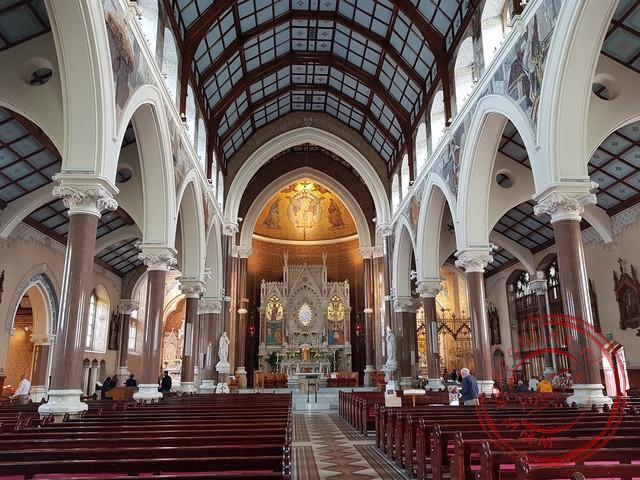 The Catholic church lies dangerously close to the Protestant district
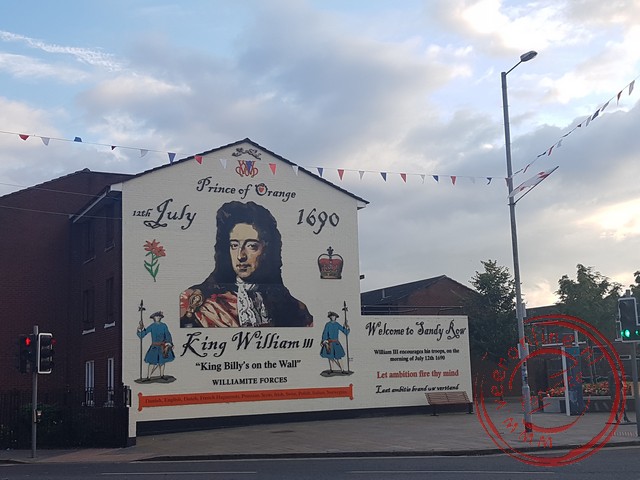 A tribute to William of Orange
 The old linen factories now house trendy apartments
Travelogue City Trip Belfast
Dag 2 | Northern Ireland > Back to the Titanic Era
Dag 3 | Northern Ireland > The Northern Irish Troubles
Dag 4 | Northern Ireland > Farewell to Belfast