
154 countries
(and areas)
 - Azerbaijan
- Bahrain
- Barbados
- Belgium
- Belize
- Benin
- Bhutan
- Bolivia
- Bonaire
- Bosnia and Herzegovina
- Botswana
- Brazil
- British Virgin Islands
- Brunei
- Bulgaria
- Cambodia
- Canada
- Cape Verde
- Chile
- China
- Costa Rica
- Croatia
- Cuba
- Curacao
- Cyprus
- Czech Republic
- Denmark
- Dominica
- Dominican Republic
- Egypt
- El Salvador
- England
- Estonia
- Eswatini (Swaziland)
- Ethiopia
- Fiji
- Finland
- France
- French Guiana
- Georgia
- Germany
- Gibraltar
- Greece
- Grenada
- Guadeloupe
- Guatemala
- Honduras
- Hong Kong
- Hungary
- Iceland
- India
- Indonesia
- Iran
- Ireland
- Israel
- Italy
- Jamaica
- Japan
- Jordan
- Kazakhstan
- Kenya
- Kosovo
- Kuwait
- Kyrgyzstan
- Laos
- Latvia
- Lebanon
- Lesotho
- Liechtenstein
- Lithuania
- Luxembourg
- Macau
- Madagascar
- Malawi
- Malaysia
- Maldives
- Malta
- Martinique
- Mexico
- Moldova
- Monaco
- Mongolia
- Montenegro
- Morocco
- Mozambique
- Namibia
- Nepal
- Netherlands
- New Zealand
- Nicaragua
- North Macedonia
- Northern Ireland
- Norway
- Oman
- Pakistan
- Palestine
- Peru
- Philippines
- Poland
- Portugal
- Qatar
- Republic of Korea
- Romania
- Russia
- Saint Kitts and Nevis
- Saint Lucia
- Saint Martin
- Saint Vincent and the Grenadines
- San Marino
- São Tomé and Principe
- Saudi Arabia
- Scotland
- Senegal
- Serbia
- Singapore
- Sint Maarten
- Slovakia
- Slovenia
- South Africa
- Spain
- Sri Lanka
- Suriname
- Sweden
- Switzerland
- Tajikistan
- Tanzania
- Thailand
- The Gambia
- Tibet
- Togo
- Transnistria
- Trinidad and Tobago
- Tunisia
- Turkey
- Turkmenistan
- Uganda
- United Arab Emirates
- United States
- Uruguay
- Uzbekistan
- Vatican City
- Vietnam
- Wales
- Zambia
- Zanzibar
- Azerbaijan
- Bahrain
- Barbados
- Belgium
- Belize
- Benin
- Bhutan
- Bolivia
- Bonaire
- Bosnia and Herzegovina
- Botswana
- Brazil
- British Virgin Islands
- Brunei
- Bulgaria
- Cambodia
- Canada
- Cape Verde
- Chile
- China
- Costa Rica
- Croatia
- Cuba
- Curacao
- Cyprus
- Czech Republic
- Denmark
- Dominica
- Dominican Republic
- Egypt
- El Salvador
- England
- Estonia
- Eswatini (Swaziland)
- Ethiopia
- Fiji
- Finland
- France
- French Guiana
- Georgia
- Germany
- Gibraltar
- Greece
- Grenada
- Guadeloupe
- Guatemala
- Honduras
- Hong Kong
- Hungary
- Iceland
- India
- Indonesia
- Iran
- Ireland
- Israel
- Italy
- Jamaica
- Japan
- Jordan
- Kazakhstan
- Kenya
- Kosovo
- Kuwait
- Kyrgyzstan
- Laos
- Latvia
- Lebanon
- Lesotho
- Liechtenstein
- Lithuania
- Luxembourg
- Macau
- Madagascar
- Malawi
- Malaysia
- Maldives
- Malta
- Martinique
- Mexico
- Moldova
- Monaco
- Mongolia
- Montenegro
- Morocco
- Mozambique
- Namibia
- Nepal
- Netherlands
- New Zealand
- Nicaragua
- North Macedonia
- Northern Ireland
- Norway
- Oman
- Pakistan
- Palestine
- Peru
- Philippines
- Poland
- Portugal
- Qatar
- Republic of Korea
- Romania
- Russia
- Saint Kitts and Nevis
- Saint Lucia
- Saint Martin
- Saint Vincent and the Grenadines
- San Marino
- São Tomé and Principe
- Saudi Arabia
- Scotland
- Senegal
- Serbia
- Singapore
- Sint Maarten
- Slovakia
- Slovenia
- South Africa
- Spain
- Sri Lanka
- Suriname
- Sweden
- Switzerland
- Tajikistan
- Tanzania
- Thailand
- The Gambia
- Tibet
- Togo
- Transnistria
- Trinidad and Tobago
- Tunisia
- Turkey
- Turkmenistan
- Uganda
- United Arab Emirates
- United States
- Uruguay
- Uzbekistan
- Vatican City
- Vietnam
- Wales
- Zambia
- Zanzibar


Copyright 2004 - 2026
Veeronline.nl Travel Adventures

Home > Bulgaria > Hiking in Mountainous Bulgaria > Travelogue day 3
Travelogue Hiking in Mountainous Bulgaria
May 1827 2013 (10 days)
Bulgaria > Through the Yagodina Cave
Dag 3 - Monday, May 20, 2013
At nine o’clock, I leave the hotel by bus. In about half an hour, I arrive at the village of Borino. Just past Borino lies an old Roman bridge in Dospat National Park. The bridge has now been replaced by a modern version and is no longer in use. Its old stone construction, however, remains intact. Svetoslava explains that the bridge served as a model for many medieval bridges in the region, which is why the exact age of these bridges is not always clear. I walk across the old stone bridge to take a photo from the other side with the light behind me. Afterward, the bus drives a short distance to the village of Dospat, where I get off to begin the walk. I follow Svetoslava through the village. Several people wave to the group, though overall the streets are very quiet. Just outside the village, the route takes a country lane into the forest. The path gradually rises. The road shows clear signs of yesterday’s heavy rain—deep ruts remain in the dirt track. I try to imagine what it must have been like walking here in the rain yesterday. A short break is taken at a bench before continuing toward the summit. As I approach a small group of houses, it’s time for lunch. I eat my packed lunch on the grass. Today the weather is beautiful, and the sun is shining. I lie back in the grass to enjoy it. Before the afternoon program, I refill my water bottles at a water well.
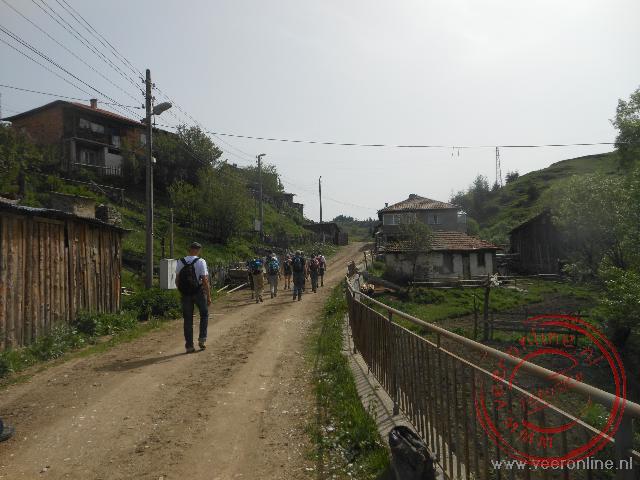
It’s good that there are regular spots along the route to access mountain water. The path follows a ridge, with deep valleys on both sides—a stunning view. As I return to the forest, a steep descent leads toward the Yagodina Cave. I follow a narrow zigzag path through the woods. Occasionally, the path is quite steep, and I have to watch my footing to avoid slipping. Low-hanging branches make the descent even trickier. I estimate that few people use this route. Around four o’clock, I arrive at Yagodina Cave. The bus is already waiting, and I can leave my backpack and camera behind. Photography is not allowed inside the cave. The guide welcomes us. He speaks in Bulgarian, and Svetoslava translates for us. I look at him as he speaks in Bulgarian and realize that there is not a single word or facial expression I can understand. Bulgarian is truly a difficult language. Yagodina Cave is a cave system with more than ten kilometers of passages spread over three levels. As soon as I enter, I see stalactites hanging from the ceiling—a magnificent sight. The route through the cave passes several underground chambers. Sometimes the passage is very narrow, or I have to bend to avoid hitting the stalactites. The pre-walk warning—“don’t disturb the stalactites with your head”—is well justified.

I follow the path for over a kilometer and am impressed by the beautiful rock formations. When I step outside, I notice just how cool it had been in the cave. Outside, it suddenly feels warm, almost like a heater is on. The day’s program is finished. I could take the bus back to the hotel, but I decide with a few fellow travelers to walk back. I take a small forest path and climb higher and higher. After about an hour, I see the village of Yagodina below. The last stretch is downhill to the village center. At the café, I sit on the terrace for a drink. I need to hurry to have a quick shower at the hotel and get to dinner on time. Tonight, trout is on the menu—delicious!
 Bulgaria
 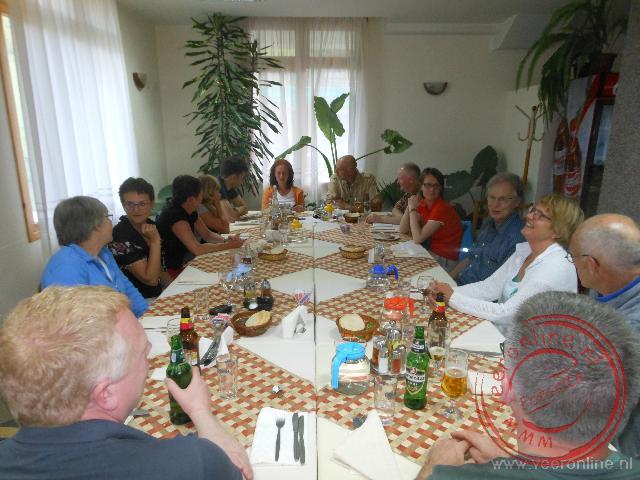 The shared meal in the hotel in Yagodina
 The Devils Throat Cave is a large open space in the rocks
 The accommodation in Leshten built from wood and stone
 Sometimes its a steep climb over the boulders
Travelogue Hiking in Mountainous Bulgaria
Dag 2 | Bulgaria > The Devil's Throat Cave
Dag 3 | Bulgaria > Through the Yagodina Cave
Dag 4 | Bulgaria > Local folklore
Dag 5 | Bulgaria > On the way to Leshten
Dag 6 | Bulgaria > The old village Kovachevitsa
Dag 7 | Bulgaria > The Rila Monastery
Dag 8 | Bulgaria > Exploring Sofia
Dag 9 | Bulgaria > Sofia tour part two
Dag 10 | Bulgaria > 'Good morning, wake-up call'