
154 countries
(and areas)
 - Belize
- Benin
- Bhutan
- Bolivia
- Bonaire
- Bosnia and Herzegovina
- Botswana
- Brazil
- British Virgin Islands
- Brunei
- Bulgaria
- Cambodia
- Canada
- Cape Verde
- Chile
- China
- Costa Rica
- Croatia
- Cuba
- Curacao
- Cyprus
- Czech Republic
- Denmark
- Dominica
- Dominican Republic
- Egypt
- El Salvador
- England
- Estonia
- Eswatini (Swaziland)
- Ethiopia
- Fiji
- Finland
- France
- French Guiana
- Georgia
- Germany
- Gibraltar
- Greece
- Grenada
- Guadeloupe
- Guatemala
- Honduras
- Hong Kong
- Hungary
- Iceland
- India
- Indonesia
- Iran
- Ireland
- Israel
- Italy
- Jamaica
- Japan
- Jordan
- Kazakhstan
- Kenya
- Kosovo
- Kuwait
- Kyrgyzstan
- Laos
- Latvia
- Lebanon
- Lesotho
- Liechtenstein
- Lithuania
- Luxembourg
- Macau
- Madagascar
- Malawi
- Malaysia
- Maldives
- Malta
- Martinique
- Mexico
- Moldova
- Monaco
- Mongolia
- Montenegro
- Morocco
- Mozambique
- Namibia
- Nepal
- Netherlands
- New Zealand
- Nicaragua
- North Macedonia
- Northern Ireland
- Norway
- Oman
- Pakistan
- Palestine
- Peru
- Philippines
- Poland
- Portugal
- Qatar
- Republic of Korea
- Romania
- Russia
- Saint Kitts and Nevis
- Saint Lucia
- Saint Martin
- Saint Vincent and the Grenadines
- San Marino
- São Tomé and Principe
- Saudi Arabia
- Scotland
- Senegal
- Serbia
- Singapore
- Sint Maarten
- Slovakia
- Slovenia
- South Africa
- Spain
- Sri Lanka
- Suriname
- Sweden
- Switzerland
- Tajikistan
- Tanzania
- Thailand
- The Gambia
- Tibet
- Togo
- Transnistria
- Trinidad and Tobago
- Tunisia
- Turkey
- Turkmenistan
- Uganda
- United Arab Emirates
- United States
- Uruguay
- Uzbekistan
- Vatican City
- Vietnam
- Wales
- Zambia
- Zanzibar
- Belize
- Benin
- Bhutan
- Bolivia
- Bonaire
- Bosnia and Herzegovina
- Botswana
- Brazil
- British Virgin Islands
- Brunei
- Bulgaria
- Cambodia
- Canada
- Cape Verde
- Chile
- China
- Costa Rica
- Croatia
- Cuba
- Curacao
- Cyprus
- Czech Republic
- Denmark
- Dominica
- Dominican Republic
- Egypt
- El Salvador
- England
- Estonia
- Eswatini (Swaziland)
- Ethiopia
- Fiji
- Finland
- France
- French Guiana
- Georgia
- Germany
- Gibraltar
- Greece
- Grenada
- Guadeloupe
- Guatemala
- Honduras
- Hong Kong
- Hungary
- Iceland
- India
- Indonesia
- Iran
- Ireland
- Israel
- Italy
- Jamaica
- Japan
- Jordan
- Kazakhstan
- Kenya
- Kosovo
- Kuwait
- Kyrgyzstan
- Laos
- Latvia
- Lebanon
- Lesotho
- Liechtenstein
- Lithuania
- Luxembourg
- Macau
- Madagascar
- Malawi
- Malaysia
- Maldives
- Malta
- Martinique
- Mexico
- Moldova
- Monaco
- Mongolia
- Montenegro
- Morocco
- Mozambique
- Namibia
- Nepal
- Netherlands
- New Zealand
- Nicaragua
- North Macedonia
- Northern Ireland
- Norway
- Oman
- Pakistan
- Palestine
- Peru
- Philippines
- Poland
- Portugal
- Qatar
- Republic of Korea
- Romania
- Russia
- Saint Kitts and Nevis
- Saint Lucia
- Saint Martin
- Saint Vincent and the Grenadines
- San Marino
- São Tomé and Principe
- Saudi Arabia
- Scotland
- Senegal
- Serbia
- Singapore
- Sint Maarten
- Slovakia
- Slovenia
- South Africa
- Spain
- Sri Lanka
- Suriname
- Sweden
- Switzerland
- Tajikistan
- Tanzania
- Thailand
- The Gambia
- Tibet
- Togo
- Transnistria
- Trinidad and Tobago
- Tunisia
- Turkey
- Turkmenistan
- Uganda
- United Arab Emirates
- United States
- Uruguay
- Uzbekistan
- Vatican City
- Vietnam
- Wales
- Zambia
- Zanzibar


Copyright 2004 - 2026
Veeronline.nl Travel Adventures

Home > Israel > Israel the Holy Land > Travelogue day 1
Travelogue Israel the Holy Land
April 310 2014 (8 days)
Israel > Driving through the Negev desert
Dag 1 - Thursday, April 3, 2014An employee at Schiphol has just opened the revolving door to the departure hall. It is just past four in the morning. Schiphol is waking up. I walk into the departure hall, convinced that I saw on the teletext that I should be at counter 3–4. The taxi driver, however, assured me that Corendon uses counter 30—completely on the other side. In the departure hall, I quickly realize he was right. I walk to departure hall 3. At the check-in counter, I try to spot any fellow travelers in the line. It proves difficult because there are two tour groups, and the other passengers are on a one-week holiday to the sun in Eilat. Because this is a trip to a controversial destination, I make sure to be at baggage control on time. My trousers’ zippers light up, but I’m allowed to proceed. Just after seven o’clock, flight CND411 takes off for Ovda in southern Israel. Outside, daylight slowly appears. I can clearly see the Alps beneath me. The weather is clear. Flying along the coast of the Adriatic Sea, I pass Greece and cross the Mediterranean. As we approach Israeli airspace, the captain announces that it is not allowed to stand up while over Israel. I quickly make a final trip to the restroom. At a quarter to one local time—an hour later than in the Netherlands—I approach Ovda Airport. From the air, I see nothing but sand and rocks. Even as the plane nears the ground, the view doesn’t change. Fortunately, the pilot lands on a paved strip in the desert. Ovda Airport is about 45 kilometers north of Eilat. At customs, I request not to have my passport stamped. I recently received a new passport, and for some Islamic countries, an Israeli stamp could be an obstacle. I have to fill out a separate form. With a small stamp on this form, I officially enter Israel. In front of the arrivals hall, Dafne is already waiting. Originally Belgian, she has lived in Israel for 46 years. She directs me to the bus. The tour group is fairly large; I estimate about 36 people. One traveler appears to be having problems at customs. When Dafne receives the signal that we can leave, it probably means that the traveler was refused entry and must return to the Netherlands. I will never know the reason. Viraz, the bus driver, drives us into the desert. I see a barren, hilly landscape. Along the road, several tanks with soldiers are positioned. We are likely driving very close to the border with Jordan. At a roadside restaurant, there is an opportunity to eat or drink. Fortunately, I can pay in euros since I don’t have any local currency yet. My change is given in shekels. Due to the exchange rate, this may cost me a bit more, but at least I have some Israeli money on hand.

As we continue through the desert, Dafne talks about the country and its customs. Because of her Belgian background and long residence in Israel, she sometimes has to search for the right Dutch words. Dafne mentions that it has rained relatively often in the past month, which has caused more green shrubs than usual. In a few weeks, these will disappear, and the desert will appear even more barren. At the Ramon Crater, we make a short stop. I step out and walk to the edge of the crater. Over thousands of years, a river has carved the rocks, forming a kind of crater rim. From one side, I look into the deep valley—a beautiful sight. It is also nice to stretch my legs. The expectation is that it will take another two hours to reach Jerusalem. As we enter the toll road near Be’er Sheva, things go wrong. An accident on the continuation of the toll road forces everyone off the highway, causing a long traffic jam on the detour. By the time I finally enter the outskirts of Jerusalem, dusk is falling. I see the city sprawled across several hills. A few taller buildings form the skyline. I will stay overnight in Bethlehem, ten kilometers south of Jerusalem. Dafne informs us that she will not accompany the group to the hotel. As she is Jewish, she is not allowed to enter Palestinian territory. She leaves the bus at an intersection. Viraz takes me to Bethlehem, which requires crossing the border. Tall fences line the border. An eight-meter-high wall separates Palestinian territory from Jerusalem—a bizarre sight. Directly across the border, the streets appear more chaotic, amplified by the darkness. I am relieved when I step off the bus and enter the hotel. I quickly take my luggage to my room and go to the dining hall. I am quite hungry after a long day of travel.
 Israel
 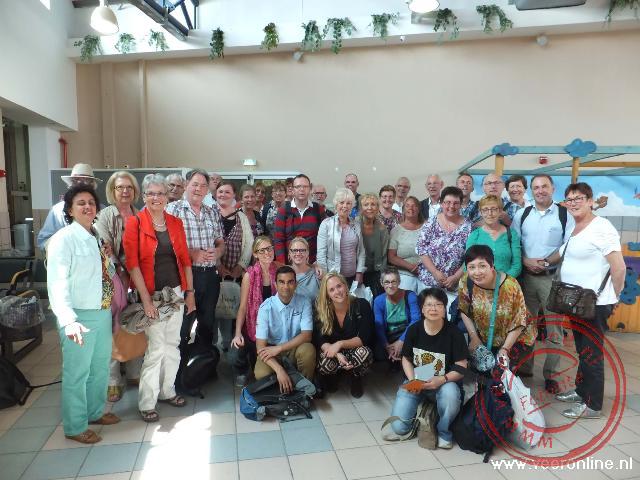 A group photo at Ovda Airport
 The Makhtesh Ramon crater is a geologically formed crater
 The Ramon Crater is at 40 kilometres the largest crater in the world
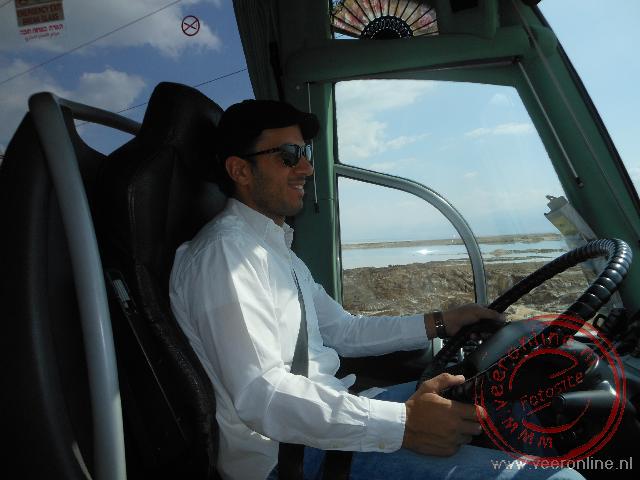 Firaz drives the bus through Israel
Travelogue Israel the Holy Land
Dag 2 | Israel > View over Jerusalem
Dag 3 | Israel > The lowest point on earth
Dag 4 | Israel > The Church of the Nativity in Bethlehem
Dag 5 | Israel > The Roman city of Caesarea
Dag 6 | Israel > Holy places at Lake Galilee
Dag 7 | Israel > Annunciation Church of Nazareth
Dag 8 | Israel > Farewell to Israel