
154 countries
(and areas)
 - Belize
- Benin
- Bhutan
- Bolivia
- Bonaire
- Bosnia and Herzegovina
- Botswana
- Brazil
- British Virgin Islands
- Brunei
- Bulgaria
- Cambodia
- Canada
- Cape Verde
- Chile
- China
- Costa Rica
- Croatia
- Cuba
- Curacao
- Cyprus
- Czech Republic
- Denmark
- Dominica
- Dominican Republic
- Egypt
- El Salvador
- England
- Estonia
- Eswatini (Swaziland)
- Ethiopia
- Fiji
- Finland
- France
- French Guiana
- Georgia
- Germany
- Gibraltar
- Greece
- Grenada
- Guadeloupe
- Guatemala
- Honduras
- Hong Kong
- Hungary
- Iceland
- India
- Indonesia
- Iran
- Ireland
- Israel
- Italy
- Jamaica
- Japan
- Jordan
- Kazakhstan
- Kenya
- Kosovo
- Kuwait
- Kyrgyzstan
- Laos
- Latvia
- Lebanon
- Lesotho
- Liechtenstein
- Lithuania
- Luxembourg
- Macau
- Madagascar
- Malawi
- Malaysia
- Maldives
- Malta
- Martinique
- Mexico
- Moldova
- Monaco
- Mongolia
- Montenegro
- Morocco
- Mozambique
- Namibia
- Nepal
- Netherlands
- New Zealand
- Nicaragua
- North Macedonia
- Northern Ireland
- Norway
- Oman
- Pakistan
- Palestine
- Peru
- Philippines
- Poland
- Portugal
- Qatar
- Republic of Korea
- Romania
- Russia
- Saint Kitts and Nevis
- Saint Lucia
- Saint Martin
- Saint Vincent and the Grenadines
- San Marino
- São Tomé and Principe
- Saudi Arabia
- Scotland
- Senegal
- Serbia
- Singapore
- Sint Maarten
- Slovakia
- Slovenia
- South Africa
- Spain
- Sri Lanka
- Suriname
- Sweden
- Switzerland
- Tajikistan
- Tanzania
- Thailand
- The Gambia
- Tibet
- Togo
- Transnistria
- Trinidad and Tobago
- Tunisia
- Turkey
- Turkmenistan
- Uganda
- United Arab Emirates
- United States
- Uruguay
- Uzbekistan
- Vatican City
- Vietnam
- Wales
- Zambia
- Zanzibar
- Belize
- Benin
- Bhutan
- Bolivia
- Bonaire
- Bosnia and Herzegovina
- Botswana
- Brazil
- British Virgin Islands
- Brunei
- Bulgaria
- Cambodia
- Canada
- Cape Verde
- Chile
- China
- Costa Rica
- Croatia
- Cuba
- Curacao
- Cyprus
- Czech Republic
- Denmark
- Dominica
- Dominican Republic
- Egypt
- El Salvador
- England
- Estonia
- Eswatini (Swaziland)
- Ethiopia
- Fiji
- Finland
- France
- French Guiana
- Georgia
- Germany
- Gibraltar
- Greece
- Grenada
- Guadeloupe
- Guatemala
- Honduras
- Hong Kong
- Hungary
- Iceland
- India
- Indonesia
- Iran
- Ireland
- Israel
- Italy
- Jamaica
- Japan
- Jordan
- Kazakhstan
- Kenya
- Kosovo
- Kuwait
- Kyrgyzstan
- Laos
- Latvia
- Lebanon
- Lesotho
- Liechtenstein
- Lithuania
- Luxembourg
- Macau
- Madagascar
- Malawi
- Malaysia
- Maldives
- Malta
- Martinique
- Mexico
- Moldova
- Monaco
- Mongolia
- Montenegro
- Morocco
- Mozambique
- Namibia
- Nepal
- Netherlands
- New Zealand
- Nicaragua
- North Macedonia
- Northern Ireland
- Norway
- Oman
- Pakistan
- Palestine
- Peru
- Philippines
- Poland
- Portugal
- Qatar
- Republic of Korea
- Romania
- Russia
- Saint Kitts and Nevis
- Saint Lucia
- Saint Martin
- Saint Vincent and the Grenadines
- San Marino
- São Tomé and Principe
- Saudi Arabia
- Scotland
- Senegal
- Serbia
- Singapore
- Sint Maarten
- Slovakia
- Slovenia
- South Africa
- Spain
- Sri Lanka
- Suriname
- Sweden
- Switzerland
- Tajikistan
- Tanzania
- Thailand
- The Gambia
- Tibet
- Togo
- Transnistria
- Trinidad and Tobago
- Tunisia
- Turkey
- Turkmenistan
- Uganda
- United Arab Emirates
- United States
- Uruguay
- Uzbekistan
- Vatican City
- Vietnam
- Wales
- Zambia
- Zanzibar


Copyright 2004 - 2026
Veeronline.nl Travel Adventures
Home > Japan > Enchanting Japan > Travelogue day 108
Travelogue Enchanting Japan
August 821 2016 (13 days)
Japan > The Daimonji Bonfire Festival
Dag 108 - Tuesday, August 16, 2016I take the subway and train to Arashiyama, located on the western side of Kyoto. Figuring out which train ticket I need takes a bit of thought. By now, I know how the ticket machine works, but the fare board is only in Japanese. At the ticket counter, I buy a ticket. The train is already waiting on the platform. To be sure, I check with the conductor if it’s the right train. After a confirming nod, I board. The train is quite full, and I have to stand. I have no idea how many stops I need to take, but judging by the price, it can’t be too far.

It turns out to be six stops. I get off at Saga-Arashiyama. The train empties, probably because most visitors are heading to the Tenryu-ji Temple. I first turn left and walk toward the Togetsukyo Bridge. This bridge has a history of over a thousand years and has been restored several times since. On the other side of the bridge is the Monkey Park. After a twenty-minute climb to the top of the hill, I reach the baboons. Along the way, there are numerous warning signs: don’t make eye contact with the monkeys, don’t show them food, and keep your distance. At the top, there’s a special viewing area; only from here are you allowed to feed the monkeys. Some cling to the outer mesh, while others rest under the trees behind the hut. It’s hot even for them. Some groom each other, while a young monkey swings on a rope. The animals seem oblivious to the spectators, though several keepers are watching to ensure everything goes smoothly. It’s a delightful sight. On the other side of the terrace, the view of Kyoto is equally spectacular, showing just how large the city is. Back down, I visit the Tenryu-ji Temple complex. I skip the temple itself and buy a ticket for the garden. The gravel around the rocks is meticulously raked, and the water features look beautiful. It’s no wonder the temple and garden are on the UNESCO World Heritage list. From the garden, I walk into the bamboo forest, a path winding through towering bamboo stalks.

It’s wonderful to stroll in the shade. This changes as I walk back toward the station—it’s 34°C again today. Everyone carries fans to cool themselves. Luckily, the train has air conditioning. In the evening, the Daimonji Bonfire Festival celebrates the end of Obon, a three-day period in which the Japanese honor their ancestors. In Kyoto, the Daimonji is celebrated by forming the Chinese character “dai” (meaning “big”) in lanterns on the slope of Mt. Nyoigadake. At the hotel reception, I was told the best view is at the Kamo River junction and warned it could be crowded, with rain predicted. With my umbrella in hand, I set off. I walk to the Kamo River and follow it. Halfway along, it starts to rain. What a shame. I take shelter under an overpass and continue when the rain eases. I ask two girls ahead of me where I need to be. They speak little English but gesture for me to follow them. Along the way, we exchange small bits of conversation, and I show them my travel itinerary. They are so impressed that they start clapping and even offer me a small gift. I don’t understand why, and it’s clear these chocolates weren’t bought specifically for me, so I feel a little awkward. We quickly take a photo under the umbrella. At the water junction, it’s very crowded. Police try to manage the crowd. When I try to take a photo from the bridge, I’m immediately told not to stop—“No standing on the bridge!” I walk into the park, and the rain pours down. Standing under the trees and my little umbrella, I vacillate between thinking, “Why am I here in this weather?” and “It’s amazing to be here.” Others around me probably wonder the same. The rain comes down in torrents. At eight o’clock, when the first fire is supposed to be lit, nothing seems to happen—at least not visibly.

There’s a glow behind the clouds, but I had expected a massive “ooh” and “aah,” which never comes. People start leaving, and by now I’m soaked, so I decide to head toward the subway, a little disappointed. Hundreds of people are waiting on the bridge with umbrellas to enter the metro. I realize that being taller than the average Japanese is not an advantage in the rain—the water from my umbrella splashes back from the lower umbrellas around me. Fortunately, my passport and camera are wrapped in plastic; everything else is drenched. The crowd moves efficiently through the metro station, guided by staff toward the platforms. I even manage to get a ticket fairly easily. An empty train car arrives. In the metro, I notice that many people are far less wet than I am—maybe my umbrella needs replacing. Two stops later, I get off at Gion Station and still have a short walk. It’s still raining heavily, but I’m able to walk under the shop awnings until I reach my hotel. Several hotel guests trickle in, hanging their wet clothes to dry. I strike up a conversation with Will, who sleeps next to me. He’s a teacher in Washington and gives me tips about Route 66. He says I can contact him anytime if I have questions.
 Japan
Japan  A group photo with Japanese girls
 Shibuya Crossing is the busiest intersection in Tokyo
 A dog waited daily for two years at the station for its deceased owner
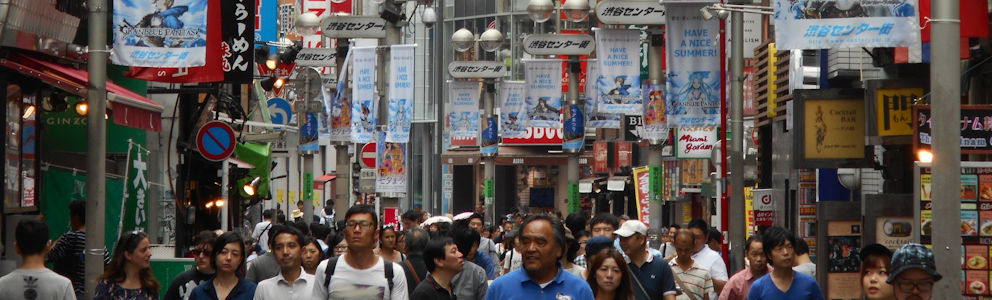
 The hustle and bustle in the streets of Shibuya
Travelogue Enchanting Japan
Dag 102 | Japan > The temples of Tokyo
Dag 103 | Japan > The Shibuya crossing
Dag 104 | Japan > 300 km/h to Kyoto
Dag 105 | Japan > The Golden Pavilion
Dag 106 | Japan > The temple of Nara
Dag 107 | Japan > The Philosopher's Path
Dag 108 | Japan > The Daimonji Bonfire Festival
Dag 109 | Japan > By train to Osaka
Dag 110 | Japan > The beach of Suma
Dag 111 | Japan > Osaka Castle
Dag 112 | Japan > Whale sharks and dolphins
Dag 113 | Japan > Farewell Japan