
154 countries
(and areas)
 - Azerbaijan
- Bahrain
- Barbados
- Belgium
- Belize
- Benin
- Bhutan
- Bolivia
- Bonaire
- Bosnia and Herzegovina
- Botswana
- Brazil
- British Virgin Islands
- Brunei
- Bulgaria
- Cambodia
- Canada
- Cape Verde
- Chile
- China
- Costa Rica
- Croatia
- Cuba
- Curacao
- Cyprus
- Czech Republic
- Denmark
- Dominica
- Dominican Republic
- Egypt
- El Salvador
- England
- Estonia
- Eswatini (Swaziland)
- Ethiopia
- Fiji
- Finland
- France
- French Guiana
- Georgia
- Germany
- Gibraltar
- Greece
- Grenada
- Guadeloupe
- Guatemala
- Honduras
- Hong Kong
- Hungary
- Iceland
- India
- Indonesia
- Iran
- Ireland
- Israel
- Italy
- Jamaica
- Japan
- Jordan
- Kazakhstan
- Kenya
- Kosovo
- Kuwait
- Kyrgyzstan
- Laos
- Latvia
- Lebanon
- Lesotho
- Liechtenstein
- Lithuania
- Luxembourg
- Macau
- Madagascar
- Malawi
- Malaysia
- Maldives
- Malta
- Martinique
- Mexico
- Moldova
- Monaco
- Mongolia
- Montenegro
- Morocco
- Mozambique
- Namibia
- Nepal
- Netherlands
- New Zealand
- Nicaragua
- North Macedonia
- Northern Ireland
- Norway
- Oman
- Pakistan
- Palestine
- Peru
- Philippines
- Poland
- Portugal
- Qatar
- Republic of Korea
- Romania
- Russia
- Saint Kitts and Nevis
- Saint Lucia
- Saint Martin
- Saint Vincent and the Grenadines
- San Marino
- São Tomé and Principe
- Saudi Arabia
- Scotland
- Senegal
- Serbia
- Singapore
- Sint Maarten
- Slovakia
- Slovenia
- South Africa
- Spain
- Sri Lanka
- Suriname
- Sweden
- Switzerland
- Tajikistan
- Tanzania
- Thailand
- The Gambia
- Tibet
- Togo
- Transnistria
- Trinidad and Tobago
- Tunisia
- Turkey
- Turkmenistan
- Uganda
- United Arab Emirates
- United States
- Uruguay
- Uzbekistan
- Vatican City
- Vietnam
- Wales
- Zambia
- Zanzibar
- Azerbaijan
- Bahrain
- Barbados
- Belgium
- Belize
- Benin
- Bhutan
- Bolivia
- Bonaire
- Bosnia and Herzegovina
- Botswana
- Brazil
- British Virgin Islands
- Brunei
- Bulgaria
- Cambodia
- Canada
- Cape Verde
- Chile
- China
- Costa Rica
- Croatia
- Cuba
- Curacao
- Cyprus
- Czech Republic
- Denmark
- Dominica
- Dominican Republic
- Egypt
- El Salvador
- England
- Estonia
- Eswatini (Swaziland)
- Ethiopia
- Fiji
- Finland
- France
- French Guiana
- Georgia
- Germany
- Gibraltar
- Greece
- Grenada
- Guadeloupe
- Guatemala
- Honduras
- Hong Kong
- Hungary
- Iceland
- India
- Indonesia
- Iran
- Ireland
- Israel
- Italy
- Jamaica
- Japan
- Jordan
- Kazakhstan
- Kenya
- Kosovo
- Kuwait
- Kyrgyzstan
- Laos
- Latvia
- Lebanon
- Lesotho
- Liechtenstein
- Lithuania
- Luxembourg
- Macau
- Madagascar
- Malawi
- Malaysia
- Maldives
- Malta
- Martinique
- Mexico
- Moldova
- Monaco
- Mongolia
- Montenegro
- Morocco
- Mozambique
- Namibia
- Nepal
- Netherlands
- New Zealand
- Nicaragua
- North Macedonia
- Northern Ireland
- Norway
- Oman
- Pakistan
- Palestine
- Peru
- Philippines
- Poland
- Portugal
- Qatar
- Republic of Korea
- Romania
- Russia
- Saint Kitts and Nevis
- Saint Lucia
- Saint Martin
- Saint Vincent and the Grenadines
- San Marino
- São Tomé and Principe
- Saudi Arabia
- Scotland
- Senegal
- Serbia
- Singapore
- Sint Maarten
- Slovakia
- Slovenia
- South Africa
- Spain
- Sri Lanka
- Suriname
- Sweden
- Switzerland
- Tajikistan
- Tanzania
- Thailand
- The Gambia
- Tibet
- Togo
- Transnistria
- Trinidad and Tobago
- Tunisia
- Turkey
- Turkmenistan
- Uganda
- United Arab Emirates
- United States
- Uruguay
- Uzbekistan
- Vatican City
- Vietnam
- Wales
- Zambia
- Zanzibar


Copyright 2004 - 2026
Veeronline.nl Travel Adventures
Home > Italy > City Trip Naples > Travelogue day 4
Travelogue City Trip Naples
February 1417 2019 (4 days)
Italy > The old district of Naples
Dag 4 - Sunday, February 17, 2019For the last time this weekend, we head to the breakfast room. Although the space is small, with only a few tables, the comings and goings of guests are handled fairly smoothly. No one has to wait. Today we are going out to explore the old town. As soon as we leave the main Via Armando Diaz, we walk into a very narrow alley. At every turn, it’s uncertain whether the alley continues or ends at a house. It turns out to continue. Only, the end of the alley is full of trash and clearly used as a toilet. We quickly make our way to Via Santa Chiara. Along this street is the monastery of the same name. The Santa Chiara Monastery and its church were built in the 14th century. The rectangular courtyard was fitted in the 17th century with mosaic pillars and benches. The tiles depict religious images, and orange trees are planted in the courtyard. The monastery garden forms an oasis of calm in the midst of the busy city. A service is just taking place in the church. The 110-meter-long church is simply decorated in Gothic style. Baroque decorations were added in the 17th century. During World War II, the entire complex was heavily damaged by bombings, but everything has been restored to its original state. Around the monastery, the narrow streets are bustling.

Tourists and locals stroll through the alleys. Groups of musicians make their way through, carrying banners and playing carnival-style music. They often ask passersby for money. When two groups meet, they play a tune together, then continue on their separate ways. We walk through the narrow streets of the old quarter to the Duomo di Napoli. The cathedral is the main church of Naples. Inside is the Chapel of San Gennaro, the city’s patron saint. The chapel is gilded with Baroque statues and frescoes—stunning to see. On the main altar stands a bust of San Gennaro, and beneath it in the crypt lie his remains. It is said that blood from the saint was collected at his beheading in 305 during the Christian persecution. A few days each year, this blood is taken from the crypt and placed on the altar in the Santa Chiara Cathedral. The solidified blood becomes liquid again—a sign that the city of Naples is protected from disaster.
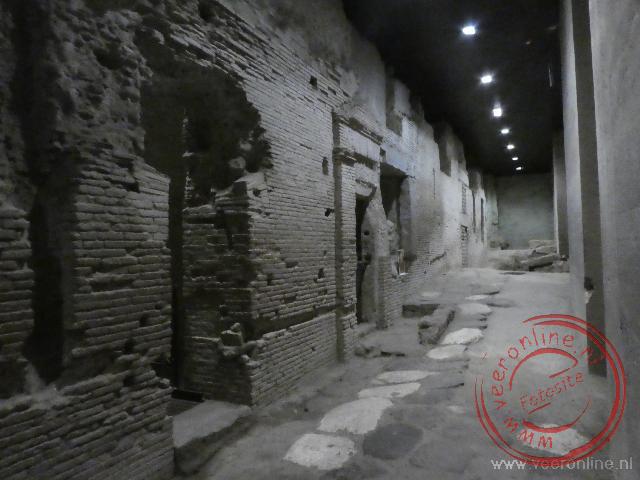
The Duomo was built in the 13th century over the original baptistery of San Giovanni. In this ancient 6th-century baptistery, remnants of the original mosaic floor can still be seen. Outside again, we stop for a drink at a terrace. In the afternoon, we break up so everyone can do what they like. Nicolette and I walk to the Cappella Sansevero. This former family chapel of the princes of San Severo is now the most visited museum in Naples. The chapel houses fine artworks in Baroque and Rococo style. In the center is the veiled Christ sculpture, carved from a single block of marble. The cloth over the body looks remarkably lifelike. The weather remains beautiful, and the streets are still busy. Fortunately, we find a free table at the lively Piazza Bellini and order a drink. For our final activity in Naples, we visit the Underground City. Below ground, the remains of the Roman period can be seen. The Roman city was built on Greek foundations. During a Vesuvius eruption around 500 AD, parts of the city were buried under lava. The current street level of Naples now lies above this ancient layer. At four o’clock, we enter a restaurant. It is still far from dinner time for Italians, but since we are flying back tonight, we eat now. Just before six, we approach our hotel again. The taxi driver calls, saying he is waiting outside. We quickly load the luggage and drive to the airport. At 8:30 p.m., the Transavia plane takes off for the flight back to the Netherlands. Three hours later, we land, collect our baggage, and are driven home by a Dutch taxi driver.
 Italy
Italy 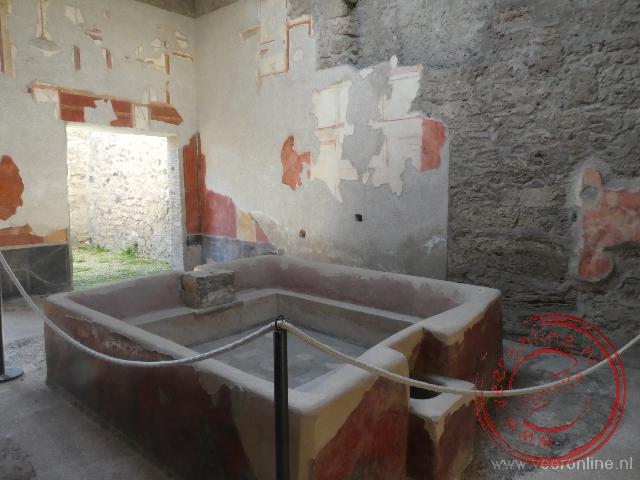 A bathtub in one of the houses in Pompeii
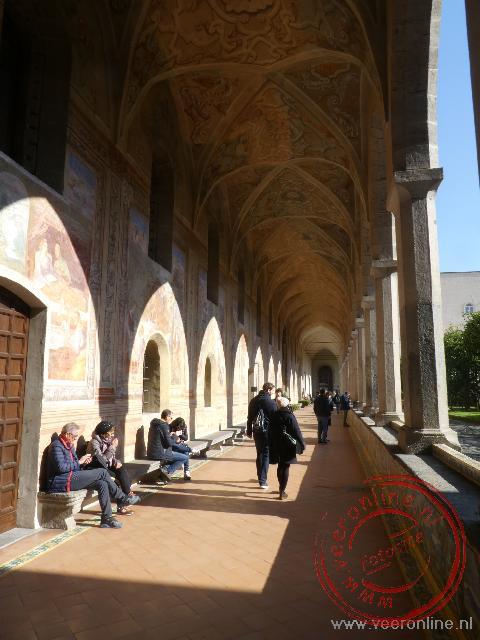 The Santa Chiara monastery in the old city
 The chapel of San Gennaro in the Duomo di Napoli
 The Palazzo Reale di Napoli
Travelogue City Trip Naples
Dag 2 | Italy > Birthday in Naples
Dag 3 | Italy > Pompeii and Vesuvius
Dag 4 | Italy > The old district of Naples