
154 countries
(and areas)
 - Azerbaijan
- Bahrain
- Barbados
- Belgium
- Belize
- Benin
- Bhutan
- Bolivia
- Bonaire
- Bosnia and Herzegovina
- Botswana
- Brazil
- British Virgin Islands
- Brunei
- Bulgaria
- Cambodia
- Canada
- Cape Verde
- Chile
- China
- Costa Rica
- Croatia
- Cuba
- Curacao
- Cyprus
- Czech Republic
- Denmark
- Dominica
- Dominican Republic
- Egypt
- El Salvador
- England
- Estonia
- Eswatini (Swaziland)
- Ethiopia
- Fiji
- Finland
- France
- French Guiana
- Georgia
- Germany
- Gibraltar
- Greece
- Grenada
- Guadeloupe
- Guatemala
- Honduras
- Hong Kong
- Hungary
- Iceland
- India
- Indonesia
- Iran
- Ireland
- Israel
- Italy
- Jamaica
- Japan
- Jordan
- Kazakhstan
- Kenya
- Kosovo
- Kuwait
- Kyrgyzstan
- Laos
- Latvia
- Lebanon
- Lesotho
- Liechtenstein
- Lithuania
- Luxembourg
- Macau
- Madagascar
- Malawi
- Malaysia
- Maldives
- Malta
- Martinique
- Mexico
- Moldova
- Monaco
- Mongolia
- Montenegro
- Morocco
- Mozambique
- Namibia
- Nepal
- Netherlands
- New Zealand
- Nicaragua
- North Macedonia
- Northern Ireland
- Norway
- Oman
- Pakistan
- Palestine
- Peru
- Philippines
- Poland
- Portugal
- Qatar
- Republic of Korea
- Romania
- Russia
- Saint Kitts and Nevis
- Saint Lucia
- Saint Martin
- Saint Vincent and the Grenadines
- San Marino
- São Tomé and Principe
- Saudi Arabia
- Scotland
- Senegal
- Serbia
- Singapore
- Sint Maarten
- Slovakia
- Slovenia
- South Africa
- Spain
- Sri Lanka
- Suriname
- Sweden
- Switzerland
- Tajikistan
- Tanzania
- Thailand
- The Gambia
- Tibet
- Togo
- Transnistria
- Trinidad and Tobago
- Tunisia
- Turkey
- Turkmenistan
- Uganda
- United Arab Emirates
- United States
- Uruguay
- Uzbekistan
- Vatican City
- Vietnam
- Wales
- Zambia
- Zanzibar
- Azerbaijan
- Bahrain
- Barbados
- Belgium
- Belize
- Benin
- Bhutan
- Bolivia
- Bonaire
- Bosnia and Herzegovina
- Botswana
- Brazil
- British Virgin Islands
- Brunei
- Bulgaria
- Cambodia
- Canada
- Cape Verde
- Chile
- China
- Costa Rica
- Croatia
- Cuba
- Curacao
- Cyprus
- Czech Republic
- Denmark
- Dominica
- Dominican Republic
- Egypt
- El Salvador
- England
- Estonia
- Eswatini (Swaziland)
- Ethiopia
- Fiji
- Finland
- France
- French Guiana
- Georgia
- Germany
- Gibraltar
- Greece
- Grenada
- Guadeloupe
- Guatemala
- Honduras
- Hong Kong
- Hungary
- Iceland
- India
- Indonesia
- Iran
- Ireland
- Israel
- Italy
- Jamaica
- Japan
- Jordan
- Kazakhstan
- Kenya
- Kosovo
- Kuwait
- Kyrgyzstan
- Laos
- Latvia
- Lebanon
- Lesotho
- Liechtenstein
- Lithuania
- Luxembourg
- Macau
- Madagascar
- Malawi
- Malaysia
- Maldives
- Malta
- Martinique
- Mexico
- Moldova
- Monaco
- Mongolia
- Montenegro
- Morocco
- Mozambique
- Namibia
- Nepal
- Netherlands
- New Zealand
- Nicaragua
- North Macedonia
- Northern Ireland
- Norway
- Oman
- Pakistan
- Palestine
- Peru
- Philippines
- Poland
- Portugal
- Qatar
- Republic of Korea
- Romania
- Russia
- Saint Kitts and Nevis
- Saint Lucia
- Saint Martin
- Saint Vincent and the Grenadines
- San Marino
- São Tomé and Principe
- Saudi Arabia
- Scotland
- Senegal
- Serbia
- Singapore
- Sint Maarten
- Slovakia
- Slovenia
- South Africa
- Spain
- Sri Lanka
- Suriname
- Sweden
- Switzerland
- Tajikistan
- Tanzania
- Thailand
- The Gambia
- Tibet
- Togo
- Transnistria
- Trinidad and Tobago
- Tunisia
- Turkey
- Turkmenistan
- Uganda
- United Arab Emirates
- United States
- Uruguay
- Uzbekistan
- Vatican City
- Vietnam
- Wales
- Zambia
- Zanzibar


Copyright 2004 - 2026
Veeronline.nl Travel Adventures
Home > Spain > Roundtrip Andalusia > Travelogue day 3
Travelogue Roundtrip Andalusia
March 14 - 25, 2026 (12 days)
Spain > The old city of Cádiz
Dag 3 - Monday, March 16, 2026After breakfast, we gather at the bus again at nine o’clock. I can leave my luggage in the room, as we will return here tonight. We drive a short distance to the centre of Jerez de la Frontera. This region is known for its sherry production. Since the González Byass sherry house can only receive us at ten o’clock, we first visit the local covered market hall. This is a bit disappointing. On Mondays there is no fresh fish trade, so most stalls are closed. I do get the chance to briefly admire the adjacent Conventual Church of San Francisco—a beautiful, simple and sober church. At ten o’clock, Lola welcomes us at the sherry house. She is Spanish but speaks fluent Dutch. She explains that González Byass is one of the most famous and prestigious sherry producers in Spain. It was founded in 1835 by Manuel María González Ángel and grew into a global producer of sherry, with the famous Tío Pepe brand as its flagship. Lola takes us through the wine cellars, where thousands of barrels are stored. She explains that the aging time in oak barrels differs per type of wine; some varieties have been stored here for more than sixty years. The more common sherry is annually blended with younger wines. The sherry is gradually moved from the upper row of barrels down to lower, older ones in the solera system. We also pass the cellar where the company originally began, with old barrels still present and the founder’s office located there. After the tour, it is time for the tasting. I am served three glasses of different types of sherry.

I have never really drunk sherry before, and after tasting it I probably understand why—it is not really to my taste. Only the sweet, creamy Serena 1847 is reasonably enjoyable. Around noon, we continue to Cádiz. Cádiz is considered the oldest city in Europe (although Plovdiv in Bulgaria also makes this claim). Due to its strategic location on a peninsula, the first inhabitants settled here as early as 1100 BC. The historic centre features narrow streets, lively squares, and whitewashed houses that provide protection from the sun. We get off at Plaza de San Juan de Dios, where the statue of Segismundo Moret, a 19th-century Spanish politician, stands. From here, everyone goes their own way. With a fellow traveller, I walk into one of the narrow streets towards the cathedral, alternating left and right through the maze of alleys. We arrive at the ruins of the Roman Theatre, located just east of the cathedral. At the gate, the guard explains that the entrance is on the opposite side. The ancient theatre was discovered by chance in 1980 after a fire in a warehouse and likely dates back to the 1st century BC. At the nearby cathedral, we buy an entrance ticket for twelve euros.

Construction began in 1722 and took 118 years to complete. The Cathedral of Santa Cruz in Cádiz is an impressive Baroque and Neoclassical church. It is one of the largest churches in Spain and stands out with its golden dome and sandstone façade. The interior is beautiful but somewhat cluttered due to the choir placed in the middle of the cathedral. Via a stone staircase, I descend into the crypt below, where a temporary exhibition of the “Mystery Man” is displayed—a realistic wax reconstruction of what Jesus may have looked like after the crucifixion. The wounds are based on years of research into the Shroud. Finally, we climb the cathedral tower. Instead of stairs, there is a gently rising ramp—a feature I do not recall ever seeing in a church tower before. Only the final section to the top is accessed via a narrow spiral staircase. From the viewing platform near the bells, I have a stunning view over Cádiz and the ocean. The weather is beautiful, and the blue sky contrasts nicely with the predominantly white houses. We sit down for lunch on one of the terraces in the streets in front of the cathedral. After lunch, we walk towards the northern inlet of the city along the boulevard

. Fishermen try their luck from the quay, and the ocean water looks beautifully blue under the sun, though a strong wind is blowing. We arrive at Castillo de Santa Catalina, a 16th-century defensive fortress. Inside the gate, I find a historic courtyard surrounded by old barracks and a small chapel in the centre. All buildings are painted ochre yellow. From the ramparts, we see the ocean and La Caleta beach, where a few people are braving the still-cold water. We continue along a sandbar leading to Castillo de San Sebastián, a fort located in the sea. As we approach the entrance, the wind blows strongly over the water. The fort is beautifully situated but somewhat dilapidated. We walk through the barracks, many of which are closed or fenced off. It appears there is a second island as well, likely added because the first was too small to house all troops. The second island is more barren, with the lighthouse of Cádiz in the centre. We walk along the fort’s walls before returning to the city. Back in Cádiz, we head again towards the cathedral and meet the other travellers at the statue of Segismundo Moret. At five o’clock, we walk together back to the bus. We drive for about an hour to the hotel in Jerez de la Frontera. In the evening, we decide to dine at the hotel restaurant, where other travellers had a good meal the night before. I choose risotto with a glass of red wine—a very good choice.
 Gibraltar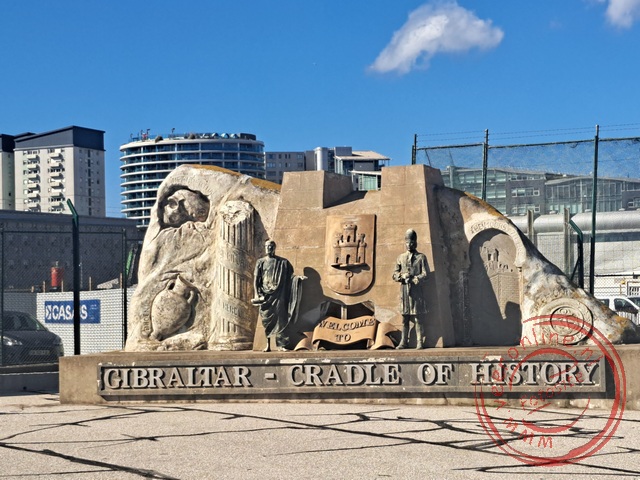
 Spain
Spain 

Travelogue Roundtrip Andalusia
Dag 2 | Spain > Historic bridge of Ronda
Dag 3 | Spain > The old city of Cádiz
Dag 4 | Gibraltar > The microstate of Gibraltar
Dag 5 | Spain > Arcos de la Frontera
Dag 6 | Spain > The Cathedral of Seville
Dag 7 | Spain > Cycling tour through Seville
Dag 8 | Spain > The Mezquita of Córdoba
Dag 9 | Spain > Baeza and Úbeda
Dag 10 | Spain > The Alhambra of Granada
Dag 11 | Spain > Cave dwellings of Granada
Dag 12 | Spain > A day in Málaga