
154 countries
(and areas)
 - Azerbaijan
- Bahrain
- Barbados
- Belgium
- Belize
- Benin
- Bhutan
- Bolivia
- Bonaire
- Bosnia and Herzegovina
- Botswana
- Brazil
- British Virgin Islands
- Brunei
- Bulgaria
- Cambodia
- Canada
- Cape Verde
- Chile
- China
- Costa Rica
- Croatia
- Cuba
- Curacao
- Cyprus
- Czech Republic
- Denmark
- Dominica
- Dominican Republic
- Egypt
- El Salvador
- England
- Estonia
- Eswatini (Swaziland)
- Ethiopia
- Fiji
- Finland
- France
- French Guiana
- Georgia
- Germany
- Gibraltar
- Greece
- Grenada
- Guadeloupe
- Guatemala
- Honduras
- Hong Kong
- Hungary
- Iceland
- India
- Indonesia
- Iran
- Ireland
- Israel
- Italy
- Jamaica
- Japan
- Jordan
- Kazakhstan
- Kenya
- Kosovo
- Kuwait
- Kyrgyzstan
- Laos
- Latvia
- Lebanon
- Lesotho
- Liechtenstein
- Lithuania
- Luxembourg
- Macau
- Madagascar
- Malawi
- Malaysia
- Maldives
- Malta
- Martinique
- Mexico
- Moldova
- Monaco
- Mongolia
- Montenegro
- Morocco
- Mozambique
- Namibia
- Nepal
- Netherlands
- New Zealand
- Nicaragua
- North Macedonia
- Northern Ireland
- Norway
- Oman
- Pakistan
- Palestine
- Peru
- Philippines
- Poland
- Portugal
- Qatar
- Republic of Korea
- Romania
- Russia
- Saint Kitts and Nevis
- Saint Lucia
- Saint Martin
- Saint Vincent and the Grenadines
- San Marino
- São Tomé and Principe
- Saudi Arabia
- Scotland
- Senegal
- Serbia
- Singapore
- Sint Maarten
- Slovakia
- Slovenia
- South Africa
- Spain
- Sri Lanka
- Suriname
- Sweden
- Switzerland
- Tajikistan
- Tanzania
- Thailand
- The Gambia
- Tibet
- Togo
- Transnistria
- Trinidad and Tobago
- Tunisia
- Turkey
- Turkmenistan
- Uganda
- United Arab Emirates
- United States
- Uruguay
- Uzbekistan
- Vatican City
- Vietnam
- Wales
- Zambia
- Zanzibar
- Azerbaijan
- Bahrain
- Barbados
- Belgium
- Belize
- Benin
- Bhutan
- Bolivia
- Bonaire
- Bosnia and Herzegovina
- Botswana
- Brazil
- British Virgin Islands
- Brunei
- Bulgaria
- Cambodia
- Canada
- Cape Verde
- Chile
- China
- Costa Rica
- Croatia
- Cuba
- Curacao
- Cyprus
- Czech Republic
- Denmark
- Dominica
- Dominican Republic
- Egypt
- El Salvador
- England
- Estonia
- Eswatini (Swaziland)
- Ethiopia
- Fiji
- Finland
- France
- French Guiana
- Georgia
- Germany
- Gibraltar
- Greece
- Grenada
- Guadeloupe
- Guatemala
- Honduras
- Hong Kong
- Hungary
- Iceland
- India
- Indonesia
- Iran
- Ireland
- Israel
- Italy
- Jamaica
- Japan
- Jordan
- Kazakhstan
- Kenya
- Kosovo
- Kuwait
- Kyrgyzstan
- Laos
- Latvia
- Lebanon
- Lesotho
- Liechtenstein
- Lithuania
- Luxembourg
- Macau
- Madagascar
- Malawi
- Malaysia
- Maldives
- Malta
- Martinique
- Mexico
- Moldova
- Monaco
- Mongolia
- Montenegro
- Morocco
- Mozambique
- Namibia
- Nepal
- Netherlands
- New Zealand
- Nicaragua
- North Macedonia
- Northern Ireland
- Norway
- Oman
- Pakistan
- Palestine
- Peru
- Philippines
- Poland
- Portugal
- Qatar
- Republic of Korea
- Romania
- Russia
- Saint Kitts and Nevis
- Saint Lucia
- Saint Martin
- Saint Vincent and the Grenadines
- San Marino
- São Tomé and Principe
- Saudi Arabia
- Scotland
- Senegal
- Serbia
- Singapore
- Sint Maarten
- Slovakia
- Slovenia
- South Africa
- Spain
- Sri Lanka
- Suriname
- Sweden
- Switzerland
- Tajikistan
- Tanzania
- Thailand
- The Gambia
- Tibet
- Togo
- Transnistria
- Trinidad and Tobago
- Tunisia
- Turkey
- Turkmenistan
- Uganda
- United Arab Emirates
- United States
- Uruguay
- Uzbekistan
- Vatican City
- Vietnam
- Wales
- Zambia
- Zanzibar


Copyright 2004 - 2026
Veeronline.nl Travel Adventures

Home > Belgium > City Trip Ghent > Travelogue day 2
Travelogue City Trip Ghent
October 1517 2021 (3 days)
Belgium > The Castle of the Counts (Gravensteen)
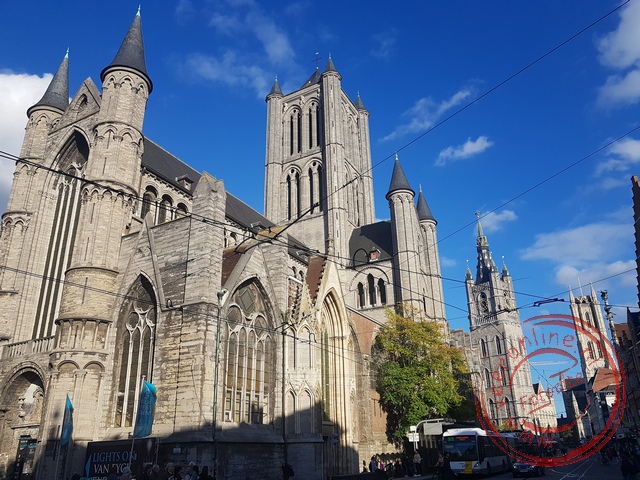
Dag 2 - Saturday, 16 October 2021Last night, mosquitoes buzzed through the room. The irritating sound kept us awake. Last evening, we had left the skylight slightly open. Even though we sleep on the third floor of the monastery, a few mosquitoes still managed to get in. Breakfast is served on the ground floor. In the beautiful old monastery hall, a breakfast buffet is laid out. It is busy. Almost all tables are occupied. Fortunately, there is still one left for us. Due to the long line at the coffee machine, we decide to take our second cup of coffee back in the room. There is a good machine there with coffee pods. At half past nine, we walk into Ghent. We roughly follow a city walking route, reading the explanations for the buildings along the way. A fun way to discover the city. First, we come across Saint Michael’s Church. This used to be the church of the brewers, a large and wealthy guild. The church is also the largest in the city, though not the tallest. Originally, there were plans for a 124-meter-high church tower. However, because of its location right on the Leie River, the ground was too weak. The 24-meter-high flat tower was all that was possible. The church is closed in the morning. From the Saint Michael’s Bridge, we see the three towers of Ghent all in one view: the Saint Nicholas Church tower, the Belfry, and the tower of Saint Bavo Cathedral. Slowly, life in the city is starting to pick up. There are not many tourists yet. We follow the quay of the Leie. Next to Saint Michael’s Church stands the Pand. From the waterside, the building looks dilapidated, but on the other side, it is fully restored. The building has had many functions but is now used by Ghent University. In the Veldstraat, a shopping street, we pass two grand townhouses: House Arnold Vander Haeghen and the Hotel d’Hane-Steenhuyse.
They will be open for viewing later this afternoon. Maybe we’ll have time for that? Via the impressive neoclassical old courthouse, we arrive at the Book Tower. A colossal concrete tower. It’s not really beautiful, but the tower is the symbol of Ghent University. The nearby Saint Peter’s Church, however, is beautiful. The original Romanesque Our Lady Saint Peter’s Church was built in the 12th-13th centuries. Around 1650, it was rebuilt in Baroque style. The adjacent Saint Peter’s Abbey is a former Benedictine abbey founded in the 7th century by Saint Amandus. We check in at the reception. We have reserved an Alison audio tour in the abbey. The monk Alison takes us through the monastery. The tour also passes the organ in Saint Peter’s Church. A guard accompanies us to open the doors. The view from the church balcony is magnificent. The route continues through the monastery, the cellar, the garden, and the attic. Up stairs and down stairs. At the library, we encounter a closed door and cannot proceed. A new exhibition is being set up, which opens on the 22nd. They call for us. A security guard rushes over to guide us past the exhibited items. The exhibition is in the refectory, the former monastery dining hall. The tall, wooden, historic semi-circular ceiling is beautifully painted. Unfortunately, we can only stay briefly, and photography is not allowed. On the other side of the hall, the guard shows us out and quickly closes the door behind us. The route ends in the attic.

Between the beams, we walk above the historic ceiling of the refectory hall. Perhaps the audio tour was a bit long at times, but the route through the monastery was very special. We walk back to the city center. At ‘Voorbij’, now the arts and culture center, we have a drink. The adjacent modern library, the Krook, forms the boundary between the historic center to the north and the arts district to the south. Via the Geeraard de Duivelsteen, the 14th-century fortress, and Saint Bavo Cathedral, we arrive at the Belfry. The Belfry used to be the watchtower. The 95-meter-high tower was built around 1313. In emergencies, the alarm bell was rung. A replica of the original bell, the Klokke Roelof, stands on the square next to the Belfry. The originally wooden spire was repeatedly replaced and adapted. At the top, a fire-breathing dragon serves as a weather vane. We climb the Belfry to the first platform. From there, there is a lift—very convenient. When the lift stops, we step out. Only when the doors close do we realize we are on the second platform, not the top. We take the spiral staircase to the upper platform. Here stands the drum that controls the carillon. We also arrive at the walkway. Far below lies Ghent. We look at the city in all directions. We recognize many buildings from our morning tour. The city looks beautiful in the sunshine. We also see the Gravensteen castle, our next destination. The Gravensteen is a fortified water castle. It is the only remaining medieval castle in Flanders and has an almost intact defense system. The Counts of Flanders chose this location on the branches of the Leie River. The current form dates back to the ninth century when a defensive work existed here.

It was continually expanded. After a fire, Count Philip of Alsace decided to build the current castle. The castle was not only to keep enemies out but also to protect the counts during popular uprisings. The citizens of Ghent have tried several times to storm the castle, often during protests against high taxes. In the afternoon, we return to the d’Hane-Steenhuyse townhouse. We are warmly welcomed. The residence is beautiful inside. Especially the high ballroom is remarkable. The hall is two stories tall. The ceiling is beautifully painted. Entrance is free, but a voluntary donation is requested. This is tricky as we don’t have any small change. We gather some coins to still give something. At the Korenmarkt, we want to order a drink. It is Saturday afternoon and the weather is nice, so many people want to do the same. All tables seem occupied. A young man who sees us looking indicates that they are leaving. Quickly, we take over the table. We watch the passing people, a mixture of tourists and local shoppers. We end the day on the north side of the center. We walk a bit through the graffiti alley—a small lane where graffiti is legally allowed. A colorful crowd. On the corner stands the town hall, a building combining two architectural styles. We wonder which is nicer. We both choose the Gothic side. Saint Jacob’s Church stands near the Friday Market. On this spot, the first wooden church was built in 1093, dedicated to Saint James. On the square where we ate yesterday, the Toreken building and the trade union house ‘Ons Huis’ stand out. In the Patershol district, behind the Gravensteen, there should be restaurants. We find some, but not the expected coziness. We return to the Korenlei. On one of the heated terraces, we take a seat. Probably among many other tourists, but this area has the atmosphere. Outside, darkness slowly falls.
 Belgium
  Goods were previously transported over the water of the Leie
 Hotel dHaneSteenhuyse is an 18thcentury city palace
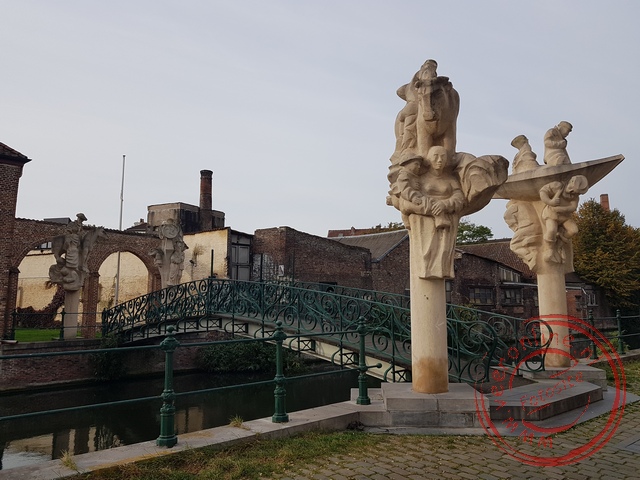 The Emperor Charles Bridge or Bridge of Imperial Pleasures
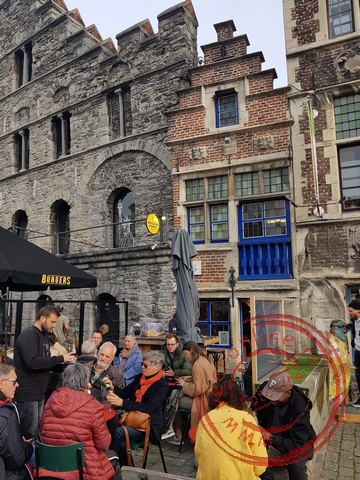 The narrowest house in Ghent is located at the Graslei
Travelogue City Trip Ghent
Dag 2 | Belgium > The Castle of the Counts (Gravensteen)
Dag 3 | Belgium > By boat through Ghent