
154 countries
(and areas)
 - Belize
- Benin
- Bhutan
- Bolivia
- Bonaire
- Bosnia and Herzegovina
- Botswana
- Brazil
- British Virgin Islands
- Brunei
- Bulgaria
- Cambodia
- Canada
- Cape Verde
- Chile
- China
- Costa Rica
- Croatia
- Cuba
- Curacao
- Cyprus
- Czech Republic
- Denmark
- Dominica
- Dominican Republic
- Egypt
- El Salvador
- England
- Estonia
- Eswatini (Swaziland)
- Ethiopia
- Fiji
- Finland
- France
- French Guiana
- Georgia
- Germany
- Gibraltar
- Greece
- Grenada
- Guadeloupe
- Guatemala
- Honduras
- Hong Kong
- Hungary
- Iceland
- India
- Indonesia
- Iran
- Ireland
- Israel
- Italy
- Jamaica
- Japan
- Jordan
- Kazakhstan
- Kenya
- Kosovo
- Kuwait
- Kyrgyzstan
- Laos
- Latvia
- Lebanon
- Lesotho
- Liechtenstein
- Lithuania
- Luxembourg
- Macau
- Madagascar
- Malawi
- Malaysia
- Maldives
- Malta
- Martinique
- Mexico
- Moldova
- Monaco
- Mongolia
- Montenegro
- Morocco
- Mozambique
- Namibia
- Nepal
- Netherlands
- New Zealand
- Nicaragua
- North Macedonia
- Northern Ireland
- Norway
- Oman
- Pakistan
- Palestine
- Peru
- Philippines
- Poland
- Portugal
- Qatar
- Republic of Korea
- Romania
- Russia
- Saint Kitts and Nevis
- Saint Lucia
- Saint Martin
- Saint Vincent and the Grenadines
- San Marino
- São Tomé and Principe
- Saudi Arabia
- Scotland
- Senegal
- Serbia
- Singapore
- Sint Maarten
- Slovakia
- Slovenia
- South Africa
- Spain
- Sri Lanka
- Suriname
- Sweden
- Switzerland
- Tajikistan
- Tanzania
- Thailand
- The Gambia
- Tibet
- Togo
- Transnistria
- Trinidad and Tobago
- Tunisia
- Turkey
- Turkmenistan
- Uganda
- United Arab Emirates
- United States
- Uruguay
- Uzbekistan
- Vatican City
- Vietnam
- Wales
- Zambia
- Zanzibar
- Belize
- Benin
- Bhutan
- Bolivia
- Bonaire
- Bosnia and Herzegovina
- Botswana
- Brazil
- British Virgin Islands
- Brunei
- Bulgaria
- Cambodia
- Canada
- Cape Verde
- Chile
- China
- Costa Rica
- Croatia
- Cuba
- Curacao
- Cyprus
- Czech Republic
- Denmark
- Dominica
- Dominican Republic
- Egypt
- El Salvador
- England
- Estonia
- Eswatini (Swaziland)
- Ethiopia
- Fiji
- Finland
- France
- French Guiana
- Georgia
- Germany
- Gibraltar
- Greece
- Grenada
- Guadeloupe
- Guatemala
- Honduras
- Hong Kong
- Hungary
- Iceland
- India
- Indonesia
- Iran
- Ireland
- Israel
- Italy
- Jamaica
- Japan
- Jordan
- Kazakhstan
- Kenya
- Kosovo
- Kuwait
- Kyrgyzstan
- Laos
- Latvia
- Lebanon
- Lesotho
- Liechtenstein
- Lithuania
- Luxembourg
- Macau
- Madagascar
- Malawi
- Malaysia
- Maldives
- Malta
- Martinique
- Mexico
- Moldova
- Monaco
- Mongolia
- Montenegro
- Morocco
- Mozambique
- Namibia
- Nepal
- Netherlands
- New Zealand
- Nicaragua
- North Macedonia
- Northern Ireland
- Norway
- Oman
- Pakistan
- Palestine
- Peru
- Philippines
- Poland
- Portugal
- Qatar
- Republic of Korea
- Romania
- Russia
- Saint Kitts and Nevis
- Saint Lucia
- Saint Martin
- Saint Vincent and the Grenadines
- San Marino
- São Tomé and Principe
- Saudi Arabia
- Scotland
- Senegal
- Serbia
- Singapore
- Sint Maarten
- Slovakia
- Slovenia
- South Africa
- Spain
- Sri Lanka
- Suriname
- Sweden
- Switzerland
- Tajikistan
- Tanzania
- Thailand
- The Gambia
- Tibet
- Togo
- Transnistria
- Trinidad and Tobago
- Tunisia
- Turkey
- Turkmenistan
- Uganda
- United Arab Emirates
- United States
- Uruguay
- Uzbekistan
- Vatican City
- Vietnam
- Wales
- Zambia
- Zanzibar


Copyright 2004 - 2026
Veeronline.nl Travel Adventures

Home > Belgium > The Historic Battle Around Ypres > Travelogue day 3
Travelogue The Historic Battle Around Ypres
December 1719 2021 (3 days)
Belgium > The Flanders Fields
Dag 3 - Sunday, 19 December 2021This morning’s breakfast is excellent again. The other guests, also from the Netherlands, went on a bike tour yesterday through the Flanders Fields. They strongly recommend visiting Tyne Cot Cemetery, an impressive burial site where many victims of the Battle of Passchendaele lie. After breakfast, we say goodbye to the owner. When he hears that we plan to take a walk at Hill 60 on the former battlefields, he advises us to also visit Palingbeek. To his relief, our walk passes through there. “It’s a very beautiful area,” he adds. Before we go there, we first take a walk around the Verdronken Weide (Drowned Meadow), a nature reserve just outside the Lille Gate. This area serves as a reservoir during high water. The marshy landscape provides space for special birds.
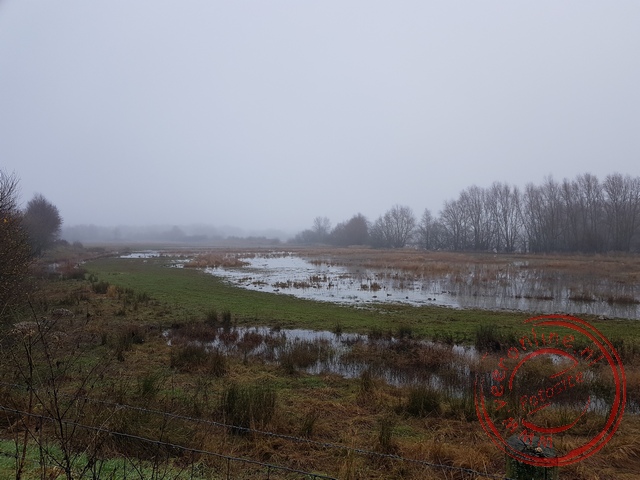
It’s hazy. The Lille Gate is reflected in the still water of the city moat. Above the Drowned Meadow, a thin layer of mist hangs, giving nature a special appearance. The walk circles around the reservoir. In some places, the path is muddy. Carefully, we try to avoid the worst mud and especially not slip. After about an hour of walking, we safely return to the car. We head to Palingbeek, where heavy fighting took place more than a hundred years ago. In some places, the trenches were only a few dozen meters apart. At the visitor center, a video plays about the region.
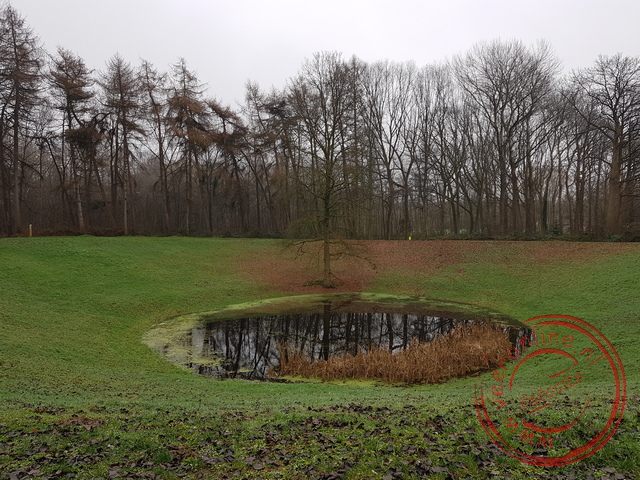
It tells how, in the 19th century, there were attempts to dig a canal from Ypres to boost trade. Due to the loose and marshy soil, these attempts failed repeatedly. The deep ravine later formed a natural front for the advancing Germans. During the war, fierce fighting took place over the Bluff. The strategic hill was repeatedly captured by both forces. Deep craters still show traces of explosions. We continue via the small military cemetery to Hill 60. Red and blue markers stand on either side, indicating the troop lines. Trenches ran to the left and right of the road. Hill 60 was a strategic hill. During the war, the British placed explosives in tunnels under the hill to retake it. The terrain around the hill still shows a collection of small craters.
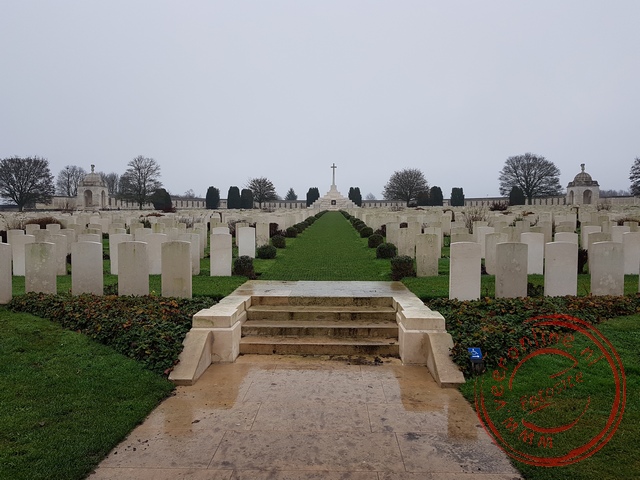
Just on the other side of the railway lies one very large crater. The Caterpillar Crater is over twenty meters in diameter. The crater lake and the tree on its shore now look peaceful. This was not always the case. From here, we walk back to the parking lot at the visitor center. Our final activity is a visit to Tyne Cot Cemetery. The cemetery is near Zonnebeke, just on the other side of Ypres. It is the largest Commonwealth cemetery on the continent. Many victims of the pointless Battle of Passchendaele are buried here. Passing through the entrance gate, we see thousands of white memorial stones. Approximately 12,000 soldiers are buried here. Additionally, 35,000 names of soldiers are listed on the monument. It is an impressive place to walk around and perhaps a fitting place to conclude our weekend in Ypres. Around two o’clock, we set the navigation to the Netherlands and head home again.
 Belgium
 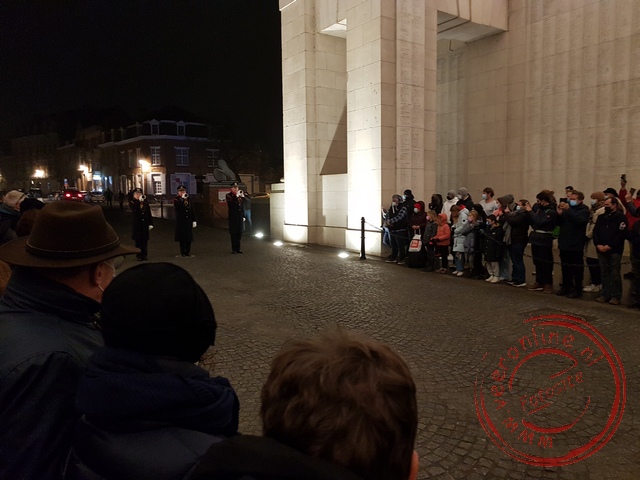 Every evening the Last Post is still played in remembrance of the war victims
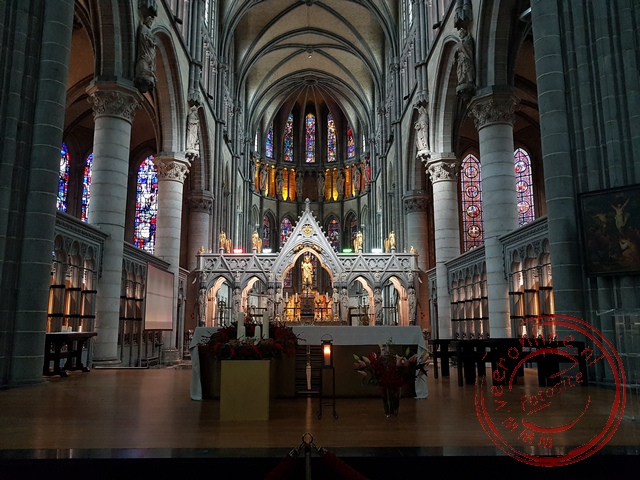 The impressive cathedral of Ypres
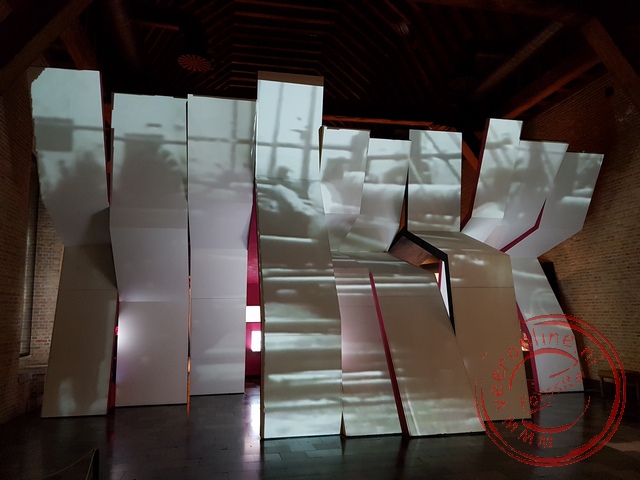 The museum explains the long and difficult struggle around Ypres
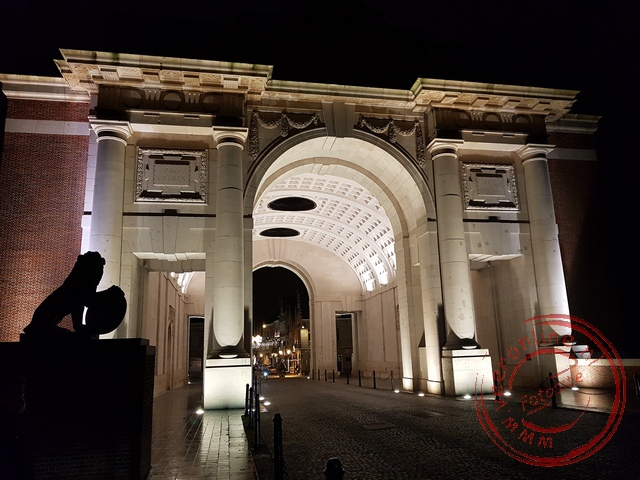 The Menin Gate illuminated in the dark
Travelogue The Historic Battle Around Ypres
Dag 2 | Belgium > The traces of war
Dag 3 | Belgium > The Flanders Fields