
154 countries
(and areas)
 - Azerbaijan
- Bahrain
- Barbados
- Belgium
- Belize
- Benin
- Bhutan
- Bolivia
- Bonaire
- Bosnia and Herzegovina
- Botswana
- Brazil
- British Virgin Islands
- Brunei
- Bulgaria
- Cambodia
- Canada
- Cape Verde
- Chile
- China
- Costa Rica
- Croatia
- Cuba
- Curacao
- Cyprus
- Czech Republic
- Denmark
- Dominica
- Dominican Republic
- Egypt
- El Salvador
- England
- Estonia
- Eswatini (Swaziland)
- Ethiopia
- Fiji
- Finland
- France
- French Guiana
- Georgia
- Germany
- Gibraltar
- Greece
- Grenada
- Guadeloupe
- Guatemala
- Honduras
- Hong Kong
- Hungary
- Iceland
- India
- Indonesia
- Iran
- Ireland
- Israel
- Italy
- Jamaica
- Japan
- Jordan
- Kazakhstan
- Kenya
- Kosovo
- Kuwait
- Kyrgyzstan
- Laos
- Latvia
- Lebanon
- Lesotho
- Liechtenstein
- Lithuania
- Luxembourg
- Macau
- Madagascar
- Malawi
- Malaysia
- Maldives
- Malta
- Martinique
- Mexico
- Moldova
- Monaco
- Mongolia
- Montenegro
- Morocco
- Mozambique
- Namibia
- Nepal
- Netherlands
- New Zealand
- Nicaragua
- North Macedonia
- Northern Ireland
- Norway
- Oman
- Pakistan
- Palestine
- Peru
- Philippines
- Poland
- Portugal
- Qatar
- Republic of Korea
- Romania
- Russia
- Saint Kitts and Nevis
- Saint Lucia
- Saint Martin
- Saint Vincent and the Grenadines
- San Marino
- São Tomé and Principe
- Saudi Arabia
- Scotland
- Senegal
- Serbia
- Singapore
- Sint Maarten
- Slovakia
- Slovenia
- South Africa
- Spain
- Sri Lanka
- Suriname
- Sweden
- Switzerland
- Tajikistan
- Tanzania
- Thailand
- The Gambia
- Tibet
- Togo
- Transnistria
- Trinidad and Tobago
- Tunisia
- Turkey
- Turkmenistan
- Uganda
- United Arab Emirates
- United States
- Uruguay
- Uzbekistan
- Vatican City
- Vietnam
- Wales
- Zambia
- Zanzibar
- Azerbaijan
- Bahrain
- Barbados
- Belgium
- Belize
- Benin
- Bhutan
- Bolivia
- Bonaire
- Bosnia and Herzegovina
- Botswana
- Brazil
- British Virgin Islands
- Brunei
- Bulgaria
- Cambodia
- Canada
- Cape Verde
- Chile
- China
- Costa Rica
- Croatia
- Cuba
- Curacao
- Cyprus
- Czech Republic
- Denmark
- Dominica
- Dominican Republic
- Egypt
- El Salvador
- England
- Estonia
- Eswatini (Swaziland)
- Ethiopia
- Fiji
- Finland
- France
- French Guiana
- Georgia
- Germany
- Gibraltar
- Greece
- Grenada
- Guadeloupe
- Guatemala
- Honduras
- Hong Kong
- Hungary
- Iceland
- India
- Indonesia
- Iran
- Ireland
- Israel
- Italy
- Jamaica
- Japan
- Jordan
- Kazakhstan
- Kenya
- Kosovo
- Kuwait
- Kyrgyzstan
- Laos
- Latvia
- Lebanon
- Lesotho
- Liechtenstein
- Lithuania
- Luxembourg
- Macau
- Madagascar
- Malawi
- Malaysia
- Maldives
- Malta
- Martinique
- Mexico
- Moldova
- Monaco
- Mongolia
- Montenegro
- Morocco
- Mozambique
- Namibia
- Nepal
- Netherlands
- New Zealand
- Nicaragua
- North Macedonia
- Northern Ireland
- Norway
- Oman
- Pakistan
- Palestine
- Peru
- Philippines
- Poland
- Portugal
- Qatar
- Republic of Korea
- Romania
- Russia
- Saint Kitts and Nevis
- Saint Lucia
- Saint Martin
- Saint Vincent and the Grenadines
- San Marino
- São Tomé and Principe
- Saudi Arabia
- Scotland
- Senegal
- Serbia
- Singapore
- Sint Maarten
- Slovakia
- Slovenia
- South Africa
- Spain
- Sri Lanka
- Suriname
- Sweden
- Switzerland
- Tajikistan
- Tanzania
- Thailand
- The Gambia
- Tibet
- Togo
- Transnistria
- Trinidad and Tobago
- Tunisia
- Turkey
- Turkmenistan
- Uganda
- United Arab Emirates
- United States
- Uruguay
- Uzbekistan
- Vatican City
- Vietnam
- Wales
- Zambia
- Zanzibar


Copyright 2004 - 2026
Veeronline.nl Travel Adventures
Home > Indonesia > Indonesia Sumatra Java and Bali > Travelogue day 24
Travelogue Indonesia Sumatra Java and Bali
May 6 June 4 2015 (30 days)
Indonesia > The dolphins let us down
Dag 24 - Friday, May 29, 2015At six o’clock, I meet Robert again on the beach. The sun hasn’t risen yet, but a glow is already spreading over the sea. I help Robert and the skipper push the fishing boat into the water. I get in to go dolphin spotting. I’ve already heard from fellow travelers who went yesterday that it’s quite a touristy situation. After about twenty minutes of sailing, we arrive at the dolphin-spotting area, where I already count more than fifty boats. The sea is rough due to a strong wind, creating whitecaps on the water. I hope to see a dolphin with each wave—but unfortunately, I don’t. Sometimes one of the creatures pokes its head above water, and all the boats immediately speed toward that spot. This game repeats every time a dolphin appears elsewhere.

The high-speed chasing poses a risk to the dolphins. My skipper explains that last year, two young dolphins were run over by kamikaze boats. Because of this, the dolphins are cautious around so many boats. Sometimes they come up later in the morning when fewer boats are out. Today, they seem unwilling. Suddenly, my skipper spots dolphins very close. He heads toward them. “They’re in the move,” he apologizes. I see four to five dolphins surfacing near my boat several times. Then it goes quiet again. Other boats give up. We sail back toward Lovina to check the second spot. Here the water is calm. No wind, but also no dolphins. The skipper apologizes for the meager catch. It happens—nature is not a zoo. I head back ashore for breakfast and then prepare for my departure to Munduk. When I go to return my key, I get a surprise: the bill from the night before last is still open, even though I am 100% sure I paid it. A restaurant staff member insists it hasn’t been paid. After a while, the manager is contacted, and the bill is torn up. Slightly annoyed, I get on the bus. The journey to Munduk is a short leg. Munduk is high in the mountains and often shrouded in clouds. My new accommodation sits beautifully atop the mountainside. From the balcony of my bungalow, I look down into the valley. In the distance, I can see the sea near Lovina. In the afternoon, I follow Darma for a walk around the area.
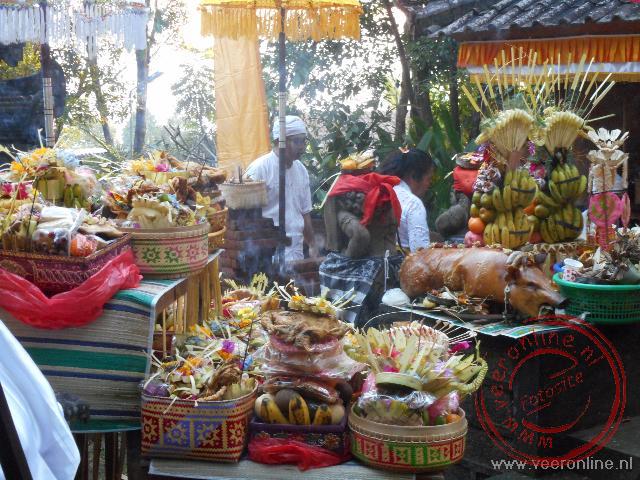
A fast group and a slower group are supposed to be formed, but everyone wants to be in the first group. The split is decided simply: the first ten in the first group, the rest in the second. Both groups end up walking at roughly the same pace. Darma guides me along narrow paths beside the irrigation canals. Sometimes the path climbs steeply, then goes down again. The scenery is beautiful. Along the way, Darma explains the plants, trees, and fruits along the path. I start recognizing cacao, nutmeg, and papaya myself. After a steep descent, we reach the rice fields. I cross a narrow dam, walking between the fields. Balinese rice grows abundantly in the fields. The Balinese variety grows taller than the Javanese one. Women use sticks to try to keep birds out of the crops—an almost impossible task. At a small stream, I have to cross by stepping carefully from stone to stone. The stones are slippery, but I safely reach the other side. Further on, there’s a watermill. The water powers a dynamo, providing electricity. From here, a small water channel runs along the rice fields. I follow the path beside the channel. At each field, the channel sits slightly lower, and water is regulated into the fields through small sluices. I follow the path all the way down. Then I have to climb up the other side to reach my bungalow—a steep ascent. Exhausted, I arrive back at the lodge and thank Darma. I’m just in time for a special ceremony at the temple near the hotel. Today marks the birthday of the Hindu temple. Various offerings are made, including a lot of food and a whole pig. Music is played as well. In the evening, I dine at a restaurant just outside the lodge. I order spring rolls as a starter and several kinds of satay skewers for the main meal. An excellent choice.
 Indonesia
  The scooter is also a favorite mode of transport at the bird market
 The old carrying chair of the Sultan is no longer used
 Due to hazy weather the volcanoes are barely visible
 Numerous birds and other animals are sold at the bird market
Travelogue Indonesia Sumatra Java and Bali
Dag 2 | Indonesia > Rain in Tangkahan
Dag 3 | Indonesia > Leeches in the forest
Dag 4 | Indonesia > Washing elephants
Dag 5 | Indonesia > Face to face with an orangutan
Dag 6 | Indonesia > From Bukit Lawang to Berastagi
Dag 7 | Indonesia > On the way to Lake Toba
Dag 8 | Indonesia > The habitat of the Batak tribes
Dag 9 | Indonesia > Caught in a rain shower
Dag 10 | Indonesia > The local market of Balige
Dag 11 | Indonesia > Travel day to Bukittinggi
Dag 12 | Indonesia > Walking through the Karbouwengat
Dag 13 | Indonesia > Flying to Java
Dag 14 | Indonesia > To the Kraton in Yogyakarta
Dag 15 | Indonesia > At the Borobudur
Dag 16 | Indonesia > Prambanan: Temple of Shiva
Dag 17 | Indonesia > Old times relive at Toko Oen
Dag 18 | Indonesia > Climbing the Bromo
Dag 19 | Indonesia > Sunrise at Bromo
Dag 20 | Indonesia > Walking among the plantations
Dag 21 | Indonesia > On the way to Ketapang
Dag 22 | Indonesia > Sulfur carriers on Ijen Volcano
Dag 23 | Indonesia > Snorkeling in Bali
Dag 24 | Indonesia > The dolphins let us down
Dag 25 | Indonesia > Traditional dance in Ubud
Dag 26 | Indonesia > Mountain biking from the volcano
Dag 27 | Indonesia > Touristy Sanur
Dag 28 | Indonesia > The beach of Sanur
Dag 29 | Indonesia > Farewell to Indonesia
Dag 30 | Indonesia > Return flight home