
154 countries
(and areas)
 - Belize
- Benin
- Bhutan
- Bolivia
- Bonaire
- Bosnia and Herzegovina
- Botswana
- Brazil
- British Virgin Islands
- Brunei
- Bulgaria
- Cambodia
- Canada
- Cape Verde
- Chile
- China
- Costa Rica
- Croatia
- Cuba
- Curacao
- Cyprus
- Czech Republic
- Denmark
- Dominica
- Dominican Republic
- Egypt
- El Salvador
- England
- Estonia
- Eswatini (Swaziland)
- Ethiopia
- Fiji
- Finland
- France
- French Guiana
- Georgia
- Germany
- Gibraltar
- Greece
- Grenada
- Guadeloupe
- Guatemala
- Honduras
- Hong Kong
- Hungary
- Iceland
- India
- Indonesia
- Iran
- Ireland
- Israel
- Italy
- Jamaica
- Japan
- Jordan
- Kazakhstan
- Kenya
- Kosovo
- Kuwait
- Kyrgyzstan
- Laos
- Latvia
- Lebanon
- Lesotho
- Liechtenstein
- Lithuania
- Luxembourg
- Macau
- Madagascar
- Malawi
- Malaysia
- Maldives
- Malta
- Martinique
- Mexico
- Moldova
- Monaco
- Mongolia
- Montenegro
- Morocco
- Mozambique
- Namibia
- Nepal
- Netherlands
- New Zealand
- Nicaragua
- North Macedonia
- Northern Ireland
- Norway
- Oman
- Pakistan
- Palestine
- Peru
- Philippines
- Poland
- Portugal
- Qatar
- Republic of Korea
- Romania
- Russia
- Saint Kitts and Nevis
- Saint Lucia
- Saint Martin
- Saint Vincent and the Grenadines
- San Marino
- São Tomé and Principe
- Saudi Arabia
- Scotland
- Senegal
- Serbia
- Singapore
- Sint Maarten
- Slovakia
- Slovenia
- South Africa
- Spain
- Sri Lanka
- Suriname
- Sweden
- Switzerland
- Tajikistan
- Tanzania
- Thailand
- The Gambia
- Tibet
- Togo
- Transnistria
- Trinidad and Tobago
- Tunisia
- Turkey
- Turkmenistan
- Uganda
- United Arab Emirates
- United States
- Uruguay
- Uzbekistan
- Vatican City
- Vietnam
- Wales
- Zambia
- Zanzibar
- Belize
- Benin
- Bhutan
- Bolivia
- Bonaire
- Bosnia and Herzegovina
- Botswana
- Brazil
- British Virgin Islands
- Brunei
- Bulgaria
- Cambodia
- Canada
- Cape Verde
- Chile
- China
- Costa Rica
- Croatia
- Cuba
- Curacao
- Cyprus
- Czech Republic
- Denmark
- Dominica
- Dominican Republic
- Egypt
- El Salvador
- England
- Estonia
- Eswatini (Swaziland)
- Ethiopia
- Fiji
- Finland
- France
- French Guiana
- Georgia
- Germany
- Gibraltar
- Greece
- Grenada
- Guadeloupe
- Guatemala
- Honduras
- Hong Kong
- Hungary
- Iceland
- India
- Indonesia
- Iran
- Ireland
- Israel
- Italy
- Jamaica
- Japan
- Jordan
- Kazakhstan
- Kenya
- Kosovo
- Kuwait
- Kyrgyzstan
- Laos
- Latvia
- Lebanon
- Lesotho
- Liechtenstein
- Lithuania
- Luxembourg
- Macau
- Madagascar
- Malawi
- Malaysia
- Maldives
- Malta
- Martinique
- Mexico
- Moldova
- Monaco
- Mongolia
- Montenegro
- Morocco
- Mozambique
- Namibia
- Nepal
- Netherlands
- New Zealand
- Nicaragua
- North Macedonia
- Northern Ireland
- Norway
- Oman
- Pakistan
- Palestine
- Peru
- Philippines
- Poland
- Portugal
- Qatar
- Republic of Korea
- Romania
- Russia
- Saint Kitts and Nevis
- Saint Lucia
- Saint Martin
- Saint Vincent and the Grenadines
- San Marino
- São Tomé and Principe
- Saudi Arabia
- Scotland
- Senegal
- Serbia
- Singapore
- Sint Maarten
- Slovakia
- Slovenia
- South Africa
- Spain
- Sri Lanka
- Suriname
- Sweden
- Switzerland
- Tajikistan
- Tanzania
- Thailand
- The Gambia
- Tibet
- Togo
- Transnistria
- Trinidad and Tobago
- Tunisia
- Turkey
- Turkmenistan
- Uganda
- United Arab Emirates
- United States
- Uruguay
- Uzbekistan
- Vatican City
- Vietnam
- Wales
- Zambia
- Zanzibar


Copyright 2004 - 2026
Veeronline.nl Travel Adventures

Home > Kuwait > Qatar Bahrain and Kuwait > Travelogue day 10
Travelogue Qatar Bahrain and Kuwait
January 314 2025 (12 days)
Kuwait > The consequences of the Iraq War
Dag 10 - Sunday, January 12, 2025I wake up in Kuwait City. In the hotel’s basement, a breakfast buffet is ready. This is not included in the hotel price, but it’s convenient to start the day with. After breakfast, I walk into the Al-Mubarakiya souq. Most shops are still closed, and the streets are being cleaned. I continue walking until I reach the modern Safat Square. Around the fountain, there is a sort of arena. At the bottom is a passageway under the busy highway. On the other side, I stand at the foot of the 372-meter-high Liberation Tower. Construction started in the late 1980s but was halted during the Iraqi invasion in 1991. This invasion led to the Gulf War, which resulted in the country’s liberation. At 10:30, I’m back at my hotel. I’m picked up for an excursion. The driver sends me a message that he is a little late. Shortly after, I meet Ahmed. I had originally planned to travel today with a rental car, but I gave up on that. The busy traffic didn’t appeal to me. Now that I’m in the city, I’m glad I made that choice. We drive south out of the city to the Al-Qurain Martyrs Museum. During the Iraqi invasion, a group of young Kuwaiti men planned a counterattack. At that moment, Iraqi troops were in front of the house. It was fight or be arrested. A firefight followed, during which the Iraqi army shelled the house. Six fighters died immediately; seven others were captured and executed. But six Kuwaitis managed to escape. The damaged house is now a museum telling the story of these ‘martyrs.’ It feels strange to walk through the house where every room has large holes in the walls.
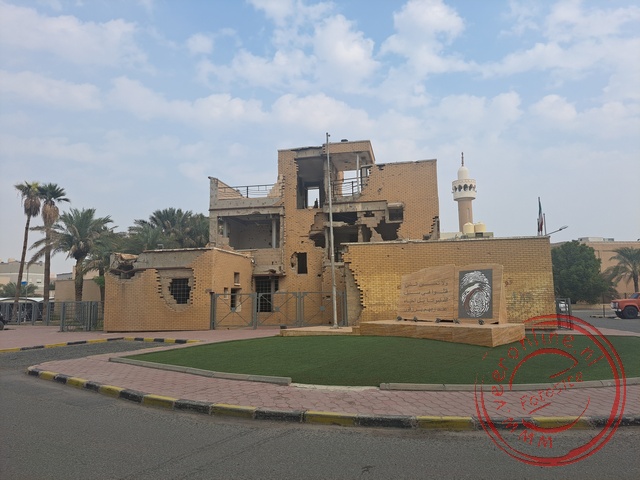
Fortunately, the building is supported by steel beams. Apart from the story and photos of the fighters, the museum doesn’t offer much else. Outside stand the vehicles that were parked there at the time and were damaged. Across the street is a Russian T55 tank, which the Iraqis used to bombard the house. A few days after the attack, the Iraqis had to withdraw. During their retreat, they blew up many oil installations. Large burning flames remained in the desert. The Ahmad Al-Jaber Oil & Gas Exhibition shows how oil is discovered and pumped, but also how they recovered from the Gulf War. Ahmed, my driver, has never been here before and joins me inside. That’s a good thing; otherwise, I would have had a private tour. The explanation begins with how oil and gas originated millions of years ago from, among other things, plankton. In the early 20th century, oil was mainly found because it was pushed to the surface by earth cracks. Later, oil fields could be detected better using shock and sound waves. All oil production in Kuwait is controlled by the Kuwait Oil Company (KOC), a government agency. The quality of the oil varies per field. The thicker the oil, the harder it is to process. Kuwait produces 3 million barrels per day. In a large container, an amount of water is poured that corresponds to the amount of oil produced every second—an impressive amount.
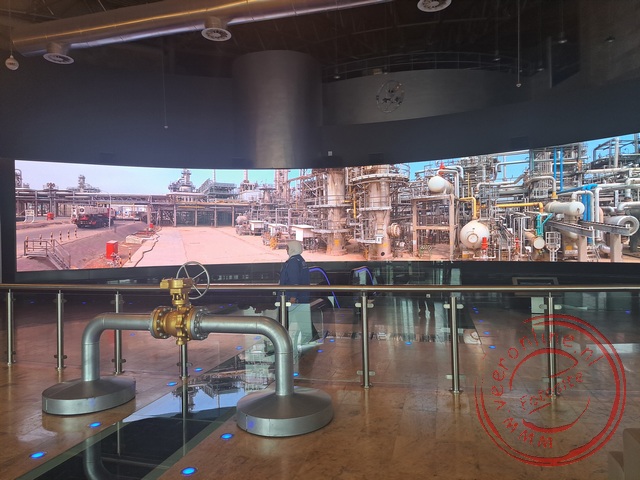
The tour ends with a film about the aftermath of the Gulf War. After Kuwait regained its freedom, 613 oil installations were on fire. The guide cynically calls it a ‘souvenir’ from Iraq. Thick black smoke spread through the desert. Because of the intense heat, the fires were difficult to extinguish. With foreign support, all oil wells were extinguished within nine months after the war ended. A risky but successful job. It took three years before most installations were back in operation. Impressed by the story, I thank the guide. Funny enough, there’s a Starbucks in the building. I order coffee and a sandwich. When we drive back to Kuwait City, we follow the coastline. We stop at a replica of an old wooden sailing ship. The ship serves as a restaurant. Even the stern of the 17th-century ship is used for dining. The view of the Kuwait skyline is limited. Due to sea mist, it’s hazy, and the towers are barely visible. Ahmed really doesn’t know what he’s seeing. There’s usually a clear view of the skyline, but not today, he sighs. A little further, we stop again. Ahmed orders sweet corn for me.
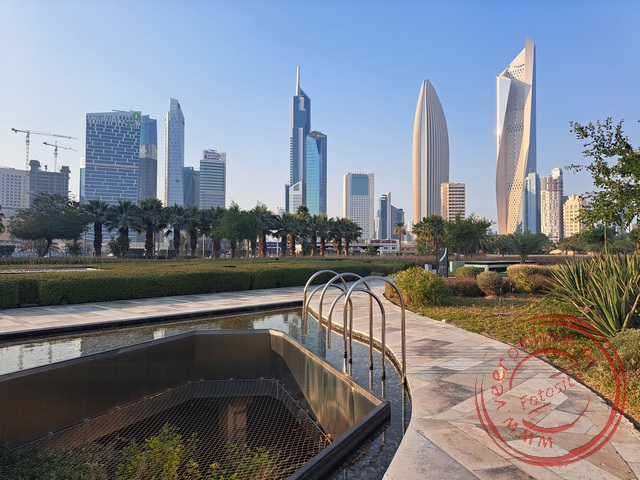
We are at the marina. Again, he apologizes for the limited view. As an alternative, we cross the road via a covered pedestrian bridge and enter a shopping mall. It seems that perfume sellers dominate every mall. Here, too, they try to sell fragrances. As the last stop of the day, we visit Al Saheed Park. This park runs like a green belt through the city and was neglected a few years ago but has been fully restored. The car is parked in the garage under the park. Above ground, I enter a neatly landscaped park with well-maintained flowerbeds, water features, and walking paths. At the end of the afternoon, Ahmed brings me back to the Oasis Hotel. For dinner, he gives me a recommendation: the Freej Swaeleh restaurant in the Al-Mubarakiya souq. When it gets dark, I walk there. It is indeed a nice and atmospheric restaurant. It is noticeable that several people dine alone. I suppose many people stay in Kuwait for work. I order a traditional Mutabaq Zubaidi. The waiter emphasizes that this is a good choice. While I eat the fish with spiced rice, the table next to me already had two rounds of guests. Everyone comes here to eat quickly. And I really don’t sit long at the table. After dinner, I walk back toward my hotel via Safat Square. I’m glad I wore my sweater. There is a fresh wind coming from the sea.
 Kuwait
 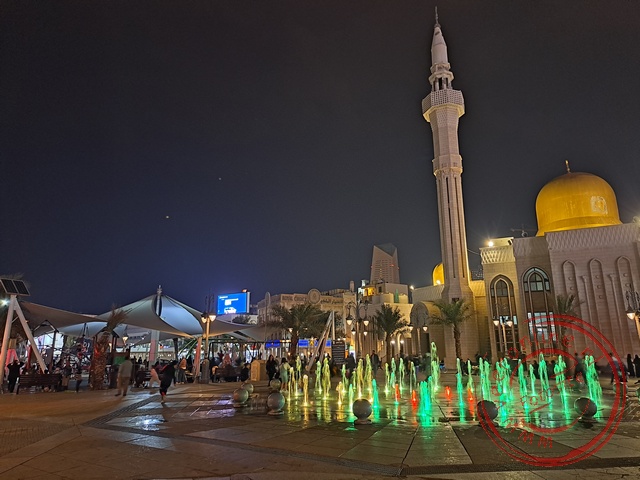 The colorful fountain in front of the mosque
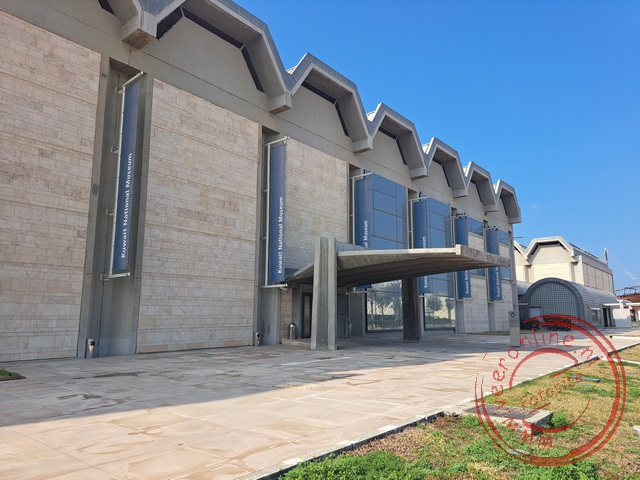 The National Museum of Kuwait
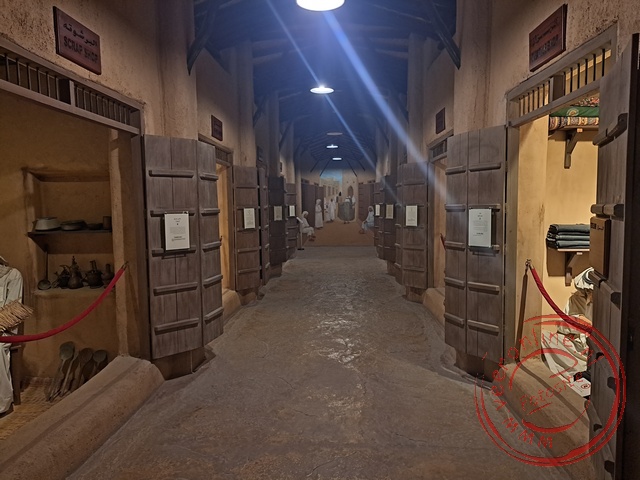 Life in Kuwait depicted in the National Museum
 United Arab Emirates
 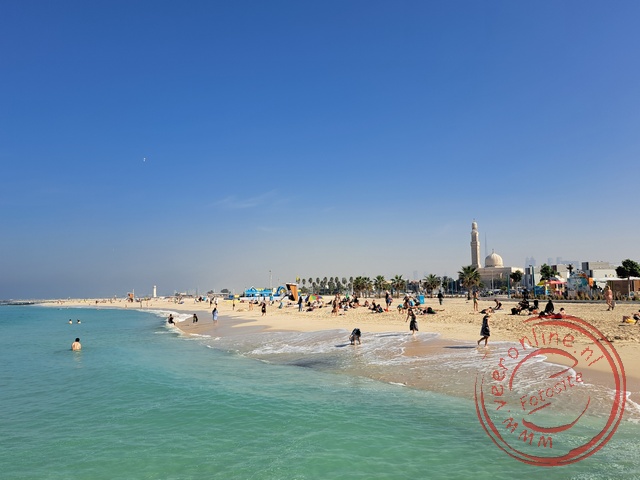 Kite Beach in Dubai
Travelogue Qatar Bahrain and Kuwait
Dag 2 | United Arab Emirates > On board the MSC Euribia
Dag 3 | Qatar > Cycling through Doha
Dag 4 | Bahrain > The Bahrain F1 Circuit
Dag 5 | United Arab Emirates > A day on board
Dag 6 | United Arab Emirates > The Abu Dhabi Mosque
Dag 7 | United Arab Emirates > Safari on Sir Bani Yas
Dag 8 | United Arab Emirates > Cycling to the Burj al Arab
Dag 9 | Kuwait > Flight to Kuwait
Dag 10 | Kuwait > The consequences of the Iraq War
Dag 11 | Kuwait > Tour of Kuwait City
Dag 12 | Kuwait > Via Dubai back home