
154 countries
(and areas)
 - Belize
- Benin
- Bhutan
- Bolivia
- Bonaire
- Bosnia and Herzegovina
- Botswana
- Brazil
- British Virgin Islands
- Brunei
- Bulgaria
- Cambodia
- Canada
- Cape Verde
- Chile
- China
- Costa Rica
- Croatia
- Cuba
- Curacao
- Cyprus
- Czech Republic
- Denmark
- Dominica
- Dominican Republic
- Egypt
- El Salvador
- England
- Estonia
- Eswatini (Swaziland)
- Ethiopia
- Fiji
- Finland
- France
- French Guiana
- Georgia
- Germany
- Gibraltar
- Greece
- Grenada
- Guadeloupe
- Guatemala
- Honduras
- Hong Kong
- Hungary
- Iceland
- India
- Indonesia
- Iran
- Ireland
- Israel
- Italy
- Jamaica
- Japan
- Jordan
- Kazakhstan
- Kenya
- Kosovo
- Kuwait
- Kyrgyzstan
- Laos
- Latvia
- Lebanon
- Lesotho
- Liechtenstein
- Lithuania
- Luxembourg
- Macau
- Madagascar
- Malawi
- Malaysia
- Maldives
- Malta
- Martinique
- Mexico
- Moldova
- Monaco
- Mongolia
- Montenegro
- Morocco
- Mozambique
- Namibia
- Nepal
- Netherlands
- New Zealand
- Nicaragua
- North Macedonia
- Northern Ireland
- Norway
- Oman
- Pakistan
- Palestine
- Peru
- Philippines
- Poland
- Portugal
- Qatar
- Republic of Korea
- Romania
- Russia
- Saint Kitts and Nevis
- Saint Lucia
- Saint Martin
- Saint Vincent and the Grenadines
- San Marino
- São Tomé and Principe
- Saudi Arabia
- Scotland
- Senegal
- Serbia
- Singapore
- Sint Maarten
- Slovakia
- Slovenia
- South Africa
- Spain
- Sri Lanka
- Suriname
- Sweden
- Switzerland
- Tajikistan
- Tanzania
- Thailand
- The Gambia
- Tibet
- Togo
- Transnistria
- Trinidad and Tobago
- Tunisia
- Turkey
- Turkmenistan
- Uganda
- United Arab Emirates
- United States
- Uruguay
- Uzbekistan
- Vatican City
- Vietnam
- Wales
- Zambia
- Zanzibar
- Belize
- Benin
- Bhutan
- Bolivia
- Bonaire
- Bosnia and Herzegovina
- Botswana
- Brazil
- British Virgin Islands
- Brunei
- Bulgaria
- Cambodia
- Canada
- Cape Verde
- Chile
- China
- Costa Rica
- Croatia
- Cuba
- Curacao
- Cyprus
- Czech Republic
- Denmark
- Dominica
- Dominican Republic
- Egypt
- El Salvador
- England
- Estonia
- Eswatini (Swaziland)
- Ethiopia
- Fiji
- Finland
- France
- French Guiana
- Georgia
- Germany
- Gibraltar
- Greece
- Grenada
- Guadeloupe
- Guatemala
- Honduras
- Hong Kong
- Hungary
- Iceland
- India
- Indonesia
- Iran
- Ireland
- Israel
- Italy
- Jamaica
- Japan
- Jordan
- Kazakhstan
- Kenya
- Kosovo
- Kuwait
- Kyrgyzstan
- Laos
- Latvia
- Lebanon
- Lesotho
- Liechtenstein
- Lithuania
- Luxembourg
- Macau
- Madagascar
- Malawi
- Malaysia
- Maldives
- Malta
- Martinique
- Mexico
- Moldova
- Monaco
- Mongolia
- Montenegro
- Morocco
- Mozambique
- Namibia
- Nepal
- Netherlands
- New Zealand
- Nicaragua
- North Macedonia
- Northern Ireland
- Norway
- Oman
- Pakistan
- Palestine
- Peru
- Philippines
- Poland
- Portugal
- Qatar
- Republic of Korea
- Romania
- Russia
- Saint Kitts and Nevis
- Saint Lucia
- Saint Martin
- Saint Vincent and the Grenadines
- San Marino
- São Tomé and Principe
- Saudi Arabia
- Scotland
- Senegal
- Serbia
- Singapore
- Sint Maarten
- Slovakia
- Slovenia
- South Africa
- Spain
- Sri Lanka
- Suriname
- Sweden
- Switzerland
- Tajikistan
- Tanzania
- Thailand
- The Gambia
- Tibet
- Togo
- Transnistria
- Trinidad and Tobago
- Tunisia
- Turkey
- Turkmenistan
- Uganda
- United Arab Emirates
- United States
- Uruguay
- Uzbekistan
- Vatican City
- Vietnam
- Wales
- Zambia
- Zanzibar


Copyright 2004 - 2026
Veeronline.nl Travel Adventures

Home > Kuwait > Qatar Bahrain and Kuwait > Travelogue day 11
Travelogue Qatar Bahrain and Kuwait
January 314 2025 (12 days)
Kuwait > Tour of Kuwait City
Dag 11 - Monday, January 13, 2025The day starts off chaotic. After breakfast, while getting ready in my room for the excursion, I receive a message from Ahmed. Sorry, sorry, but he overslept. This is not the same Ahmed as yesterday, but a colleague. He’ll be about half an hour late. When I wait in the lobby half an hour later, there’s still no sign of Ahmed. Then I get a photo of a broken-down car. Right after that, Ahmed calls to say something is wrong with the car. He hopes to be with me by 10:30. I decide to take a walk around the hotel and order coffee at ‘Alfred,’ a little coffee shop. Meanwhile, I worry whether I’ll have enough time to visit the mosque. The main reason I booked this tour was so someone could help me get into the mosque. I’d read different stories about this online. The mosque is open in the morning until eleven o’clock. Before it’s 10:30, Ahmed calls again. Sorry, sorry, sorry once more, but the part that needs to be replaced is not available. More delay. He assures me we can visit the mosque this afternoon after 4 p.m. The tour was originally supposed to last until about 2 p.m. I message Ahmed that I’m going to the National Museum Kuwait and ask if he can pick me up there at noon. I wander through the souq and across various parking lots. This seems typical of Kuwait City. Everywhere there are parking spaces with coverings to protect from the summer heat. All the parking lots are practically full. At the museum, I’m greeted warmly. The visit is free. I had hoped to learn more about Kuwait’s history, but the first building shows ancient artifacts. Although it’s a large building, this is just one exhibition room. The second building displays scenes from the daily life of both Bedouins and Arabs. The rest of the museum is closed. It’s not clear whether it’s supposed to open later or if it’s temporarily closed. There doesn’t seem to be much activity indicating it will open. Outside the museum, I read about the country’s history online. Due to its strategic location, Kuwait has always played a role in trade and has often been attacked.
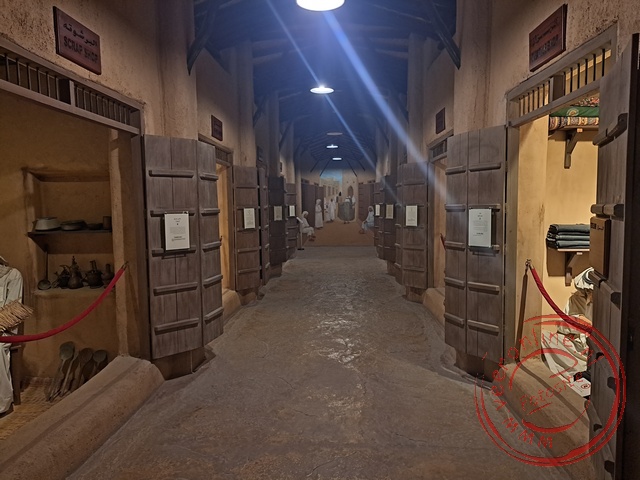
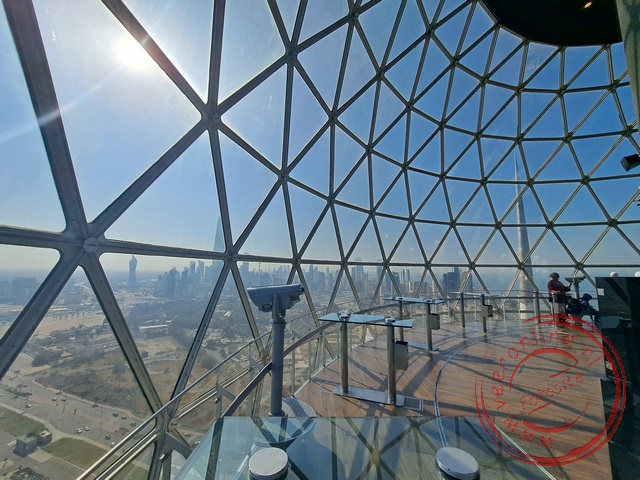
The sometimes difficult relationship with Iraq is also described. At the beginning of the 20th century, Iraq did not accept Kuwait’s borders. In the 1990s, several skirmishes led to the invasion. One was Iraq accusing Kuwait of extracting oil from a field mostly within Iraqi territory. After the museum visit, still no Ahmed. I decide to walk via the Sadu House, a museum showing how people used to live, to the Seif Palace. I cross a pedestrian bridge over the road and find myself at the staff entrance of the palace. I walk along the fence on the front side. The Seif Palace is the working palace of the Prince of Kuwait. Not surprisingly, I’m not allowed to take photos at the gate. I follow the busy road and message Ahmed that I’m heading toward the Grand Mosque. I no longer trust that it will work out or that I’ll have enough time to explore the city. Reaching the mosque is not easy. I have to cross a busy highway with a steady stream of cars on three lanes — twice, because the other direction is also busy. I manage to cross safely. I decide to wait until 12:30 and then continue by taxi. Just as I message Ahmed that I’m cancelling the tour, he calls my name from across the street. Although I’m a bit fed up with the whole situation, it also offers opportunities to see some sights. Judging by the car, it’s no surprise something is wrong. It looks like every corner of the car has been hit at some point. The fender is held on by a screw. The first stop is the Kuwait Towers. The three towers were built in 1979 and symbolize Kuwait’s economic growth. During the Iraq war, the symbol of Kuwait City was heavily damaged. I buy a ticket for the viewing point. I take the elevator up to the platform at 124 meters high. The entire dome is glass, giving a beautiful view over Kuwait and the sea. It takes me a moment to realize the platform is slowly rotating, so the whole city passes by me.
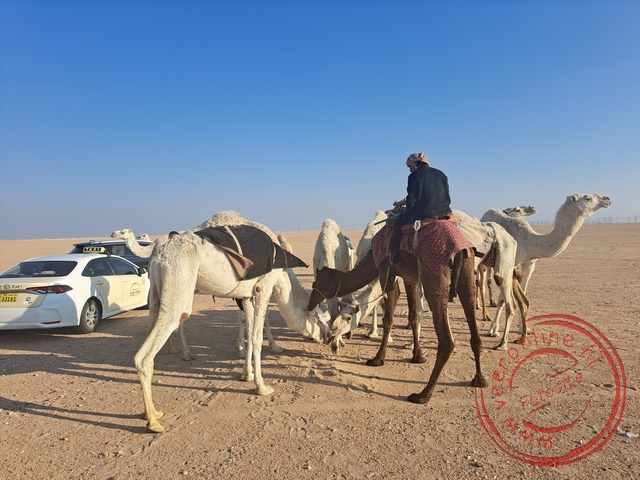
After the towers, Ahmed takes me to the fish market. Traditional dhow boats are moored in the harbor. Fresh fish is displayed in the market hall. There are a few large fish. I try to ignore the strong fishy smell. As we walk back to the car, Ahmed asks if I want to go to the desert. As long as there’s time left for the Grand Mosque, I’m open to any good suggestions. I get the impression he wants to make up for this morning. To get to the desert, we cross the 48-kilometer Sheikh Jaber Al-Ahmad Al-Sabah Causeway. This bridge connects Kuwait to the north. Ahmed explains that they plan to build a city there in the future. From the bridge, there’s a nice view of the Kuwait City skyline. By now, I recognize most skyscrapers and can orient myself. On the other side of the bridge, we pass a large traffic junction. We go straight ahead. A few kilometers later, the broad three-lane road suddenly ends and we drive into the desert sand. Here and there stand nomad caravans. They mostly live here with camels or sheep. Ahmed promises me “fun” and spins the wheel. The car does a 360-degree turn in the sand. He laughs and repeats it several times. Now I understand why the car squeaks and creaks. It looks like we’re driving erratically across the sand, but Ahmed is looking for camels. He brought bread. When we get out, the animals run toward us. Ahmed throws the bread to the animals as they chase after him. He’s careful not to get bitten. That would be because they can’t distinguish his hand from the food. I keep a safe distance, but occasionally the herd comes my way. A funny sight. We drive back to the city via the bridge. The sun is beginning to set.
Two stops remain on the program. I want to see the Avenues Mall, the largest shopping center in Kuwait. With some effort, we find a parking spot and walk inside. The mall stretches for kilometers. Looking left and right, I see all the familiar brands represented. We can’t stay too long because I definitely don’t want to miss the Grand Mosque, one of the highlights of my Kuwait visit. Around five o’clock, we arrive at the mosque. The prayer has just started. The tour can be given after the prayer. Ahmed asks if it’s okay that he goes to pray as well. Fine. Shortly after, I’m already invited for the tour. Shouldn’t I wait for Ahmed? They promise to tell him I’m already inside. I get a private tour. When I enter the mosque, I’m impressed by the beautiful building. There is no prayer happening in this room; the prayer is in the other hall, I’m told. The mosque was built in 1979, continues my guide, who is fully covered in a burqa. It took seven years to build. The mosque is designed in Andalusian style. It rests on four large pillars and has one large dome. The walls are finished with Italian marble and mosaics from Esfahan (Iran). I also get to see the waiting room for important guests. If I want, I can see more rooms. I do want to, but it’s almost six o’clock. I have an appointment at the hotel at 6:30. We quickly return. At the hotel, I say goodbye to Ahmed. I’m glad the tour still happened. Then I quickly go to my room to change. Tonight I have a date with Ayyoob, the man I met earlier during the flight to Kuwait. He wanted to invite me to dinner. While he asks what I’ve done in Kuwait, his driver takes us to a restaurant in AlQurain, about a twenty-minute drive from Kuwait City.

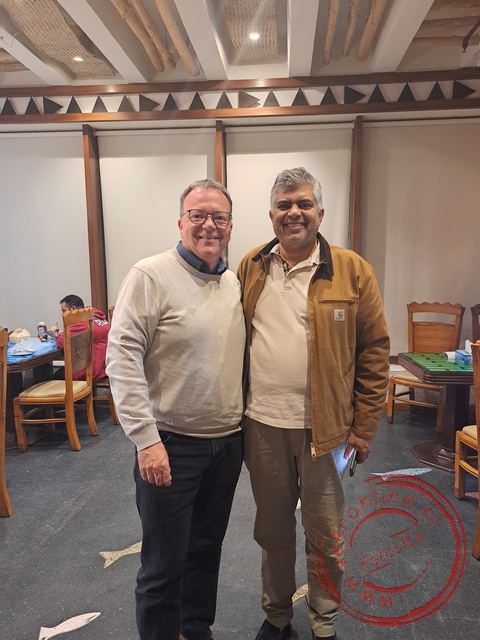
We stop at a traditional restaurant. It turns out to be the same Freej Swaeleh chain where I ate yesterday. Ayyoob orders all kinds of dishes. I have to try a bit of everything. The soup is served in a hollowed-out piece of bread. Very unusual. Ayyoob explains that he is the manager of all the Grand supermarkets in Kuwait. About 3,000 people work for him. The main course is served with a whole ceremony, during which the names “Ronald” and “Holland” are mentioned. The driver records everything on video. Ayyoob watches how I react. I have to try to refuse some things. Do I want extra drinks? More meat? We finish the meal with coffee and sweets. The coffee is also poured in a big ceremony, though I don’t understand a word of it. According to Ayyoob, the waiter spoke very well of me. At nine o’clock, I’m back at the hotel. I say goodbye to Ayyoob with a big hug. We promise to keep in touch. He even walks me inside to ask at reception if I have any outstanding bills. Although I still have to pay for breakfast, it feels good that the receptionist says everything has been paid. In my room, I try to reflect on everything I experienced today — first the adventure with Ahmed and tonight with Ayyoob. One thing is certain: whenever I think of Kuwait, this day will stay with me. With that thought, I go to sleep.
 Kuwait
 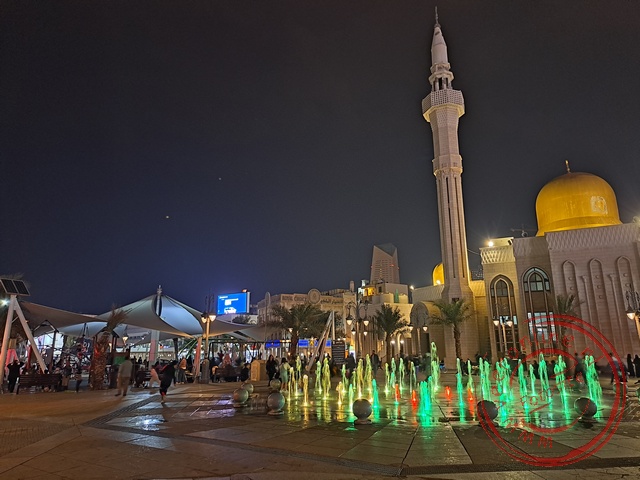 The colorful fountain in front of the mosque
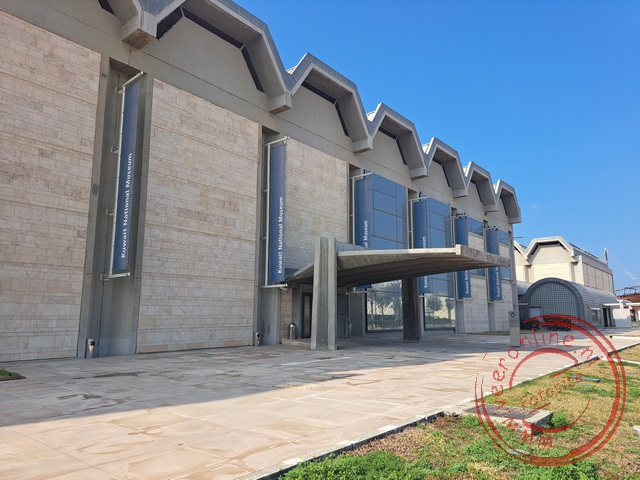 The National Museum of Kuwait
 Life in Kuwait depicted in the National Museum
 United Arab Emirates
 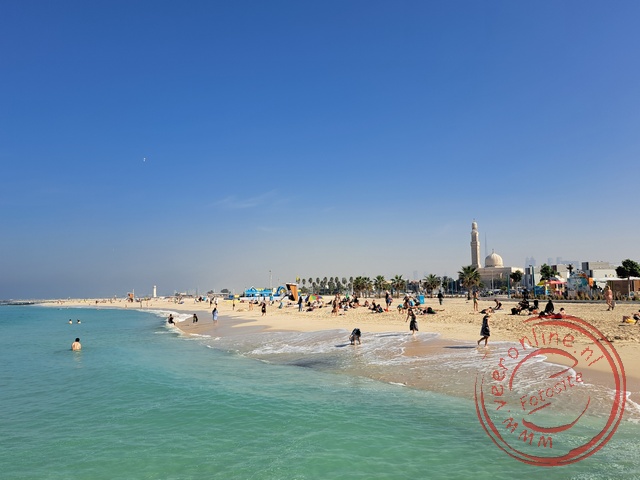 Kite Beach in Dubai
Travelogue Qatar Bahrain and Kuwait
Dag 2 | United Arab Emirates > On board the MSC Euribia
Dag 3 | Qatar > Cycling through Doha
Dag 4 | Bahrain > The Bahrain F1 Circuit
Dag 5 | United Arab Emirates > A day on board
Dag 6 | United Arab Emirates > The Abu Dhabi Mosque
Dag 7 | United Arab Emirates > Safari on Sir Bani Yas
Dag 8 | United Arab Emirates > Cycling to the Burj al Arab
Dag 9 | Kuwait > Flight to Kuwait
Dag 10 | Kuwait > The consequences of the Iraq War
Dag 11 | Kuwait > Tour of Kuwait City
Dag 12 | Kuwait > Via Dubai back home