
154 countries
(and areas)
 - Azerbaijan
- Bahrain
- Barbados
- Belgium
- Belize
- Benin
- Bhutan
- Bolivia
- Bonaire
- Bosnia and Herzegovina
- Botswana
- Brazil
- British Virgin Islands
- Brunei
- Bulgaria
- Cambodia
- Canada
- Cape Verde
- Chile
- China
- Costa Rica
- Croatia
- Cuba
- Curacao
- Cyprus
- Czech Republic
- Denmark
- Dominica
- Dominican Republic
- Egypt
- El Salvador
- England
- Estonia
- Eswatini (Swaziland)
- Ethiopia
- Fiji
- Finland
- France
- French Guiana
- Georgia
- Germany
- Gibraltar
- Greece
- Grenada
- Guadeloupe
- Guatemala
- Honduras
- Hong Kong
- Hungary
- Iceland
- India
- Indonesia
- Iran
- Ireland
- Israel
- Italy
- Jamaica
- Japan
- Jordan
- Kazakhstan
- Kenya
- Kosovo
- Kuwait
- Kyrgyzstan
- Laos
- Latvia
- Lebanon
- Lesotho
- Liechtenstein
- Lithuania
- Luxembourg
- Macau
- Madagascar
- Malawi
- Malaysia
- Maldives
- Malta
- Martinique
- Mexico
- Moldova
- Monaco
- Mongolia
- Montenegro
- Morocco
- Mozambique
- Namibia
- Nepal
- Netherlands
- New Zealand
- Nicaragua
- North Macedonia
- Northern Ireland
- Norway
- Oman
- Pakistan
- Palestine
- Peru
- Philippines
- Poland
- Portugal
- Qatar
- Republic of Korea
- Romania
- Russia
- Saint Kitts and Nevis
- Saint Lucia
- Saint Martin
- Saint Vincent and the Grenadines
- San Marino
- São Tomé and Principe
- Saudi Arabia
- Scotland
- Senegal
- Serbia
- Singapore
- Sint Maarten
- Slovakia
- Slovenia
- South Africa
- Spain
- Sri Lanka
- Suriname
- Sweden
- Switzerland
- Tajikistan
- Tanzania
- Thailand
- The Gambia
- Tibet
- Togo
- Transnistria
- Trinidad and Tobago
- Tunisia
- Turkey
- Turkmenistan
- Uganda
- United Arab Emirates
- United States
- Uruguay
- Uzbekistan
- Vatican City
- Vietnam
- Wales
- Zambia
- Zanzibar
- Azerbaijan
- Bahrain
- Barbados
- Belgium
- Belize
- Benin
- Bhutan
- Bolivia
- Bonaire
- Bosnia and Herzegovina
- Botswana
- Brazil
- British Virgin Islands
- Brunei
- Bulgaria
- Cambodia
- Canada
- Cape Verde
- Chile
- China
- Costa Rica
- Croatia
- Cuba
- Curacao
- Cyprus
- Czech Republic
- Denmark
- Dominica
- Dominican Republic
- Egypt
- El Salvador
- England
- Estonia
- Eswatini (Swaziland)
- Ethiopia
- Fiji
- Finland
- France
- French Guiana
- Georgia
- Germany
- Gibraltar
- Greece
- Grenada
- Guadeloupe
- Guatemala
- Honduras
- Hong Kong
- Hungary
- Iceland
- India
- Indonesia
- Iran
- Ireland
- Israel
- Italy
- Jamaica
- Japan
- Jordan
- Kazakhstan
- Kenya
- Kosovo
- Kuwait
- Kyrgyzstan
- Laos
- Latvia
- Lebanon
- Lesotho
- Liechtenstein
- Lithuania
- Luxembourg
- Macau
- Madagascar
- Malawi
- Malaysia
- Maldives
- Malta
- Martinique
- Mexico
- Moldova
- Monaco
- Mongolia
- Montenegro
- Morocco
- Mozambique
- Namibia
- Nepal
- Netherlands
- New Zealand
- Nicaragua
- North Macedonia
- Northern Ireland
- Norway
- Oman
- Pakistan
- Palestine
- Peru
- Philippines
- Poland
- Portugal
- Qatar
- Republic of Korea
- Romania
- Russia
- Saint Kitts and Nevis
- Saint Lucia
- Saint Martin
- Saint Vincent and the Grenadines
- San Marino
- São Tomé and Principe
- Saudi Arabia
- Scotland
- Senegal
- Serbia
- Singapore
- Sint Maarten
- Slovakia
- Slovenia
- South Africa
- Spain
- Sri Lanka
- Suriname
- Sweden
- Switzerland
- Tajikistan
- Tanzania
- Thailand
- The Gambia
- Tibet
- Togo
- Transnistria
- Trinidad and Tobago
- Tunisia
- Turkey
- Turkmenistan
- Uganda
- United Arab Emirates
- United States
- Uruguay
- Uzbekistan
- Vatican City
- Vietnam
- Wales
- Zambia
- Zanzibar


Copyright 2004 - 2026
Veeronline.nl Travel Adventures
Home > Netherlands > City Trip Zutphen > Travelogue day 2
Travelogue City Trip Zutphen
May 30 June 1 2020 (3 days)
Netherlands > The Courtyards of Zutphen
Dag 2 - Sunday 31 May 2020At breakfast, the COVID measures are immediately apparent. We have a reserved time slot for breakfast. Today, we are expected in the breakfast room at 8:40 a.m. Where there would normally be a breakfast buffet, a friendly staff member is now ready to assemble the breakfast for us. “Did you sleep well?” is her first question. Then comes the choice of bread, the toppings we want, and whether we’d like an egg and coffee. The fully loaded tray is placed on a table where we can help ourselves. It feels reassuring that the hotel staff takes the guidelines seriously. When we leave the hotel, it still feels a bit chilly outside. The sun has yet to gain strength. According to the forecast, it will be another beautiful day. We start with the courtyard walk. Zutphen has many courtyards, which are easy to miss in the normal streetscape. The route starts at the Sint Walburgis Church. The church, whose oldest part dates from the 11th century, stands out with its robust, wide tower. Normally, you can also climb the 76-meter tower for a fine view over Zutphen, but that is not possible today. Behind the church, we enter the Proostdijsteeg. Through this narrow alley, we arrive at the Zaadmarkt. The streets are quiet. The market stalls are gone, and only a few tourists venture outside. Diagonally across, we pass the entrance to Het Oude Bornhof. This courtyard is the oldest in the city and was established in 1320. A clergyman left his home and surrounding garden to the city’s poor. The courtyard has been restored several times. For a long time, it served as a retirement home, where men and women slept in separate dormitories.
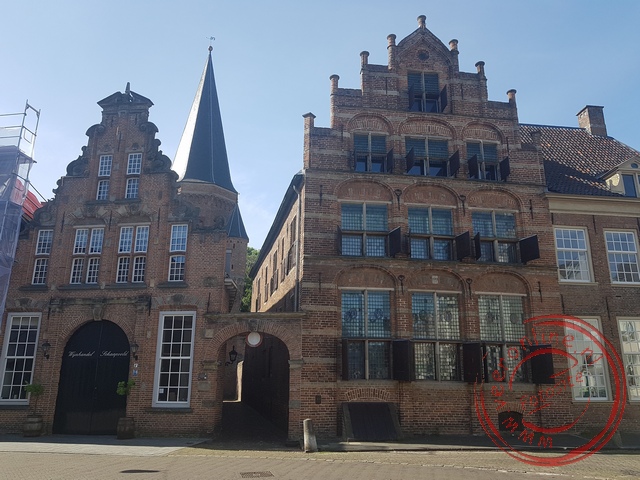
In 1962, the home was closed, and Het Oude Bornhof was thoroughly restored. Today, there are 47 houses surrounding the inner garden, which is neatly maintained with colorful flowers. On the other side, we exit the courtyard. From the calm of the courtyard, we immediately enter the shopping street. It is quiet here on a Sunday as well. On Pentecost Sunday, all shops are closed. A short right and left turn takes us through the gate of the Agnietensteeg, which leads to the water of the Singel. Here lies the Ruitershofje. The benefactor Ruyters left five houses for the poor. In 1898, the courtyard was relocated to its current location along the Berkelsingel. The small houses are surrounded by a peaceful communal flower garden. Across the water lies the next courtyard, the Sareptahofje, which is closed to the public. Just as we ponder the pronunciation, a resident comes out to help us. The Lutheran courtyard from 1850, one block further, is a typical poorhouse. Originally, it consisted of 14 small homes. After several renovations, there are now seven homes that better suit modern living. The garden is neglected, with weeds taking over. The houses are also clearly less maintained than those we saw in the previous courtyards. Back on the city side of the Singel, we enter the Agnietenhof. This courtyard is only open in the morning. Luckily, it is also open to the public on Sundays.

This is probably the most beautiful courtyard in the city. Since the 15th century, sisters and brothers of the Common Life lived here. They donated their possessions to the brother or sister house and cared for each other. Just behind the hotel lies the last courtyard of our route. The Wöhrmannhof is a relatively new courtyard. In 1983, new construction replaced the former Royal Printing House Wöhrmann. By eleven o’clock, we are back at the hotel. We have seen the beautiful historic sites of the old city. It is actually a bit early for a meal. We had planned to take a second walking route this afternoon. We decide to start the second round now. The second route of the day follows the outer lines of the city center. It starts again at the Sint Walburgis Church, but this time via the side of the old town hall. Interestingly, the street here is called ‘Kerkhof’—hopefully, no houses are on it. Via the Drogenaptoren, we reach the Vispoortgracht. We then follow the Singel northward, sometimes on the left, sometimes on the right side of the water. The sun is still shining, giving the green surroundings a cheerful color. On the path, however, we have to watch out for goose droppings. At the end of the Coehoornsingel, the path runs between the trees. At the Grote Gracht, the path makes a sharp turn.

Via the Dijckmeesterweg, we reach the large city pond, which is also part of the Grote Gracht. In the middle, a fountain shoots water over ten meters high. We follow the pond and return to the city center via the opposite side. At the Berkelpoort, we turn right. It is amusing to see that there is minimal overlap with this morning’s walk. At the railway, the former Kruittoren stands somewhat lost on a parking lot. Through the station, we continue to the IJsselkade. From here, we know the way back to our hotel. On the terrace, we have a drink. The parasol protects us from the sun—lovely in the shade. Since we have some time, we decide to drive to the Empese and Tonderse heath. Here, a five-kilometer nature trail runs over the heath and through the forest. The parking lot is busy. On the trail, it’s not too crowded—everyone keeps a good distance. The Empese heath is overgrown with grass. In the marshy areas, a wooden boardwalk has been installed. The walkway winds through the landscape. Despite the dry weeks, some areas still hold water. It is likely much more during rainy periods. By around four o’clock, we are back in Zutphen. Time for a beer on the terrace. We strike up a conversation with other hotel guests. Everyone has their own reason for taking a weekend away. Tonight, we are in the second dining shift, meaning we can eat at 8:00 p.m. This gives us time to retreat to the room. From the bed, we watch a movie on Netflix. The temperature is still pleasant enough to eat outside on the terrace. After dinner, we close the day with a short walk along the IJssel. The sun is just setting on the horizon.
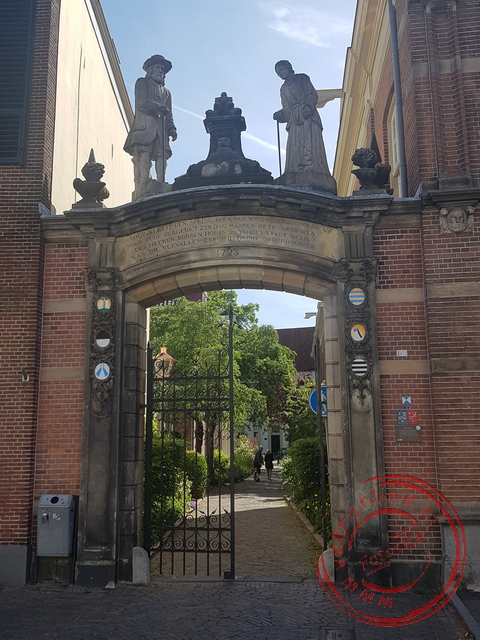 The gate to the Bornhofje
 The beautiful Agnietenhofje can only be visited in the morning
 The Bulwark on the Seed Market
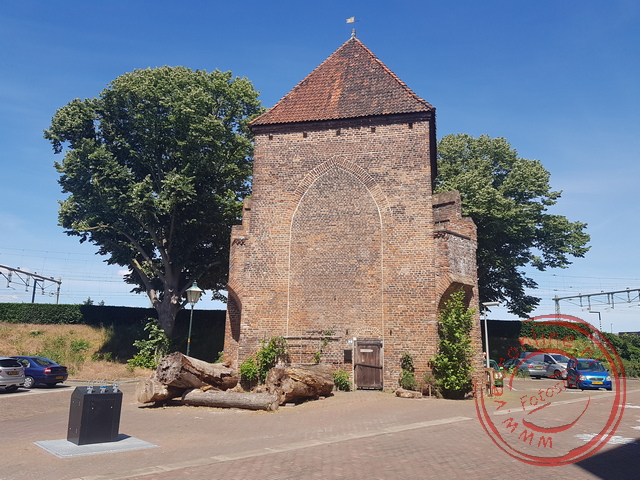 The old powder tower stands somewhat lonely
Travelogue City Trip Zutphen
Dag 2 | Netherlands > The Courtyards of Zutphen
Dag 3 | Netherlands > Walking on the Posbank