
154 countries
(and areas)
 - Azerbaijan
- Bahrain
- Barbados
- Belgium
- Belize
- Benin
- Bhutan
- Bolivia
- Bonaire
- Bosnia and Herzegovina
- Botswana
- Brazil
- British Virgin Islands
- Brunei
- Bulgaria
- Cambodia
- Canada
- Cape Verde
- Chile
- China
- Costa Rica
- Croatia
- Cuba
- Curacao
- Cyprus
- Czech Republic
- Denmark
- Dominica
- Dominican Republic
- Egypt
- El Salvador
- England
- Estonia
- Eswatini (Swaziland)
- Ethiopia
- Fiji
- Finland
- France
- French Guiana
- Georgia
- Germany
- Gibraltar
- Greece
- Grenada
- Guadeloupe
- Guatemala
- Honduras
- Hong Kong
- Hungary
- Iceland
- India
- Indonesia
- Iran
- Ireland
- Israel
- Italy
- Jamaica
- Japan
- Jordan
- Kazakhstan
- Kenya
- Kosovo
- Kuwait
- Kyrgyzstan
- Laos
- Latvia
- Lebanon
- Lesotho
- Liechtenstein
- Lithuania
- Luxembourg
- Macau
- Madagascar
- Malawi
- Malaysia
- Maldives
- Malta
- Martinique
- Mexico
- Moldova
- Monaco
- Mongolia
- Montenegro
- Morocco
- Mozambique
- Namibia
- Nepal
- Netherlands
- New Zealand
- Nicaragua
- North Macedonia
- Northern Ireland
- Norway
- Oman
- Pakistan
- Palestine
- Peru
- Philippines
- Poland
- Portugal
- Qatar
- Republic of Korea
- Romania
- Russia
- Saint Kitts and Nevis
- Saint Lucia
- Saint Martin
- Saint Vincent and the Grenadines
- San Marino
- São Tomé and Principe
- Saudi Arabia
- Scotland
- Senegal
- Serbia
- Singapore
- Sint Maarten
- Slovakia
- Slovenia
- South Africa
- Spain
- Sri Lanka
- Suriname
- Sweden
- Switzerland
- Tajikistan
- Tanzania
- Thailand
- The Gambia
- Tibet
- Togo
- Transnistria
- Trinidad and Tobago
- Tunisia
- Turkey
- Turkmenistan
- Uganda
- United Arab Emirates
- United States
- Uruguay
- Uzbekistan
- Vatican City
- Vietnam
- Wales
- Zambia
- Zanzibar
- Azerbaijan
- Bahrain
- Barbados
- Belgium
- Belize
- Benin
- Bhutan
- Bolivia
- Bonaire
- Bosnia and Herzegovina
- Botswana
- Brazil
- British Virgin Islands
- Brunei
- Bulgaria
- Cambodia
- Canada
- Cape Verde
- Chile
- China
- Costa Rica
- Croatia
- Cuba
- Curacao
- Cyprus
- Czech Republic
- Denmark
- Dominica
- Dominican Republic
- Egypt
- El Salvador
- England
- Estonia
- Eswatini (Swaziland)
- Ethiopia
- Fiji
- Finland
- France
- French Guiana
- Georgia
- Germany
- Gibraltar
- Greece
- Grenada
- Guadeloupe
- Guatemala
- Honduras
- Hong Kong
- Hungary
- Iceland
- India
- Indonesia
- Iran
- Ireland
- Israel
- Italy
- Jamaica
- Japan
- Jordan
- Kazakhstan
- Kenya
- Kosovo
- Kuwait
- Kyrgyzstan
- Laos
- Latvia
- Lebanon
- Lesotho
- Liechtenstein
- Lithuania
- Luxembourg
- Macau
- Madagascar
- Malawi
- Malaysia
- Maldives
- Malta
- Martinique
- Mexico
- Moldova
- Monaco
- Mongolia
- Montenegro
- Morocco
- Mozambique
- Namibia
- Nepal
- Netherlands
- New Zealand
- Nicaragua
- North Macedonia
- Northern Ireland
- Norway
- Oman
- Pakistan
- Palestine
- Peru
- Philippines
- Poland
- Portugal
- Qatar
- Republic of Korea
- Romania
- Russia
- Saint Kitts and Nevis
- Saint Lucia
- Saint Martin
- Saint Vincent and the Grenadines
- San Marino
- São Tomé and Principe
- Saudi Arabia
- Scotland
- Senegal
- Serbia
- Singapore
- Sint Maarten
- Slovakia
- Slovenia
- South Africa
- Spain
- Sri Lanka
- Suriname
- Sweden
- Switzerland
- Tajikistan
- Tanzania
- Thailand
- The Gambia
- Tibet
- Togo
- Transnistria
- Trinidad and Tobago
- Tunisia
- Turkey
- Turkmenistan
- Uganda
- United Arab Emirates
- United States
- Uruguay
- Uzbekistan
- Vatican City
- Vietnam
- Wales
- Zambia
- Zanzibar


Copyright 2004 - 2026
Veeronline.nl Travel Adventures
Home > Netherlands > A Weekend in Zwolle > Travelogue day 2
Travelogue A Weekend in Zwolle
April 1214 2024 (3 days)
Netherlands > Climbing the Peperbus
Dag 2 - Saturday, April 13, 2024At the hotel’s ground floor, a large buffet is ready. Strangely, only long tables are available for groups. We sit by the window at one of these tables. It’s not very busy. It seems a large group of German tourists has just left. They are standing in the lobby with their luggage waiting for their bus. After breakfast, we stroll into the center of Zwolle. Over the Hofvlietbrug bridge across the Zwarte Water river, we reach the pedestrian bridge leading to Rodetorenplein. From here, we pick up the ANWB city walk. This walk actually starts at the NS train station. We walk up the Melkmarkt. We pass restaurant Humphrey’s and the ANNO museum. Via the Melkmarktstraatje and the Drostenstraat, we arrive at the ‘Peperbus’. Construction of the Peperbus began in the late 14th century as part of the Onze Lieve Vrouwe Basilica. The tower was originally planned to be taller, but these plans halted due to lack of funds. The church tower is still closed. Later today we can climb it. Zwolle’s center has various narrow historic streets. We arrive at the large church square, where the Grote of St. Michaëlskerk stands. The church is dedicated to the archangel Michael, the patron saint of Zwolle. Its origins date back to the 8th century, but it was also completely destroyed during sieges. The foundation for the current church was laid at the end of the 14th century. The church tower, at 113.5 meters tall, was even higher than the Dom of Utrecht. In 1682, the tower collapsed during a severe storm.
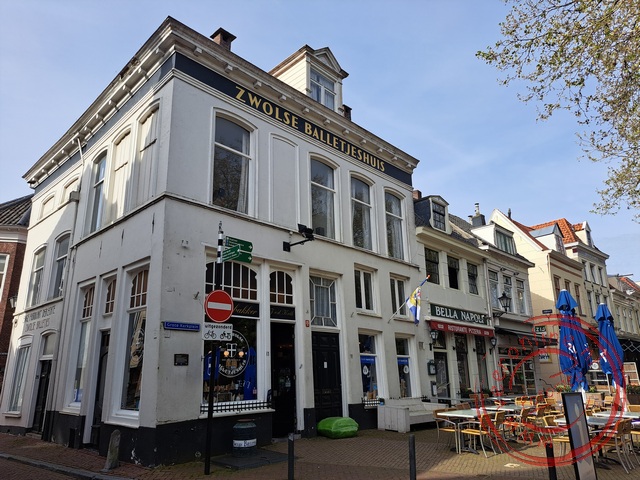
Since then, the church has had no spire. Today, the church serves as an academy house. Inside there is a bar, a library, and singing choirs rehearse here. The organ in the church is built in the Baroque style and is considered one of the most important Baroque organs in the Netherlands. It has multiple ranks of pipes and extensive wood carvings. We leave the church via the Grote Markt and continue to the Blijmarkt. The former courthouse now houses Museum De Fundatie. On the roof of the historic building is a modern egg-shaped dome. A huge golden peace dove by artist Marte Röling adorns the roof’s edge. On the terrace opposite the museum, we order coffee. The weather is beautiful and the sun shines brightly. We pass the old synagogue. Zwolle once had a large Jewish community. Even at the start of World War II, Zwolle provided refuge for Jews fleeing Germany. Via the Sassenstraat, we reach the Sassenpoort. The medieval Sassenpoort was built in Gothic style and dates from the 14th century. The gate is made of red brick walls, tall towers, and pointed arch openings.

The Sassenpoort was originally part of the city wall and served as one of the main city entrances. We climb the tower via a narrow spiral staircase. On one of the floors, we get an explanation of the city’s history. The volunteer clearly enjoys our interest. He explains why Zwolle got the nickname “Blauwvinger” (Blue Finger). In the 16th century, some residents committed perjury against the Duke of Guelders. On the higher floors of the Sassenpoort, we can still see the cells from when the building was a prison, and filing cabinets from when the state owned the building. Outside, the streets have become lively. Shoppers enjoy the fine weather in the Diezerstraat, the main shopping street. We walk on to the Broerenkerk. This 15th-century church houses Van der Velde bookstore, which calls itself the most beautiful bookstore in the world. Via the quay of the Thorbeckegracht, we return to the starting point. Here we visit the ANNO museum, about the history of Zwolle. A video explains how the city gained its wealth and the long rivalry with the cities of Deventer and Kampen. A table just frees up at the church square. We quickly take a seat on the terrace.
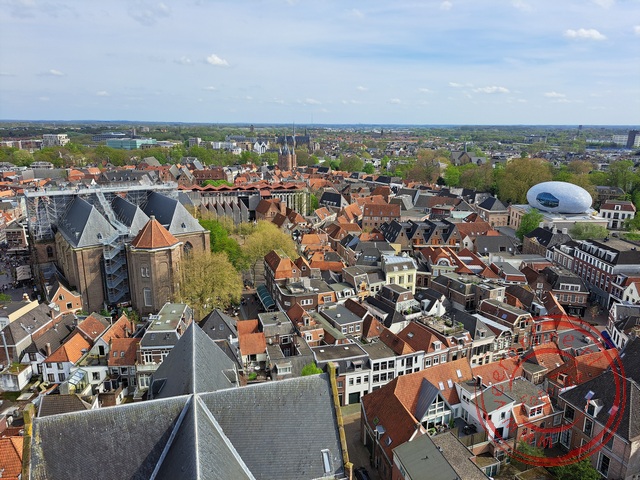
Because of the nice weather, almost all terraces are full. We order a beer with bitterballen (Dutch meat snacks). Our last sightseeing stop is the Peperbus again. Inside, they apologize that we have to wait to climb the tower. Only 20 people can go up at a time. Meanwhile, we look around the basilica. We start talking to a volunteer about the conopeum (papal umbrella) and tintinnabulum (ceremonial bell), which are symbols of a basilica. Because of this, our spot in the queue is given away. There is some discussion among the volunteers. Although a group of boys is ready to pay, it is decided that we may go up first. It doesn’t really matter; we have plenty of time. When we’re allowed, we start climbing the 236 steps. We walk up in circles. From the gallery at 51 meters high, we see the center of Zwolle. It’s nice to see the places we visited today. At the end of the afternoon, we have a drink on a terrace at the Grote Markt. In the evening, we dine at De Beren, a restaurant just outside the city canal. A fine choice. Afterwards, we stroll through the center back to the hotel.
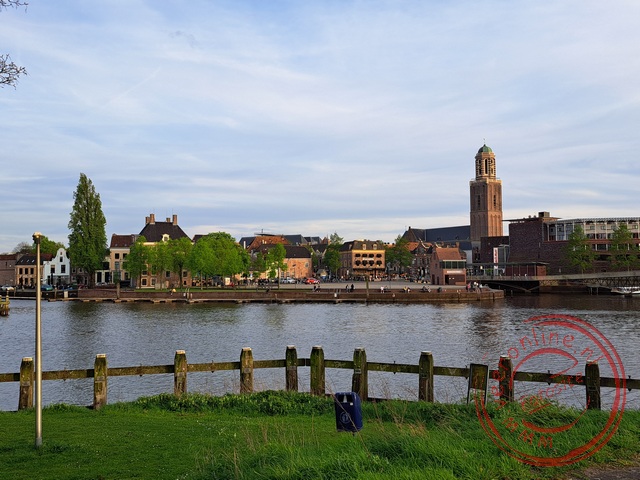 A glimpse of the historic center of Zwolle
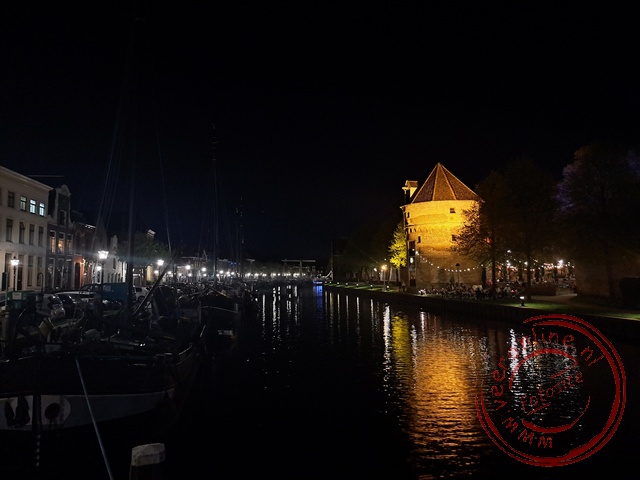 The Wijndragerstoren is beautifully lit in the evening
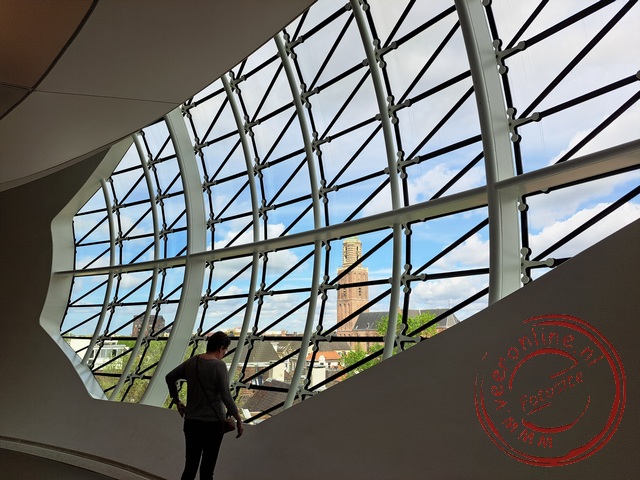 From the dome in the Fundatie Museum there is a view of the city
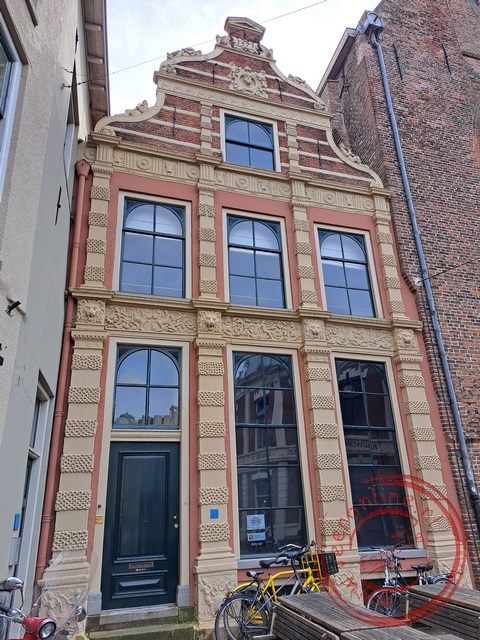 The narrow Karel V house at Sassenstraat 33
Travelogue A Weekend in Zwolle
Dag 2 | Netherlands > Climbing the Peperbus
Dag 3 | Netherlands > Museum de Fundatie