
154 countries
(and areas)
 - Belize
- Benin
- Bhutan
- Bolivia
- Bonaire
- Bosnia and Herzegovina
- Botswana
- Brazil
- British Virgin Islands
- Brunei
- Bulgaria
- Cambodia
- Canada
- Cape Verde
- Chile
- China
- Costa Rica
- Croatia
- Cuba
- Curacao
- Cyprus
- Czech Republic
- Denmark
- Dominica
- Dominican Republic
- Egypt
- El Salvador
- England
- Estonia
- Eswatini (Swaziland)
- Ethiopia
- Fiji
- Finland
- France
- French Guiana
- Georgia
- Germany
- Gibraltar
- Greece
- Grenada
- Guadeloupe
- Guatemala
- Honduras
- Hong Kong
- Hungary
- Iceland
- India
- Indonesia
- Iran
- Ireland
- Israel
- Italy
- Jamaica
- Japan
- Jordan
- Kazakhstan
- Kenya
- Kosovo
- Kuwait
- Kyrgyzstan
- Laos
- Latvia
- Lebanon
- Lesotho
- Liechtenstein
- Lithuania
- Luxembourg
- Macau
- Madagascar
- Malawi
- Malaysia
- Maldives
- Malta
- Martinique
- Mexico
- Moldova
- Monaco
- Mongolia
- Montenegro
- Morocco
- Mozambique
- Namibia
- Nepal
- Netherlands
- New Zealand
- Nicaragua
- North Macedonia
- Northern Ireland
- Norway
- Oman
- Pakistan
- Palestine
- Peru
- Philippines
- Poland
- Portugal
- Qatar
- Republic of Korea
- Romania
- Russia
- Saint Kitts and Nevis
- Saint Lucia
- Saint Martin
- Saint Vincent and the Grenadines
- San Marino
- São Tomé and Principe
- Saudi Arabia
- Scotland
- Senegal
- Serbia
- Singapore
- Sint Maarten
- Slovakia
- Slovenia
- South Africa
- Spain
- Sri Lanka
- Suriname
- Sweden
- Switzerland
- Tajikistan
- Tanzania
- Thailand
- The Gambia
- Tibet
- Togo
- Transnistria
- Trinidad and Tobago
- Tunisia
- Turkey
- Turkmenistan
- Uganda
- United Arab Emirates
- United States
- Uruguay
- Uzbekistan
- Vatican City
- Vietnam
- Wales
- Zambia
- Zanzibar
- Belize
- Benin
- Bhutan
- Bolivia
- Bonaire
- Bosnia and Herzegovina
- Botswana
- Brazil
- British Virgin Islands
- Brunei
- Bulgaria
- Cambodia
- Canada
- Cape Verde
- Chile
- China
- Costa Rica
- Croatia
- Cuba
- Curacao
- Cyprus
- Czech Republic
- Denmark
- Dominica
- Dominican Republic
- Egypt
- El Salvador
- England
- Estonia
- Eswatini (Swaziland)
- Ethiopia
- Fiji
- Finland
- France
- French Guiana
- Georgia
- Germany
- Gibraltar
- Greece
- Grenada
- Guadeloupe
- Guatemala
- Honduras
- Hong Kong
- Hungary
- Iceland
- India
- Indonesia
- Iran
- Ireland
- Israel
- Italy
- Jamaica
- Japan
- Jordan
- Kazakhstan
- Kenya
- Kosovo
- Kuwait
- Kyrgyzstan
- Laos
- Latvia
- Lebanon
- Lesotho
- Liechtenstein
- Lithuania
- Luxembourg
- Macau
- Madagascar
- Malawi
- Malaysia
- Maldives
- Malta
- Martinique
- Mexico
- Moldova
- Monaco
- Mongolia
- Montenegro
- Morocco
- Mozambique
- Namibia
- Nepal
- Netherlands
- New Zealand
- Nicaragua
- North Macedonia
- Northern Ireland
- Norway
- Oman
- Pakistan
- Palestine
- Peru
- Philippines
- Poland
- Portugal
- Qatar
- Republic of Korea
- Romania
- Russia
- Saint Kitts and Nevis
- Saint Lucia
- Saint Martin
- Saint Vincent and the Grenadines
- San Marino
- São Tomé and Principe
- Saudi Arabia
- Scotland
- Senegal
- Serbia
- Singapore
- Sint Maarten
- Slovakia
- Slovenia
- South Africa
- Spain
- Sri Lanka
- Suriname
- Sweden
- Switzerland
- Tajikistan
- Tanzania
- Thailand
- The Gambia
- Tibet
- Togo
- Transnistria
- Trinidad and Tobago
- Tunisia
- Turkey
- Turkmenistan
- Uganda
- United Arab Emirates
- United States
- Uruguay
- Uzbekistan
- Vatican City
- Vietnam
- Wales
- Zambia
- Zanzibar


Copyright 2004 - 2026
Veeronline.nl Travel Adventures

Home > Mexico > Tour of Mexico > Travelogue day 4
Travelogue Tour of Mexico
February 11 March 1 2025 (19 days)
Mexico > The Ancient Maya Ruins of Uxmal
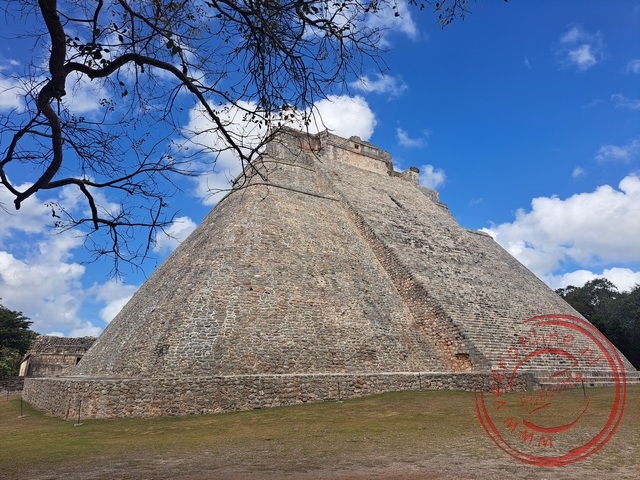
Dag 4 - Friday 14 February 2025At breakfast, I don’t feel very hungry. Whereas yesterday we still had the choice of egg, quesadillas, or pancakes, today everyone gets pancakes with egg. A somewhat strange combination. I try to eat a little anyway. At eight o’clock, we load the luggage back onto the bus. We leave Mérida. In about two hours, we drive to the ancient Maya ruins of Uxmal. Uxmal is one of the most impressive Maya cities in Mexico. The city flourished between the 7th and 10th centuries and is famous for its refined Puuc architecture, characterized by decorated façades, mosaics, and masks of the rain god Chaac. The guide is already waiting for us at the entrance. To my surprise, he speaks excellent Dutch. Energetically, he tells us about the Pyramid of the Magician. The Pyramid of the Magician (Pirámide del Adivino) is the most iconic temple of Uxmal. According to legend, this temple was built overnight by a dwarf with magical powers. The pyramid has an oval shape, which is unique in Maya architecture, and consists of five construction phases.
The entrance is decorated with masks of Chaac, indicating the importance of rain in this region. The temples of Uxmal are much more decorated than those of Chichén Itzá. The guide continues in Dutch about the meaning of the various Maya decorations and how the symbol of the snake is woven into them. The route ends at the Governor’s Palace (Palacio del Gobernador), a long building on an elevated platform. This structure is decorated with hundreds of Chaac masks and is considered a masterpiece of the Puuc style. It’s easy to see that there are multiple layers of temples here — three on top of each other, in fact. This is also the meaning of Uxmal. In the Maya language, it means “three times.
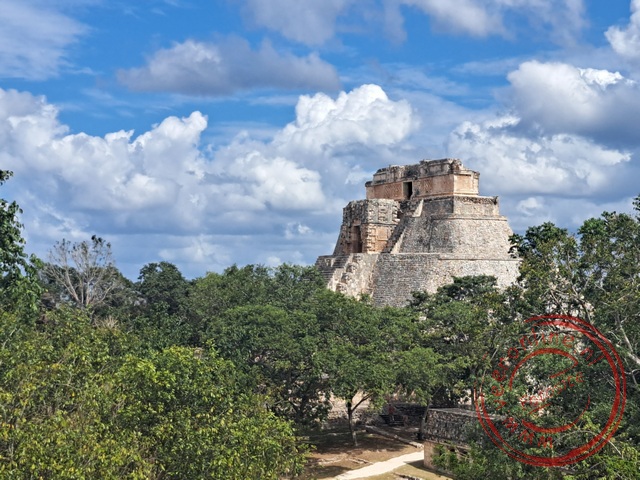
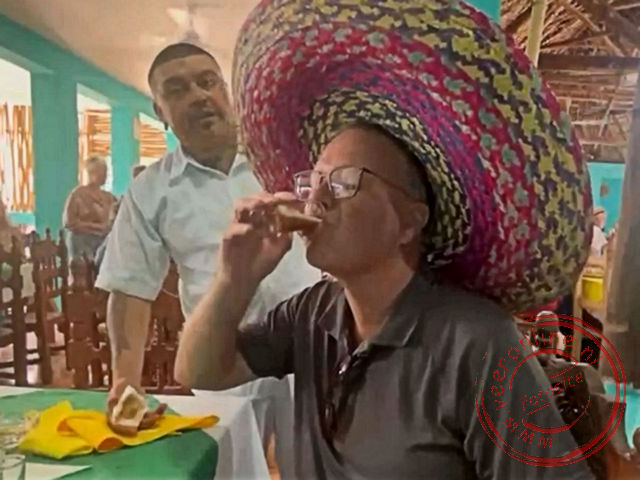
” From the governor’s temple, which is higher up, there is a beautiful view over the entire complex. At the lunch restaurant, they show us how our lunch dish was prepared. Behind the restaurant are several deep pits. Fires are lit in these pits, and then dishes with food are covered and placed on the hot coals for hours. The pit with our dish is opened: chicken, pork, vegetables, and baked potatoes. It tastes great. Afterwards, we are offered a drink. Everyone wears a Mexican sombrero while the waiter slaps a glass three times loudly on the table. Then it must be drunk in one gulp. It doesn’t even taste that bad. After lunch, we prepare for the drive to Campeche — a journey of just over two hours. As a surprise, we stop along the way in Becal. In this small town, Mexican hats are handmade. Because the material is best worked when moist, the weaving of the hats takes place in a cave under the house, where the air is more humid.
I go down the stairs into the cave. An older woman tells me she has been weaving hats for over forty-five years. Depending on the thickness of the strands, it takes her between two and twenty days to complete one. A labor-intensive job in an underground cave. Around half past five, we arrive in Campeche. The sky is overcast and a few drops of rain fall. The bus cannot get to the hotel in the old town. Hotel staff come with a small car to collect our luggage. Can’t we just carry it ourselves? They insist on bringing the luggage for us. We walk through the old gate of the city wall and head to our hotel. Shortly after, a small car packed full of luggage stops. The rear door and windows are open. The luggage is spilling out.
 Mexico
  The beach, the palm trees, and the sea
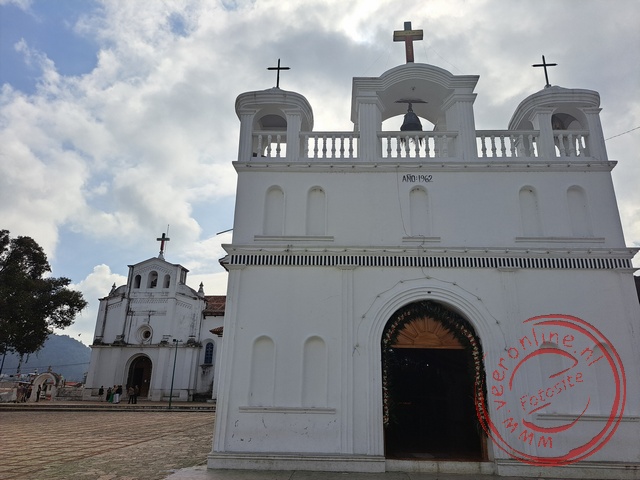 The chapel and the San Lorenzo church in Zinacantán
 The golden decorations in the Nuestra Señora de la Caridad church
 The center of San Cristóbal de las Casas still has many historic buildings
Travelogue Tour of Mexico
Dag 2 | Mexico > The Maya City of Chichén Itzá
Dag 3 | Mexico > Reserva de la Biosfera Ría Celestún
Dag 4 | Mexico > The Ancient Maya Ruins of Uxmal
Dag 5 | Mexico > Wandering Through Campeche
Dag 6 | Mexico > Ziplining Over the Miguel Colorado Cenote
Dag 7 | Mexico > The Cañon del Sumidero Canyon
Dag 8 | Mexico > A Walking Tour Through San Cristóbal
Dag 9 | Mexico > The Traditional Maya Mountain Villages
Dag 10 | Mexico > Swimming in the Agua Azul Waterfall
Dag 11 | Mexico > The Maya City of Palenque
Dag 12 | Mexico > Travel Day to Chetumal
Dag 13 | Mexico > The Lake of Bacalar
Dag 14 | Mexico > The Beach of Mahahual
Dag 15 | Mexico > Via Tulum to Playa del Carmen
Dag 16 | Mexico > To Isla Mujeres
Dag 17 | Mexico > Snorkeling Around Isla Mujeres
Dag 18 | Mexico > The Last Hours on Isla Mujeres
Dag 19 | Mexico > By Train Back Home