
154 countries
(and areas)
 - Belize
- Benin
- Bhutan
- Bolivia
- Bonaire
- Bosnia and Herzegovina
- Botswana
- Brazil
- British Virgin Islands
- Brunei
- Bulgaria
- Cambodia
- Canada
- Cape Verde
- Chile
- China
- Costa Rica
- Croatia
- Cuba
- Curacao
- Cyprus
- Czech Republic
- Denmark
- Dominica
- Dominican Republic
- Egypt
- El Salvador
- England
- Estonia
- Eswatini (Swaziland)
- Ethiopia
- Fiji
- Finland
- France
- French Guiana
- Georgia
- Germany
- Gibraltar
- Greece
- Grenada
- Guadeloupe
- Guatemala
- Honduras
- Hong Kong
- Hungary
- Iceland
- India
- Indonesia
- Iran
- Ireland
- Israel
- Italy
- Jamaica
- Japan
- Jordan
- Kazakhstan
- Kenya
- Kosovo
- Kuwait
- Kyrgyzstan
- Laos
- Latvia
- Lebanon
- Lesotho
- Liechtenstein
- Lithuania
- Luxembourg
- Macau
- Madagascar
- Malawi
- Malaysia
- Maldives
- Malta
- Martinique
- Mexico
- Moldova
- Monaco
- Mongolia
- Montenegro
- Morocco
- Mozambique
- Namibia
- Nepal
- Netherlands
- New Zealand
- Nicaragua
- North Macedonia
- Northern Ireland
- Norway
- Oman
- Pakistan
- Palestine
- Peru
- Philippines
- Poland
- Portugal
- Qatar
- Republic of Korea
- Romania
- Russia
- Saint Kitts and Nevis
- Saint Lucia
- Saint Martin
- Saint Vincent and the Grenadines
- San Marino
- São Tomé and Principe
- Saudi Arabia
- Scotland
- Senegal
- Serbia
- Singapore
- Sint Maarten
- Slovakia
- Slovenia
- South Africa
- Spain
- Sri Lanka
- Suriname
- Sweden
- Switzerland
- Tajikistan
- Tanzania
- Thailand
- The Gambia
- Tibet
- Togo
- Transnistria
- Trinidad and Tobago
- Tunisia
- Turkey
- Turkmenistan
- Uganda
- United Arab Emirates
- United States
- Uruguay
- Uzbekistan
- Vatican City
- Vietnam
- Wales
- Zambia
- Zanzibar
- Belize
- Benin
- Bhutan
- Bolivia
- Bonaire
- Bosnia and Herzegovina
- Botswana
- Brazil
- British Virgin Islands
- Brunei
- Bulgaria
- Cambodia
- Canada
- Cape Verde
- Chile
- China
- Costa Rica
- Croatia
- Cuba
- Curacao
- Cyprus
- Czech Republic
- Denmark
- Dominica
- Dominican Republic
- Egypt
- El Salvador
- England
- Estonia
- Eswatini (Swaziland)
- Ethiopia
- Fiji
- Finland
- France
- French Guiana
- Georgia
- Germany
- Gibraltar
- Greece
- Grenada
- Guadeloupe
- Guatemala
- Honduras
- Hong Kong
- Hungary
- Iceland
- India
- Indonesia
- Iran
- Ireland
- Israel
- Italy
- Jamaica
- Japan
- Jordan
- Kazakhstan
- Kenya
- Kosovo
- Kuwait
- Kyrgyzstan
- Laos
- Latvia
- Lebanon
- Lesotho
- Liechtenstein
- Lithuania
- Luxembourg
- Macau
- Madagascar
- Malawi
- Malaysia
- Maldives
- Malta
- Martinique
- Mexico
- Moldova
- Monaco
- Mongolia
- Montenegro
- Morocco
- Mozambique
- Namibia
- Nepal
- Netherlands
- New Zealand
- Nicaragua
- North Macedonia
- Northern Ireland
- Norway
- Oman
- Pakistan
- Palestine
- Peru
- Philippines
- Poland
- Portugal
- Qatar
- Republic of Korea
- Romania
- Russia
- Saint Kitts and Nevis
- Saint Lucia
- Saint Martin
- Saint Vincent and the Grenadines
- San Marino
- São Tomé and Principe
- Saudi Arabia
- Scotland
- Senegal
- Serbia
- Singapore
- Sint Maarten
- Slovakia
- Slovenia
- South Africa
- Spain
- Sri Lanka
- Suriname
- Sweden
- Switzerland
- Tajikistan
- Tanzania
- Thailand
- The Gambia
- Tibet
- Togo
- Transnistria
- Trinidad and Tobago
- Tunisia
- Turkey
- Turkmenistan
- Uganda
- United Arab Emirates
- United States
- Uruguay
- Uzbekistan
- Vatican City
- Vietnam
- Wales
- Zambia
- Zanzibar


Copyright 2004 - 2026
Veeronline.nl Travel Adventures
Home > Norway > Travel around Norway > Travelogue day 8
Travelogue Travel around Norway
2001 (9 days)
Norway > Oslo in one day
Dag 8 - Monday, September 3, 2001The last real vacation day has arrived. At nine o’clock we leave Hemsedal and head via Geilo to Gol. We drive toward Oslo through the Hallingdal. Along the way we stop for coffee by the Krøderen River, about fifty kilometers before Oslo. Just after noon we arrive at Oslo City Hall, where we are scheduled for a guided tour at two o’clock. Until then, we explore Oslo. We start the route together up to the National Theatre.

From there everyone goes their own way. Ruud walks with us to the university, where the murals by Edvard Munch (1863–1944) decorate the walls. We enter the university, but unfortunately a concert is taking place in the hall in question. We can’t go in. At two o’clock it would be possible, but by then it’s too late for us. Since we’re looking for a restroom, we follow Ruud to a hotel where he usually stays. However, this hotel is under renovation and closed. So we divert to a café restroom. Ruud then goes his own way. We continue along Karl Johans Gate to the palace of King Harald and Queen Sofia. Via St. Olavs Gate, we follow the city walk to St. Olav’s Church and the Trefoldighetskirken. The walk then continues through Damstredet with its wooden merchant houses, though most were lost in the many fires. Through the “Lovers’ Stairs” (Kjærlighetsstien) we reach Scandinavia’s oldest stone church, Gamle Aker, just after half past one. Given the time, we have to hurry to walk the one and a half kilometers back to City Hall to be there on time for the tour. At exactly five to two, the appointed time, we arrive sweating—having ignored several red pedestrian lights—only to find out that the tour is canceled. Because of next week’s elections, City Hall is closed to the public. All our rushing was for nothing.

As an alternative, we take a bus tour of the city and eventually arrive at the museum island. The island includes the open-air museum with the original stave church from Torpo. A copy now stands in Torpo itself. We visit the Viking Ship Museum (Vikingskipshuset). Here the history of the Vikings is displayed along with several ships from that era. It’s astonishing that the Vikings crossed oceans with such vessels. The beautiful wood carvings and dragon heads are especially impressive. After the museum, we drive through Oslo’s evening rush hour to the ski center. Around four o’clock Oslo is already quite busy. It’s clear that ten percent of Norway’s population lives in Oslo. From the ski center, there’s a wonderful view over the city. Because of the long city walk and the rush to get back on time earlier in the afternoon, we haven’t eaten yet. So I quickly buy a sandwich at the café by the slope. The ski jump slope is filled with water, and people are jumping into it with snowboards on artificial tracks. Not for me. What does look fun, though, is the ski simulator. Together with Anita and Riny, I take a ride in the machine. Sitting down, we descend the slopes at 140 km/h. Great fun. After the ski center, we drive to the famous Frogner Park to visit the Vigeland sculpture park.

Gustav Vigeland (1869–1943) created nearly two hundred sculptures for this park. The works depict the phases of the human life cycle, partly realistically and partly in stylized forms. We walk through the park from the back entrance via the Wheel of Life, the Monolith—a 17-meter-high artwork made up of 121 intertwined figures—and across the bridge to the main entrance. Svein has driven around and picks us up again at a quarter to six. Then it’s time to go to the hotel. We drive back to a suburb of Oslo, about fifteen kilometers west of the city center. The luxury hotel used to be conveniently located near the old airport. However, three years ago the airport was moved to Gardermoen, about thirty kilometers northeast of Oslo. After dinner, on this last evening, we reminisce together. By borrowing a few extra Norwegian coins, we just manage to order a beer (52 NOK / €6.75) and a glass of red wine (65 NOK / €8.45). Around half past eleven, we go to bed.
 Norway
  The harbor of Bergen
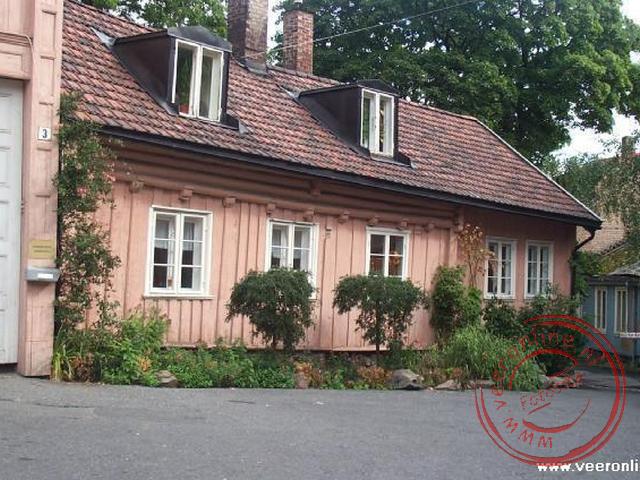 The wooden trading houses but most have been lost due to many fires
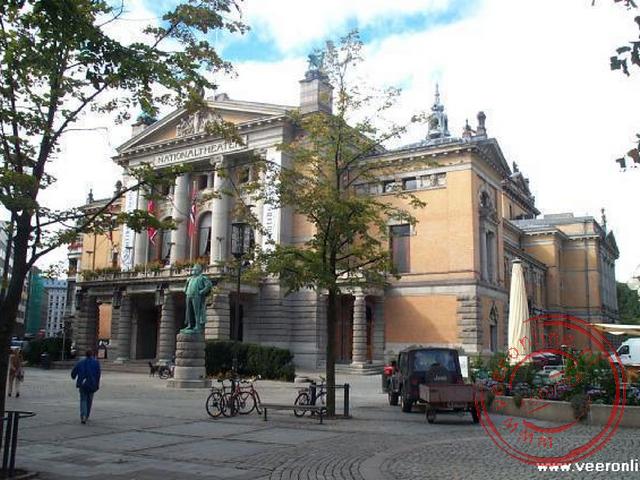 The national theater
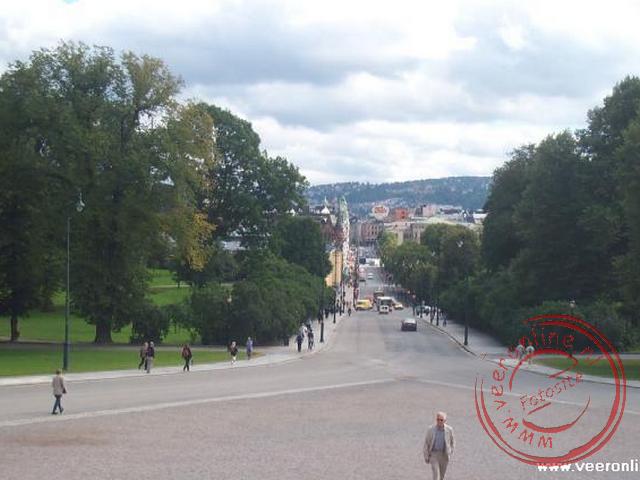 Karl Johans Gate
Travelogue Travel around Norway
Dag 2 | Norway > Evening walk to Trondheim
Dag 3 | Norway > The colorful wooden trading houses
Dag 4 | Norway > Sailing through the Geiranger fjord
Dag 5 | Norway > At the foot of the Brævasshytta glacier
Dag 6 | Norway > Wandering through the Bryggen
Dag 7 | Norway > The Flåmsbane train climbs up
Dag 8 | Norway > Oslo in one day
Dag 9 | Norway > Baggage check at Schiphol