
154 countries
(and areas)
 - Belize
- Benin
- Bhutan
- Bolivia
- Bonaire
- Bosnia and Herzegovina
- Botswana
- Brazil
- British Virgin Islands
- Brunei
- Bulgaria
- Cambodia
- Canada
- Cape Verde
- Chile
- China
- Costa Rica
- Croatia
- Cuba
- Curacao
- Cyprus
- Czech Republic
- Denmark
- Dominica
- Dominican Republic
- Egypt
- El Salvador
- England
- Estonia
- Eswatini (Swaziland)
- Ethiopia
- Fiji
- Finland
- France
- French Guiana
- Georgia
- Germany
- Gibraltar
- Greece
- Grenada
- Guadeloupe
- Guatemala
- Honduras
- Hong Kong
- Hungary
- Iceland
- India
- Indonesia
- Iran
- Ireland
- Israel
- Italy
- Jamaica
- Japan
- Jordan
- Kazakhstan
- Kenya
- Kosovo
- Kuwait
- Kyrgyzstan
- Laos
- Latvia
- Lebanon
- Lesotho
- Liechtenstein
- Lithuania
- Luxembourg
- Macau
- Madagascar
- Malawi
- Malaysia
- Maldives
- Malta
- Martinique
- Mexico
- Moldova
- Monaco
- Mongolia
- Montenegro
- Morocco
- Mozambique
- Namibia
- Nepal
- Netherlands
- New Zealand
- Nicaragua
- North Macedonia
- Northern Ireland
- Norway
- Oman
- Pakistan
- Palestine
- Peru
- Philippines
- Poland
- Portugal
- Qatar
- Republic of Korea
- Romania
- Russia
- Saint Kitts and Nevis
- Saint Lucia
- Saint Martin
- Saint Vincent and the Grenadines
- San Marino
- São Tomé and Principe
- Saudi Arabia
- Scotland
- Senegal
- Serbia
- Singapore
- Sint Maarten
- Slovakia
- Slovenia
- South Africa
- Spain
- Sri Lanka
- Suriname
- Sweden
- Switzerland
- Tajikistan
- Tanzania
- Thailand
- The Gambia
- Tibet
- Togo
- Transnistria
- Trinidad and Tobago
- Tunisia
- Turkey
- Turkmenistan
- Uganda
- United Arab Emirates
- United States
- Uruguay
- Uzbekistan
- Vatican City
- Vietnam
- Wales
- Zambia
- Zanzibar
- Belize
- Benin
- Bhutan
- Bolivia
- Bonaire
- Bosnia and Herzegovina
- Botswana
- Brazil
- British Virgin Islands
- Brunei
- Bulgaria
- Cambodia
- Canada
- Cape Verde
- Chile
- China
- Costa Rica
- Croatia
- Cuba
- Curacao
- Cyprus
- Czech Republic
- Denmark
- Dominica
- Dominican Republic
- Egypt
- El Salvador
- England
- Estonia
- Eswatini (Swaziland)
- Ethiopia
- Fiji
- Finland
- France
- French Guiana
- Georgia
- Germany
- Gibraltar
- Greece
- Grenada
- Guadeloupe
- Guatemala
- Honduras
- Hong Kong
- Hungary
- Iceland
- India
- Indonesia
- Iran
- Ireland
- Israel
- Italy
- Jamaica
- Japan
- Jordan
- Kazakhstan
- Kenya
- Kosovo
- Kuwait
- Kyrgyzstan
- Laos
- Latvia
- Lebanon
- Lesotho
- Liechtenstein
- Lithuania
- Luxembourg
- Macau
- Madagascar
- Malawi
- Malaysia
- Maldives
- Malta
- Martinique
- Mexico
- Moldova
- Monaco
- Mongolia
- Montenegro
- Morocco
- Mozambique
- Namibia
- Nepal
- Netherlands
- New Zealand
- Nicaragua
- North Macedonia
- Northern Ireland
- Norway
- Oman
- Pakistan
- Palestine
- Peru
- Philippines
- Poland
- Portugal
- Qatar
- Republic of Korea
- Romania
- Russia
- Saint Kitts and Nevis
- Saint Lucia
- Saint Martin
- Saint Vincent and the Grenadines
- San Marino
- São Tomé and Principe
- Saudi Arabia
- Scotland
- Senegal
- Serbia
- Singapore
- Sint Maarten
- Slovakia
- Slovenia
- South Africa
- Spain
- Sri Lanka
- Suriname
- Sweden
- Switzerland
- Tajikistan
- Tanzania
- Thailand
- The Gambia
- Tibet
- Togo
- Transnistria
- Trinidad and Tobago
- Tunisia
- Turkey
- Turkmenistan
- Uganda
- United Arab Emirates
- United States
- Uruguay
- Uzbekistan
- Vatican City
- Vietnam
- Wales
- Zambia
- Zanzibar


Copyright 2004 - 2026
Veeronline.nl Travel Adventures
Home > Norway > Travel around Norway > Travelogue day 2
Travelogue Travel around Norway
2001 (9 days)
Norway > Evening walk to Trondheim
Dag 2 - Tuesday, August 28, 2001At 7:15 I am woken by a call on the phone. “Good morning, wake-up call.” Today’s program features the longest stage of the entire journey: to Trondheim. In total, we will cover nearly five hundred kilometers. With all the winding mountain roads in Norway, progress is anything but fast. Breakfast is excellent with plenty of choice. We eat with Paul and Truus from Sittard. Little by little you get to know the whole group. After breakfast, I put my suitcase on the bus.

At exactly eight o’clock the bus departs. The route first follows the shores of Lake Mjøsa toward Lillehammer.
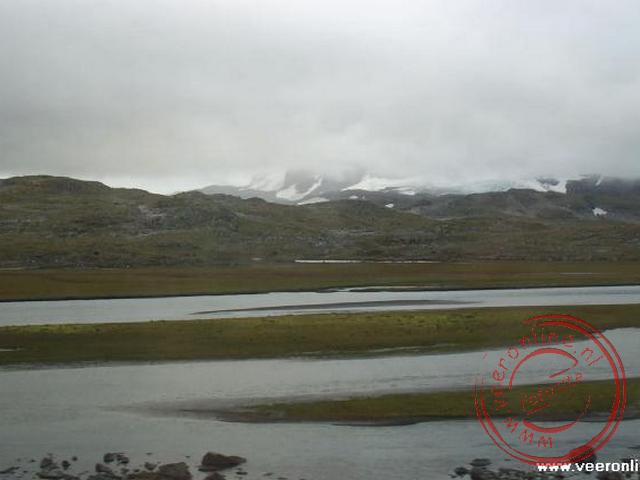
Lillehammer is a town on the northern side of the Mjøsa. Just like Hamar and Gjøvik, it is known from the Olympic Games. We visit the Lysgardsbakken ski jump in Lillehammer. The bus drives right into the arena, almost up to the jump itself. Unfortunately, no one is training. Even though there is no snow, jumps can be made in summer on the artificial track next to the main piste. Together with Jos, I climb the stairs alongside the piste. At about a hundred meters’ height, I take photos of the stunning view over Lillehammer and Lake Mjøsa. The staircase has a total of 954 steps, but I turn back halfway. It is rather chilly at the top, and I don’t want to keep the other passengers waiting unnecessarily. Strangely enough, I find the descent harder, because now I am looking straight down into the enormous depth—this is also the view of a ski jumper. Luckily, I’m not prone to vertigo. After Lillehammer, the journey continues to Hunderfossen, home of the Norsk Vegmuseum (the Norwegian Road Museum). Ruud is very enthusiastic about this museum. When we arrive, it isn’t officially open yet, but they open the doors for us, so we can already enter before ten o’clock. Inside, we learn how the Norwegians have planned and built their roads, viaducts, bridges, and tunnels through the mountainous terrain over the decades. A slideshow shows how they adapted to the fast-growing stream of cars in the 1960s. In the cinema, we watch a film about the construction of the longest tunnel in Europe, the Lærdal Tunnel. This tunnel is over 24 kilometers long and forms the last link between Bergen and Oslo. Until recently, cars around Lærdal had to take the ferry or make a major detour via the south. Work on the tunnel took eight years, and it has only just opened (2001). Later on in our journey, we will pass near it, though we likely won’t take it—after all, 24 kilometers through a tunnel tube is not particularly spectacular. Ruud was right about the museum: it is very impressive. After visiting the museum, we leave the main road to follow the Peer Gynt route (Peer Gyntvei).

Peer Gynt is a Norwegian folk legend who lived in the high mountains of the Gudbrandsdal. The Norwegian composer Edvard Grieg (1843–1907) wrote the famous Peer Gynt Suites (1888). The route cuts through vast and rugged landscapes. With its moors and rocks, it often resembles a lunar landscape. The road runs mostly above the tree line, which in Norway is already at about nine hundred meters. At a viewpoint, we stop briefly to take photos, but the icy wind makes it unpleasant to linger. It is far more comfortable in the bus as we continue along the Peer Gynt route. Meanwhile, Grieg’s Peer Gynt Suite plays over the speakers. In the village of Vinstra, we rejoin the road toward Trondheim. According to legend, Peer Gynt lived here, and the village has fully embraced the legend to attract tourists. Who can blame them? In Dombås, we stop for lunch at a self-service restaurant. I treat myself to salmon and shrimp sandwiches. Opposite the restaurant stands the charming church of Dombås, which I walk around. After lunch, the road continues toward Trondheim, a long stretch through the Gauldal valley. The closer we get to Trondheim, the wilder the landscape becomes, with ever more dramatic mountain heights and steep drops. It is clear that the mountains grow higher and steeper the closer they are to the coast. On the way, Ruud tells us about the history of Norway. Unfortunately, I miss a part of the story—from the Viking invasion of Normandy around 900 to King Haakon around 1200—because I briefly close my eyes. But that does help the journey toward Trondheim pass more quickly.

Around 5:30 we reach Trondheim and arrive at the hotel. Unfortunately, it is located in a suburb, quite far from the center. In the room, we have a glass of wine. Dinner, coincidentally, is salmon once again. Hotels don’t know what the others serve, of course. After dinner, we walk into the center of Trondheim. At first, it rains lightly, but soon the umbrella can be folded away. The walk into the center is quite a trek, mostly downhill, which doesn’t bode well for the way back. We try to memorize the route carefully, as the city map of Trondheim we have is not very clear. Near the stadium, we ask the way to the center. We can walk across the university grounds toward the bridge, which leads directly to the cathedral. The cathedral looks magnificent reflected in the water, just like the rest of the town. We continue to the harbor. Along the way, we step into a luxury hotel for a restroom break. At the harbor, we see the fishing boats and the beautifully colored warehouses. Crossing the Gamle Bybro (1681), the Old Red Bridge over the Nidelva, we head back toward the hotel. Since we take a different route, we have to ask the way three times. This is no problem—whenever I merely glance around, a cyclist stops and offers help. Just before eleven, we are back at the hotel after a walk of about twelve kilometers. With another glass of wine, I end the day and head to bed.
 Norway
 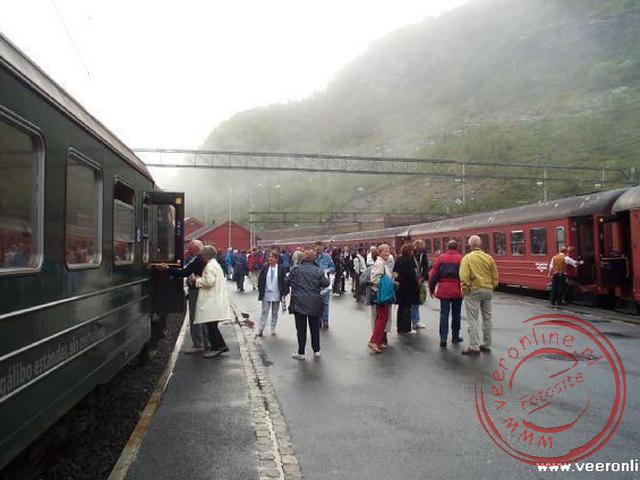 At Myrdal station we changed to the through train from Bergen to Oslo
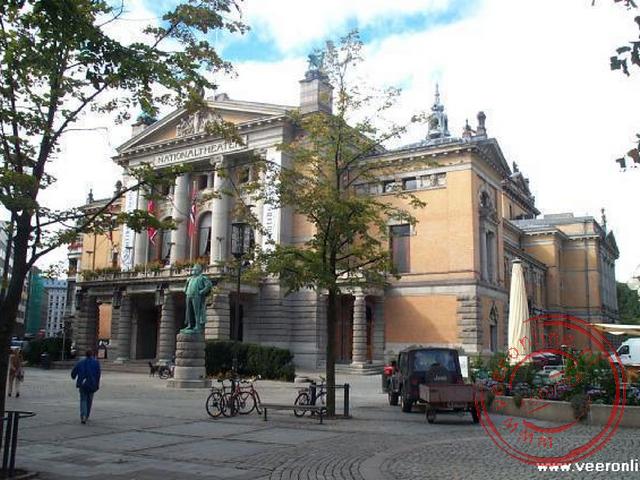 The national theater
 In Hella we took the ferry to Vangsnes on the opposite shore of the Sognfjord
 St Olav church
Travelogue Travel around Norway
Dag 2 | Norway > Evening walk to Trondheim
Dag 3 | Norway > The colorful wooden trading houses
Dag 4 | Norway > Sailing through the Geiranger fjord
Dag 5 | Norway > At the foot of the Brævasshytta glacier
Dag 6 | Norway > Wandering through the Bryggen
Dag 7 | Norway > The Flåmsbane train climbs up
Dag 8 | Norway > Oslo in one day
Dag 9 | Norway > Baggage check at Schiphol