
154 countries
(and areas)
 - Azerbaijan
- Bahrain
- Barbados
- Belgium
- Belize
- Benin
- Bhutan
- Bolivia
- Bonaire
- Bosnia and Herzegovina
- Botswana
- Brazil
- British Virgin Islands
- Brunei
- Bulgaria
- Cambodia
- Canada
- Cape Verde
- Chile
- China
- Costa Rica
- Croatia
- Cuba
- Curacao
- Cyprus
- Czech Republic
- Denmark
- Dominica
- Dominican Republic
- Egypt
- El Salvador
- England
- Estonia
- Eswatini (Swaziland)
- Ethiopia
- Fiji
- Finland
- France
- French Guiana
- Georgia
- Germany
- Gibraltar
- Greece
- Grenada
- Guadeloupe
- Guatemala
- Honduras
- Hong Kong
- Hungary
- Iceland
- India
- Indonesia
- Iran
- Ireland
- Israel
- Italy
- Jamaica
- Japan
- Jordan
- Kazakhstan
- Kenya
- Kosovo
- Kuwait
- Kyrgyzstan
- Laos
- Latvia
- Lebanon
- Lesotho
- Liechtenstein
- Lithuania
- Luxembourg
- Macau
- Madagascar
- Malawi
- Malaysia
- Maldives
- Malta
- Martinique
- Mexico
- Moldova
- Monaco
- Mongolia
- Montenegro
- Morocco
- Mozambique
- Namibia
- Nepal
- Netherlands
- New Zealand
- Nicaragua
- North Macedonia
- Northern Ireland
- Norway
- Oman
- Pakistan
- Palestine
- Peru
- Philippines
- Poland
- Portugal
- Qatar
- Republic of Korea
- Romania
- Russia
- Saint Kitts and Nevis
- Saint Lucia
- Saint Martin
- Saint Vincent and the Grenadines
- San Marino
- São Tomé and Principe
- Saudi Arabia
- Scotland
- Senegal
- Serbia
- Singapore
- Sint Maarten
- Slovakia
- Slovenia
- South Africa
- Spain
- Sri Lanka
- Suriname
- Sweden
- Switzerland
- Tajikistan
- Tanzania
- Thailand
- The Gambia
- Tibet
- Togo
- Transnistria
- Trinidad and Tobago
- Tunisia
- Turkey
- Turkmenistan
- Uganda
- United Arab Emirates
- United States
- Uruguay
- Uzbekistan
- Vatican City
- Vietnam
- Wales
- Zambia
- Zanzibar
- Azerbaijan
- Bahrain
- Barbados
- Belgium
- Belize
- Benin
- Bhutan
- Bolivia
- Bonaire
- Bosnia and Herzegovina
- Botswana
- Brazil
- British Virgin Islands
- Brunei
- Bulgaria
- Cambodia
- Canada
- Cape Verde
- Chile
- China
- Costa Rica
- Croatia
- Cuba
- Curacao
- Cyprus
- Czech Republic
- Denmark
- Dominica
- Dominican Republic
- Egypt
- El Salvador
- England
- Estonia
- Eswatini (Swaziland)
- Ethiopia
- Fiji
- Finland
- France
- French Guiana
- Georgia
- Germany
- Gibraltar
- Greece
- Grenada
- Guadeloupe
- Guatemala
- Honduras
- Hong Kong
- Hungary
- Iceland
- India
- Indonesia
- Iran
- Ireland
- Israel
- Italy
- Jamaica
- Japan
- Jordan
- Kazakhstan
- Kenya
- Kosovo
- Kuwait
- Kyrgyzstan
- Laos
- Latvia
- Lebanon
- Lesotho
- Liechtenstein
- Lithuania
- Luxembourg
- Macau
- Madagascar
- Malawi
- Malaysia
- Maldives
- Malta
- Martinique
- Mexico
- Moldova
- Monaco
- Mongolia
- Montenegro
- Morocco
- Mozambique
- Namibia
- Nepal
- Netherlands
- New Zealand
- Nicaragua
- North Macedonia
- Northern Ireland
- Norway
- Oman
- Pakistan
- Palestine
- Peru
- Philippines
- Poland
- Portugal
- Qatar
- Republic of Korea
- Romania
- Russia
- Saint Kitts and Nevis
- Saint Lucia
- Saint Martin
- Saint Vincent and the Grenadines
- San Marino
- São Tomé and Principe
- Saudi Arabia
- Scotland
- Senegal
- Serbia
- Singapore
- Sint Maarten
- Slovakia
- Slovenia
- South Africa
- Spain
- Sri Lanka
- Suriname
- Sweden
- Switzerland
- Tajikistan
- Tanzania
- Thailand
- The Gambia
- Tibet
- Togo
- Transnistria
- Trinidad and Tobago
- Tunisia
- Turkey
- Turkmenistan
- Uganda
- United Arab Emirates
- United States
- Uruguay
- Uzbekistan
- Vatican City
- Vietnam
- Wales
- Zambia
- Zanzibar


Copyright 2004 - 2026
Veeronline.nl Travel Adventures
Home > Austria > Christmas in Vienna > Travelogue day 4
Travelogue Christmas in Vienna
December 2428 2019 (5 days)
Austria > Concert in the Annakirche
Dag 4 - Friday 27 December 2019The U1 metro line soon arrives. The metro is crowded, this time not only with tourists. Christmas is over and the residents of Vienna are travelling by metro to the city centre. At the Stephansdom stop, most people get off. We stay on for a few more stops until Südtiroler Platz. Near this station lies the baroque Belvedere palace complex. Around the expansive palace gardens stand the Upper Belvedere Palace and, at a lower level, the Lower Belvedere Palace. The palaces were built in the 17th century by order of Prince Eugene of Savoy. As a general, he was a military genius and led various campaigns on behalf of the Habsburg emperors. We enter the Belvedere through the main gate. The lions above the gate bear Prince Eugene’s coat of arms. The sun shines on the Upper Belvedere. Since the early 20th century, both palaces have housed works by Austrian artists, including Gustav Klimt and Egon Schiele. It’s busy at the ticket counter, with an impressive queue stretching outside the office. Slowly we move closer to the entrance. Inside, we find there is a time slot for the Upper Palace. Our ticket states that we must wait three-quarters of an hour before we may enter the museum. We use the time to explore the palace gardens. The garden is divided into three terraces, with landscaped flowerbeds alternating with fountains and staircases.

Below the final terrace lies the Lower Belvedere Palace, also a museum. Although combination tickets are available, we chose to visit only the Upper Museum, which seems sufficient to us. When we return to the Upper Palace, it’s just the right time to join the line to go inside. The palace mainly displays 19th- and 20th-century paintings. We view the collection of Gustav Klimt, an Austrian painter of the 19th century. His paintings The Kiss and Judith are the highlights of his work. We also pass paintings by Monet and Van Gogh. The building itself is remarkable too. In the Sala Terrena, the reception hall, white marble statues form the pillars that support the structure. The Marble Hall is the most beautiful space in the palace, with its decorated walls of red marble and gold leaf. The chapel, in the corner of the palace, is closed for restoration. We leave the Belvedere complex at the side of the Lower Palace. Along the Ringstrasse are confectioneries, and in one of the bakeries we order the typical Viennese Sachertorte and a Grosser Brauner coffee. Across the street stands the Vienna State Opera House, built in 1861. During World War II, the opera house was heavily damaged by bombings. We join the line for the two-hour guided tour of the building.

The hundreds of visitors are divided into German, Spanish, and English groups. Well before two o’clock, Manuel takes the first fifty visitors of the English group on the tour. He explains the history of the building and shows the various lounges. The grand staircase and the royal suite are especially beautiful—these areas are still original. On the other side, the modern restoration is clearly visible. Finally, Manuel leads us to the grand opera hall. As he tells us that the stage sets can be moved up and down automatically, the current set disappears into the floor, revealing a large open backstage area. It is special to see this magnificent building from the inside. A few streets further on, we reach the Stephansdom again. It is still busy around the church. This time the nave is open for viewing. At the catacombs, a line of people is waiting. The door opens just in time for the next guided tour, and we quickly join. We descend a staircase beneath the church where the graves of bishops and rulers lie. The guide’s explanation is completely lost on us; the group is so large that nothing can be heard from the back.
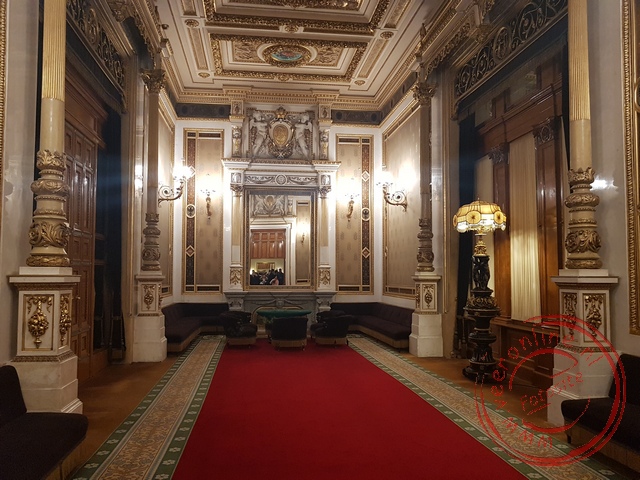
The route continues through an underground tunnel to chambers beneath Stephansplatz. In the 17th century, people were buried here to prevent the spread of the plague. However, underground burials proved ineffective, as the stench of the corpses permeated the church. After decades, the practice was abandoned. During the war, the underground chambers served as an air-raid shelter. From the church, it is only a short walk back to our hotel. In the evening, we prepare for a classical concert in the Annakirche. Next to the church, in Annagasse, we had earlier spotted a charming little restaurant. Here, I order goulash with pasta. The baroque Annakirche provides a splendid setting for a classical performance. Four musicians play works by Mozart, Haydn, and Beethoven. The church’s interior forms a fitting backdrop. We end the evening in a café near the Hofburg. Walking back to our guesthouse, we pass the Jewish quarter around Judenplatz. This is the nightlife district for the young crowd, and everywhere is bustling.

 Austria
  The famous Stephansdom of Vienna
 A sixcourse dinner in a restaurant in Vienna
 The beautiful Jesuit church in Vienna
 Angels carry Carlo Borromeus on a cloud above the altar
Travelogue Christmas in Vienna
Dag 2 | Austria > Schönbrunn Palace
Dag 3 | Austria > The Hofburg Palace
Dag 4 | Austria > Concert in the Annakirche
Dag 5 | Austria > The Prater Ferris Wheel