
154 countries
(and areas)
 - Azerbaijan
- Bahrain
- Barbados
- Belgium
- Belize
- Benin
- Bhutan
- Bolivia
- Bonaire
- Bosnia and Herzegovina
- Botswana
- Brazil
- British Virgin Islands
- Brunei
- Bulgaria
- Cambodia
- Canada
- Cape Verde
- Chile
- China
- Costa Rica
- Croatia
- Cuba
- Curacao
- Cyprus
- Czech Republic
- Denmark
- Dominica
- Dominican Republic
- Egypt
- El Salvador
- England
- Estonia
- Eswatini (Swaziland)
- Ethiopia
- Fiji
- Finland
- France
- French Guiana
- Georgia
- Germany
- Gibraltar
- Greece
- Grenada
- Guadeloupe
- Guatemala
- Honduras
- Hong Kong
- Hungary
- Iceland
- India
- Indonesia
- Iran
- Ireland
- Israel
- Italy
- Jamaica
- Japan
- Jordan
- Kazakhstan
- Kenya
- Kosovo
- Kuwait
- Kyrgyzstan
- Laos
- Latvia
- Lebanon
- Lesotho
- Liechtenstein
- Lithuania
- Luxembourg
- Macau
- Madagascar
- Malawi
- Malaysia
- Maldives
- Malta
- Martinique
- Mexico
- Moldova
- Monaco
- Mongolia
- Montenegro
- Morocco
- Mozambique
- Namibia
- Nepal
- Netherlands
- New Zealand
- Nicaragua
- North Macedonia
- Northern Ireland
- Norway
- Oman
- Pakistan
- Palestine
- Peru
- Philippines
- Poland
- Portugal
- Qatar
- Republic of Korea
- Romania
- Russia
- Saint Kitts and Nevis
- Saint Lucia
- Saint Martin
- Saint Vincent and the Grenadines
- San Marino
- São Tomé and Principe
- Saudi Arabia
- Scotland
- Senegal
- Serbia
- Singapore
- Sint Maarten
- Slovakia
- Slovenia
- South Africa
- Spain
- Sri Lanka
- Suriname
- Sweden
- Switzerland
- Tajikistan
- Tanzania
- Thailand
- The Gambia
- Tibet
- Togo
- Transnistria
- Trinidad and Tobago
- Tunisia
- Turkey
- Turkmenistan
- Uganda
- United Arab Emirates
- United States
- Uruguay
- Uzbekistan
- Vatican City
- Vietnam
- Wales
- Zambia
- Zanzibar
- Azerbaijan
- Bahrain
- Barbados
- Belgium
- Belize
- Benin
- Bhutan
- Bolivia
- Bonaire
- Bosnia and Herzegovina
- Botswana
- Brazil
- British Virgin Islands
- Brunei
- Bulgaria
- Cambodia
- Canada
- Cape Verde
- Chile
- China
- Costa Rica
- Croatia
- Cuba
- Curacao
- Cyprus
- Czech Republic
- Denmark
- Dominica
- Dominican Republic
- Egypt
- El Salvador
- England
- Estonia
- Eswatini (Swaziland)
- Ethiopia
- Fiji
- Finland
- France
- French Guiana
- Georgia
- Germany
- Gibraltar
- Greece
- Grenada
- Guadeloupe
- Guatemala
- Honduras
- Hong Kong
- Hungary
- Iceland
- India
- Indonesia
- Iran
- Ireland
- Israel
- Italy
- Jamaica
- Japan
- Jordan
- Kazakhstan
- Kenya
- Kosovo
- Kuwait
- Kyrgyzstan
- Laos
- Latvia
- Lebanon
- Lesotho
- Liechtenstein
- Lithuania
- Luxembourg
- Macau
- Madagascar
- Malawi
- Malaysia
- Maldives
- Malta
- Martinique
- Mexico
- Moldova
- Monaco
- Mongolia
- Montenegro
- Morocco
- Mozambique
- Namibia
- Nepal
- Netherlands
- New Zealand
- Nicaragua
- North Macedonia
- Northern Ireland
- Norway
- Oman
- Pakistan
- Palestine
- Peru
- Philippines
- Poland
- Portugal
- Qatar
- Republic of Korea
- Romania
- Russia
- Saint Kitts and Nevis
- Saint Lucia
- Saint Martin
- Saint Vincent and the Grenadines
- San Marino
- São Tomé and Principe
- Saudi Arabia
- Scotland
- Senegal
- Serbia
- Singapore
- Sint Maarten
- Slovakia
- Slovenia
- South Africa
- Spain
- Sri Lanka
- Suriname
- Sweden
- Switzerland
- Tajikistan
- Tanzania
- Thailand
- The Gambia
- Tibet
- Togo
- Transnistria
- Trinidad and Tobago
- Tunisia
- Turkey
- Turkmenistan
- Uganda
- United Arab Emirates
- United States
- Uruguay
- Uzbekistan
- Vatican City
- Vietnam
- Wales
- Zambia
- Zanzibar


Copyright 2004 - 2026
Veeronline.nl Travel Adventures
Home > Togo > Under the Spell of Voodoo > Travelogue day 5
Travelogue Under the Spell of Voodoo
December 21 2010 January 12 2011 (23 days)
Togo > 'Jové, Jové”
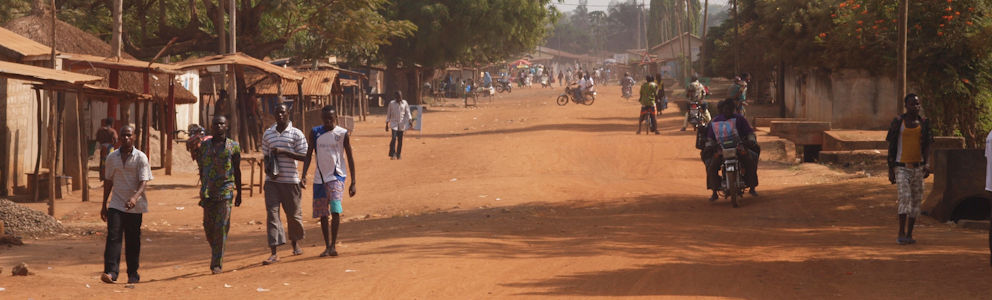
Dag 5 - Saturday, December 25, 2010Christmas! At breakfast, we wish each other a Merry Christmas and continue our journey. Today we are driving to Badou. Normally, we would take the direct route from Kpalimé to Atakpamé, but that road is closed due to recent flooding. We have to make a detour of over 150 kilometers via the main south–north route. We leave at seven o’clock. We pass Kpalimé and, a few kilometers later, turn left onto a dirt road. The road is marked as a “piste,” which usually doesn’t bode well. The bus jolts along the bumpy track. Abdullah drives carefully to avoid the potholes, though we are still shaken around quite a bit. Along the way, children wave enthusiastically. Virtually everyone pauses their work as we pass. The children shout “Jové, Jové,” meaning “white person,” and I wave back. After a toilet stop by the roadside, we walk a stretch along the dirt road—it’s nice to stretch our legs. A little further on, the bus picks us up again.

At the main road, we turn left heading north. The south–north route is a proper asphalt road. There are 64 kilometers to Atakpamé. Immediately, there is more activity and traffic on the road. With higher speed, there is less direct contact with the locals, and Abdullah honks frequently to announce the arrival of our massive vehicle. The main road runs straight through several villages, and this is where all the trade happens. Accidents are likely to occur at times. The buildings here are mostly houses with corrugated roofs, rather than round huts with thatched roofs along the dirt roads. At Atakpamé, we leave the main route and turn toward Badou. The road is still asphalt, but it contains large holes, which must be avoided—a real test of Abdullah’s skill. Along the way, we pass coffee and cocoa fields that provide income for the local people. Children run alongside the bus shouting “Jové, Jové.” We wind our way up the hills of the plateau near the Ghanaian border, navigating hairpin turns. At every bend, the horn sounds to warn oncoming traffic. The road is barely wide enough for two vehicles to pass. Upon reaching Badou, we drive straight to the Aklou Waterfalls.

The starting point for the walk to the falls is eleven kilometers further. Just after three o’clock, we arrive in Aklou, a small village popular with visitors to the waterfalls. Immediately, boys run along with the bus, hoping for a small job. Each visitor on the trail is given a local guide to help navigate the stones and rocks. It’s somewhat unnecessary, but it ensures more families benefit from tourism. Mesa is my guide, a slender boy of about eighteen. We communicate with hand gestures and a few French words, although French doesn’t seem his strong suit either. Mesa takes my bag, and I follow him up the mountain. The pace is brisk, and I have to push myself to keep up. At the second section, at my request, we slow a little. At the first stream, Mesa gestures for me to climb onto his back. I look at him incredulously, but he insists. He doesn’t want to be outdone by the other guides. Wobbling on his back, I make the crossing, though my feet get wet. At the next stream, a log makes it easier. Only near the waterfall does Mesa invite me once more onto his back—just once, and just for a photo. After that, I resolve to cross the water myself. On the other side, I change and take a dip. The Aklou Falls are 35 meters high, and the falling water spreads beautifully over this idyllic spot. Mesa dives in, and I follow. We high-five in the water and swim toward the waterfall, letting the water cascade over us.

On the way back, we take the same route. I no longer ride on his back, which seems to relieve Mesa as well. Our hotel today is on the edge of Badou. The rooms vary; I have one with a shared toilet in the hallway but a private shower. The hotel cook has prepared a special Christmas dinner: salad, chicken, fries, and vegetables. With enthusiasm and pride, the cook serves the meal. The food tastes excellent, but I don’t feel particularly festive—unless it comes from the tinny Christmas tune playing in the lobby every thirty seconds, like a musical card. In the evening, we walk into Badou for a drink. The streets are unlit, but the lights from stalls and passing cars provide enough illumination to reach the central square. We don’t immediately spot a bar. When we ask for directions, a boy leads us to a courtyard at an auberge. Onlookers immediately want to know where we are from. I realize, for the first time, that I never paid much attention during French class—regrettably so.
 Togo
Togo  The Tata are castle homes of the Tamberna tribe in northern Togo
 Chief Antoine leading the Tamberna tribe in the Tamberna valley
 A full lunch in a clearing in the forest
 Effortlessly balancing a water basin on her head
Travelogue Under the Spell of Voodoo
Dag 2 | Togo > Getting to know the city of Lomé
Dag 3 | Togo > The voodoo priest and the voodoo ceremony
Dag 4 | Togo > A dance performance on Christmas Eve
Dag 5 | Togo > 'Jové, Jové”
Dag 6 | Togo > The fire dance of the Tem tribe
Dag 7 | Togo > The iron blast furnaces of Bangeli
Dag 8 | Togo > Walking tour through Djamdé
Dag 9 | Togo > Climbing Mount Kabyé
Dag 10 | Togo > A Djembe as a souvenir
Dag 11 | Benin > New Year's Eve among the Beninese
Dag 12 | Benin > A look at the Somba tribes
Dag 13 | Benin > Meeting the chief of the Taneka-Beri tribe
Dag 14 | Benin > Singing with the children in Moupemou
Dag 15 | Benin > From north to south Benin
Dag 16 | Benin > Visit to the palace of Abomey
Dag 17 | Benin > The King of Ketou
Dag 18 | Benin > Sleeping in a stilt house in Ganvié
Dag 19 | Benin > Slave route to the 'Door of No Return'
Dag 20 | Benin > Eating a local pizza in the dark
Dag 21 | Benin > Voodoo festival of Quidah
Dag 22 | Togo > Farewell to Lomé
Dag 23 | Togo > Does the Djembe fit or not?