
154 countries
(and areas)
 - Azerbaijan
- Bahrain
- Barbados
- Belgium
- Belize
- Benin
- Bhutan
- Bolivia
- Bonaire
- Bosnia and Herzegovina
- Botswana
- Brazil
- British Virgin Islands
- Brunei
- Bulgaria
- Cambodia
- Canada
- Cape Verde
- Chile
- China
- Costa Rica
- Croatia
- Cuba
- Curacao
- Cyprus
- Czech Republic
- Denmark
- Dominica
- Dominican Republic
- Egypt
- El Salvador
- England
- Estonia
- Eswatini (Swaziland)
- Ethiopia
- Fiji
- Finland
- France
- French Guiana
- Georgia
- Germany
- Gibraltar
- Greece
- Grenada
- Guadeloupe
- Guatemala
- Honduras
- Hong Kong
- Hungary
- Iceland
- India
- Indonesia
- Iran
- Ireland
- Israel
- Italy
- Jamaica
- Japan
- Jordan
- Kazakhstan
- Kenya
- Kosovo
- Kuwait
- Kyrgyzstan
- Laos
- Latvia
- Lebanon
- Lesotho
- Liechtenstein
- Lithuania
- Luxembourg
- Macau
- Madagascar
- Malawi
- Malaysia
- Maldives
- Malta
- Martinique
- Mexico
- Moldova
- Monaco
- Mongolia
- Montenegro
- Morocco
- Mozambique
- Namibia
- Nepal
- Netherlands
- New Zealand
- Nicaragua
- North Macedonia
- Northern Ireland
- Norway
- Oman
- Pakistan
- Palestine
- Peru
- Philippines
- Poland
- Portugal
- Qatar
- Republic of Korea
- Romania
- Russia
- Saint Kitts and Nevis
- Saint Lucia
- Saint Martin
- Saint Vincent and the Grenadines
- San Marino
- São Tomé and Principe
- Saudi Arabia
- Scotland
- Senegal
- Serbia
- Singapore
- Sint Maarten
- Slovakia
- Slovenia
- South Africa
- Spain
- Sri Lanka
- Suriname
- Sweden
- Switzerland
- Tajikistan
- Tanzania
- Thailand
- The Gambia
- Tibet
- Togo
- Transnistria
- Trinidad and Tobago
- Tunisia
- Turkey
- Turkmenistan
- Uganda
- United Arab Emirates
- United States
- Uruguay
- Uzbekistan
- Vatican City
- Vietnam
- Wales
- Zambia
- Zanzibar
- Azerbaijan
- Bahrain
- Barbados
- Belgium
- Belize
- Benin
- Bhutan
- Bolivia
- Bonaire
- Bosnia and Herzegovina
- Botswana
- Brazil
- British Virgin Islands
- Brunei
- Bulgaria
- Cambodia
- Canada
- Cape Verde
- Chile
- China
- Costa Rica
- Croatia
- Cuba
- Curacao
- Cyprus
- Czech Republic
- Denmark
- Dominica
- Dominican Republic
- Egypt
- El Salvador
- England
- Estonia
- Eswatini (Swaziland)
- Ethiopia
- Fiji
- Finland
- France
- French Guiana
- Georgia
- Germany
- Gibraltar
- Greece
- Grenada
- Guadeloupe
- Guatemala
- Honduras
- Hong Kong
- Hungary
- Iceland
- India
- Indonesia
- Iran
- Ireland
- Israel
- Italy
- Jamaica
- Japan
- Jordan
- Kazakhstan
- Kenya
- Kosovo
- Kuwait
- Kyrgyzstan
- Laos
- Latvia
- Lebanon
- Lesotho
- Liechtenstein
- Lithuania
- Luxembourg
- Macau
- Madagascar
- Malawi
- Malaysia
- Maldives
- Malta
- Martinique
- Mexico
- Moldova
- Monaco
- Mongolia
- Montenegro
- Morocco
- Mozambique
- Namibia
- Nepal
- Netherlands
- New Zealand
- Nicaragua
- North Macedonia
- Northern Ireland
- Norway
- Oman
- Pakistan
- Palestine
- Peru
- Philippines
- Poland
- Portugal
- Qatar
- Republic of Korea
- Romania
- Russia
- Saint Kitts and Nevis
- Saint Lucia
- Saint Martin
- Saint Vincent and the Grenadines
- San Marino
- São Tomé and Principe
- Saudi Arabia
- Scotland
- Senegal
- Serbia
- Singapore
- Sint Maarten
- Slovakia
- Slovenia
- South Africa
- Spain
- Sri Lanka
- Suriname
- Sweden
- Switzerland
- Tajikistan
- Tanzania
- Thailand
- The Gambia
- Tibet
- Togo
- Transnistria
- Trinidad and Tobago
- Tunisia
- Turkey
- Turkmenistan
- Uganda
- United Arab Emirates
- United States
- Uruguay
- Uzbekistan
- Vatican City
- Vietnam
- Wales
- Zambia
- Zanzibar


Copyright 2004 - 2026
Veeronline.nl Travel Adventures
Home > Togo > Under the Spell of Voodoo > Travelogue day 6
Travelogue Under the Spell of Voodoo
December 21 2010 January 12 2011 (23 days)
Togo > The fire dance of the Tem tribe
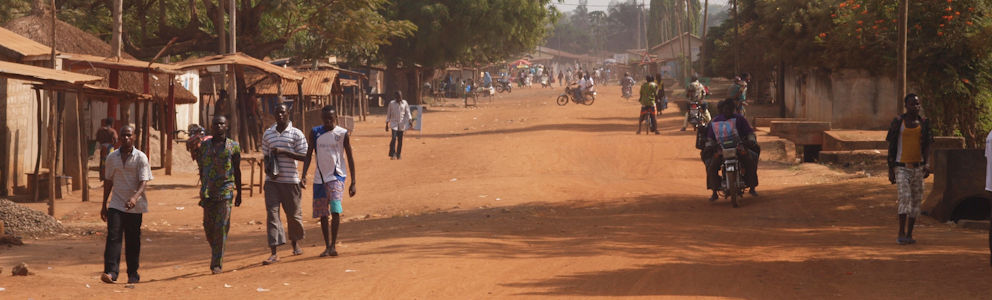
Dag 6 - Sunday, December 26, 2010Another early departure. The downside of yesterday’s route is that we have to travel back along the road from Badou to Atakpamé, weaving through all the potholes. Opinions are divided on whether the waterfall is worth the extra travel time. In any case, there is also time today to visit some villages. After about an hour, we stop in Ilé, a small village along the road. We take a walk through Ilé, and it’s clear that we are the main attraction. The children, in particular, come out of the thatched houses in large numbers to watch us. Taking photos is generally not a problem, and the children especially enjoy looking at the pictures afterward. I also show photos from the Netherlands, including family pictures. We continue on our way. In the villages we pass through, people wave at us. “Jové, Jové” is heard repeatedly. In Atakpamé, the streets are much busier.

Atakpamé lies at the crossroads of two major roads, which concentrates the trade in this town. Everyone is trying to make a living. Our first stop is at a Kente weaving workshop. Kente is colorful cotton or silk fabric originally made by the Asante people from Ghana. It is woven in narrow strips, which are then sewn together to be worn as clothing. The colors and patterns have symbolic meaning. In the workshop, a young girl demonstrates the weaving process, which is labor-intensive. In the center of Atakpamé, we stop for lunch. At a restaurant, we order drinks while Toto distributes sandwiches. We sit comfortably under a large tree, while bustling activity continues along the main road in front of us. After lunch, I walk along the main road. A Christian festival is taking place, and a group leader explains what is happening. I stroll past the various stalls. Once everyone is back on the bus, we continue toward Sokodé. We are back on the main route, but north of Atakpamé the road is much worse. This slows the journey, and the distance is still considerable. The landscape changes as we travel. It becomes much drier and more barren. In some places, the effects of recent floods are still visible—the land has subsided, and the soil is cracked. In some areas, the dry grasslands are set on fire so that the soil can be cultivated again for the rainy season. I marvel at how they manage to control fires in such a dry landscape. It is also clear that the northern regions have more Muslims, with small mosques in almost every village. In the south, Voodoo practitioners are more common. Nearly every town also has a Catholic church, and the buildings are relatively large compared to the size of the village.

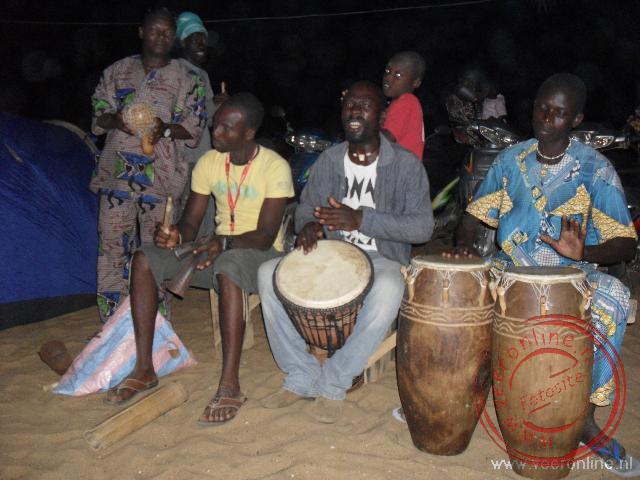
It seems that the size of the churches and mosques does not match the proportion of followers. Fortunately, in most villages, good school buildings have been constructed with foreign assistance. We stop at a village of the Kotokoli tribe, known for their distinctive grain silos. The grain and maize are stored in small thatched huts. I walk among the huts and greet the locals. The final stretch to Sokodé is a toll road, but this is no guarantee of smooth asphalt—potholes still need to be avoided. Finally, around 5:30 p.m., we arrive at the hotel, located about 1.5 kilometers outside Sokodé’s center. I quickly take a shower to wash off all the dust. In the evening, champagne is served with dinner, and we toast to Christmas. The meal takes a while, so we leave later than planned for the fire dance. By bus, we head to a Tem village east of Sokodé. It is dark, and only the headlights illuminate the road. Upon arrival, a large crowd is already waiting. The drumming begins immediately, and we are led to a bench. During the Tem fire dance, men demonstrate their ability to withstand fire. According to tradition, this was once necessary to rescue family members if their house was set on fire during an enemy attack. In sequences, the men show that they can hold torches against their bodies, roll through the campfire, and even bite off pieces of smoldering wood. It is somewhat bizarre. As quickly as it began, it is also over.
 Benin
Benin 
 Togo
Togo 

Travelogue Under the Spell of Voodoo
Dag 2 | Togo > Getting to know the city of Lomé
Dag 3 | Togo > The voodoo priest and the voodoo ceremony
Dag 4 | Togo > A dance performance on Christmas Eve
Dag 5 | Togo > 'Jové, Jové”
Dag 6 | Togo > The fire dance of the Tem tribe
Dag 7 | Togo > The iron blast furnaces of Bangeli
Dag 8 | Togo > Walking tour through Djamdé
Dag 9 | Togo > Climbing Mount Kabyé
Dag 10 | Togo > A Djembe as a souvenir
Dag 11 | Benin > New Year's Eve among the Beninese
Dag 12 | Benin > A look at the Somba tribes
Dag 13 | Benin > Meeting the chief of the Taneka-Beri tribe
Dag 14 | Benin > Singing with the children in Moupemou
Dag 15 | Benin > From north to south Benin
Dag 16 | Benin > Visit to the palace of Abomey
Dag 17 | Benin > The King of Ketou
Dag 18 | Benin > Sleeping in a stilt house in Ganvié
Dag 19 | Benin > Slave route to the 'Door of No Return'
Dag 20 | Benin > Eating a local pizza in the dark
Dag 21 | Benin > Voodoo festival of Quidah
Dag 22 | Togo > Farewell to Lomé
Dag 23 | Togo > Does the Djembe fit or not?