
154 countries
(and areas)
 - Belize
- Benin
- Bhutan
- Bolivia
- Bonaire
- Bosnia and Herzegovina
- Botswana
- Brazil
- British Virgin Islands
- Brunei
- Bulgaria
- Cambodia
- Canada
- Cape Verde
- Chile
- China
- Costa Rica
- Croatia
- Cuba
- Curacao
- Cyprus
- Czech Republic
- Denmark
- Dominica
- Dominican Republic
- Egypt
- El Salvador
- England
- Estonia
- Eswatini (Swaziland)
- Ethiopia
- Fiji
- Finland
- France
- French Guiana
- Georgia
- Germany
- Gibraltar
- Greece
- Grenada
- Guadeloupe
- Guatemala
- Honduras
- Hong Kong
- Hungary
- Iceland
- India
- Indonesia
- Iran
- Ireland
- Israel
- Italy
- Jamaica
- Japan
- Jordan
- Kazakhstan
- Kenya
- Kosovo
- Kuwait
- Kyrgyzstan
- Laos
- Latvia
- Lebanon
- Lesotho
- Liechtenstein
- Lithuania
- Luxembourg
- Macau
- Madagascar
- Malawi
- Malaysia
- Maldives
- Malta
- Martinique
- Mexico
- Moldova
- Monaco
- Mongolia
- Montenegro
- Morocco
- Mozambique
- Namibia
- Nepal
- Netherlands
- New Zealand
- Nicaragua
- North Macedonia
- Northern Ireland
- Norway
- Oman
- Pakistan
- Palestine
- Peru
- Philippines
- Poland
- Portugal
- Qatar
- Republic of Korea
- Romania
- Russia
- Saint Kitts and Nevis
- Saint Lucia
- Saint Martin
- Saint Vincent and the Grenadines
- San Marino
- São Tomé and Principe
- Saudi Arabia
- Scotland
- Senegal
- Serbia
- Singapore
- Sint Maarten
- Slovakia
- Slovenia
- South Africa
- Spain
- Sri Lanka
- Suriname
- Sweden
- Switzerland
- Tajikistan
- Tanzania
- Thailand
- The Gambia
- Tibet
- Togo
- Transnistria
- Trinidad and Tobago
- Tunisia
- Turkey
- Turkmenistan
- Uganda
- United Arab Emirates
- United States
- Uruguay
- Uzbekistan
- Vatican City
- Vietnam
- Wales
- Zambia
- Zanzibar
- Belize
- Benin
- Bhutan
- Bolivia
- Bonaire
- Bosnia and Herzegovina
- Botswana
- Brazil
- British Virgin Islands
- Brunei
- Bulgaria
- Cambodia
- Canada
- Cape Verde
- Chile
- China
- Costa Rica
- Croatia
- Cuba
- Curacao
- Cyprus
- Czech Republic
- Denmark
- Dominica
- Dominican Republic
- Egypt
- El Salvador
- England
- Estonia
- Eswatini (Swaziland)
- Ethiopia
- Fiji
- Finland
- France
- French Guiana
- Georgia
- Germany
- Gibraltar
- Greece
- Grenada
- Guadeloupe
- Guatemala
- Honduras
- Hong Kong
- Hungary
- Iceland
- India
- Indonesia
- Iran
- Ireland
- Israel
- Italy
- Jamaica
- Japan
- Jordan
- Kazakhstan
- Kenya
- Kosovo
- Kuwait
- Kyrgyzstan
- Laos
- Latvia
- Lebanon
- Lesotho
- Liechtenstein
- Lithuania
- Luxembourg
- Macau
- Madagascar
- Malawi
- Malaysia
- Maldives
- Malta
- Martinique
- Mexico
- Moldova
- Monaco
- Mongolia
- Montenegro
- Morocco
- Mozambique
- Namibia
- Nepal
- Netherlands
- New Zealand
- Nicaragua
- North Macedonia
- Northern Ireland
- Norway
- Oman
- Pakistan
- Palestine
- Peru
- Philippines
- Poland
- Portugal
- Qatar
- Republic of Korea
- Romania
- Russia
- Saint Kitts and Nevis
- Saint Lucia
- Saint Martin
- Saint Vincent and the Grenadines
- San Marino
- São Tomé and Principe
- Saudi Arabia
- Scotland
- Senegal
- Serbia
- Singapore
- Sint Maarten
- Slovakia
- Slovenia
- South Africa
- Spain
- Sri Lanka
- Suriname
- Sweden
- Switzerland
- Tajikistan
- Tanzania
- Thailand
- The Gambia
- Tibet
- Togo
- Transnistria
- Trinidad and Tobago
- Tunisia
- Turkey
- Turkmenistan
- Uganda
- United Arab Emirates
- United States
- Uruguay
- Uzbekistan
- Vatican City
- Vietnam
- Wales
- Zambia
- Zanzibar


Copyright 2004 - 2026
Veeronline.nl Travel Adventures

Home > Bhutan > Tour of Bhutan > Travelogue day 4
Travelogue Tour of Bhutan
October 28 November 6 2023 (10 days)
Bhutan > A Buddha in the mountains
Dag 4 - Tuesday, 31 October 2023I go into the laundry room. Rinchen asks if there is warm water? There should be a bowl ready. The lady of the house indicates that warm water should come from the washbasin tap. This does not happen. She already gives me a bowl of water. From the questions and gestures, it is unclear to me whether I should wash with this or if more is coming. Shortly after, a bucket of warm water is brought, and shortly thereafter a second one. Now I have enough. I squat down and pour the water over myself. It takes some getting used to, but it works. At breakfast, I skip the spicy dishes. It’s too early for me. By saying the word "metsu," you indicate you’ve had enough. This seems like an important word to remember. When leaving the homestay, we thank the family. As we drive away, she and her daughter enthusiastically wave us goodbye. Although the white temple is officially not yet open, yesterday we were told we could come earlier. While the young monks walk with their plates to the breakfast room, we enter the temple. Rinchen explains the meaning of the various Buddhist images. I start to recognize some of them. For the caretaker, the story probably takes too long. Slowly, he begins turning off some lights. When we leave the temple, he closes the door and hurries away. We head towards the capital, Thimphu. For this, we partially drive back over the Chelela Pass. There is a shorter route, but it is impassable due to roadworks.

As we drive up the hairpin bends, the Haa Valley becomes smaller and smaller. The monastery around the white temple is clearly visible from the mountains. I also see the black temple and the homestay. At the top of the Chelela Pass, it is quiet this morning. A few tourists are walking around. At a small stall in the back of a small truck, we buy some peanut bars and tea. On the other side, we descend again to Paro. Soon the airport comes back into view. Down in the valley, we do not turn towards Paro but drive the other way toward Thimphu. This is the “BNH,” says Rinchen, the Bhutanese National Highway. The road to Thimphu has two lanes and is considerably busier than the mountain roads. The road follows the Thimphu Chu River. Further on, this river merges with the Ola Rong Chu River and continues as one river. Rinchen spots Hanuman langurs, monkeys on the rocks. A unique monkey species found only in Bhutan. The animals jump from bush to bush and don’t pay attention to us. At the river split is the turnoff to Thimphu. We get out to walk across the bridge. The rushing water of the two rivers squeezes through the carved valley. From here, it is still twenty kilometers to Thimphu. This stretch is the oldest road in Bhutan. The road was only built in the 1960s. Before that, there were no cars in the country. It is hardly imaginable that Bhutan managed without motorized traffic until the 1960s. The capital currently has about 130,000 inhabitants, making it the largest city in the country. The city is rapidly expanding. Houses and apartments are being built everywhere. We stop at a restaurant in an old traditional building. Here we also meet Tsheten, the owner of our tour operator Bhutan Travel Guru. We coordinated the itinerary with him beforehand. It is nice to meet him personally. Lunch of typical Bhutanese dishes is served on a low table with cushions on the floor. We are clearly less used to this. At other tables, tourists receive extra cushions to sit higher.

That is not for me. I go for the Bhutanese style. Afterward, Tsheten has a small gift for us from Bhutan. We thank him and say goodbye. In the afternoon, we do a city tour through the capital Thimphu. First, we drive to the huge Buddha statue in the mountains. The Buddha Dordenma statue is one of the largest Buddha statues in the world. The statue rises to a height of about 51.5 meters. Construction of the Buddha Dordenma statue began in 2006 and was completed in 2015. It was a joint project of Bhutan’s royal family and the local community. The enormous Buddha can be seen from far away. Festivals can be organized on the forecourt. Inside the Buddha statue is a modern temple. It feels somewhat kitschy, probably because the temple was made in China, shipped to India, and transported through the mountains to Bhutan. The Buddha images resemble more Chinese Buddhas. The temple houses thousands of small Buddha figures. For $1,000, one can buy such a figure as a sponsorship. From the statue, we also have a view of the city of Thimphu. Construction work for city expansion is visible everywhere. The next destination is the National Library. This library houses the largest published book ever in the world. Measuring over two meters and weighing 60 kilograms, the book is recorded in the Guinness World Records. Besides the book, the library shows the history of printing, especially of Buddhist scriptures. Old typewriters and various pens are on display. After the library, we drive to the mini zoo on the outskirts of the city. The Motithang Takin Preserve is home to the takin. The takin has a striking appearance with a heavy-built body, a curved neck, and short legs. They have a thick coat varying in color from dark brown to light brown.
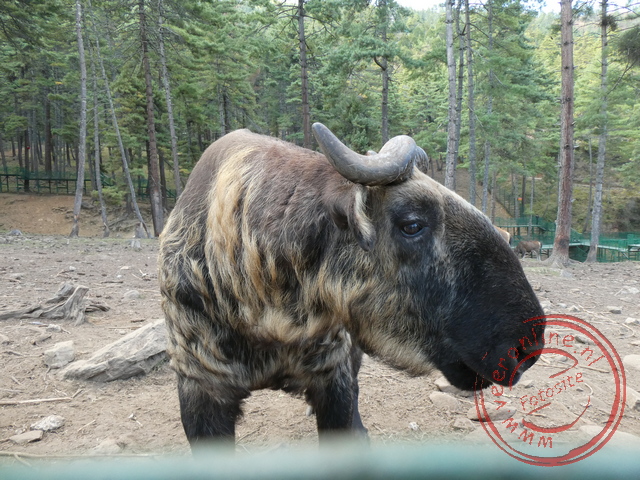
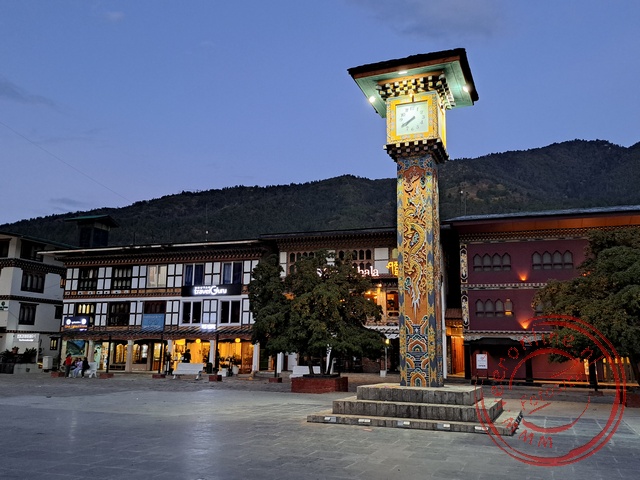
The takin is Bhutan’s national animal. The takin is best described as a cross between a gnu and a goat. From a walkway, we can observe these oddly looking animals. At the end of the afternoon, we drive to the hotel in the center. The reception is with a cup of tea. When I walk to my room on the third floor, my suitcase is already waiting at my door. Although the sun has already set behind the mountains, we still have time to walk into the capital. Thimphu’s center has only a few streets. The city has no traffic lights, but at the busiest intersection, a policeman directs traffic. The shops are for everyday shopping. We end up at the clock tower on the central square. The office of Bhutan Travel Guru is also located at this square. Right next to it is a little bar. We order a local “Druk” beer. Our first beer during our stay in Bhutan. Back at the hotel, the buffet is ready. A fine combination mainly of Indian dishes.
 Bhutan
  We pass a stupa on the way to Goenpa
 Phobjikha Valley grows smaller behind us
 An old stupa on the edge of Phobjikha Valley
 The Lhakhang Karpo monastery seen from the mountains
Travelogue Tour of Bhutan
Dag 2 | Bhutan > Welcome to Bhutan
Dag 3 | Bhutan > The Kila Goenpa Monastery
Dag 4 | Bhutan > A Buddha in the mountains
Dag 5 | Bhutan > The Punakha Monastery
Dag 6 | Bhutan > Over the Lawala mountain pass
Dag 7 | Bhutan > Hiking in the Phobjikha Valley
Dag 8 | Bhutan > Back towards Paro
Dag 9 | Bhutan > The Tiger's Nest climb
Dag 10 | Bhutan > Farewell in Delhi