
154 countries
(and areas)
 - Belize
- Benin
- Bhutan
- Bolivia
- Bonaire
- Bosnia and Herzegovina
- Botswana
- Brazil
- British Virgin Islands
- Brunei
- Bulgaria
- Cambodia
- Canada
- Cape Verde
- Chile
- China
- Costa Rica
- Croatia
- Cuba
- Curacao
- Cyprus
- Czech Republic
- Denmark
- Dominica
- Dominican Republic
- Egypt
- El Salvador
- England
- Estonia
- Eswatini (Swaziland)
- Ethiopia
- Fiji
- Finland
- France
- French Guiana
- Georgia
- Germany
- Gibraltar
- Greece
- Grenada
- Guadeloupe
- Guatemala
- Honduras
- Hong Kong
- Hungary
- Iceland
- India
- Indonesia
- Iran
- Ireland
- Israel
- Italy
- Jamaica
- Japan
- Jordan
- Kazakhstan
- Kenya
- Kosovo
- Kuwait
- Kyrgyzstan
- Laos
- Latvia
- Lebanon
- Lesotho
- Liechtenstein
- Lithuania
- Luxembourg
- Macau
- Madagascar
- Malawi
- Malaysia
- Maldives
- Malta
- Martinique
- Mexico
- Moldova
- Monaco
- Mongolia
- Montenegro
- Morocco
- Mozambique
- Namibia
- Nepal
- Netherlands
- New Zealand
- Nicaragua
- North Macedonia
- Northern Ireland
- Norway
- Oman
- Pakistan
- Palestine
- Peru
- Philippines
- Poland
- Portugal
- Qatar
- Republic of Korea
- Romania
- Russia
- Saint Kitts and Nevis
- Saint Lucia
- Saint Martin
- Saint Vincent and the Grenadines
- San Marino
- São Tomé and Principe
- Saudi Arabia
- Scotland
- Senegal
- Serbia
- Singapore
- Sint Maarten
- Slovakia
- Slovenia
- South Africa
- Spain
- Sri Lanka
- Suriname
- Sweden
- Switzerland
- Tajikistan
- Tanzania
- Thailand
- The Gambia
- Tibet
- Togo
- Transnistria
- Trinidad and Tobago
- Tunisia
- Turkey
- Turkmenistan
- Uganda
- United Arab Emirates
- United States
- Uruguay
- Uzbekistan
- Vatican City
- Vietnam
- Wales
- Zambia
- Zanzibar
- Belize
- Benin
- Bhutan
- Bolivia
- Bonaire
- Bosnia and Herzegovina
- Botswana
- Brazil
- British Virgin Islands
- Brunei
- Bulgaria
- Cambodia
- Canada
- Cape Verde
- Chile
- China
- Costa Rica
- Croatia
- Cuba
- Curacao
- Cyprus
- Czech Republic
- Denmark
- Dominica
- Dominican Republic
- Egypt
- El Salvador
- England
- Estonia
- Eswatini (Swaziland)
- Ethiopia
- Fiji
- Finland
- France
- French Guiana
- Georgia
- Germany
- Gibraltar
- Greece
- Grenada
- Guadeloupe
- Guatemala
- Honduras
- Hong Kong
- Hungary
- Iceland
- India
- Indonesia
- Iran
- Ireland
- Israel
- Italy
- Jamaica
- Japan
- Jordan
- Kazakhstan
- Kenya
- Kosovo
- Kuwait
- Kyrgyzstan
- Laos
- Latvia
- Lebanon
- Lesotho
- Liechtenstein
- Lithuania
- Luxembourg
- Macau
- Madagascar
- Malawi
- Malaysia
- Maldives
- Malta
- Martinique
- Mexico
- Moldova
- Monaco
- Mongolia
- Montenegro
- Morocco
- Mozambique
- Namibia
- Nepal
- Netherlands
- New Zealand
- Nicaragua
- North Macedonia
- Northern Ireland
- Norway
- Oman
- Pakistan
- Palestine
- Peru
- Philippines
- Poland
- Portugal
- Qatar
- Republic of Korea
- Romania
- Russia
- Saint Kitts and Nevis
- Saint Lucia
- Saint Martin
- Saint Vincent and the Grenadines
- San Marino
- São Tomé and Principe
- Saudi Arabia
- Scotland
- Senegal
- Serbia
- Singapore
- Sint Maarten
- Slovakia
- Slovenia
- South Africa
- Spain
- Sri Lanka
- Suriname
- Sweden
- Switzerland
- Tajikistan
- Tanzania
- Thailand
- The Gambia
- Tibet
- Togo
- Transnistria
- Trinidad and Tobago
- Tunisia
- Turkey
- Turkmenistan
- Uganda
- United Arab Emirates
- United States
- Uruguay
- Uzbekistan
- Vatican City
- Vietnam
- Wales
- Zambia
- Zanzibar


Copyright 2004 - 2026
Veeronline.nl Travel Adventures
Home > Vietnam > Roundtrip Indochina > Travelogue day 13
Travelogue Roundtrip Indochina
12 febr - 8 march 2008 (26 days)
Vietnam > The tunnels of Vinh Moc
Dag 13 - Sunday, February 24, 2008We leave Dong Ha heading south. It is raining outside. We had just been looking forward to better and, above all, warmer weather now that we are in Vietnam. The opposite turns out to be true. The bus windows are fogged up. I take the opportunity to read about the history of Vietnam in the travel guide and realize how little I actually know about the background of the Vietnam War.

Just north of the former border between North and South Vietnam, we visit the Vinh Moc tunnel complex. Around the 17th parallel, the border between the two Vietnams was established, and five kilometers on either side of the border was off-limits. The people living in this area did not leave. They dug an extensive tunnel system to live in, but also as protection against heavy bombardments. In total, these residents lived in the narrow tunnels for six years. In the museum, photographs show what life was like during the war. Then we follow the guide into the tunnel complex. Bent over, we can just make our way through the narrow passages. It is hard to imagine that people lived here for such a long time.

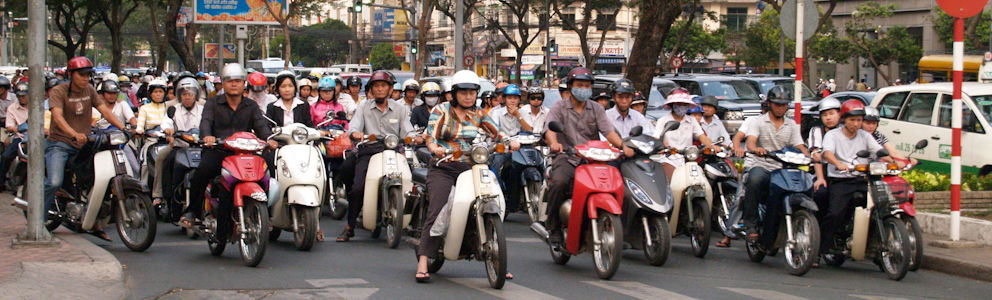
As we continue by bus, we soon reach the former border river. We could simply drive across the bridge, but Perry suggests crossing the border on foot. The pedestrian bridge leads directly to the impressive concrete statue representing communism. The statue depicts the victory of North Vietnam over the south. In South Vietnam, we get back on the bus and continue to Hué. Just before Hué, we stop for lunch. Early in the afternoon, we arrive in the center of Hué. Hué is a large city in the northern part of the southern region. It was once ruled by imperial dynasties. The walled Citadel and the Forbidden City still bear witness to this, although the Citadel was heavily damaged by American bombing during the war. In the afternoon, we walk through Hué. The streets are busy. Everyone seems to be riding a scooter or bicycle.

Crossing the street requires careful attention. This city is quite a change compared to the past week. We walk over the bridge across the Perfume River and return via the other bridge. We search for two pagodas. I notice that in Vietnam, Buddhist symbols are not very visible in public. Only 18% of the population practices Buddhism, compared to 80% in Laos. We really have to look carefully to find the Tu Dam Pagoda and the Bao Quoc Pagoda. The first is closed, and at the second, we can only walk around the building. The temple itself is not accessible. We walk back along the railway. I am amazed by the large number of scooters. Especially when the railway barriers rise, a flood of scooters comes toward us. It is now around five o’clock and rush hour. We follow the railway a short distance back to our hotel. The railway runs from Hanoi to Ho Chi Minh City and is the only railway in the country. Just as we walk here, the train to Ho Chi Minh passes us. In the evening, Saskia hosts a small drink; it is her birthday today. Afterwards, we eat at a restaurant in the entertainment district and have another beer on the terrace of a trendy bar. Soon, we are engaged in conversation by locals who want to know where we are from, what we think of Vietnam, and so on. Vietnamese people clearly speak better English than their counterparts in Laos.
 Laos
Laos 

 Vietnam

Travelogue Roundtrip Indochina
Dag 2 | Thailand > The temple of Wat Doi Suthep
Dag 3 | Thailand > Ten baht for a photo
Dag 4 | Laos > By boat over the Mekong
Dag 5 | Laos > Visit to the mountain tribes
Dag 6 | Laos > The temples of Luang Prabang
Dag 7 | Laos > The Kuang Si waterfall
Dag 8 | Laos > On the way to Phonsavan
Dag 9 | Laos > The flight is canceled!
Dag 10 | Laos > Still to Vientiane
Dag 11 | Laos > Traveling through the mountains
Dag 12 | Vietnam > From Laos to Vietnam
Dag 13 | Vietnam > The tunnels of Vinh Moc
Dag 14 | Vietnam > The citadel of Hué
Dag 15 | Vietnam > The trading town of Hoi An
Dag 16 | Vietnam > Wandering through Hoi An
Dag 17 | Vietnam > Night train to Ho Chi Minh City
Dag 18 | Vietnam > A real scooter plague
Dag 19 | Vietnam > Stuck in the tunnel passage
Dag 20 | Cambodia > To Phnom Penh in Cambodia
Dag 21 | Cambodia > Deep impression at the Killing Fields
Dag 22 | Cambodia > School project in Siem Reap
Dag 23 | Cambodia > The impressive temple of Angkor Wat
Dag 24 | Cambodia > On my own past the Ta Phrom jungle temple
Dag 25 | Cambodia > By bike between the temples
Dag 26 | Cambodia > Back home