
154 countries
(and areas)
 - Azerbaijan
- Bahrain
- Barbados
- Belgium
- Belize
- Benin
- Bhutan
- Bolivia
- Bonaire
- Bosnia and Herzegovina
- Botswana
- Brazil
- British Virgin Islands
- Brunei
- Bulgaria
- Cambodia
- Canada
- Cape Verde
- Chile
- China
- Costa Rica
- Croatia
- Cuba
- Curacao
- Cyprus
- Czech Republic
- Denmark
- Dominica
- Dominican Republic
- Egypt
- El Salvador
- England
- Estonia
- Eswatini (Swaziland)
- Ethiopia
- Fiji
- Finland
- France
- French Guiana
- Georgia
- Germany
- Gibraltar
- Greece
- Grenada
- Guadeloupe
- Guatemala
- Honduras
- Hong Kong
- Hungary
- Iceland
- India
- Indonesia
- Iran
- Ireland
- Israel
- Italy
- Jamaica
- Japan
- Jordan
- Kazakhstan
- Kenya
- Kosovo
- Kuwait
- Kyrgyzstan
- Laos
- Latvia
- Lebanon
- Lesotho
- Liechtenstein
- Lithuania
- Luxembourg
- Macau
- Madagascar
- Malawi
- Malaysia
- Maldives
- Malta
- Martinique
- Mexico
- Moldova
- Monaco
- Mongolia
- Montenegro
- Morocco
- Mozambique
- Namibia
- Nepal
- Netherlands
- New Zealand
- Nicaragua
- North Macedonia
- Northern Ireland
- Norway
- Oman
- Pakistan
- Palestine
- Peru
- Philippines
- Poland
- Portugal
- Qatar
- Republic of Korea
- Romania
- Russia
- Saint Kitts and Nevis
- Saint Lucia
- Saint Martin
- Saint Vincent and the Grenadines
- San Marino
- São Tomé and Principe
- Saudi Arabia
- Scotland
- Senegal
- Serbia
- Singapore
- Sint Maarten
- Slovakia
- Slovenia
- South Africa
- Spain
- Sri Lanka
- Suriname
- Sweden
- Switzerland
- Tajikistan
- Tanzania
- Thailand
- The Gambia
- Tibet
- Togo
- Transnistria
- Trinidad and Tobago
- Tunisia
- Turkey
- Turkmenistan
- Uganda
- United Arab Emirates
- United States
- Uruguay
- Uzbekistan
- Vatican City
- Vietnam
- Wales
- Zambia
- Zanzibar
- Azerbaijan
- Bahrain
- Barbados
- Belgium
- Belize
- Benin
- Bhutan
- Bolivia
- Bonaire
- Bosnia and Herzegovina
- Botswana
- Brazil
- British Virgin Islands
- Brunei
- Bulgaria
- Cambodia
- Canada
- Cape Verde
- Chile
- China
- Costa Rica
- Croatia
- Cuba
- Curacao
- Cyprus
- Czech Republic
- Denmark
- Dominica
- Dominican Republic
- Egypt
- El Salvador
- England
- Estonia
- Eswatini (Swaziland)
- Ethiopia
- Fiji
- Finland
- France
- French Guiana
- Georgia
- Germany
- Gibraltar
- Greece
- Grenada
- Guadeloupe
- Guatemala
- Honduras
- Hong Kong
- Hungary
- Iceland
- India
- Indonesia
- Iran
- Ireland
- Israel
- Italy
- Jamaica
- Japan
- Jordan
- Kazakhstan
- Kenya
- Kosovo
- Kuwait
- Kyrgyzstan
- Laos
- Latvia
- Lebanon
- Lesotho
- Liechtenstein
- Lithuania
- Luxembourg
- Macau
- Madagascar
- Malawi
- Malaysia
- Maldives
- Malta
- Martinique
- Mexico
- Moldova
- Monaco
- Mongolia
- Montenegro
- Morocco
- Mozambique
- Namibia
- Nepal
- Netherlands
- New Zealand
- Nicaragua
- North Macedonia
- Northern Ireland
- Norway
- Oman
- Pakistan
- Palestine
- Peru
- Philippines
- Poland
- Portugal
- Qatar
- Republic of Korea
- Romania
- Russia
- Saint Kitts and Nevis
- Saint Lucia
- Saint Martin
- Saint Vincent and the Grenadines
- San Marino
- São Tomé and Principe
- Saudi Arabia
- Scotland
- Senegal
- Serbia
- Singapore
- Sint Maarten
- Slovakia
- Slovenia
- South Africa
- Spain
- Sri Lanka
- Suriname
- Sweden
- Switzerland
- Tajikistan
- Tanzania
- Thailand
- The Gambia
- Tibet
- Togo
- Transnistria
- Trinidad and Tobago
- Tunisia
- Turkey
- Turkmenistan
- Uganda
- United Arab Emirates
- United States
- Uruguay
- Uzbekistan
- Vatican City
- Vietnam
- Wales
- Zambia
- Zanzibar


Copyright 2004 - 2026
Veeronline.nl Travel Adventures

Home > Iran > Impressive and Hospitable Iran > Travelogue day 7
Travelogue Impressive and Hospitable Iran
April 29 May 9 2010 (11 days)
Iran > Persepolis, the city of Darius I
Dag 7 - Wednesday, May 5, 2010At half past seven, we leave Shiraz heading for Esfahan. But before we get there, we first visit Persepolis. Amin rides along in the bus specifically for this purpose. He is our guide for Persepolis. Amin is a young Iranian, about twenty-five years old. In clear English, he tells us on the way to Persepolis about the history of Iran and the Persian Empire. He also explains about Darius I, who built the city of Persepolis in southern Iran. Darius the Great was King of Persia around 500 BC and was a relative of the earlier king, Cyrus. The original name of Persepolis is Parsa.

Persepolis is the Greek name and means “City of the Persians.” When we arrive at the archaeological site, Amin leads us up the grand stairs into Persepolis. We walk among the columns of the former palaces, where the Persian kings held their audiences. Much of the original relief sculpture has been preserved. On the central stairs of the complex, all the population groups are depicted presenting gifts to the king. Of Darius’ palace and the Gate of All Nations, relatively the most remains visible. Unfortunately, this section is currently under renovation and not accessible. After the tour, we end up at the museum, housed in the fully restored residence of the queens. It provides a good impression of how the entire palace complex would have looked in its prime. Finally, we climb the nearby hill for a view over the ancient city. Allegedly, the city fell into decline after being conquered by Alexander the Great.

Later mudslides from the hill buried the sculptures under sand, protecting them from destruction. At the exit, we say goodbye to Amin and continue our journey toward Esfahan around noon. Along the way, we break the long drive for a picnic on a small grassy field. I use the rest of the journey to read up on Esfahan and also take a short nap. Around seven o’clock, we arrive in the old Persian capital. We will stay in the hotel for three nights. In the evening, we stroll through the narrow and often covered streets toward the large Ali Iman Square. The square is the second largest in the world; only Beijing’s Tiananmen Square is bigger. The square is bustling. People take horse-and-carriage rides around the square, young people play volleyball on the grass, and families picnic around the fountain. There is a lively atmosphere, and naturally, many people want to know where we are from and, more importantly, what we think of Iran. We eat at the Sonnati restaurant, right by the square. Half sitting, half reclining, we take our place on the takhts (daybeds). It takes a little getting used to eating this way, but it perfectly conveys the typical Iranian atmosphere. I order the traditional Iranian dish, Biryani—a dish with marinated chicken, yogurt, spices, and rice. It tastes excellent.
 Iran
Iran  A detail of the Jameh Mosque in Yazd
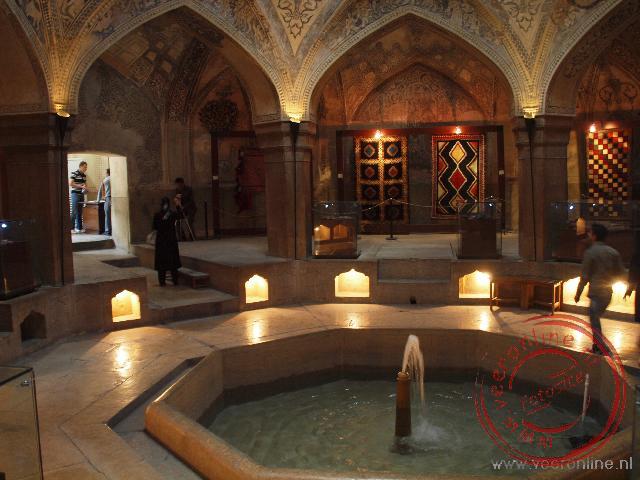 The former bathhouse Hammame Vakil is now a carpet exhibition
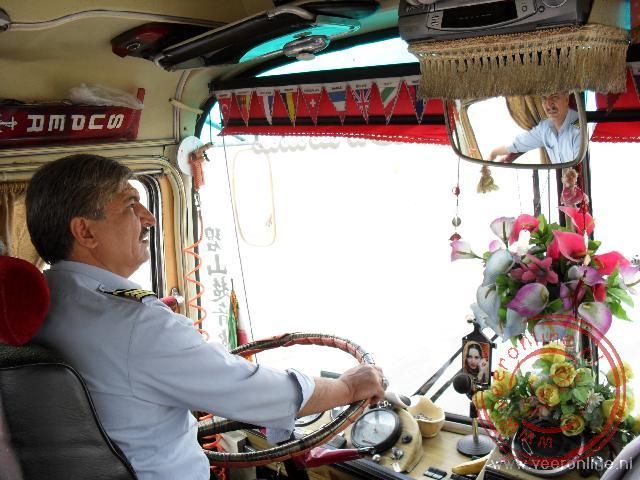 Reza the bus driver drives the richly decorated bus through the Iranian landscape
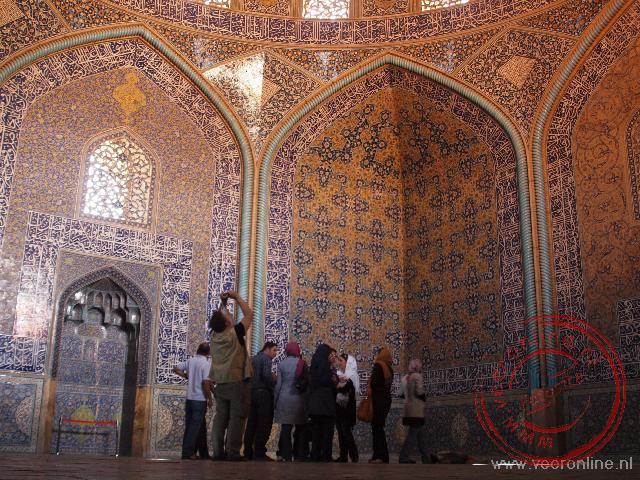 The Sheikh Lotfollah Mosque at the central square in Esfahan
Travelogue Impressive and Hospitable Iran
Dag 2 | Iran > The climb of the Alborz Mountains
Dag 3 | Iran > The Sadabad Palace Museum
Dag 4 | Iran > Wandering through the streets of Yazd
Dag 5 | Iran > The tombs of Cyrus and Darius
Dag 6 | Iran > 'Islam is open to everyone'
Dag 7 | Iran > Persepolis, the city of Darius I
Dag 8 | Iran > Strolling across the square in Esfahan
Dag 9 | Iran > Having tea in the park
Dag 10 | Iran > The Mausoleum of Fatima in Qom
Dag 11 | Iran > Departure from Tehran