
154 countries
(and areas)
 - Belize
- Benin
- Bhutan
- Bolivia
- Bonaire
- Bosnia and Herzegovina
- Botswana
- Brazil
- British Virgin Islands
- Brunei
- Bulgaria
- Cambodia
- Canada
- Cape Verde
- Chile
- China
- Costa Rica
- Croatia
- Cuba
- Curacao
- Cyprus
- Czech Republic
- Denmark
- Dominica
- Dominican Republic
- Egypt
- El Salvador
- England
- Estonia
- Eswatini (Swaziland)
- Ethiopia
- Fiji
- Finland
- France
- French Guiana
- Georgia
- Germany
- Gibraltar
- Greece
- Grenada
- Guadeloupe
- Guatemala
- Honduras
- Hong Kong
- Hungary
- Iceland
- India
- Indonesia
- Iran
- Ireland
- Israel
- Italy
- Jamaica
- Japan
- Jordan
- Kazakhstan
- Kenya
- Kosovo
- Kuwait
- Kyrgyzstan
- Laos
- Latvia
- Lebanon
- Lesotho
- Liechtenstein
- Lithuania
- Luxembourg
- Macau
- Madagascar
- Malawi
- Malaysia
- Maldives
- Malta
- Martinique
- Mexico
- Moldova
- Monaco
- Mongolia
- Montenegro
- Morocco
- Mozambique
- Namibia
- Nepal
- Netherlands
- New Zealand
- Nicaragua
- North Macedonia
- Northern Ireland
- Norway
- Oman
- Pakistan
- Palestine
- Peru
- Philippines
- Poland
- Portugal
- Qatar
- Republic of Korea
- Romania
- Russia
- Saint Kitts and Nevis
- Saint Lucia
- Saint Martin
- Saint Vincent and the Grenadines
- San Marino
- São Tomé and Principe
- Saudi Arabia
- Scotland
- Senegal
- Serbia
- Singapore
- Sint Maarten
- Slovakia
- Slovenia
- South Africa
- Spain
- Sri Lanka
- Suriname
- Sweden
- Switzerland
- Tajikistan
- Tanzania
- Thailand
- The Gambia
- Tibet
- Togo
- Transnistria
- Trinidad and Tobago
- Tunisia
- Turkey
- Turkmenistan
- Uganda
- United Arab Emirates
- United States
- Uruguay
- Uzbekistan
- Vatican City
- Vietnam
- Wales
- Zambia
- Zanzibar
- Belize
- Benin
- Bhutan
- Bolivia
- Bonaire
- Bosnia and Herzegovina
- Botswana
- Brazil
- British Virgin Islands
- Brunei
- Bulgaria
- Cambodia
- Canada
- Cape Verde
- Chile
- China
- Costa Rica
- Croatia
- Cuba
- Curacao
- Cyprus
- Czech Republic
- Denmark
- Dominica
- Dominican Republic
- Egypt
- El Salvador
- England
- Estonia
- Eswatini (Swaziland)
- Ethiopia
- Fiji
- Finland
- France
- French Guiana
- Georgia
- Germany
- Gibraltar
- Greece
- Grenada
- Guadeloupe
- Guatemala
- Honduras
- Hong Kong
- Hungary
- Iceland
- India
- Indonesia
- Iran
- Ireland
- Israel
- Italy
- Jamaica
- Japan
- Jordan
- Kazakhstan
- Kenya
- Kosovo
- Kuwait
- Kyrgyzstan
- Laos
- Latvia
- Lebanon
- Lesotho
- Liechtenstein
- Lithuania
- Luxembourg
- Macau
- Madagascar
- Malawi
- Malaysia
- Maldives
- Malta
- Martinique
- Mexico
- Moldova
- Monaco
- Mongolia
- Montenegro
- Morocco
- Mozambique
- Namibia
- Nepal
- Netherlands
- New Zealand
- Nicaragua
- North Macedonia
- Northern Ireland
- Norway
- Oman
- Pakistan
- Palestine
- Peru
- Philippines
- Poland
- Portugal
- Qatar
- Republic of Korea
- Romania
- Russia
- Saint Kitts and Nevis
- Saint Lucia
- Saint Martin
- Saint Vincent and the Grenadines
- San Marino
- São Tomé and Principe
- Saudi Arabia
- Scotland
- Senegal
- Serbia
- Singapore
- Sint Maarten
- Slovakia
- Slovenia
- South Africa
- Spain
- Sri Lanka
- Suriname
- Sweden
- Switzerland
- Tajikistan
- Tanzania
- Thailand
- The Gambia
- Tibet
- Togo
- Transnistria
- Trinidad and Tobago
- Tunisia
- Turkey
- Turkmenistan
- Uganda
- United Arab Emirates
- United States
- Uruguay
- Uzbekistan
- Vatican City
- Vietnam
- Wales
- Zambia
- Zanzibar


Copyright 2004 - 2026
Veeronline.nl Travel Adventures

Home > India > Ladakh Little Tibet > Travelogue day 10
Travelogue Ladakh Little Tibet
July 20 August 15 2012 (27 days)
India > From Hemis Shukpachan to Themisgang
Dag 10 - Sunday, July 29, 2012I slept very well last night. At 3,700 meters, this was the highest overnight stay during the trek. I also notice that I don’t have any muscle soreness from yesterday’s long hike.

Tea is brought to me in bed again. The crew is amazing. While I wash, get dressed, and pack my things, they already have breakfast ready. A little after eight, I leave the campsite. Today I’m heading to Themisgang. I follow Dadul from Hemis Shukpachan. At the edge of the village, Dadul shows me the ancient cedar trees. According to legend, God planted the trees. The village of Hemis Shukpachan is named after these trees. I continue to the first pass of the day. The route gradually climbs to the top of the Meptek Pass at 3,750 meters. Over the pass, I descend into the valley. The mountain path drops along the slope, and on the other side, I can already see the next pass. The zigzag path clings to the mountainside. At the bottom of the second climb of the day, I can choose between a steeper route or a slightly less steep but longer route.

I opt for the steep variant. The climb is similar to yesterday’s ascent, except the ground is much looser sand. With each step, I sink back a little. Fortunately, the climb is only about a hundred meters. At the top of the pass, I take my time. I sit on the mountain pass and enjoy the stunning view. A long descent brings me to the village of Ang. In the shade of a tent, I have my lunch. Afterwards, I walk about another hour to the campsite at Themisgang, at 3,200 meters.

In the afternoon, I climb to Themisgang Monastery. The monastery sits on a rocky outcrop over a hundred meters above the village. Originally built in the 15th century as a palace, it was later converted into a monastery. I walk up through the village, greeting people on the street with a friendly “Juley.” I take the zigzag path upward. The oldest part of the monastery is used by the red-cap monks. The adjacent monastery belongs to the yellow-cap order. In the red-cap temple, Dadul explains the meaning of the Buddha statues. From the monastery’s balustrade, I look out over the valley. Dadul points out the route for tomorrow. I can see the mountain pass I will cross. On the other side of the monastery, I descend again via the paved road. At the bottom, a nunnery sits along the road. I walk into the courtyard. A few elderly nuns welcome me and show me around the nunnery. The younger nuns are on holiday, visiting their own families. I show them my family photos from the Netherlands.
 India
India 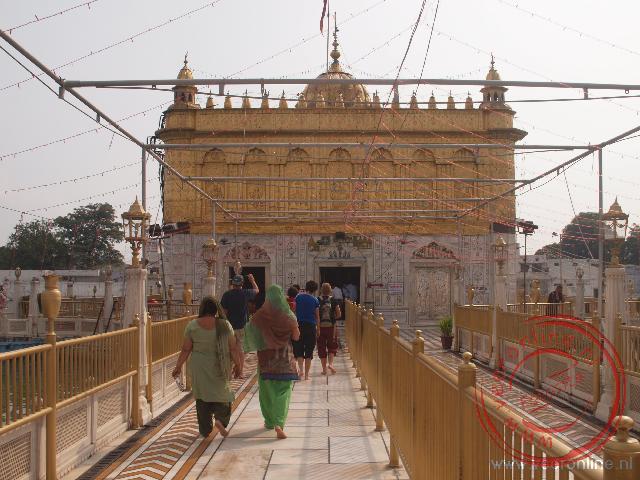 The Sri Durgiana Temple is the Hindu counterpart of the Sikh Golden Temple
 The fivestory palace in the Fatehpur Sikri Fort
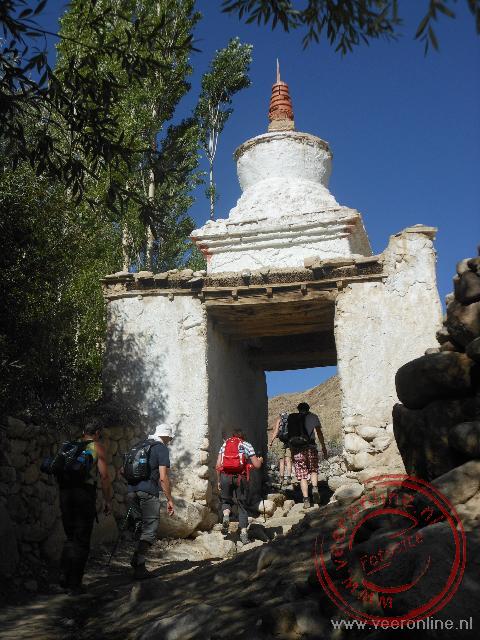 Along the way we pass stupas
 The center of Leh in Ladakh
Travelogue Ladakh Little Tibet
Dag 2 | India > Salaam Baalak walk Old Delhi
Dag 3 | India > A restart at Leh Airport
Dag 4 | India > Along the monasteries in the Indus valley
Dag 5 | India > Sunset at the Shanti Stupa
Dag 6 | India > Walking tour Leh
Dag 7 | India > Start Sham trekking
Dag 8 | India > Hiking over the mountain passes
Dag 9 | India > Through the mountain stream to Rizong
Dag 10 | India > From Hemis Shukpachan to Themisgang
Dag 11 | India > The monastery of Lamayuru
Dag 12 | India > Alchi, the oldest monastery of Ladakh
Dag 13 | India > Mountain biking from the Khardung La pass
Dag 14 | India > Across the Himalayan mountain passes
Dag 15 | India > From Sarchu to Keylong
Dag 16 | India > Landslides at the Rothang Pass
Dag 17 | India > Wandering through Manali
Dag 18 | India > Mountain hike to the waterfall
Dag 19 | India > On the way to Dharamsala
Dag 20 | India > Tsuglagkhang, the home of the Dalai Lama
Dag 21 | India > The Golden Sikh Temple
Dag 22 | India > Closure of the Wagah border
Dag 23 | India > By tuk-tuk through Delhi
Dag 24 | India > Cycling through Old Delhi
Dag 25 | India > Taj Mahal!!!
Dag 26 | India > The Fatehpur Sikri fort
Dag 27 | India > Good flight home