
154 countries
(and areas)
 - Belize
- Benin
- Bhutan
- Bolivia
- Bonaire
- Bosnia and Herzegovina
- Botswana
- Brazil
- British Virgin Islands
- Brunei
- Bulgaria
- Cambodia
- Canada
- Cape Verde
- Chile
- China
- Costa Rica
- Croatia
- Cuba
- Curacao
- Cyprus
- Czech Republic
- Denmark
- Dominica
- Dominican Republic
- Egypt
- El Salvador
- England
- Estonia
- Eswatini (Swaziland)
- Ethiopia
- Fiji
- Finland
- France
- French Guiana
- Georgia
- Germany
- Gibraltar
- Greece
- Grenada
- Guadeloupe
- Guatemala
- Honduras
- Hong Kong
- Hungary
- Iceland
- India
- Indonesia
- Iran
- Ireland
- Israel
- Italy
- Jamaica
- Japan
- Jordan
- Kazakhstan
- Kenya
- Kosovo
- Kuwait
- Kyrgyzstan
- Laos
- Latvia
- Lebanon
- Lesotho
- Liechtenstein
- Lithuania
- Luxembourg
- Macau
- Madagascar
- Malawi
- Malaysia
- Maldives
- Malta
- Martinique
- Mexico
- Moldova
- Monaco
- Mongolia
- Montenegro
- Morocco
- Mozambique
- Namibia
- Nepal
- Netherlands
- New Zealand
- Nicaragua
- North Macedonia
- Northern Ireland
- Norway
- Oman
- Pakistan
- Palestine
- Peru
- Philippines
- Poland
- Portugal
- Qatar
- Republic of Korea
- Romania
- Russia
- Saint Kitts and Nevis
- Saint Lucia
- Saint Martin
- Saint Vincent and the Grenadines
- San Marino
- São Tomé and Principe
- Saudi Arabia
- Scotland
- Senegal
- Serbia
- Singapore
- Sint Maarten
- Slovakia
- Slovenia
- South Africa
- Spain
- Sri Lanka
- Suriname
- Sweden
- Switzerland
- Tajikistan
- Tanzania
- Thailand
- The Gambia
- Tibet
- Togo
- Transnistria
- Trinidad and Tobago
- Tunisia
- Turkey
- Turkmenistan
- Uganda
- United Arab Emirates
- United States
- Uruguay
- Uzbekistan
- Vatican City
- Vietnam
- Wales
- Zambia
- Zanzibar
- Belize
- Benin
- Bhutan
- Bolivia
- Bonaire
- Bosnia and Herzegovina
- Botswana
- Brazil
- British Virgin Islands
- Brunei
- Bulgaria
- Cambodia
- Canada
- Cape Verde
- Chile
- China
- Costa Rica
- Croatia
- Cuba
- Curacao
- Cyprus
- Czech Republic
- Denmark
- Dominica
- Dominican Republic
- Egypt
- El Salvador
- England
- Estonia
- Eswatini (Swaziland)
- Ethiopia
- Fiji
- Finland
- France
- French Guiana
- Georgia
- Germany
- Gibraltar
- Greece
- Grenada
- Guadeloupe
- Guatemala
- Honduras
- Hong Kong
- Hungary
- Iceland
- India
- Indonesia
- Iran
- Ireland
- Israel
- Italy
- Jamaica
- Japan
- Jordan
- Kazakhstan
- Kenya
- Kosovo
- Kuwait
- Kyrgyzstan
- Laos
- Latvia
- Lebanon
- Lesotho
- Liechtenstein
- Lithuania
- Luxembourg
- Macau
- Madagascar
- Malawi
- Malaysia
- Maldives
- Malta
- Martinique
- Mexico
- Moldova
- Monaco
- Mongolia
- Montenegro
- Morocco
- Mozambique
- Namibia
- Nepal
- Netherlands
- New Zealand
- Nicaragua
- North Macedonia
- Northern Ireland
- Norway
- Oman
- Pakistan
- Palestine
- Peru
- Philippines
- Poland
- Portugal
- Qatar
- Republic of Korea
- Romania
- Russia
- Saint Kitts and Nevis
- Saint Lucia
- Saint Martin
- Saint Vincent and the Grenadines
- San Marino
- São Tomé and Principe
- Saudi Arabia
- Scotland
- Senegal
- Serbia
- Singapore
- Sint Maarten
- Slovakia
- Slovenia
- South Africa
- Spain
- Sri Lanka
- Suriname
- Sweden
- Switzerland
- Tajikistan
- Tanzania
- Thailand
- The Gambia
- Tibet
- Togo
- Transnistria
- Trinidad and Tobago
- Tunisia
- Turkey
- Turkmenistan
- Uganda
- United Arab Emirates
- United States
- Uruguay
- Uzbekistan
- Vatican City
- Vietnam
- Wales
- Zambia
- Zanzibar


Copyright 2004 - 2026
Veeronline.nl Travel Adventures

Home > India > Ladakh Little Tibet > Travelogue day 11
Travelogue Ladakh Little Tibet
July 20 August 15 2012 (27 days)
India > The monastery of Lamayuru
Dag 11 - Monday, July 30, 2012
The final day of the trek has arrived. I pack my daypack again and set off. Through the village, I reach the fields in the valley. A clever irrigation system runs along the fields. It consists of a water channel that flows past the fields. Each field can receive water by removing a stone to let the water run over the land. With good cooperation, every field has received water by the end of the day. I follow the flowing water along a narrow path. At the river, I cross the new bridge. Two years ago, the bridge was completely washed away during the great floods of 2010. The damage from this natural disaster is still clearly visible. On the other bank, a steep path begins upward. I climb at a steady pace, watching the valley and the monastery shrink below me. After just over half an hour, I reach the top. Following a short break, I begin the descent to Khalsi, the endpoint. The path gradually winds down between two mountainsides. Nowhere is it truly steep—a beautiful conclusion to the trek.

After an hour and a half of descending, I reach the road and the Indus River. Here the trek ends. A minibus is waiting. We have two options: the direct route or the old route over the mountain pass. We choose the latter. This means the minibus takes numerous hairpin bends up to the 3,800-meter pass. At each turn, the view of the barren slopes seems to get more spectacular—a truly breathtaking view of this mountainous region. Although the road is only sixteen kilometers long, it takes over an hour via this mountain pass to reach Lamayuru Monastery. The monastery sits on a rocky outcrop above the village of Lamayuru. The old houses of Lamayuru cling to the mountainside. Many of these ancient mud houses are abandoned and in decay. To my relief, I see that many are being restored for habitation, preserving the old village atmosphere. In the main hall of the monastery is also an ancient cave. This meditation cave dates back to the tenth century and is the oldest part of the monastery. I walk the kora (prayer circuit) around the monastery and then descend through the narrow streets of the old town to Lamayuru. At the bottom, the minibus is ready again. I get in. For the return journey, the driver takes the new route along the lower side—a much faster route but less spectacular. The bus follows the Indus River to Ulitokpo.

Along the way, there is a lot of roadwork. In several places, sections of asphalt were washed away during floods. I also pass several temporary bridges, as the original bridges were destroyed in the severe floods of 2010. New bridges are under construction. It’s hard to imagine the sheer force of the water during those floods; in less than a day, nearly all bridges in this area were washed away. In Ulitokpo, I reach the final campsite of the trek. The tents are ready again. After dinner, the campfire is lit. Around the fire, we thank the crew for their excellent guidance over the past days. Then we alternate singing Ladakhi and Dutch songs. The tailgate of the vehicle is opened, the radio is turned on, and we dance around the campfire to a mix of Western and local music.
 India
India  A small group of ibex observing from the mountain slope
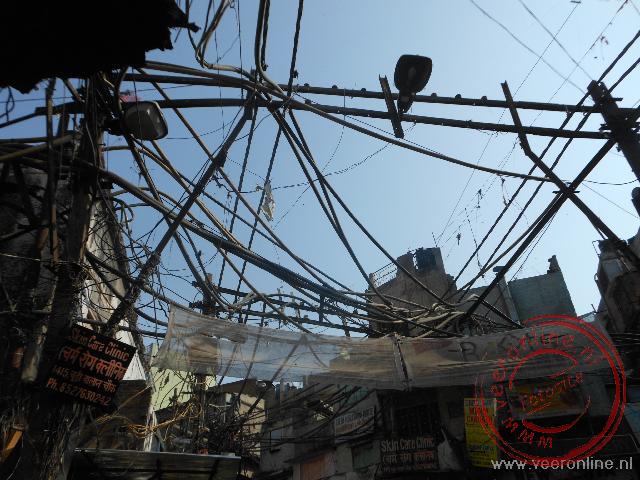 Electrical cables hanging above the streets everywhere in Delhi
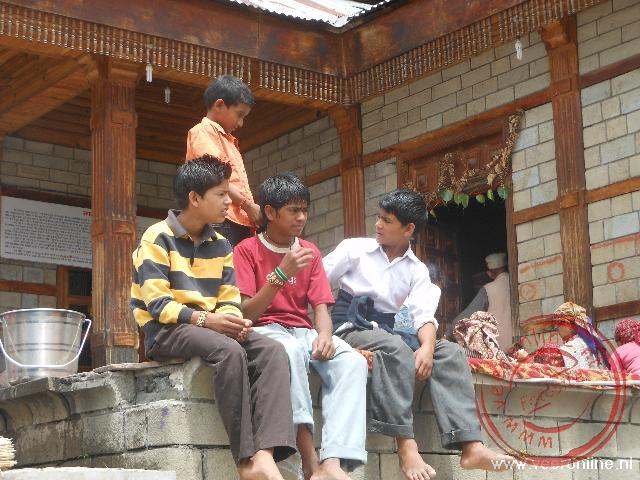 Young people sitting at the Manu Temple
 At 5602 meters Khardung La Pass is the highest motorable mountain pass in the world
Travelogue Ladakh Little Tibet
Dag 2 | India > Salaam Baalak walk Old Delhi
Dag 3 | India > A restart at Leh Airport
Dag 4 | India > Along the monasteries in the Indus valley
Dag 5 | India > Sunset at the Shanti Stupa
Dag 6 | India > Walking tour Leh
Dag 7 | India > Start Sham trekking
Dag 8 | India > Hiking over the mountain passes
Dag 9 | India > Through the mountain stream to Rizong
Dag 10 | India > From Hemis Shukpachan to Themisgang
Dag 11 | India > The monastery of Lamayuru
Dag 12 | India > Alchi, the oldest monastery of Ladakh
Dag 13 | India > Mountain biking from the Khardung La pass
Dag 14 | India > Across the Himalayan mountain passes
Dag 15 | India > From Sarchu to Keylong
Dag 16 | India > Landslides at the Rothang Pass
Dag 17 | India > Wandering through Manali
Dag 18 | India > Mountain hike to the waterfall
Dag 19 | India > On the way to Dharamsala
Dag 20 | India > Tsuglagkhang, the home of the Dalai Lama
Dag 21 | India > The Golden Sikh Temple
Dag 22 | India > Closure of the Wagah border
Dag 23 | India > By tuk-tuk through Delhi
Dag 24 | India > Cycling through Old Delhi
Dag 25 | India > Taj Mahal!!!
Dag 26 | India > The Fatehpur Sikri fort
Dag 27 | India > Good flight home