
154 countries
(and areas)
 - Belize
- Benin
- Bhutan
- Bolivia
- Bonaire
- Bosnia and Herzegovina
- Botswana
- Brazil
- British Virgin Islands
- Brunei
- Bulgaria
- Cambodia
- Canada
- Cape Verde
- Chile
- China
- Costa Rica
- Croatia
- Cuba
- Curacao
- Cyprus
- Czech Republic
- Denmark
- Dominica
- Dominican Republic
- Egypt
- El Salvador
- England
- Estonia
- Eswatini (Swaziland)
- Ethiopia
- Fiji
- Finland
- France
- French Guiana
- Georgia
- Germany
- Gibraltar
- Greece
- Grenada
- Guadeloupe
- Guatemala
- Honduras
- Hong Kong
- Hungary
- Iceland
- India
- Indonesia
- Iran
- Ireland
- Israel
- Italy
- Jamaica
- Japan
- Jordan
- Kazakhstan
- Kenya
- Kosovo
- Kuwait
- Kyrgyzstan
- Laos
- Latvia
- Lebanon
- Lesotho
- Liechtenstein
- Lithuania
- Luxembourg
- Macau
- Madagascar
- Malawi
- Malaysia
- Maldives
- Malta
- Martinique
- Mexico
- Moldova
- Monaco
- Mongolia
- Montenegro
- Morocco
- Mozambique
- Namibia
- Nepal
- Netherlands
- New Zealand
- Nicaragua
- North Macedonia
- Northern Ireland
- Norway
- Oman
- Pakistan
- Palestine
- Peru
- Philippines
- Poland
- Portugal
- Qatar
- Republic of Korea
- Romania
- Russia
- Saint Kitts and Nevis
- Saint Lucia
- Saint Martin
- Saint Vincent and the Grenadines
- San Marino
- São Tomé and Principe
- Saudi Arabia
- Scotland
- Senegal
- Serbia
- Singapore
- Sint Maarten
- Slovakia
- Slovenia
- South Africa
- Spain
- Sri Lanka
- Suriname
- Sweden
- Switzerland
- Tajikistan
- Tanzania
- Thailand
- The Gambia
- Tibet
- Togo
- Transnistria
- Trinidad and Tobago
- Tunisia
- Turkey
- Turkmenistan
- Uganda
- United Arab Emirates
- United States
- Uruguay
- Uzbekistan
- Vatican City
- Vietnam
- Wales
- Zambia
- Zanzibar
- Belize
- Benin
- Bhutan
- Bolivia
- Bonaire
- Bosnia and Herzegovina
- Botswana
- Brazil
- British Virgin Islands
- Brunei
- Bulgaria
- Cambodia
- Canada
- Cape Verde
- Chile
- China
- Costa Rica
- Croatia
- Cuba
- Curacao
- Cyprus
- Czech Republic
- Denmark
- Dominica
- Dominican Republic
- Egypt
- El Salvador
- England
- Estonia
- Eswatini (Swaziland)
- Ethiopia
- Fiji
- Finland
- France
- French Guiana
- Georgia
- Germany
- Gibraltar
- Greece
- Grenada
- Guadeloupe
- Guatemala
- Honduras
- Hong Kong
- Hungary
- Iceland
- India
- Indonesia
- Iran
- Ireland
- Israel
- Italy
- Jamaica
- Japan
- Jordan
- Kazakhstan
- Kenya
- Kosovo
- Kuwait
- Kyrgyzstan
- Laos
- Latvia
- Lebanon
- Lesotho
- Liechtenstein
- Lithuania
- Luxembourg
- Macau
- Madagascar
- Malawi
- Malaysia
- Maldives
- Malta
- Martinique
- Mexico
- Moldova
- Monaco
- Mongolia
- Montenegro
- Morocco
- Mozambique
- Namibia
- Nepal
- Netherlands
- New Zealand
- Nicaragua
- North Macedonia
- Northern Ireland
- Norway
- Oman
- Pakistan
- Palestine
- Peru
- Philippines
- Poland
- Portugal
- Qatar
- Republic of Korea
- Romania
- Russia
- Saint Kitts and Nevis
- Saint Lucia
- Saint Martin
- Saint Vincent and the Grenadines
- San Marino
- São Tomé and Principe
- Saudi Arabia
- Scotland
- Senegal
- Serbia
- Singapore
- Sint Maarten
- Slovakia
- Slovenia
- South Africa
- Spain
- Sri Lanka
- Suriname
- Sweden
- Switzerland
- Tajikistan
- Tanzania
- Thailand
- The Gambia
- Tibet
- Togo
- Transnistria
- Trinidad and Tobago
- Tunisia
- Turkey
- Turkmenistan
- Uganda
- United Arab Emirates
- United States
- Uruguay
- Uzbekistan
- Vatican City
- Vietnam
- Wales
- Zambia
- Zanzibar


Copyright 2004 - 2026
Veeronline.nl Travel Adventures

Home > India > Ladakh Little Tibet > Travelogue day 20
Travelogue Ladakh Little Tibet
July 20 August 15 2012 (27 days)
India > Tsuglagkhang, the home of the Dalai Lama
Dag 20 - Wednesday, August 8, 2012
I look for a nice rooftop terrace for my breakfast in McLeod. While eating my sandwich, I have a view of the town’s narrow streets. After breakfast, I walk to the Tsuglagkhang Temple and the Dalai Lama’s residence. On the way to the temple, I pass many souvenir stalls—perhaps even too many. Everyone is trying to get a piece of the tourism. At the Tsuglagkhang complex, I enter through the main gate. Signs immediately point me toward the temple. On the courtyard in front of the temple, young monks are debating with each other. They practice using arguments, voice, and gestures to convince one another of their viewpoints. It’s a funny sight, though it seems somewhat staged. I enter the Tsuglagkhang Temple. The temple is supposed to be the equivalent of the Jokhang Temple in Lhasa. However, I miss the Tibetan atmosphere in this relatively new temple. I had expected much more of the Tibetan ambiance here, which I did encounter in Ladakh. Next to the temple, I visit the Tibet Museum. The stories of Tibetan refugees are impressive. Photographs also show the impact of the Cultural Revolution, during which the Chinese destroyed all Tibetan monasteries. I read the story of a monk who set himself on fire in protest against the Chinese occupation. I finish the Tsuglagkhang complex by walking the kora around the temple. The entire route is decorated with Tibetan prayer flags and prayer wheels. Back in McLeod, I order a sandwich.

After lunch, I walk west toward the Tibetan school, about two kilometers outside McLeod. As I start walking, I pass several hundred students. A teacher explains that they are going to the temple for a prayer. These are only the oldest classes. He assures me that there are still plenty of students at the school. He points me in the direction of the school, which I must follow for about 30 to 35 minutes. It’s a gradual uphill climb. At a fork in the road, I decide to take the right path. To be sure, I ask a passerby again. The boy points upward, but I doubt he understands what I mean. I continue walking. At the top of the road, I reach a small pond. Right next to it is the Tibetan Children’s Village. I walk onto the grounds. It’s just four o’clock, and the children are coming out of school. Many children also live here. I walk past the dormitories. I notice that the children hardly seek contact. I assume tourists visit here frequently, perhaps too often. I follow a young monk on a shortcut back to the village. He tells me that mainly Tibetan children attend school here. Their parents don’t want them to grow up under Chinese oppression and hope for a better life in Dharamsala. The forest path gets me back to McLeod Ganj much faster. I go in search of the location of the Tibetan music and dance performance. From the flyer, I understand it’s held in a small school near the hotel.

The boy who handed out the flyers also sells the tickets and performs in the show himself. I sit on the floor in the bare classroom. Before the performance, some small flags are hung and candles lit. The boy begins with his life story. He tells how he fled Lhasa as a five-year-old and shows his only photo from Tibet. His singing and dancing are very amateurish, which almost makes it charming. At the end of his performance, he invites the audience to join. He takes me and an Israeli tourist on his shoulders during his dance, spinning rhythmically. I can barely hold on. Afterward, opinions differ—some see it as something special, others as misleading tourists. I lean more toward the latter but still appreciate the boy’s effort.
 India
India 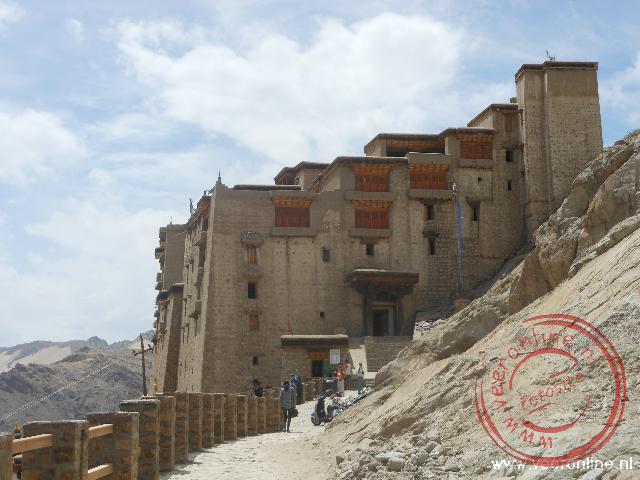 The Leh Palace on the mountains above the city
 The old houses in the old town of Leh
 Wearing slippers we wade through the icy meltwater during the trek in Ladakh
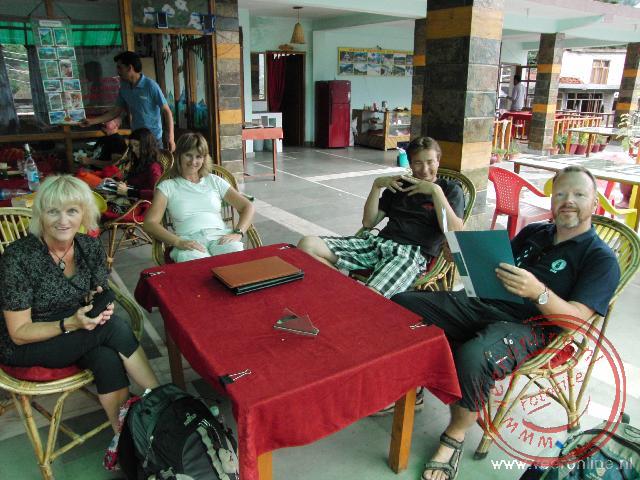 A beer on the terrace in Vashisht
Travelogue Ladakh Little Tibet
Dag 2 | India > Salaam Baalak walk Old Delhi
Dag 3 | India > A restart at Leh Airport
Dag 4 | India > Along the monasteries in the Indus valley
Dag 5 | India > Sunset at the Shanti Stupa
Dag 6 | India > Walking tour Leh
Dag 7 | India > Start Sham trekking
Dag 8 | India > Hiking over the mountain passes
Dag 9 | India > Through the mountain stream to Rizong
Dag 10 | India > From Hemis Shukpachan to Themisgang
Dag 11 | India > The monastery of Lamayuru
Dag 12 | India > Alchi, the oldest monastery of Ladakh
Dag 13 | India > Mountain biking from the Khardung La pass
Dag 14 | India > Across the Himalayan mountain passes
Dag 15 | India > From Sarchu to Keylong
Dag 16 | India > Landslides at the Rothang Pass
Dag 17 | India > Wandering through Manali
Dag 18 | India > Mountain hike to the waterfall
Dag 19 | India > On the way to Dharamsala
Dag 20 | India > Tsuglagkhang, the home of the Dalai Lama
Dag 21 | India > The Golden Sikh Temple
Dag 22 | India > Closure of the Wagah border
Dag 23 | India > By tuk-tuk through Delhi
Dag 24 | India > Cycling through Old Delhi
Dag 25 | India > Taj Mahal!!!
Dag 26 | India > The Fatehpur Sikri fort
Dag 27 | India > Good flight home