
154 countries
(and areas)
 - Azerbaijan
- Bahrain
- Barbados
- Belgium
- Belize
- Benin
- Bhutan
- Bolivia
- Bonaire
- Bosnia and Herzegovina
- Botswana
- Brazil
- British Virgin Islands
- Brunei
- Bulgaria
- Cambodia
- Canada
- Cape Verde
- Chile
- China
- Costa Rica
- Croatia
- Cuba
- Curacao
- Cyprus
- Czech Republic
- Denmark
- Dominica
- Dominican Republic
- Egypt
- El Salvador
- England
- Estonia
- Eswatini (Swaziland)
- Ethiopia
- Fiji
- Finland
- France
- French Guiana
- Georgia
- Germany
- Gibraltar
- Greece
- Grenada
- Guadeloupe
- Guatemala
- Honduras
- Hong Kong
- Hungary
- Iceland
- India
- Indonesia
- Iran
- Ireland
- Israel
- Italy
- Jamaica
- Japan
- Jordan
- Kazakhstan
- Kenya
- Kosovo
- Kuwait
- Kyrgyzstan
- Laos
- Latvia
- Lebanon
- Lesotho
- Liechtenstein
- Lithuania
- Luxembourg
- Macau
- Madagascar
- Malawi
- Malaysia
- Maldives
- Malta
- Martinique
- Mexico
- Moldova
- Monaco
- Mongolia
- Montenegro
- Morocco
- Mozambique
- Namibia
- Nepal
- Netherlands
- New Zealand
- Nicaragua
- North Macedonia
- Northern Ireland
- Norway
- Oman
- Pakistan
- Palestine
- Peru
- Philippines
- Poland
- Portugal
- Qatar
- Republic of Korea
- Romania
- Russia
- Saint Kitts and Nevis
- Saint Lucia
- Saint Martin
- Saint Vincent and the Grenadines
- San Marino
- São Tomé and Principe
- Saudi Arabia
- Scotland
- Senegal
- Serbia
- Singapore
- Sint Maarten
- Slovakia
- Slovenia
- South Africa
- Spain
- Sri Lanka
- Suriname
- Sweden
- Switzerland
- Tajikistan
- Tanzania
- Thailand
- The Gambia
- Tibet
- Togo
- Transnistria
- Trinidad and Tobago
- Tunisia
- Turkey
- Turkmenistan
- Uganda
- United Arab Emirates
- United States
- Uruguay
- Uzbekistan
- Vatican City
- Vietnam
- Wales
- Zambia
- Zanzibar
- Azerbaijan
- Bahrain
- Barbados
- Belgium
- Belize
- Benin
- Bhutan
- Bolivia
- Bonaire
- Bosnia and Herzegovina
- Botswana
- Brazil
- British Virgin Islands
- Brunei
- Bulgaria
- Cambodia
- Canada
- Cape Verde
- Chile
- China
- Costa Rica
- Croatia
- Cuba
- Curacao
- Cyprus
- Czech Republic
- Denmark
- Dominica
- Dominican Republic
- Egypt
- El Salvador
- England
- Estonia
- Eswatini (Swaziland)
- Ethiopia
- Fiji
- Finland
- France
- French Guiana
- Georgia
- Germany
- Gibraltar
- Greece
- Grenada
- Guadeloupe
- Guatemala
- Honduras
- Hong Kong
- Hungary
- Iceland
- India
- Indonesia
- Iran
- Ireland
- Israel
- Italy
- Jamaica
- Japan
- Jordan
- Kazakhstan
- Kenya
- Kosovo
- Kuwait
- Kyrgyzstan
- Laos
- Latvia
- Lebanon
- Lesotho
- Liechtenstein
- Lithuania
- Luxembourg
- Macau
- Madagascar
- Malawi
- Malaysia
- Maldives
- Malta
- Martinique
- Mexico
- Moldova
- Monaco
- Mongolia
- Montenegro
- Morocco
- Mozambique
- Namibia
- Nepal
- Netherlands
- New Zealand
- Nicaragua
- North Macedonia
- Northern Ireland
- Norway
- Oman
- Pakistan
- Palestine
- Peru
- Philippines
- Poland
- Portugal
- Qatar
- Republic of Korea
- Romania
- Russia
- Saint Kitts and Nevis
- Saint Lucia
- Saint Martin
- Saint Vincent and the Grenadines
- San Marino
- São Tomé and Principe
- Saudi Arabia
- Scotland
- Senegal
- Serbia
- Singapore
- Sint Maarten
- Slovakia
- Slovenia
- South Africa
- Spain
- Sri Lanka
- Suriname
- Sweden
- Switzerland
- Tajikistan
- Tanzania
- Thailand
- The Gambia
- Tibet
- Togo
- Transnistria
- Trinidad and Tobago
- Tunisia
- Turkey
- Turkmenistan
- Uganda
- United Arab Emirates
- United States
- Uruguay
- Uzbekistan
- Vatican City
- Vietnam
- Wales
- Zambia
- Zanzibar


Copyright 2004 - 2026
Veeronline.nl Travel Adventures

Home > Malaysia > Malaysian Borneo > Travelogue day 4
Travelogue Malaysian Borneo
December 15 2011 January 6 2012 (23 days)
Malaysia > The Lintang Trail in Bako National Park
Dag 4 - Sunday, December 18, 2011I slept very well last night. The mosquito net stayed hanging from the string, and I’m glad I brought a fitted sheet in addition to my sleeping bag. The beds are neatly made, but the humid air makes them damp and musty. Today, I’m planning a long hike through the nature park.

Walking along the wooden walkway among the mangroves, I notice that there is water beneath me—high tide. Yesterday, when the monkeys were playing on the beach, I didn’t realize it at all. A steep climb of just over a hundred meters brings me to the plateau. It feels less hot than yesterday. The sky is lightly overcast, but it’s still muggy. I doubt I’ll stay dry all day, as the weather can change quickly here. On the rocky plateau, there are few sources of food. The plants that grow here struggle to survive. One of them is the pitcher plant, a carnivorous species. It lures insects into its cup, where they get trapped and dissolved in the plant’s acidic fluid. I see several types of pitchers along the trail.

The trail is much easier to walk than yesterday’s route. Wooden walkways have been built over the swampy sections. Still, I need to watch my step on slippery tree trunks and muddy clay. As I get closer to Pandan Kecil Beach, my first destination, the route becomes more rugged again. I clamber down wooden steps. The sky above has darkened, and the first drops of rain fall. I reach the shelter just in time. I’m soaked. From the shelter, I have a view of the bay and beach about twenty meters below—a perfect moment to eat my sandwiches. Once it’s nearly dry, I descend to the beach. A rope helps me lower myself down the last section of rock. As soon as I enter the water, I notice the strong currents. Waves come from two directions, and where they meet, they form a wave at least two meters high. It’s crucial to stay steady, especially with the powerful backflow to the sea. Although I intended not to go too far into the water, it’s difficult to maintain my footing. I tumble over in a wave and feel myself doing a somersault with it. I resurface on the beach, sputtering. When the drizzle starts again, I leave the water and get dressed. I retrace my steps back to the Lintang Trail. The rocks and tree trunks are now much slipperier from the earlier rain, so I remain careful.
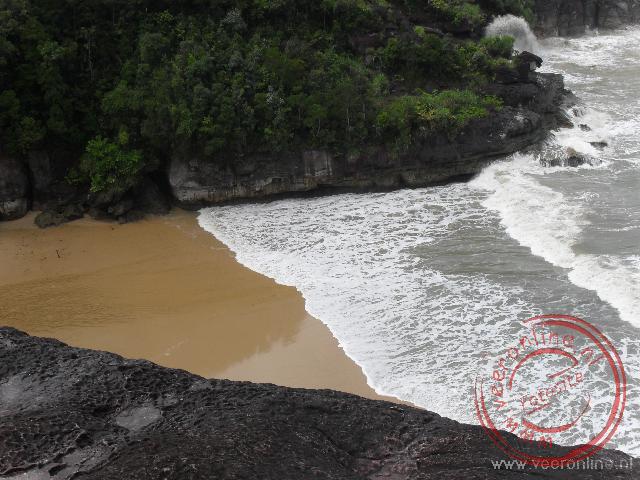
At the Lintang Trail junction, I decide to take the longer route back. The weather is now dry and perfect for walking. The trail runs mainly through forest on the plateau, with no steep climbs, though the path is still littered with tree trunks and muddy patches. Along the way, I see various pitcher plants, some centipedes, towering palm trees, and many trees with enormous leaves. The tropical rainforest never ceases to fascinate me. Eventually, around half past three, I approach the beach again. A narrow path through the rocks brings me back to the lodging. I’m actually glad to be back, and I think everyone else feels the same. After all, I’ve been hiking for nearly seven hours over uneven terrain. I thoroughly enjoy a cold beer on the veranda. While sitting there, I notice some fellow travelers running toward the beach. Is something happening? It turns out a troop of Silvered Leaf Monkeys has been spotted. I quickly grab my camera to photograph these shy monkeys. A group of twenty monkeys has taken over a tree right in front of the restaurant. The tree has few leaves left, but together they eat the remaining scraps. I return and take a wonderfully cold shower, washing off the sand and dust. During dinner—the same buffet as yesterday—it starts raining very heavily. Large puddles form around the grounds. I stay comfortably under the shelter. When it eases slightly, I quickly return to my cabin—a good choice, as the rain intensifies again. In my bed under the mosquito net, I hear the rain drumming on the roof for a long time. I wonder what it would have been like to get caught in such a downpour in the middle of the forest.
 Malaysia
  Eating in a restaurant in China Town Kuching
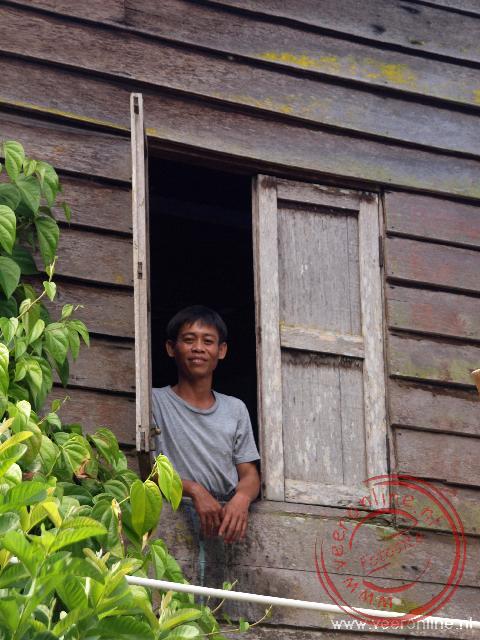 An Iban man smiles for the photo
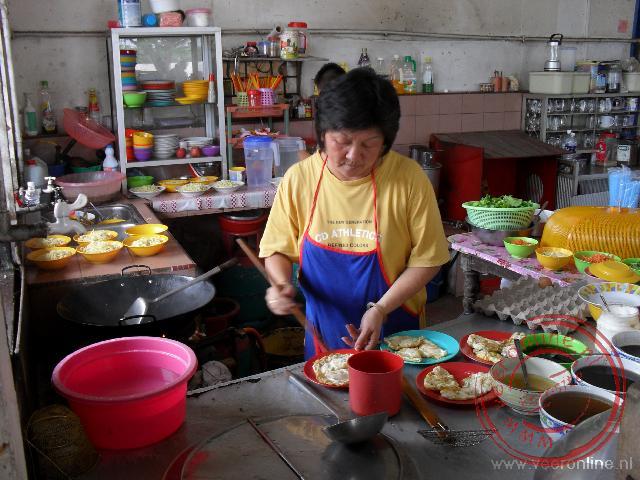 Our lunch being prepared in the open kitchen
 Eating in a simple local restaurant in the center of Kundasang
Travelogue Malaysian Borneo
Dag 2 | Malaysia > Wandering through Kuching
Dag 3 | Malaysia > Meeting an orangutan
Dag 4 | Malaysia > The Lintang Trail in Bako National Park
Dag 5 | Malaysia > The Sarawak Museum in Kuching
Dag 6 | Malaysia > On the way to Sibu over the South China Sea
Dag 7 | Malaysia > Sleeping at the Iban host family
Dag 8 | Malaysia > Hiking through Similajau National Park
Dag 9 | Malaysia > The oil city Miri
Dag 10 | Malaysia > Millions of bats in the Mulu Caves
Dag 11 | Malaysia > Swimming near the Clearwater Cave
Dag 12 | Malaysia > Suspension bridge between the treetops
Dag 13 | Malaysia > Orangutans in the rain
Dag 14 | Malaysia > 'Welcome to the tropical rainforest'
Dag 15 | Malaysia > Leeches everywhere
Dag 16 | Malaysia > Local food in Kundasang
Dag 17 | Malaysia > The Poring Hot Springs
Dag 18 | Malaysia > Hiking in Mount Kinabalu National Park
Dag 19 | Malaysia > By boat to Pulau Tiga
Dag 20 | Malaysia > Bathing in the mud volcano
Dag 21 | Malaysia > Walking around Pulau Tiga National Park
Dag 22 | Malaysia > Relaxing on Survival Island
Dag 23 | Malaysia > Return flight to Schiphol