
154 countries
(and areas)
 - Belize
- Benin
- Bhutan
- Bolivia
- Bonaire
- Bosnia and Herzegovina
- Botswana
- Brazil
- British Virgin Islands
- Brunei
- Bulgaria
- Cambodia
- Canada
- Cape Verde
- Chile
- China
- Costa Rica
- Croatia
- Cuba
- Curacao
- Cyprus
- Czech Republic
- Denmark
- Dominica
- Dominican Republic
- Egypt
- El Salvador
- England
- Estonia
- Eswatini (Swaziland)
- Ethiopia
- Fiji
- Finland
- France
- French Guiana
- Georgia
- Germany
- Gibraltar
- Greece
- Grenada
- Guadeloupe
- Guatemala
- Honduras
- Hong Kong
- Hungary
- Iceland
- India
- Indonesia
- Iran
- Ireland
- Israel
- Italy
- Jamaica
- Japan
- Jordan
- Kazakhstan
- Kenya
- Kosovo
- Kuwait
- Kyrgyzstan
- Laos
- Latvia
- Lebanon
- Lesotho
- Liechtenstein
- Lithuania
- Luxembourg
- Macau
- Madagascar
- Malawi
- Malaysia
- Maldives
- Malta
- Martinique
- Mexico
- Moldova
- Monaco
- Mongolia
- Montenegro
- Morocco
- Mozambique
- Namibia
- Nepal
- Netherlands
- New Zealand
- Nicaragua
- North Macedonia
- Northern Ireland
- Norway
- Oman
- Pakistan
- Palestine
- Peru
- Philippines
- Poland
- Portugal
- Qatar
- Republic of Korea
- Romania
- Russia
- Saint Kitts and Nevis
- Saint Lucia
- Saint Martin
- Saint Vincent and the Grenadines
- San Marino
- São Tomé and Principe
- Saudi Arabia
- Scotland
- Senegal
- Serbia
- Singapore
- Sint Maarten
- Slovakia
- Slovenia
- South Africa
- Spain
- Sri Lanka
- Suriname
- Sweden
- Switzerland
- Tajikistan
- Tanzania
- Thailand
- The Gambia
- Tibet
- Togo
- Transnistria
- Trinidad and Tobago
- Tunisia
- Turkey
- Turkmenistan
- Uganda
- United Arab Emirates
- United States
- Uruguay
- Uzbekistan
- Vatican City
- Vietnam
- Wales
- Zambia
- Zanzibar
- Belize
- Benin
- Bhutan
- Bolivia
- Bonaire
- Bosnia and Herzegovina
- Botswana
- Brazil
- British Virgin Islands
- Brunei
- Bulgaria
- Cambodia
- Canada
- Cape Verde
- Chile
- China
- Costa Rica
- Croatia
- Cuba
- Curacao
- Cyprus
- Czech Republic
- Denmark
- Dominica
- Dominican Republic
- Egypt
- El Salvador
- England
- Estonia
- Eswatini (Swaziland)
- Ethiopia
- Fiji
- Finland
- France
- French Guiana
- Georgia
- Germany
- Gibraltar
- Greece
- Grenada
- Guadeloupe
- Guatemala
- Honduras
- Hong Kong
- Hungary
- Iceland
- India
- Indonesia
- Iran
- Ireland
- Israel
- Italy
- Jamaica
- Japan
- Jordan
- Kazakhstan
- Kenya
- Kosovo
- Kuwait
- Kyrgyzstan
- Laos
- Latvia
- Lebanon
- Lesotho
- Liechtenstein
- Lithuania
- Luxembourg
- Macau
- Madagascar
- Malawi
- Malaysia
- Maldives
- Malta
- Martinique
- Mexico
- Moldova
- Monaco
- Mongolia
- Montenegro
- Morocco
- Mozambique
- Namibia
- Nepal
- Netherlands
- New Zealand
- Nicaragua
- North Macedonia
- Northern Ireland
- Norway
- Oman
- Pakistan
- Palestine
- Peru
- Philippines
- Poland
- Portugal
- Qatar
- Republic of Korea
- Romania
- Russia
- Saint Kitts and Nevis
- Saint Lucia
- Saint Martin
- Saint Vincent and the Grenadines
- San Marino
- São Tomé and Principe
- Saudi Arabia
- Scotland
- Senegal
- Serbia
- Singapore
- Sint Maarten
- Slovakia
- Slovenia
- South Africa
- Spain
- Sri Lanka
- Suriname
- Sweden
- Switzerland
- Tajikistan
- Tanzania
- Thailand
- The Gambia
- Tibet
- Togo
- Transnistria
- Trinidad and Tobago
- Tunisia
- Turkey
- Turkmenistan
- Uganda
- United Arab Emirates
- United States
- Uruguay
- Uzbekistan
- Vatican City
- Vietnam
- Wales
- Zambia
- Zanzibar


Copyright 2004 - 2026
Veeronline.nl Travel Adventures

Home > Malaysia > Malaysian Borneo > Travelogue day 2
Travelogue Malaysian Borneo
December 15 2011 January 6 2012 (23 days)
Malaysia > Wandering through Kuching
Dag 2 - Friday, December 16, 2011Shortly after six in the morning, the plane lands at Kuala Lumpur International Airport. I say goodbye to Alvin, who quickly explains that I will probably need to take a train to the other terminal for my connecting flight. On the way to immigration, I also meet other travel companions. Together, we pass through customs and search for the gate for the next flight. Indeed, the train takes me to the other terminal.

Through gate B5, I board the flight to Kuching shortly afterward. From the window, I have a beautiful view of the Malaysian Peninsula and striking cloud formations. A little after ten, I step onto Borneo with both feet. I collect my duffel bag from the luggage carousel. Outside the airport, Emile is waiting for me. He is the tour leader for this trip. I exchange money at an airport exchange office right away, so I at least have some ringgits on hand. Once the entire travel group is assembled, we drive by bus to the hotel in Kuching. Omar also introduces himself. He is the local Malaysian guide for the trip and enthusiastically talks about the program. He speaks good English, but I need a moment to get used to the local accent. Because he holds the microphone very close to his mouth, he is sometimes difficult to understand.

After a short rest in my hotel room, I walk in the afternoon toward the Kuching riverside boulevard along the river of the same name. Kuching is the largest city in Malaysian Borneo, with about 300,000 inhabitants. “Kuching” means “cat” in Malay. Accordingly, there are several cat statues in the city. The buildings are varied. High-rise buildings dominate the skyline, and I notice that a lot of attention is given to architecture. Several beautifully shaped buildings tower above the city. In stark contrast, the simpler houses of ordinary residents stand right next to them, mostly one or two stories high and often poorly maintained. Traffic in the city is busy. Since people drive on the left, extra caution is needed when crossing the street. Along the Kuching River, a walking promenade has been built. From the promenade, I see small boats functioning as water taxis, ferrying passengers to the north side of the river. Here, the striking parliament building rises above the trees. To the right, hidden among the trees, is Margherita Fort. To the left lies the palace that Charles Brooke had built in 1879 to celebrate the arrival of his wife in the city. Along the promenade, I pass the Chinese Tua Pek Kong Temple, the oldest building in the city. Inside are images of Chinese gods, and incense burns for worship. At the square clock tower and the courthouse, I leave the river and make my way toward the grand mosque. I turn into Carpenter Street, full of furniture makers, and then enter the Chinese district.

Some men on a terrace point out that there is a Chinese temple above the restaurant. I climb the stairs to the fourth floor. The oppressive, humid heat becomes increasingly noticeable. Once at the top, I take off my shoes. The small temple is worth visiting and also offers a beautiful view over the city. In the afternoon, Emile gives a briefing at the hotel. He explains that it is officially the rainy season in Malaysia and advises keeping a poncho handy for often short but heavy showers. He promises that the travel days will generally be short. We will move several times by boat or plane, which makes the trip varied. At the end, Emile gives tips for the two-day excursion to Bako National Park. Only the necessary luggage for these two days will be taken along. After the briefing, I head back to the boulevard. In a restaurant with a view of the Kuching River, we have a group dinner. After eating, I stroll along the boulevard. The lights of the parliament building reflect in the river. The streets are lively and bustling. Before going to bed, I pack my luggage for the next two days, then quickly crawl into bed.
 Malaysia
 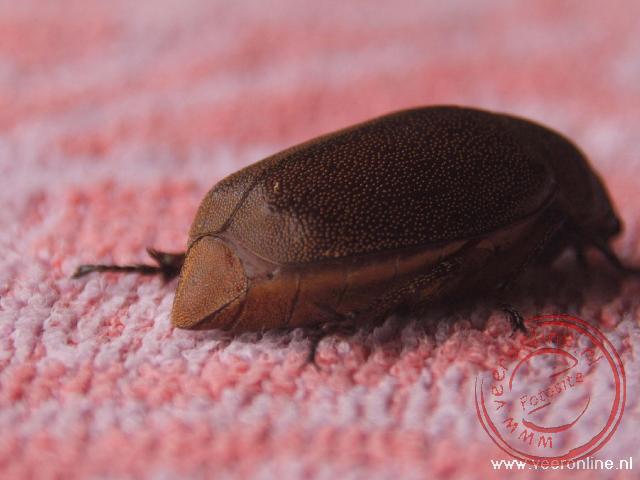 A beetle on a towel
 Mist in the tropical rainforest
 The gateway to China Town in Kuching
 The Heliconia Psittacorum
Travelogue Malaysian Borneo
Dag 2 | Malaysia > Wandering through Kuching
Dag 3 | Malaysia > Meeting an orangutan
Dag 4 | Malaysia > The Lintang Trail in Bako National Park
Dag 5 | Malaysia > The Sarawak Museum in Kuching
Dag 6 | Malaysia > On the way to Sibu over the South China Sea
Dag 7 | Malaysia > Sleeping at the Iban host family
Dag 8 | Malaysia > Hiking through Similajau National Park
Dag 9 | Malaysia > The oil city Miri
Dag 10 | Malaysia > Millions of bats in the Mulu Caves
Dag 11 | Malaysia > Swimming near the Clearwater Cave
Dag 12 | Malaysia > Suspension bridge between the treetops
Dag 13 | Malaysia > Orangutans in the rain
Dag 14 | Malaysia > 'Welcome to the tropical rainforest'
Dag 15 | Malaysia > Leeches everywhere
Dag 16 | Malaysia > Local food in Kundasang
Dag 17 | Malaysia > The Poring Hot Springs
Dag 18 | Malaysia > Hiking in Mount Kinabalu National Park
Dag 19 | Malaysia > By boat to Pulau Tiga
Dag 20 | Malaysia > Bathing in the mud volcano
Dag 21 | Malaysia > Walking around Pulau Tiga National Park
Dag 22 | Malaysia > Relaxing on Survival Island
Dag 23 | Malaysia > Return flight to Schiphol