
154 countries
(and areas)
 - Belize
- Benin
- Bhutan
- Bolivia
- Bonaire
- Bosnia and Herzegovina
- Botswana
- Brazil
- British Virgin Islands
- Brunei
- Bulgaria
- Cambodia
- Canada
- Cape Verde
- Chile
- China
- Costa Rica
- Croatia
- Cuba
- Curacao
- Cyprus
- Czech Republic
- Denmark
- Dominica
- Dominican Republic
- Egypt
- El Salvador
- England
- Estonia
- Eswatini (Swaziland)
- Ethiopia
- Fiji
- Finland
- France
- French Guiana
- Georgia
- Germany
- Gibraltar
- Greece
- Grenada
- Guadeloupe
- Guatemala
- Honduras
- Hong Kong
- Hungary
- Iceland
- India
- Indonesia
- Iran
- Ireland
- Israel
- Italy
- Jamaica
- Japan
- Jordan
- Kazakhstan
- Kenya
- Kosovo
- Kuwait
- Kyrgyzstan
- Laos
- Latvia
- Lebanon
- Lesotho
- Liechtenstein
- Lithuania
- Luxembourg
- Macau
- Madagascar
- Malawi
- Malaysia
- Maldives
- Malta
- Martinique
- Mexico
- Moldova
- Monaco
- Mongolia
- Montenegro
- Morocco
- Mozambique
- Namibia
- Nepal
- Netherlands
- New Zealand
- Nicaragua
- North Macedonia
- Northern Ireland
- Norway
- Oman
- Pakistan
- Palestine
- Peru
- Philippines
- Poland
- Portugal
- Qatar
- Republic of Korea
- Romania
- Russia
- Saint Kitts and Nevis
- Saint Lucia
- Saint Martin
- Saint Vincent and the Grenadines
- San Marino
- São Tomé and Principe
- Saudi Arabia
- Scotland
- Senegal
- Serbia
- Singapore
- Sint Maarten
- Slovakia
- Slovenia
- South Africa
- Spain
- Sri Lanka
- Suriname
- Sweden
- Switzerland
- Tajikistan
- Tanzania
- Thailand
- The Gambia
- Tibet
- Togo
- Transnistria
- Trinidad and Tobago
- Tunisia
- Turkey
- Turkmenistan
- Uganda
- United Arab Emirates
- United States
- Uruguay
- Uzbekistan
- Vatican City
- Vietnam
- Wales
- Zambia
- Zanzibar
- Belize
- Benin
- Bhutan
- Bolivia
- Bonaire
- Bosnia and Herzegovina
- Botswana
- Brazil
- British Virgin Islands
- Brunei
- Bulgaria
- Cambodia
- Canada
- Cape Verde
- Chile
- China
- Costa Rica
- Croatia
- Cuba
- Curacao
- Cyprus
- Czech Republic
- Denmark
- Dominica
- Dominican Republic
- Egypt
- El Salvador
- England
- Estonia
- Eswatini (Swaziland)
- Ethiopia
- Fiji
- Finland
- France
- French Guiana
- Georgia
- Germany
- Gibraltar
- Greece
- Grenada
- Guadeloupe
- Guatemala
- Honduras
- Hong Kong
- Hungary
- Iceland
- India
- Indonesia
- Iran
- Ireland
- Israel
- Italy
- Jamaica
- Japan
- Jordan
- Kazakhstan
- Kenya
- Kosovo
- Kuwait
- Kyrgyzstan
- Laos
- Latvia
- Lebanon
- Lesotho
- Liechtenstein
- Lithuania
- Luxembourg
- Macau
- Madagascar
- Malawi
- Malaysia
- Maldives
- Malta
- Martinique
- Mexico
- Moldova
- Monaco
- Mongolia
- Montenegro
- Morocco
- Mozambique
- Namibia
- Nepal
- Netherlands
- New Zealand
- Nicaragua
- North Macedonia
- Northern Ireland
- Norway
- Oman
- Pakistan
- Palestine
- Peru
- Philippines
- Poland
- Portugal
- Qatar
- Republic of Korea
- Romania
- Russia
- Saint Kitts and Nevis
- Saint Lucia
- Saint Martin
- Saint Vincent and the Grenadines
- San Marino
- São Tomé and Principe
- Saudi Arabia
- Scotland
- Senegal
- Serbia
- Singapore
- Sint Maarten
- Slovakia
- Slovenia
- South Africa
- Spain
- Sri Lanka
- Suriname
- Sweden
- Switzerland
- Tajikistan
- Tanzania
- Thailand
- The Gambia
- Tibet
- Togo
- Transnistria
- Trinidad and Tobago
- Tunisia
- Turkey
- Turkmenistan
- Uganda
- United Arab Emirates
- United States
- Uruguay
- Uzbekistan
- Vatican City
- Vietnam
- Wales
- Zambia
- Zanzibar


Copyright 2004 - 2026
Veeronline.nl Travel Adventures

Home > Saudi Arabia > Fascinating Saudi Arabia > Travelogue day 5
Travelogue Fascinating Saudi Arabia
October 823 2022 (16 days)
Saudi Arabia > The Forts of Ha'il
Dag 5 - Wednesday 12 October 2022At seven o’clock we have a kind of simple breakfast. We have a cup of tea and some cookies with it. Later on, we will stop along the way to eat something more substantial. We got up early for the camel market. In Buraydah, the largest camel market in the Middle East is held. Maybe it’s even the largest camel market in the world. Camels are mainly found in this region. When we arrive, we see enclosures with camels everywhere. Some animals are already curiously sticking their heads through the fence. A truck drives up. Probably the owner bought a camel. Using a crane, he hoists one of the camels into his truck. The animal moans in fear. The animals in the other enclosures will probably soon face the same fate. A little further on, it’s busy. A large group of camels lie in the sand. Their hind legs are tied so they cannot stand up. Several men are busy lifting animals into different trucks. The camels accept it resignedly. At the edge of the market is the goat and sheep market. The animals are packed tightly in the beds of pickup trucks. When I take a photo of the sheep in one of the trucks, the driver beckons me. He presses a small cardboard cup into my hand and pours Arabic coffee. The sheep are his own, for sale. He hopes to receive about 1,100 SAR, about 300 euros, per sheep. More men approach. We no longer wait for the first question and immediately say “Holland.” “Ah Holland,” they say. The market was a nice start to the day. We quickly fill the car’s tank and head for Jubbah. We follow a new, almost perfectly straight highway through the desert. There is hardly any traffic on the six-lane highway. Occasionally, an eco-viaduct is built. Signs indicate these viaducts are intended for camels to cross. Under one of the viaducts there is a police checkpoint.

Usually, we can just drive through checkpoints at a slow pace, but today every car is checked. Driver’s license and passports. Are we tourists or business travelers and is it our own car? After a few questions, we can continue. With a speed limit of 140 km/h and a quiet straight highway, progress is good. Around eleven o’clock, we pass the exit to Ha’il. We will stay there tonight. We continue on to Jubbah for a while. At a gas station, we stop to buy some drinks. Other places selling soft drinks are scarce. Behind the storefront is a huge supermarket. We immediately buy bread and sandwich toppings for lunch. We also buy food for breakfast tomorrow morning. Around half past twelve, we arrive at the rock drawings of Jibal Umm Sinman. The parking lot is empty. Could it be open? We walk through the door into the information center. In one of the rooms, two men sit on a mat. “Come in, come in.” While they register our passports and casually look over all visas, we are offered coffee and dates. We agree with the guide to walk to the rock drawings in 15 minutes. First, we go have lunch by the car. While we just finished preparing our sandwiches, a car pulls up. It’s Bas and Bert, the same two Dutchmen we met yesterday in Ushaiger. What a coincidence. Meanwhile, our guide drives away in his car. He shouts something about being back within half an hour or an hour. We couldn’t quite catch that. We decide not to wait for him and explore the complex independently. On the rocks, we soon spot the ancient drawings. At some of the drawings, stairs have been installed to better view the higher images. This is the most famous rock art site in Saudi Arabia. The oldest drawings are 10,000 years old. We follow the path and walk around the rock formations. When we return to the reception building, we decide we have seen enough. There are plenty of drawings on the other side of the building as well. The path continues for hundreds of meters. The guide has not returned when we set course for Ha’il. For the second time today, we fill the car up. The Chinese SUV is not very fuel-efficient at high speeds. Fortunately, petrol here costs the equivalent of only about sixty euro cents. Around half past three, we enter Ha’il. Near the citadel, we want to get a drink. From outside, the restaurant looks closed, but the door is open. There is a roller blind hanging in front. Inside, we are received somewhat awkwardly. It is not entirely clear whether they are open or not.

No one speaks English. We point at the drinks in the fridge and pay for them. Opposite the restaurant is the A’arif citadel, strategically located on a rocky point. The entrance is closed off with a chain and there is a sign saying “No entry.” Maybe the citadel is closed? At the other entrance there is a barrier, but no sign indicating closure. We climb the stairs to the castle. The mud-built castle and white finish contrast nicely with the blue sky. We also have a view of the lower-lying city. In the city lies the al-Qishlah fort. This so-called “mud fort” was built in 1940 to house troops protecting the northern border. The fort is currently being renovated and is not accessible. We walk around the fort. The third fort is located by the Barzan souq. We don’t see the ruins of Barzan fort immediately, but we do see the souq. We stroll through the shops. It is striking that mainly women walk here. All women are dressed in a dark niqab. All women in Saudi Arabia wear a niqab or burqa when out in public. Contact with veiled women is hardly possible. Occasionally, someone asks Monique where we are from.

Everyone is curious. We are surprised by the luxury clothing stores. Colorful women’s clothes hang in the shops. Do women wear these at home or only in the presence of other women? These shops stand in sharp contrast to the neighboring shops that sell only black burqas. At the end of the afternoon, we arrive at the hotel. The receptionist advises us of a good restaurant in the center. It turns out to be the restaurant where we were this afternoon. What a coincidence. We also see a nice local restaurant within walking distance. When we arrive, the door is still closed. About ten men are waiting outside. They are mostly busy with their phones. “Another fifteen minutes,” they say. Inside, guests seem to be finishing their meals. Shortly before eight o’clock, the lights brighten and the door opens. We are allowed to enter first. It seems the restaurant was not yet open and only provided space for employees. The men outside turn out to be waiting for takeout. We take a seat in a partitioned space with low walls. We sit on the mat. Our booth measures two and a half by two and a half meters and the walls are raised to 1.20 meters. A small low door shields our “table” from the corridor. At the counter, we have to say what we want to eat.

The menu on the wall is only in Arabic. The guy at the counter shows us some pictures on his phone. “Something with chicken, something with camel, and a salad.” When the food is served, it turns out to be way too much. Both the chicken and the camel taste excellent. What a fun experience to eat like this. On the way back to the hotel, we pass a large chocolate shop. The cashier beckons us to come inside. Soon the question arises where we are from. With Google Translate, the question follows what we think of Saudi Arabia and the people. We are offered a bowl of chocolates. A gift! We take a few chocolates, but we have to take the entire bowl. Photos are taken back and forth. When we want to leave, we receive several boxes of chocolates and treats. It cannot be refused. We leave the shop with two bags. This is too much and we feel a bit embarrassed. We can never eat all of this ourselves. Also, it is hardly possible to take it with us in temperatures above 35 degrees Celsius. Based on the price tags, it appears that we received about 20 euros worth of sweets. What incredible hospitality. As a small gesture in return, we walk back briefly to give a keychain with Dutch clogs. This is very much appreciated.

 Saudi Arabia
 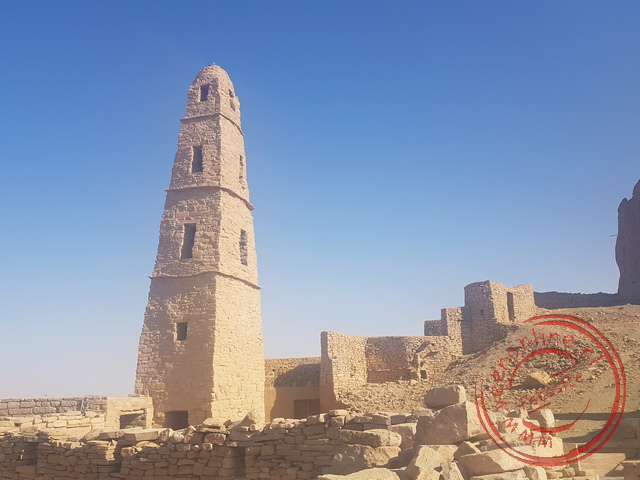 The 1300yearold Omar Ibn alKhattab Mosque
 Archaeological excavations next to the Omar Ibn alKhattab Mosque
 The endless desert roads look as if drawn with a ruler
 Rugged rocks around Wadi Al Disah
Travelogue Fascinating Saudi Arabia
Dag 2 | Saudi Arabia > The Skybridge in Riyadh
Dag 3 | Saudi Arabia > Offroad to 'the Edge'
Dag 4 | Saudi Arabia > The Mud City of Ushaiger
Dag 5 | Saudi Arabia > The Forts of Ha'il
Dag 6 | Saudi Arabia > The Stonehenge of Saudi Arabia
Dag 7 | Saudi Arabia > The Castle of Tabuk
Dag 8 | Saudi Arabia > Overnight in Wadi Al Disah
Dag 9 | Saudi Arabia > The Historic Old Town of Al'Ula
Dag 10 | Saudi Arabia > The Tombs of Madain Saleh
Dag 11 | Saudi Arabia > The Flight to Abha
Dag 12 | Saudi Arabia > The Rijal Almaa Open-Air Museum
Dag 13 | Saudi Arabia > We Got Hit ...
Dag 14 | Saudi Arabia > The Flight to Jeddah
Dag 15 | Saudi Arabia > The Old Centre of Jeddah
Dag 16 | Saudi Arabia > Back to the Netherlands