
154 countries
(and areas)
 - Belize
- Benin
- Bhutan
- Bolivia
- Bonaire
- Bosnia and Herzegovina
- Botswana
- Brazil
- British Virgin Islands
- Brunei
- Bulgaria
- Cambodia
- Canada
- Cape Verde
- Chile
- China
- Costa Rica
- Croatia
- Cuba
- Curacao
- Cyprus
- Czech Republic
- Denmark
- Dominica
- Dominican Republic
- Egypt
- El Salvador
- England
- Estonia
- Eswatini (Swaziland)
- Ethiopia
- Fiji
- Finland
- France
- French Guiana
- Georgia
- Germany
- Gibraltar
- Greece
- Grenada
- Guadeloupe
- Guatemala
- Honduras
- Hong Kong
- Hungary
- Iceland
- India
- Indonesia
- Iran
- Ireland
- Israel
- Italy
- Jamaica
- Japan
- Jordan
- Kazakhstan
- Kenya
- Kosovo
- Kuwait
- Kyrgyzstan
- Laos
- Latvia
- Lebanon
- Lesotho
- Liechtenstein
- Lithuania
- Luxembourg
- Macau
- Madagascar
- Malawi
- Malaysia
- Maldives
- Malta
- Martinique
- Mexico
- Moldova
- Monaco
- Mongolia
- Montenegro
- Morocco
- Mozambique
- Namibia
- Nepal
- Netherlands
- New Zealand
- Nicaragua
- North Macedonia
- Northern Ireland
- Norway
- Oman
- Pakistan
- Palestine
- Peru
- Philippines
- Poland
- Portugal
- Qatar
- Republic of Korea
- Romania
- Russia
- Saint Kitts and Nevis
- Saint Lucia
- Saint Martin
- Saint Vincent and the Grenadines
- San Marino
- São Tomé and Principe
- Saudi Arabia
- Scotland
- Senegal
- Serbia
- Singapore
- Sint Maarten
- Slovakia
- Slovenia
- South Africa
- Spain
- Sri Lanka
- Suriname
- Sweden
- Switzerland
- Tajikistan
- Tanzania
- Thailand
- The Gambia
- Tibet
- Togo
- Transnistria
- Trinidad and Tobago
- Tunisia
- Turkey
- Turkmenistan
- Uganda
- United Arab Emirates
- United States
- Uruguay
- Uzbekistan
- Vatican City
- Vietnam
- Wales
- Zambia
- Zanzibar
- Belize
- Benin
- Bhutan
- Bolivia
- Bonaire
- Bosnia and Herzegovina
- Botswana
- Brazil
- British Virgin Islands
- Brunei
- Bulgaria
- Cambodia
- Canada
- Cape Verde
- Chile
- China
- Costa Rica
- Croatia
- Cuba
- Curacao
- Cyprus
- Czech Republic
- Denmark
- Dominica
- Dominican Republic
- Egypt
- El Salvador
- England
- Estonia
- Eswatini (Swaziland)
- Ethiopia
- Fiji
- Finland
- France
- French Guiana
- Georgia
- Germany
- Gibraltar
- Greece
- Grenada
- Guadeloupe
- Guatemala
- Honduras
- Hong Kong
- Hungary
- Iceland
- India
- Indonesia
- Iran
- Ireland
- Israel
- Italy
- Jamaica
- Japan
- Jordan
- Kazakhstan
- Kenya
- Kosovo
- Kuwait
- Kyrgyzstan
- Laos
- Latvia
- Lebanon
- Lesotho
- Liechtenstein
- Lithuania
- Luxembourg
- Macau
- Madagascar
- Malawi
- Malaysia
- Maldives
- Malta
- Martinique
- Mexico
- Moldova
- Monaco
- Mongolia
- Montenegro
- Morocco
- Mozambique
- Namibia
- Nepal
- Netherlands
- New Zealand
- Nicaragua
- North Macedonia
- Northern Ireland
- Norway
- Oman
- Pakistan
- Palestine
- Peru
- Philippines
- Poland
- Portugal
- Qatar
- Republic of Korea
- Romania
- Russia
- Saint Kitts and Nevis
- Saint Lucia
- Saint Martin
- Saint Vincent and the Grenadines
- San Marino
- São Tomé and Principe
- Saudi Arabia
- Scotland
- Senegal
- Serbia
- Singapore
- Sint Maarten
- Slovakia
- Slovenia
- South Africa
- Spain
- Sri Lanka
- Suriname
- Sweden
- Switzerland
- Tajikistan
- Tanzania
- Thailand
- The Gambia
- Tibet
- Togo
- Transnistria
- Trinidad and Tobago
- Tunisia
- Turkey
- Turkmenistan
- Uganda
- United Arab Emirates
- United States
- Uruguay
- Uzbekistan
- Vatican City
- Vietnam
- Wales
- Zambia
- Zanzibar


Copyright 2004 - 2026
Veeronline.nl Travel Adventures

Home > Algeria > Through the desert of Algeria > Travelogue day 1
Travelogue Through the desert of Algeria
November 8-22, 2025 (15 days)
Algeria > No Luggage in Algiers
Dag 1 - Saturday, 8 November 2025At quarter past four in the morning, Allert picks me up. In the dark, we drive along the almost deserted roads toward Schiphol. At the check-in desk, we meet Bart. Milko also messages that he’s on his way. Today we are flying to Algeria via Paris—a destination not traveled to every day. For me, it is precisely this unfamiliarity that is appealing. At the desk, we need to show the visa form—or rather, the authorization to apply for a “visa on arrival” in Algeria. Due to the long processing time for Algerian visas, it was not possible to arrange a visa in advance. The only downside of this method is that the procedure in Algiers can take a lot of time—hours, as we’ve been told. We’ll see. Check-in goes quickly, and the baggage control hardly takes any time. This leaves us with enough time for a coffee at Starbucks. Just before seven o’clock, boarding begins at gate D66. Once all passengers are on board, the pilot announces that we cannot take off yet. Around Paris, it seems foggy, causing delays in air traffic. At eight o’clock, about forty minutes later, we finally depart. The delay is not too bad; we already received a message that the next flight is delayed as well. We arrive at Charles de Gaulle Airport in Paris without any problems. Here, we must pass through customs as we leave the European Schengen area. At the gate, the delay has now grown to almost two hours.

There’s nothing to do but wait. At the airport, we order a sandwich and coffee. Just before noon, boarding begins—extremely slowly. Finally, we take off for Algiers with over two and a half hours’ delay. During the flight, the pilot apologizes for the delay. The crew had arrived in Algeria with a significant delay yesterday and had to comply with the legally required rest period. This caused the morning flight to France to be heavily delayed as well. Shortly after three o’clock, we land in Algiers. Algeria is in the same time zone as the Netherlands. In the arrivals hall, we must find the visa counter. Customs officers, however, gesture that we first need to fill out a form, then go to customs, and only afterward will the visa be issued. We join a long line for customs. Slowly, the counter approaches. While standing in line, Milko receives a message that his luggage is still in France. Does this apply to everyone? When it’s my turn, my passport and forms are examined carefully. Then the passport is handed to another officer, who leads me to a waiting area. My passport disappears into an office. The same procedure repeats for my fellow travelers. After some time, someone cheerfully returns with our passports. “The Dutch,” he says enthusiastically. My passport has a visa stamp, but it is not yet completed. I first have to go to the bank to pay the visa fee of 25,000 Dinar, about 170 euros. I receive a payment confirmation, but my passport is sent back to the office. In the waiting area, about twenty tourists—mostly French—are waiting for the same procedures. More than two hours after arriving in Algiers, the customs officer returns with my passport. Now the visa is complete, and I may enter the country. In the baggage hall, baggage carousel four is now empty. Has the luggage been collected or not yet arrived? At the Swissport counter, we are informed that the luggage is still in Paris and will probably arrive with the midnight flight. We receive a baggage claim document to collect the luggage. Eventually, we meet Omar in the arrivals hall. He was already worried. He quickly messages Gonda, the Dutch travel agent, that we have arrived. He suggests going to the hotel now and leaving one hour earlier tomorrow to stop by the airport first. In the evening rush hour, we drive to central Algiers. It is raining and slowly getting dark. The traffic looks chaotic and busy. Fortunately, I don’t have to drive. After a whole travel day that started so early, I am quite tired. The hotel and the hotel room are fine. We have to wait a bit. Omar has indicated he will come by to exchange money. His rate is much better than the official exchange rate. “This is the black market,” he says with a laugh, handing over 44,000 Dinar for 200 euros. With the Algerian money, we walk to a restaurant. Omar recommended Restaurant Bardo, a somewhat more upscale restaurant where alcohol is also served—unusual in Algeria. I order a fish soup and a fish tajine. We also order a bottle of red wine. A nice start to our adventure. The bill of 9,000 Dinar is perhaps a little higher than usual in Algeria, but the food tasted excellent. After dinner, I go to bed around ten o’clock.
 Algeria
  Stalls in the old town of Ghardaia
 The harbor of Cherchell
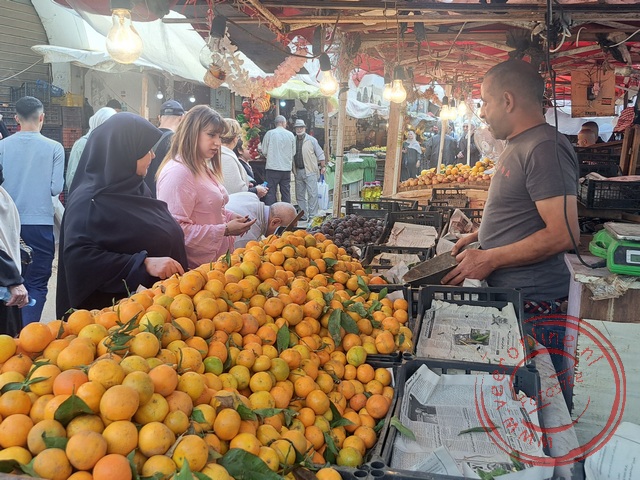 Street stalls in Algiers
 A photo in front of the old town
Travelogue Through the desert of Algeria
Dag 2 | Algeria > The old city of Djemila
Dag 3 | Algeria > The Bridges of Constantine
Dag 4 | Algeria > Timgad, Pompeii of Africa
Dag 5 | Algeria > Old Mosque in Sidi Okba
Dag 6 | Algeria > Ghardaïa in the Desert
Dag 7 | Algeria > The Cities of the M'Zab Valley
Dag 8 | Algeria > The Casbah of Algiers
Dag 9 | Algeria > The Roman City of Tipaza
Dag 10 | Algeria > Tassili N'Ajjer National Park
Dag 11 | Algeria > Rock Art in the Desert
Dag 12 | Algeria > Driving Between Rock Formations
Dag 13 | Algeria > Last Day in the Desert
Dag 14 | Algeria > Back in Djanet
Dag 15 | Algeria > Again No Luggage