
154 countries
(and areas)
 - Belize
- Benin
- Bhutan
- Bolivia
- Bonaire
- Bosnia and Herzegovina
- Botswana
- Brazil
- British Virgin Islands
- Brunei
- Bulgaria
- Cambodia
- Canada
- Cape Verde
- Chile
- China
- Costa Rica
- Croatia
- Cuba
- Curacao
- Cyprus
- Czech Republic
- Denmark
- Dominica
- Dominican Republic
- Egypt
- El Salvador
- England
- Estonia
- Eswatini (Swaziland)
- Ethiopia
- Fiji
- Finland
- France
- French Guiana
- Georgia
- Germany
- Gibraltar
- Greece
- Grenada
- Guadeloupe
- Guatemala
- Honduras
- Hong Kong
- Hungary
- Iceland
- India
- Indonesia
- Iran
- Ireland
- Israel
- Italy
- Jamaica
- Japan
- Jordan
- Kazakhstan
- Kenya
- Kosovo
- Kuwait
- Kyrgyzstan
- Laos
- Latvia
- Lebanon
- Lesotho
- Liechtenstein
- Lithuania
- Luxembourg
- Macau
- Madagascar
- Malawi
- Malaysia
- Maldives
- Malta
- Martinique
- Mexico
- Moldova
- Monaco
- Mongolia
- Montenegro
- Morocco
- Mozambique
- Namibia
- Nepal
- Netherlands
- New Zealand
- Nicaragua
- North Macedonia
- Northern Ireland
- Norway
- Oman
- Pakistan
- Palestine
- Peru
- Philippines
- Poland
- Portugal
- Qatar
- Republic of Korea
- Romania
- Russia
- Saint Kitts and Nevis
- Saint Lucia
- Saint Martin
- Saint Vincent and the Grenadines
- San Marino
- São Tomé and Principe
- Saudi Arabia
- Scotland
- Senegal
- Serbia
- Singapore
- Sint Maarten
- Slovakia
- Slovenia
- South Africa
- Spain
- Sri Lanka
- Suriname
- Sweden
- Switzerland
- Tajikistan
- Tanzania
- Thailand
- The Gambia
- Tibet
- Togo
- Transnistria
- Trinidad and Tobago
- Tunisia
- Turkey
- Turkmenistan
- Uganda
- United Arab Emirates
- United States
- Uruguay
- Uzbekistan
- Vatican City
- Vietnam
- Wales
- Zambia
- Zanzibar
- Belize
- Benin
- Bhutan
- Bolivia
- Bonaire
- Bosnia and Herzegovina
- Botswana
- Brazil
- British Virgin Islands
- Brunei
- Bulgaria
- Cambodia
- Canada
- Cape Verde
- Chile
- China
- Costa Rica
- Croatia
- Cuba
- Curacao
- Cyprus
- Czech Republic
- Denmark
- Dominica
- Dominican Republic
- Egypt
- El Salvador
- England
- Estonia
- Eswatini (Swaziland)
- Ethiopia
- Fiji
- Finland
- France
- French Guiana
- Georgia
- Germany
- Gibraltar
- Greece
- Grenada
- Guadeloupe
- Guatemala
- Honduras
- Hong Kong
- Hungary
- Iceland
- India
- Indonesia
- Iran
- Ireland
- Israel
- Italy
- Jamaica
- Japan
- Jordan
- Kazakhstan
- Kenya
- Kosovo
- Kuwait
- Kyrgyzstan
- Laos
- Latvia
- Lebanon
- Lesotho
- Liechtenstein
- Lithuania
- Luxembourg
- Macau
- Madagascar
- Malawi
- Malaysia
- Maldives
- Malta
- Martinique
- Mexico
- Moldova
- Monaco
- Mongolia
- Montenegro
- Morocco
- Mozambique
- Namibia
- Nepal
- Netherlands
- New Zealand
- Nicaragua
- North Macedonia
- Northern Ireland
- Norway
- Oman
- Pakistan
- Palestine
- Peru
- Philippines
- Poland
- Portugal
- Qatar
- Republic of Korea
- Romania
- Russia
- Saint Kitts and Nevis
- Saint Lucia
- Saint Martin
- Saint Vincent and the Grenadines
- San Marino
- São Tomé and Principe
- Saudi Arabia
- Scotland
- Senegal
- Serbia
- Singapore
- Sint Maarten
- Slovakia
- Slovenia
- South Africa
- Spain
- Sri Lanka
- Suriname
- Sweden
- Switzerland
- Tajikistan
- Tanzania
- Thailand
- The Gambia
- Tibet
- Togo
- Transnistria
- Trinidad and Tobago
- Tunisia
- Turkey
- Turkmenistan
- Uganda
- United Arab Emirates
- United States
- Uruguay
- Uzbekistan
- Vatican City
- Vietnam
- Wales
- Zambia
- Zanzibar


Copyright 2004 - 2026
Veeronline.nl Travel Adventures

Home > Algeria > Through the desert of Algeria > Travelogue day 8
Travelogue Through the desert of Algeria
November 8-22, 2025 (15 days)
Algeria > The Casbah of Algiers
Dag 8 - Saturday, 15 November 2025
The alarm goes off at six o’clock. I take a shower and pack my luggage. The breakfast buffet is already open. At 7:30, Mustafa arrives for the last time at the hotel. He drives us to Ghardaïa Airport. The airport is not busy—only three flights are departing today. Just before boarding, everyone must point out their suitcase, which ensures confidence that all luggage will make it on the plane. Once we board, we find it’s free seating. Soon everyone has a spot in the somewhat old propeller plane. The plane takes off, and I watch the desert below. Just after 10:30, we begin the landing. We arrive again at Algiers Airport. It already feels a bit like coming home. The baggage on belt 3 is delayed, but suddenly all luggage appears on belt 1. In the arrival hall, Riyad is waiting for us. He is our guide for today in Algiers. First, we take our luggage to the hotel. It’s too early to check in, so we head to the former Ottoman fort at the top of the kasbah (medina). In the seventeenth century, the Spanish attacked Algiers. The Algerians called on the Ottomans for help, which led to Algeria becoming part of the vast Ottoman Empire, although the country retained a special status.
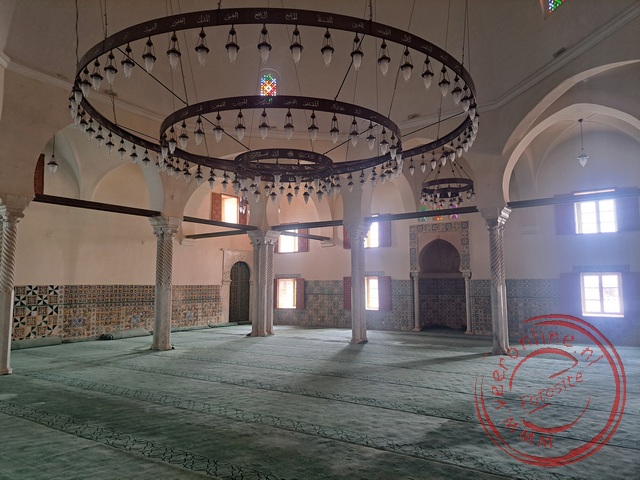
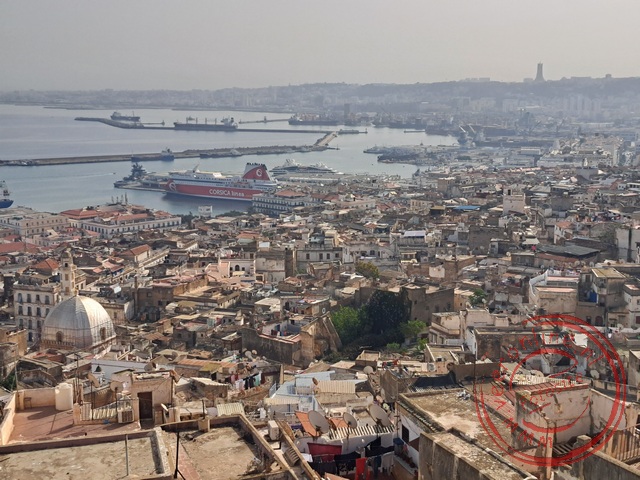
The Beys became rulers of the Algerian regions. Previously, we had seen the palace of Ahmed Bey in Constantine. The Ottomans built a fort above the city of Algiers, which contained the Bey’s palace, a mosque, guest quarters, and a gunpowder storage area. During the French invasion, the fort fell into French hands. We explore some rooms, the mosque, and the gunpowder store. The palaces are still being extensively restored. Outside the fort begins the kasbah—a network of narrow streets on the hillside. Starting from the top, we mostly descend through the kasbah. Riyad leads the way. The streets are busy; it’s Saturday, a free day for many Algerians. Women are shopping at the stalls and small shops. What a contrast to yesterday. Here, it’s also much less of a problem if people appear in photos. From a café rooftop terrace, we have a view of the kasbah, the boulevard, and the harbor. Riyad points out various mosques, Martyrs’ Square, and the European quarter. From above, the houses in the kasbah look messy and chaotic. Walking further, the lively atmosphere on the streets stands out.
People regularly greet us or ask where we are from. In a restaurant, we order something to eat. Fish is naturally a specialty so close to the sea. I order shrimp in sauce. Next to the restaurant is the Palace of Mustapha Pasha, one of the best-preserved Ottoman-Algerian palaces from the 18th century. It was built around 1798 by Mustapha Pasha, a powerful Ottoman governor. The courtyard is especially beautiful. Today, the palace houses the Manuscripts Museum, which is less interesting to me. At the bottom of the old quarter, we reach Martyrs’ Square. In the 19th century, Algerians tried to protect a mosque that the French wanted to demolish. Protesters were killed, and the mosque was destroyed. The cathedral and theater built in its place now serve as a mosque. We walk along the boulevard as the sun begins to set. At the old post office, we take the metro to the botanical garden, which was established by the French. The expansive park contains numerous exotic trees. Across from the park, we take the cable car to the Martyrs’ Monument, built in 1982 to commemorate Algeria’s struggle for independence from France. The monument consists of three massive, gracefully curved concrete slabs forming a crown, with an eternal flame and statues of fighters underneath. Beneath the monument is a museum about the wars and uprisings, emphasizing French atrocities. Outside again, the monument is illuminated, with the colors of the Algerian flag projected onto it.

It is already six o’clock. We drive to the hotel in the minibus—or so we think. We pass the hotel. When we ask where we are going, the guide apologizes for not paying attention. On the other lane, there is a long traffic jam. Eventually, we arrive at the hotel and check in. Our first room has a double bed; we are moved to another room with two single beds. In the evening, we go out to eat nearby. There are not many restaurants. An Asian restaurant offers noodles and sushi.
 Algeria
  Beni Isguen is one of the towns in the MZab Valley
 Emir Abdelkader laid the foundation for the modern Algerian state
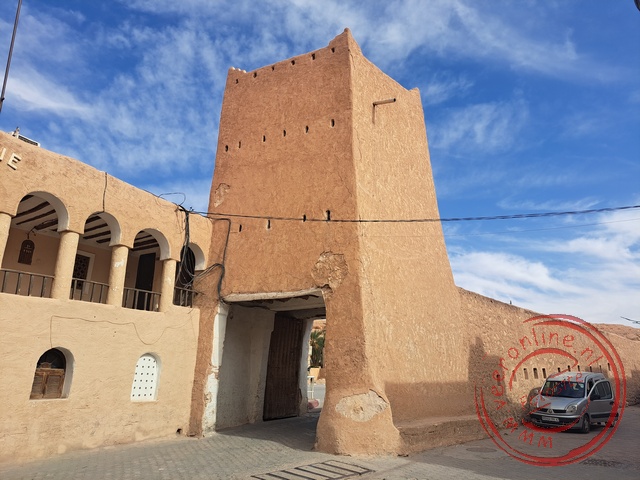 The gateway of Beni Isguen
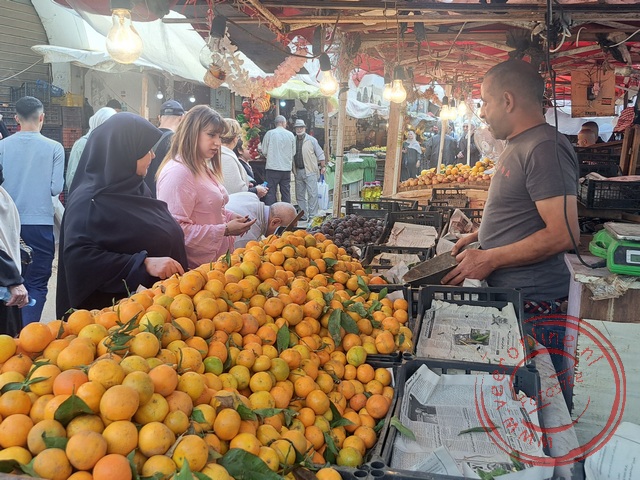 Street stalls in Algiers
Travelogue Through the desert of Algeria
Dag 2 | Algeria > The old city of Djemila
Dag 3 | Algeria > The Bridges of Constantine
Dag 4 | Algeria > Timgad, Pompeii of Africa
Dag 5 | Algeria > Old Mosque in Sidi Okba
Dag 6 | Algeria > Ghardaïa in the Desert
Dag 7 | Algeria > The Cities of the M'Zab Valley
Dag 8 | Algeria > The Casbah of Algiers
Dag 9 | Algeria > The Roman City of Tipaza
Dag 10 | Algeria > Tassili N'Ajjer National Park
Dag 11 | Algeria > Rock Art in the Desert
Dag 12 | Algeria > Driving Between Rock Formations
Dag 13 | Algeria > Last Day in the Desert
Dag 14 | Algeria > Back in Djanet
Dag 15 | Algeria > Again No Luggage