
154 countries
(and areas)
 - Belize
- Benin
- Bhutan
- Bolivia
- Bonaire
- Bosnia and Herzegovina
- Botswana
- Brazil
- British Virgin Islands
- Brunei
- Bulgaria
- Cambodia
- Canada
- Cape Verde
- Chile
- China
- Costa Rica
- Croatia
- Cuba
- Curacao
- Cyprus
- Czech Republic
- Denmark
- Dominica
- Dominican Republic
- Egypt
- El Salvador
- England
- Estonia
- Eswatini (Swaziland)
- Ethiopia
- Fiji
- Finland
- France
- French Guiana
- Georgia
- Germany
- Gibraltar
- Greece
- Grenada
- Guadeloupe
- Guatemala
- Honduras
- Hong Kong
- Hungary
- Iceland
- India
- Indonesia
- Iran
- Ireland
- Israel
- Italy
- Jamaica
- Japan
- Jordan
- Kazakhstan
- Kenya
- Kosovo
- Kuwait
- Kyrgyzstan
- Laos
- Latvia
- Lebanon
- Lesotho
- Liechtenstein
- Lithuania
- Luxembourg
- Macau
- Madagascar
- Malawi
- Malaysia
- Maldives
- Malta
- Martinique
- Mexico
- Moldova
- Monaco
- Mongolia
- Montenegro
- Morocco
- Mozambique
- Namibia
- Nepal
- Netherlands
- New Zealand
- Nicaragua
- North Macedonia
- Northern Ireland
- Norway
- Oman
- Pakistan
- Palestine
- Peru
- Philippines
- Poland
- Portugal
- Qatar
- Republic of Korea
- Romania
- Russia
- Saint Kitts and Nevis
- Saint Lucia
- Saint Martin
- Saint Vincent and the Grenadines
- San Marino
- São Tomé and Principe
- Saudi Arabia
- Scotland
- Senegal
- Serbia
- Singapore
- Sint Maarten
- Slovakia
- Slovenia
- South Africa
- Spain
- Sri Lanka
- Suriname
- Sweden
- Switzerland
- Tajikistan
- Tanzania
- Thailand
- The Gambia
- Tibet
- Togo
- Transnistria
- Trinidad and Tobago
- Tunisia
- Turkey
- Turkmenistan
- Uganda
- United Arab Emirates
- United States
- Uruguay
- Uzbekistan
- Vatican City
- Vietnam
- Wales
- Zambia
- Zanzibar
- Belize
- Benin
- Bhutan
- Bolivia
- Bonaire
- Bosnia and Herzegovina
- Botswana
- Brazil
- British Virgin Islands
- Brunei
- Bulgaria
- Cambodia
- Canada
- Cape Verde
- Chile
- China
- Costa Rica
- Croatia
- Cuba
- Curacao
- Cyprus
- Czech Republic
- Denmark
- Dominica
- Dominican Republic
- Egypt
- El Salvador
- England
- Estonia
- Eswatini (Swaziland)
- Ethiopia
- Fiji
- Finland
- France
- French Guiana
- Georgia
- Germany
- Gibraltar
- Greece
- Grenada
- Guadeloupe
- Guatemala
- Honduras
- Hong Kong
- Hungary
- Iceland
- India
- Indonesia
- Iran
- Ireland
- Israel
- Italy
- Jamaica
- Japan
- Jordan
- Kazakhstan
- Kenya
- Kosovo
- Kuwait
- Kyrgyzstan
- Laos
- Latvia
- Lebanon
- Lesotho
- Liechtenstein
- Lithuania
- Luxembourg
- Macau
- Madagascar
- Malawi
- Malaysia
- Maldives
- Malta
- Martinique
- Mexico
- Moldova
- Monaco
- Mongolia
- Montenegro
- Morocco
- Mozambique
- Namibia
- Nepal
- Netherlands
- New Zealand
- Nicaragua
- North Macedonia
- Northern Ireland
- Norway
- Oman
- Pakistan
- Palestine
- Peru
- Philippines
- Poland
- Portugal
- Qatar
- Republic of Korea
- Romania
- Russia
- Saint Kitts and Nevis
- Saint Lucia
- Saint Martin
- Saint Vincent and the Grenadines
- San Marino
- São Tomé and Principe
- Saudi Arabia
- Scotland
- Senegal
- Serbia
- Singapore
- Sint Maarten
- Slovakia
- Slovenia
- South Africa
- Spain
- Sri Lanka
- Suriname
- Sweden
- Switzerland
- Tajikistan
- Tanzania
- Thailand
- The Gambia
- Tibet
- Togo
- Transnistria
- Trinidad and Tobago
- Tunisia
- Turkey
- Turkmenistan
- Uganda
- United Arab Emirates
- United States
- Uruguay
- Uzbekistan
- Vatican City
- Vietnam
- Wales
- Zambia
- Zanzibar


Copyright 2004 - 2026
Veeronline.nl Travel Adventures
Home > Lithuania > Baltic States > Travelogue day 3
Travelogue Baltic States
July 24 August 7 2010 (15 days)
Lithuania > At the Water Castle of Trakai
Dag 3 - Monday, July 26, 2010It’s cloudy, and it has rained heavily during the night. At the bus, I meet Juozas, our driver for the coming days. He will stay with us until Tallinn. At nine o’clock, he starts the bus, and we leave the hotel. Our first stop is the beautiful Saints Peter and Paul Cathedral. The cathedral was built in 1676 to replace a wooden church. The interior is Baroque, featuring more than 2,000 depictions of biblical figures. Remarkably, the dominant color is white, which gives the otherwise ornate interior a surprisingly calm appearance.

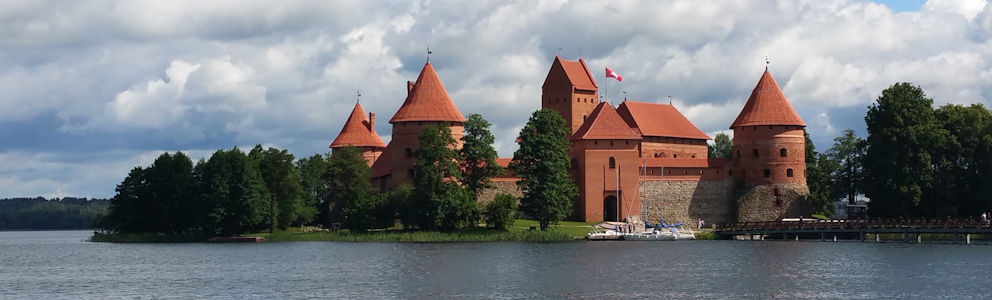
After about an hour’s drive, we arrive in the town of Trakai. Driving through the main street, we notice the brightly colored wooden houses. You’d expect wooden houses to struggle in such cold winters, but they seem well-maintained. Trakai, however, is best known for its Island Castle. At the end of the village, I can already see the castle, located on an island between lakes Galve and Luka. Built in 1321, the fortress once held a prominent position in Trakai, then the capital of Lithuania. Although the castle suffered significant damage over the centuries, it has been fully restored. Unfortunately, it’s easy to see which parts have been rebuilt and which remain original. Crossing the wooden bridge and entering the castle, I’m pleased to find that much of the old atmosphere has been preserved.We have lunch about a hundred kilometers further in Kaunas, a charming town founded in 1361 at the confluence of the Nemunas and Neris rivers. The old town is full of historic buildings. We step inside the sturdy Saints Peter and Paul Basilica, a blend of Renaissance and Baroque styles. The high altar at the back, adorned with apostles, is especially beautiful. Crossing the Town Hall Square, we pass the elegant white Town Hall—nicknamed “the Swan”—which proudly dominates the square.Next, we visit St. Francis Church, also located on the square. During the Russian occupation, it was used as a sports hall and badly damaged, leaving the interior rather austere. A little further, on the banks of the Nemunas River, stands the Vytautas Church, a brick building that, unfortunately, is closed. Diagonally across from it is the Perkunas House, a Gothic-style building made of red bricks, now used by the Jesuits, who lend it to artists. Inside, a tour costs 2 litas (about 60 cents).

A student guides us through the cellar and former bedrooms. I have to get used to his English accent—it sounds memorized, and some words are distorted. He struggles a bit when answering questions, but the tour is pleasant enough. It ends at the stately front door on the first floor, and as it closes behind us, we exit via the grand staircase. A simple but enjoyable visit.We continue past the closed Holy Trinity Church and make our way back to the parking lot near the castle, where the bus picks us up. Light rain begins to fall. Just outside Kaunas, we stop at an impressive memorial dedicated to the victims of World War II, including the many Jews who perished here. A large concrete monument stands in solemn remembrance. The drizzly weather feels fitting for the site.Back on the bus, we stow away our wet umbrellas and travel another 200 kilometers toward Klaipeda. The landscape is mostly green fields and forests, with surprisingly few houses along the way, giving it a somewhat monotonous feel. I close my eyes for a while. When I wake up around six o’clock, we’re entering Klaipeda. Juozas drives straight to the harbor, where we take the ferry to the Curonian Spit. This narrow strip of land stretches almost 100 kilometers north from the Russian exclave of Kaliningrad, never wider than four kilometers. The crossing takes only five minutes.We continue about 40 kilometers to the village of Nida, the closest settlement to the Kaliningrad border. Just past Juodkrante, we stop at the Dead Dunes. A sandy trail leads us to a vast dune landscape covered with patches of gray moss, which gives the dunes their eerie name. I climb to the top and take in the stunning view over the Curonian Lagoon, the large inland sea between the spit and the Lithuanian coast. I don’t linger too long—our driver must adhere to his legal driving hours, and time is tight. Exactly at eight o’clock, Juozas parks the bus at our hotel in Nida. According to Lithuanian law, he can drive no further, and he strictly follows the rules. The hotel is located in the center of Nida. In the evening, we dine on the terrace of a fish restaurant along the boulevard.
 Latvia
 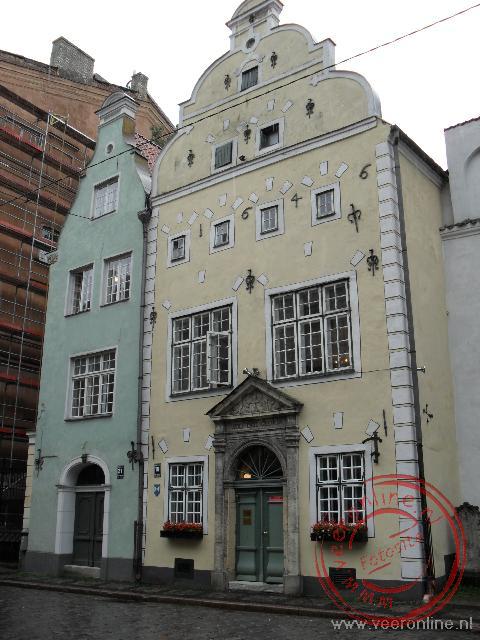 The three oldest houses of Riga leaning together since the 17th century
 Lithuania
 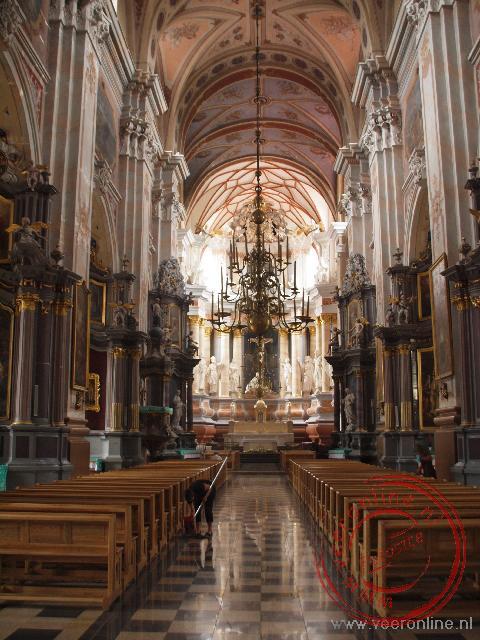 The robust St Peter and Paul Basilica of Kaunas
 The town hall and Franciscan Church at the central square in Kaunas
 The brightly colored houses in Trakai Lithuania
Travelogue Baltic States
Dag 2 | Lithuania > Wandering among the churches
Dag 3 | Lithuania > At the Water Castle of Trakai
Dag 4 | Lithuania > By bike over the Curonian Spit
Dag 5 | Latvia > Crosses, crosses and more crosses
Dag 6 | Latvia > Riga, the beating heart of the Baltics
Dag 7 | Estonia > The sturdy fortress church of Pölde
Dag 8 | Estonia > The bunkers of Sõrve
Dag 9 | Estonia > The Middle Ages in Tallinn
Dag 10 | Estonia > Searching for Kodak points in Tallinn
Dag 11 | Estonia > In the catacombs under old Tallinn
Dag 12 | Russia > Crossing the Russian border
Dag 13 | Russia > Hermitage and the Swan Lake
Dag 14 | Russia > Wandering through Saint Petersburg
Dag 15 | Russia > Visit to the Catherine Palace