
154 countries
(and areas)
 - Azerbaijan
- Bahrain
- Barbados
- Belgium
- Belize
- Benin
- Bhutan
- Bolivia
- Bonaire
- Bosnia and Herzegovina
- Botswana
- Brazil
- British Virgin Islands
- Brunei
- Bulgaria
- Cambodia
- Canada
- Cape Verde
- Chile
- China
- Costa Rica
- Croatia
- Cuba
- Curacao
- Cyprus
- Czech Republic
- Denmark
- Dominica
- Dominican Republic
- Egypt
- El Salvador
- England
- Estonia
- Eswatini (Swaziland)
- Ethiopia
- Fiji
- Finland
- France
- French Guiana
- Georgia
- Germany
- Gibraltar
- Greece
- Grenada
- Guadeloupe
- Guatemala
- Honduras
- Hong Kong
- Hungary
- Iceland
- India
- Indonesia
- Iran
- Ireland
- Israel
- Italy
- Jamaica
- Japan
- Jordan
- Kazakhstan
- Kenya
- Kosovo
- Kuwait
- Kyrgyzstan
- Laos
- Latvia
- Lebanon
- Lesotho
- Liechtenstein
- Lithuania
- Luxembourg
- Macau
- Madagascar
- Malawi
- Malaysia
- Maldives
- Malta
- Martinique
- Mexico
- Moldova
- Monaco
- Mongolia
- Montenegro
- Morocco
- Mozambique
- Namibia
- Nepal
- Netherlands
- New Zealand
- Nicaragua
- North Macedonia
- Northern Ireland
- Norway
- Oman
- Pakistan
- Palestine
- Peru
- Philippines
- Poland
- Portugal
- Qatar
- Republic of Korea
- Romania
- Russia
- Saint Kitts and Nevis
- Saint Lucia
- Saint Martin
- Saint Vincent and the Grenadines
- San Marino
- São Tomé and Principe
- Saudi Arabia
- Scotland
- Senegal
- Serbia
- Singapore
- Sint Maarten
- Slovakia
- Slovenia
- South Africa
- Spain
- Sri Lanka
- Suriname
- Sweden
- Switzerland
- Tajikistan
- Tanzania
- Thailand
- The Gambia
- Tibet
- Togo
- Transnistria
- Trinidad and Tobago
- Tunisia
- Turkey
- Turkmenistan
- Uganda
- United Arab Emirates
- United States
- Uruguay
- Uzbekistan
- Vatican City
- Vietnam
- Wales
- Zambia
- Zanzibar
- Azerbaijan
- Bahrain
- Barbados
- Belgium
- Belize
- Benin
- Bhutan
- Bolivia
- Bonaire
- Bosnia and Herzegovina
- Botswana
- Brazil
- British Virgin Islands
- Brunei
- Bulgaria
- Cambodia
- Canada
- Cape Verde
- Chile
- China
- Costa Rica
- Croatia
- Cuba
- Curacao
- Cyprus
- Czech Republic
- Denmark
- Dominica
- Dominican Republic
- Egypt
- El Salvador
- England
- Estonia
- Eswatini (Swaziland)
- Ethiopia
- Fiji
- Finland
- France
- French Guiana
- Georgia
- Germany
- Gibraltar
- Greece
- Grenada
- Guadeloupe
- Guatemala
- Honduras
- Hong Kong
- Hungary
- Iceland
- India
- Indonesia
- Iran
- Ireland
- Israel
- Italy
- Jamaica
- Japan
- Jordan
- Kazakhstan
- Kenya
- Kosovo
- Kuwait
- Kyrgyzstan
- Laos
- Latvia
- Lebanon
- Lesotho
- Liechtenstein
- Lithuania
- Luxembourg
- Macau
- Madagascar
- Malawi
- Malaysia
- Maldives
- Malta
- Martinique
- Mexico
- Moldova
- Monaco
- Mongolia
- Montenegro
- Morocco
- Mozambique
- Namibia
- Nepal
- Netherlands
- New Zealand
- Nicaragua
- North Macedonia
- Northern Ireland
- Norway
- Oman
- Pakistan
- Palestine
- Peru
- Philippines
- Poland
- Portugal
- Qatar
- Republic of Korea
- Romania
- Russia
- Saint Kitts and Nevis
- Saint Lucia
- Saint Martin
- Saint Vincent and the Grenadines
- San Marino
- São Tomé and Principe
- Saudi Arabia
- Scotland
- Senegal
- Serbia
- Singapore
- Sint Maarten
- Slovakia
- Slovenia
- South Africa
- Spain
- Sri Lanka
- Suriname
- Sweden
- Switzerland
- Tajikistan
- Tanzania
- Thailand
- The Gambia
- Tibet
- Togo
- Transnistria
- Trinidad and Tobago
- Tunisia
- Turkey
- Turkmenistan
- Uganda
- United Arab Emirates
- United States
- Uruguay
- Uzbekistan
- Vatican City
- Vietnam
- Wales
- Zambia
- Zanzibar


Copyright 2004 - 2026
Veeronline.nl Travel Adventures
Home > Estonia > Baltic States > Travelogue day 7
Travelogue Baltic States
July 24 August 7 2010 (15 days)
Estonia > The sturdy fortress church of Pölde
Dag 7 - Friday, July 30, 2010Our stay in Latvia is short — today we’re already heading for Estonia. We follow the Bay of Riga northward, but before crossing the border, we visit Gauja National Park.

This park is a popular holiday destination thanks to its many recreational opportunities and is often called the “Switzerland of Latvia.” In the past, however, things were very different — many battles were fought here between the Castle of the Order and Turaida Castle. We enter the park from the town of Sigulda and visit the castle museum of Turaida. From a distance, the castle looks impressive, but up close the modern restoration work becomes visible. The old tower has been almost completely rebuilt. Still, the view from the 40-meter-high lookout tower is well worth the climb. On the museum grounds, there’s also a wooden church from 1750, old stables, and a working blacksmith. Back on the bus, we continue toward the border. After about an hour, we cross into Estonia. There are no more border checks here either. A little farther along, we stop to exchange our Latvian money for Estonian currency. I’ve already spent all my cash, so I’ll have to wait to withdraw money from an ATM. Around half past one, we arrive in Pärnu, a relatively large city on the Bay of Riga. We have an hour and a half for lunch, but I’m eager to see some of Pärnu’s sights in that time. We decide to focus on the architecture and grab a quick sandwich along the way. With the travel guide in hand, we walk down the central shopping street, Rüütli. We enter the canary-yellow St. Catherine’s Church, a Russian Orthodox church. Inside, it is one of the most beautiful Orthodox churches in Estonia, decorated with stunning icons. The salmon-pink Baroque St. Elizabeth’s Church, on the other hand, is Lutheran — its interior is much simpler and has a distinctly Scandinavian feel. We then stroll to the Tallinn Gate, the only surviving city gate from the Swedish period, once part of Pärnu’s defensive wall.

At a bakery, we buy a few sandwiches, and I withdraw some Estonian cash from an ATM. Around four o’clock, we arrive in Virtsu, where we’ll take the ferry to the island of Saaremaa. The ferry has just left, so we wait for the next one. The weather is pleasant, perfect for sitting outside or stretching our legs. When the next ferry arrives, we board. The crossing takes about thirty minutes. I find a seat on the upper deck in the sunshine. Before long, I spot the island of Muhu on the horizon. Muhu is connected by a bridge to the larger island of Saaremaa. I had read in the guidebook about the remarkable fortress church of Pöide, a 13th-century fortified church where clergy could retreat into the tower during uprisings. As it turns out, we pass quite close to Pöide. We make a quick stop at the church. At the turnoff for Pöide, two historical sites are signposted — we accidentally choose the wrong one. From an overgrown rampart, we spot the church tower behind us. We quickly drive there instead. A few black storks rise from the meadow — a rare sight. The old, solid Pöide church stands somewhat isolated among the trees. It’s a cross between a fortress and a church. Strikingly, the tower is as wide as the nave, giving the church a rather bulky appearance. Inside, only the rear section is in use, with a small altar. The tower and main nave are in need of restoration. All in all, it’s a very unusual church — quite unlike any we’ve seen so far. A little farther on, near Valjala, stands the island’s oldest fortified church, dating from 1240. We pass right by it as well. This church, too, is an impressive building in both Romanesque and Gothic style. Inside, it is still fully in use. After visiting the church, we finally continue to Kuressaare, the island’s main town. Our hotel is located just behind the castle, near the sports fields. There’s a fairground next to the hotel. In the evening, we have dinner on the central square by the town hall. On the way back, we open our umbrellas — it’s started to rain.
 Lithuania
  Married couples attach a lock to the bridge to symbolize their marriage and throw the key into the river
 One of the remaining fortress towers of the Upper Castle in Vilnius
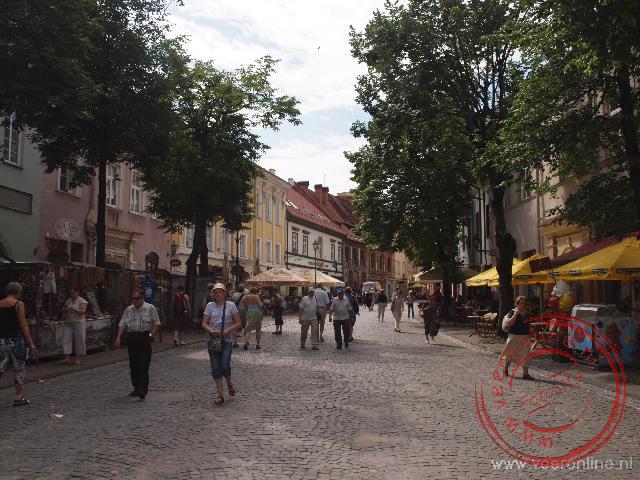 The cozy street Pilies in central Vilnius
 The brightly colored houses in Trakai Lithuania
Travelogue Baltic States
Dag 2 | Lithuania > Wandering among the churches
Dag 3 | Lithuania > At the Water Castle of Trakai
Dag 4 | Lithuania > By bike over the Curonian Spit
Dag 5 | Latvia > Crosses, crosses and more crosses
Dag 6 | Latvia > Riga, the beating heart of the Baltics
Dag 7 | Estonia > The sturdy fortress church of Pölde
Dag 8 | Estonia > The bunkers of Sõrve
Dag 9 | Estonia > The Middle Ages in Tallinn
Dag 10 | Estonia > Searching for Kodak points in Tallinn
Dag 11 | Estonia > In the catacombs under old Tallinn
Dag 12 | Russia > Crossing the Russian border
Dag 13 | Russia > Hermitage and the Swan Lake
Dag 14 | Russia > Wandering through Saint Petersburg
Dag 15 | Russia > Visit to the Catherine Palace