
154 countries
(and areas)
 - Belize
- Benin
- Bhutan
- Bolivia
- Bonaire
- Bosnia and Herzegovina
- Botswana
- Brazil
- British Virgin Islands
- Brunei
- Bulgaria
- Cambodia
- Canada
- Cape Verde
- Chile
- China
- Costa Rica
- Croatia
- Cuba
- Curacao
- Cyprus
- Czech Republic
- Denmark
- Dominica
- Dominican Republic
- Egypt
- El Salvador
- England
- Estonia
- Eswatini (Swaziland)
- Ethiopia
- Fiji
- Finland
- France
- French Guiana
- Georgia
- Germany
- Gibraltar
- Greece
- Grenada
- Guadeloupe
- Guatemala
- Honduras
- Hong Kong
- Hungary
- Iceland
- India
- Indonesia
- Iran
- Ireland
- Israel
- Italy
- Jamaica
- Japan
- Jordan
- Kazakhstan
- Kenya
- Kosovo
- Kuwait
- Kyrgyzstan
- Laos
- Latvia
- Lebanon
- Lesotho
- Liechtenstein
- Lithuania
- Luxembourg
- Macau
- Madagascar
- Malawi
- Malaysia
- Maldives
- Malta
- Martinique
- Mexico
- Moldova
- Monaco
- Mongolia
- Montenegro
- Morocco
- Mozambique
- Namibia
- Nepal
- Netherlands
- New Zealand
- Nicaragua
- North Macedonia
- Northern Ireland
- Norway
- Oman
- Pakistan
- Palestine
- Peru
- Philippines
- Poland
- Portugal
- Qatar
- Republic of Korea
- Romania
- Russia
- Saint Kitts and Nevis
- Saint Lucia
- Saint Martin
- Saint Vincent and the Grenadines
- San Marino
- São Tomé and Principe
- Saudi Arabia
- Scotland
- Senegal
- Serbia
- Singapore
- Sint Maarten
- Slovakia
- Slovenia
- South Africa
- Spain
- Sri Lanka
- Suriname
- Sweden
- Switzerland
- Tajikistan
- Tanzania
- Thailand
- The Gambia
- Tibet
- Togo
- Transnistria
- Trinidad and Tobago
- Tunisia
- Turkey
- Turkmenistan
- Uganda
- United Arab Emirates
- United States
- Uruguay
- Uzbekistan
- Vatican City
- Vietnam
- Wales
- Zambia
- Zanzibar
- Belize
- Benin
- Bhutan
- Bolivia
- Bonaire
- Bosnia and Herzegovina
- Botswana
- Brazil
- British Virgin Islands
- Brunei
- Bulgaria
- Cambodia
- Canada
- Cape Verde
- Chile
- China
- Costa Rica
- Croatia
- Cuba
- Curacao
- Cyprus
- Czech Republic
- Denmark
- Dominica
- Dominican Republic
- Egypt
- El Salvador
- England
- Estonia
- Eswatini (Swaziland)
- Ethiopia
- Fiji
- Finland
- France
- French Guiana
- Georgia
- Germany
- Gibraltar
- Greece
- Grenada
- Guadeloupe
- Guatemala
- Honduras
- Hong Kong
- Hungary
- Iceland
- India
- Indonesia
- Iran
- Ireland
- Israel
- Italy
- Jamaica
- Japan
- Jordan
- Kazakhstan
- Kenya
- Kosovo
- Kuwait
- Kyrgyzstan
- Laos
- Latvia
- Lebanon
- Lesotho
- Liechtenstein
- Lithuania
- Luxembourg
- Macau
- Madagascar
- Malawi
- Malaysia
- Maldives
- Malta
- Martinique
- Mexico
- Moldova
- Monaco
- Mongolia
- Montenegro
- Morocco
- Mozambique
- Namibia
- Nepal
- Netherlands
- New Zealand
- Nicaragua
- North Macedonia
- Northern Ireland
- Norway
- Oman
- Pakistan
- Palestine
- Peru
- Philippines
- Poland
- Portugal
- Qatar
- Republic of Korea
- Romania
- Russia
- Saint Kitts and Nevis
- Saint Lucia
- Saint Martin
- Saint Vincent and the Grenadines
- San Marino
- São Tomé and Principe
- Saudi Arabia
- Scotland
- Senegal
- Serbia
- Singapore
- Sint Maarten
- Slovakia
- Slovenia
- South Africa
- Spain
- Sri Lanka
- Suriname
- Sweden
- Switzerland
- Tajikistan
- Tanzania
- Thailand
- The Gambia
- Tibet
- Togo
- Transnistria
- Trinidad and Tobago
- Tunisia
- Turkey
- Turkmenistan
- Uganda
- United Arab Emirates
- United States
- Uruguay
- Uzbekistan
- Vatican City
- Vietnam
- Wales
- Zambia
- Zanzibar


Copyright 2004 - 2026
Veeronline.nl Travel Adventures

Home > Trinidad and Tobago > A Caribbean Cruise > Travelogue day 4
Travelogue A Caribbean Cruise
February 29 March 16 2024 (17 days)
Trinidad and Tobago > The old plantations of Tobago
Dag 4 - Sunday, March 3, 2024Yesterday, we already received a notification through the special cruise app that we need to gather for our excursion at half past eight. We set our alarm accordingly. When the alarm goes off, I see that we are off the coast of Tobago. Together with the island of Trinidad, it forms the island state of Trinidad and Tobago. During the colonial period, the Dutch were apparently the first to set foot here. The locals offered their tobacco, which led to the name Tobago. The Dutch were only briefly present, after which the French colonized the island for the sugar cane trade. When this trade declined, the French lost interest, and the British took over, combining it with Trinidad into one colony. In 1962, Trinidad and Tobago gained independence. Before going ashore, we have breakfast at the buffet at the rear of the ship. Around half past eight, we gather in the theater. We are assigned to bus three. At the port of Scarborough, this is not really a bus. A line of 4x4 vehicles is ready. Each vehicle holds four passengers. That we are the only ones who booked an English tour does not matter. All the drivers speak only English. We ride with Maron in the vehicle. During the week, he works on road maintenance on the island. Today, he is our driver. In a convoy of about ten vehicles, we leave the harbor. We stop at the boulevard by large letters saying ‘I love Tobago’. Offshore, they are working to remove oil. A month ago, a tanker capsized just off the coast of Tobago, spilling large amounts of oil on the shore.

Authorities are still in the dark about the origin of the ship named Gulfstream and its cargo. The crew is missing without a trace. It seems to have been a sort of 'ghost ship' used for illegally transporting oil from countries under international sanctions, such as nearby Venezuela. As we drive westward across Tobago, we sometimes have to detour because the road is closed for cleanup operations. At Tobago Plantations, we stop by a small lake. Besides birds, caimans sometimes rest on the shore here. The small crocodiles are shy around people, but it is difficult for a group to stay still. One crocodile lies under the trees and chooses the water as we approach. Further on, a few more caimans lie more sheltered and see less danger. The island of Tobago is only 18 by 32 kilometers in size. On the other side of the capital Scarborough, we turn into the mountains. Via a narrow unpaved road, we enter the mountains and rainforest. We stop at an old sugar cane plantation from the colonial period. The buildings are dilapidated and overgrown by the jungle. The large mechanical press is still clearly visible. It used to be powered by water. We continue to the Greenhill waterfall. It is a beautiful sight to see the water falling between the rocks. The last stop is at a cocoa plantation. We have to cross the water several times with the vehicles.

One by one, the vehicles drive through without problems. From the river, we walk to an old steel water wheel. Along the way, we learn how cocoa, papaya, and mango grow. We can also taste the cocoa fruit, chew on sugarcane, and smell coconut. On the way back to the ship, we stop by the coast. These are not the most beautiful beaches of Tobago, but it is nice to see the waves of clear blue seawater hitting the shore. From one of the vehicles, a bottle of rum appears—surprise! Everyone gets a splash of rum with cola. A nice way to end a fun excursion. Around one o’clock, we are back at the harbor. The tour guide invites us to have a snack in a local bar. Inside, the music is loud. One small dish with spicy meat is placed on the table. It tastes delicious. We stroll through Scarborough. The city is described in the guidebook as a large village. The center is no bigger than a few streets. Along the seaside are some shops. We look for a place to have a drink and take a street inland. Several buildings are empty and falling into disrepair. The streets look a bit sad. The driver explained earlier that many residents of Tobago died during the COVID pandemic. He did not even dare to give a population number for the island.

Maybe some businesses also closed because of this. In a side street, there is a restaurant where we can order a beer, and after some hesitation, we can pay in euros. We receive change in Trinidad and Tobago dollars—nice for the collection. While sitting under the awning, a rain shower breaks out. The owner asks where we’re from. He has lived in Italy for a long time but took over the business here on the island after his father passed away. He is critical of corrupt politicians—actually, in his view, they’re all corrupt. He says there is a big difference between Tobago and Trinidad. When tourists come to Trinidad, the chance of robbery is high. Young people carry weapons and there are daily shootings, he tells us. I am surprised such a difference exists between the two islands. After our beer, we walk back to the ship. Scarborough’s center doesn’t have much to offer. We haven’t had lunch yet today. At the restaurant by the pool, we pick something simple to eat. Then we settle on our balcony. We watch as everyone arrives. By half past five, everyone must be back on board. The gangway is pulled in. With a glass of wine in hand, we watch the Costa Fortuna sail out of Scarborough harbor. At dinner, we join Jan’s table. We have had a lot of contact over the past two days, so it’s easier to sit together. The evening ends in the theater with a musical singing performance. The singer performs songs by Amy Winehouse, Anita Franklin, and Whitney Houston. Meanwhile, we are already well underway at sea heading towards Barbados.
 British Virgin Islands
  Huge boulders lie on the island Virgin Gorda
 Sint Maarten
  Achterstraat in the center of Philipsburg
 Antigua and Barbuda
 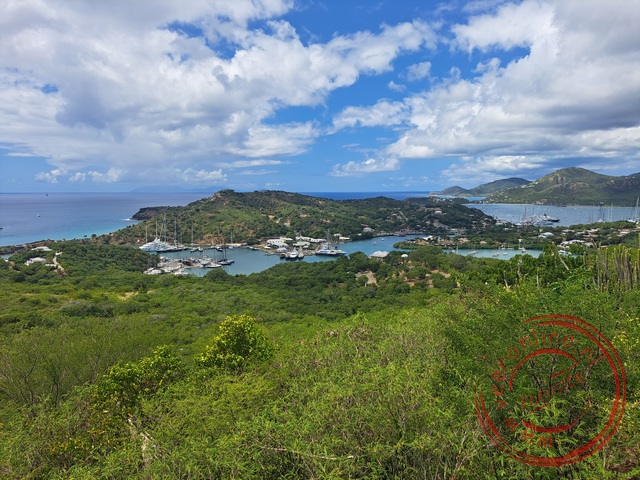 A natural harbor once protected the British fleet
 Martinique
  The interior of the SacreCur de Balata in Martinique
Travelogue A Caribbean Cruise
Dag 2 | Guadeloupe > On board the Costa Fortuna
Dag 3 | Trinidad and Tobago > A day on board the cruise ship
Dag 4 | Trinidad and Tobago > The old plantations of Tobago
Dag 5 | Barbados > Snorkeling with turtles on Barbados
Dag 6 | Dominica > Still a lot of hurricane damage
Dag 7 | Saint Lucia > The mud bath on Saint Lucia
Dag 8 | Martinique > On the beach of Martinique
Dag 9 | Guadeloupe > A tour around Guadeloupe
Dag 10 | British Virgin Islands > A relaxing day at sea
Dag 11 | British Virgin Islands > The Bath's National Park on Virgin Gorda
Dag 12 | Sint Maarten > The border between the Netherlands and France
Dag 13 | Antigua and Barbuda > The historic Nelson's Dockyard
Dag 14 | Saint Vincent and the Grenadines > Sailing to one of the Grenadines
Dag 15 | Martinique > Walking through Martinique's rainforest
Dag 16 | Guadeloupe > Farewell to the Costa Fortuna
Dag 17 | Guadeloupe > By train through Paris