
154 countries
(and areas)
 - Azerbaijan
- Bahrain
- Barbados
- Belgium
- Belize
- Benin
- Bhutan
- Bolivia
- Bonaire
- Bosnia and Herzegovina
- Botswana
- Brazil
- British Virgin Islands
- Brunei
- Bulgaria
- Cambodia
- Canada
- Cape Verde
- Chile
- China
- Costa Rica
- Croatia
- Cuba
- Curacao
- Cyprus
- Czech Republic
- Denmark
- Dominica
- Dominican Republic
- Egypt
- El Salvador
- England
- Estonia
- Eswatini (Swaziland)
- Ethiopia
- Fiji
- Finland
- France
- French Guiana
- Georgia
- Germany
- Gibraltar
- Greece
- Grenada
- Guadeloupe
- Guatemala
- Honduras
- Hong Kong
- Hungary
- Iceland
- India
- Indonesia
- Iran
- Ireland
- Israel
- Italy
- Jamaica
- Japan
- Jordan
- Kazakhstan
- Kenya
- Kosovo
- Kuwait
- Kyrgyzstan
- Laos
- Latvia
- Lebanon
- Lesotho
- Liechtenstein
- Lithuania
- Luxembourg
- Macau
- Madagascar
- Malawi
- Malaysia
- Maldives
- Malta
- Martinique
- Mexico
- Moldova
- Monaco
- Mongolia
- Montenegro
- Morocco
- Mozambique
- Namibia
- Nepal
- Netherlands
- New Zealand
- Nicaragua
- North Macedonia
- Northern Ireland
- Norway
- Oman
- Pakistan
- Palestine
- Peru
- Philippines
- Poland
- Portugal
- Qatar
- Republic of Korea
- Romania
- Russia
- Saint Kitts and Nevis
- Saint Lucia
- Saint Martin
- Saint Vincent and the Grenadines
- San Marino
- São Tomé and Principe
- Saudi Arabia
- Scotland
- Senegal
- Serbia
- Singapore
- Sint Maarten
- Slovakia
- Slovenia
- South Africa
- Spain
- Sri Lanka
- Suriname
- Sweden
- Switzerland
- Tajikistan
- Tanzania
- Thailand
- The Gambia
- Tibet
- Togo
- Transnistria
- Trinidad and Tobago
- Tunisia
- Turkey
- Turkmenistan
- Uganda
- United Arab Emirates
- United States
- Uruguay
- Uzbekistan
- Vatican City
- Vietnam
- Wales
- Zambia
- Zanzibar
- Azerbaijan
- Bahrain
- Barbados
- Belgium
- Belize
- Benin
- Bhutan
- Bolivia
- Bonaire
- Bosnia and Herzegovina
- Botswana
- Brazil
- British Virgin Islands
- Brunei
- Bulgaria
- Cambodia
- Canada
- Cape Verde
- Chile
- China
- Costa Rica
- Croatia
- Cuba
- Curacao
- Cyprus
- Czech Republic
- Denmark
- Dominica
- Dominican Republic
- Egypt
- El Salvador
- England
- Estonia
- Eswatini (Swaziland)
- Ethiopia
- Fiji
- Finland
- France
- French Guiana
- Georgia
- Germany
- Gibraltar
- Greece
- Grenada
- Guadeloupe
- Guatemala
- Honduras
- Hong Kong
- Hungary
- Iceland
- India
- Indonesia
- Iran
- Ireland
- Israel
- Italy
- Jamaica
- Japan
- Jordan
- Kazakhstan
- Kenya
- Kosovo
- Kuwait
- Kyrgyzstan
- Laos
- Latvia
- Lebanon
- Lesotho
- Liechtenstein
- Lithuania
- Luxembourg
- Macau
- Madagascar
- Malawi
- Malaysia
- Maldives
- Malta
- Martinique
- Mexico
- Moldova
- Monaco
- Mongolia
- Montenegro
- Morocco
- Mozambique
- Namibia
- Nepal
- Netherlands
- New Zealand
- Nicaragua
- North Macedonia
- Northern Ireland
- Norway
- Oman
- Pakistan
- Palestine
- Peru
- Philippines
- Poland
- Portugal
- Qatar
- Republic of Korea
- Romania
- Russia
- Saint Kitts and Nevis
- Saint Lucia
- Saint Martin
- Saint Vincent and the Grenadines
- San Marino
- São Tomé and Principe
- Saudi Arabia
- Scotland
- Senegal
- Serbia
- Singapore
- Sint Maarten
- Slovakia
- Slovenia
- South Africa
- Spain
- Sri Lanka
- Suriname
- Sweden
- Switzerland
- Tajikistan
- Tanzania
- Thailand
- The Gambia
- Tibet
- Togo
- Transnistria
- Trinidad and Tobago
- Tunisia
- Turkey
- Turkmenistan
- Uganda
- United Arab Emirates
- United States
- Uruguay
- Uzbekistan
- Vatican City
- Vietnam
- Wales
- Zambia
- Zanzibar


Copyright 2004 - 2026
Veeronline.nl Travel Adventures

Home > Sri Lanka > Sri Lanka and the Maldives > Travelogue day 14
Travelogue Sri Lanka and the Maldives
October 20 November 10 2015 (20 days)
Sri Lanka > Sightseeing Colombo
Dag 14 - Wednesday, November 4, 2015I start the day with a delicious breakfast at the small-scale hotel. Breakfast is served in a kind of living room. Of the four rooms, only two are occupied. Today is the last full day in Sri Lanka. I’m heading back to Colombo, but before leaving Galle, I still have time for a walk around the city. The weather is pleasant as I climb the city wall again. Through the lighthouse, I reach Leynbaan. In this street are characteristic old houses from the Dutch period.

The Dutch Museum and many hotels with “Dutch” in their names also reflect this heritage. Galle is a charming and cozy town, but it doesn’t take long to explore all its streets. At the luxurious Amangalla hotel, I order a cappuccino. At ten o’clock, I meet Ajbriy again at the hotel. He drives me out of the city heading north. Along the way, he talks about the damage caused by the tsunami eleven years ago. All the houses and hotels along the coast were swept away, and more than 60,000 people in Sri Lanka lost their lives. Today, all the damage has been repaired, and large hotel complexes have been rebuilt along the coast, each more luxurious than the last. A large Buddha statue, donated by the Japanese, commemorates this dark chapter in Sri Lanka’s history. At the site of the statue, a passenger train with over 1,000 people was swept into the sea by the tsunami. Only two people survived. At Bentota, I stop to visit a sea turtle sanctuary. The owner explains that he protects turtle eggs because poachers dig them up for consumption. He reburies the eggs on his property. He shows me a tank full of tiny, two-day-old turtles, which will be released into the sea tonight. Before I know it, two baby turtles are placed in my hands. In larger tanks, adult turtles swim. They are handicapped, the owner explains—one is blind, another is missing its front legs. While I am a bit skeptical whether the sanctuary is truly in the turtles’ best interest or more about the entrance fees, it’s clear that this man cares about their well-being. Under a canopy, some large turtles swim for educational purposes, I am told. I am amazed by the beautiful colors of their shells. The tsunami left its mark here too; photos show how all the tanks were destroyed by the water in 2004.

I continue my journey to Colombo. The closer I get to the city, the busier the roads become. Everyone tries to squeeze into any gap on the road, no matter if multiple rows of cars and tuk-tuks end up side by side in one lane. Forcing your way is the rule. Ajbriy maneuvers his car through the traffic. I am amazed that it always works out safely. Strangely, I also hardly see any cars with visible damage. Due to the traffic, the ride to the city center is slow. At the edge of the center, Ajbriy shows me the Town Hall, the park, and Independence Square. Then we go to the fort, which is the diplomatic district where many government buildings are located. Here I get out and walk into the adjacent Patteh district, the commercial area. I immediately see numerous shops. I arrive at the Jami Ul-Alfar Mosque, a red-and-white striped mosque and one of Colombo’s most iconic buildings. Through the market streets, I walk to the Dutch Museum, which shows how people lived during the Dutch period. I continue to the Dutch Reformed Church Wolvendhal, where Dutch naval heroes are buried. Looking for the Sri Muthu Vinayakar Kovil temples, I get lost in a maze of streets. When a path seems to dead-end, locals gesture that I can continue. I enter an alley less than a meter wide, followed by several curious children. I follow the path through the houses, greeting the surprised residents. I then realize I have not seen a single other tourist in all of Colombo—not at the market, the mosque, or here on the streets.

As I walk back toward the fort, it starts to drizzle. I duck into a local restaurant and order a cola. At exactly five o’clock, Ajbriy picks me up again. It’s now evening rush hour, and the roads are busy. The drive to the hotel is painfully slow. Meanwhile, it’s getting dark. Ajbriy tries to get ahead using side streets, but keeps getting stuck in the traffic. The hotel chosen for today is supposed to be very nice, with a pool and an inner garden, but the location is illogical. When I arrive, it’s dark, and when I leave, it will still be dark. A simple hotel on the way to the airport would have sufficed. Now the hotel is on the wrong side of the city, which I will have to drive back from tomorrow morning—a misstep by the tour company. After two hours of traffic, I arrive at the hotel. I estimate it’s less than ten kilometers from the city center. Since it’s the last evening, we’ve invited Ajbriy for dinner. Originally, I wanted to eat at a restaurant, but since it’s already late, I decide to dine at the hotel. I am the only guest. During dinner, I wrap up the trip. Afterwards, I repack my luggage and go to bed. Tomorrow morning, I have an early start.
 Sri Lanka
  Beautiful reliefs on the temples of Polonnaruwa
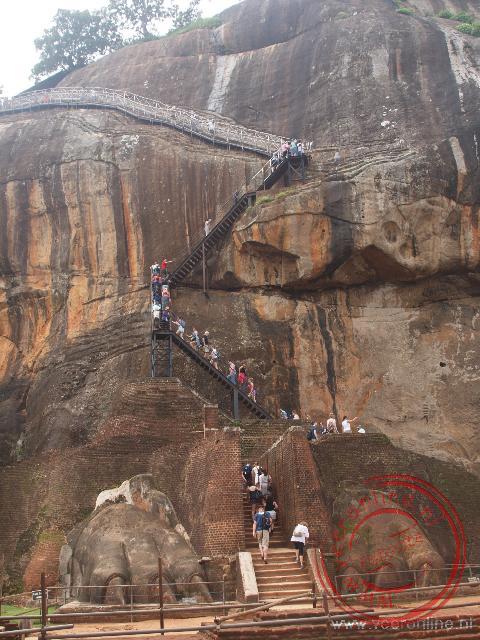 The massive Lions Head once served as the fort entrance
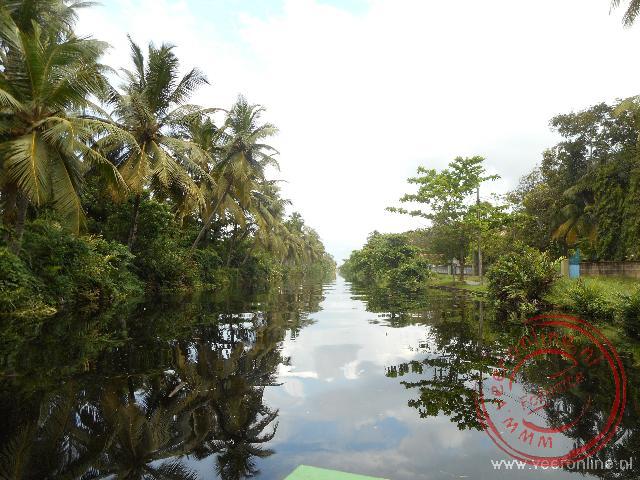 The Dutch Canal in the Muthurajawela nature reserve
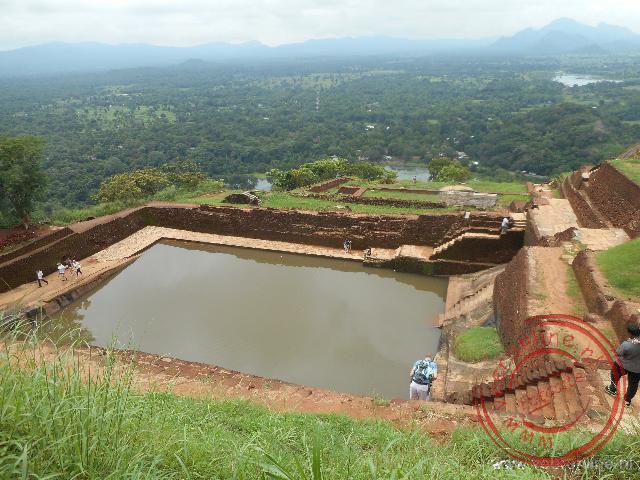 A water reservoir on top of Sigiriya Rock
Travelogue Sri Lanka and the Maldives
Dag 2 | Sri Lanka > Buying clothes in Negombo
Dag 3 | Sri Lanka > The Dutch Canal
Dag 4 | Sri Lanka > Elephants in Pinnawela
Dag 5 | Sri Lanka > The Lion Rock of Sigiriya
Dag 6 | Sri Lanka > Rain in Polonnaruwa
Dag 7 | Sri Lanka > From Dambulla to Kandy
Dag 8 | Sri Lanka > The Three Temple Loop near Kandy
Dag 9 | Sri Lanka > By train to Naru Oye
Dag 10 | Sri Lanka > Horton Plains National Park
Dag 11 | Sri Lanka > The temple of Buduruyagala
Dag 12 | Sri Lanka > The temple of Kataragama
Dag 13 | Sri Lanka > Wildlife spotting in Yala N.P.
Dag 14 | Sri Lanka > Sightseeing Colombo
Dag 15 | Sri Lanka > On the way to the Maldives
Dag 16 | Maldives > Enjoying paradise
Dag 17 | Maldives > Rain in the Maldives
Dag 18 | Maldives > Nice relaxing
Dag 19 | Maldives > Farewell to the Maldives
Dag 20 | Maldives > Back home