
154 countries
(and areas)
 - Azerbaijan
- Bahrain
- Barbados
- Belgium
- Belize
- Benin
- Bhutan
- Bolivia
- Bonaire
- Bosnia and Herzegovina
- Botswana
- Brazil
- British Virgin Islands
- Brunei
- Bulgaria
- Cambodia
- Canada
- Cape Verde
- Chile
- China
- Costa Rica
- Croatia
- Cuba
- Curacao
- Cyprus
- Czech Republic
- Denmark
- Dominica
- Dominican Republic
- Egypt
- El Salvador
- England
- Estonia
- Eswatini (Swaziland)
- Ethiopia
- Fiji
- Finland
- France
- French Guiana
- Georgia
- Germany
- Gibraltar
- Greece
- Grenada
- Guadeloupe
- Guatemala
- Honduras
- Hong Kong
- Hungary
- Iceland
- India
- Indonesia
- Iran
- Ireland
- Israel
- Italy
- Jamaica
- Japan
- Jordan
- Kazakhstan
- Kenya
- Kosovo
- Kuwait
- Kyrgyzstan
- Laos
- Latvia
- Lebanon
- Lesotho
- Liechtenstein
- Lithuania
- Luxembourg
- Macau
- Madagascar
- Malawi
- Malaysia
- Maldives
- Malta
- Martinique
- Mexico
- Moldova
- Monaco
- Mongolia
- Montenegro
- Morocco
- Mozambique
- Namibia
- Nepal
- Netherlands
- New Zealand
- Nicaragua
- North Macedonia
- Northern Ireland
- Norway
- Oman
- Pakistan
- Palestine
- Peru
- Philippines
- Poland
- Portugal
- Qatar
- Republic of Korea
- Romania
- Russia
- Saint Kitts and Nevis
- Saint Lucia
- Saint Martin
- Saint Vincent and the Grenadines
- San Marino
- São Tomé and Principe
- Saudi Arabia
- Scotland
- Senegal
- Serbia
- Singapore
- Sint Maarten
- Slovakia
- Slovenia
- South Africa
- Spain
- Sri Lanka
- Suriname
- Sweden
- Switzerland
- Tajikistan
- Tanzania
- Thailand
- The Gambia
- Tibet
- Togo
- Transnistria
- Trinidad and Tobago
- Tunisia
- Turkey
- Turkmenistan
- Uganda
- United Arab Emirates
- United States
- Uruguay
- Uzbekistan
- Vatican City
- Vietnam
- Wales
- Zambia
- Zanzibar
- Azerbaijan
- Bahrain
- Barbados
- Belgium
- Belize
- Benin
- Bhutan
- Bolivia
- Bonaire
- Bosnia and Herzegovina
- Botswana
- Brazil
- British Virgin Islands
- Brunei
- Bulgaria
- Cambodia
- Canada
- Cape Verde
- Chile
- China
- Costa Rica
- Croatia
- Cuba
- Curacao
- Cyprus
- Czech Republic
- Denmark
- Dominica
- Dominican Republic
- Egypt
- El Salvador
- England
- Estonia
- Eswatini (Swaziland)
- Ethiopia
- Fiji
- Finland
- France
- French Guiana
- Georgia
- Germany
- Gibraltar
- Greece
- Grenada
- Guadeloupe
- Guatemala
- Honduras
- Hong Kong
- Hungary
- Iceland
- India
- Indonesia
- Iran
- Ireland
- Israel
- Italy
- Jamaica
- Japan
- Jordan
- Kazakhstan
- Kenya
- Kosovo
- Kuwait
- Kyrgyzstan
- Laos
- Latvia
- Lebanon
- Lesotho
- Liechtenstein
- Lithuania
- Luxembourg
- Macau
- Madagascar
- Malawi
- Malaysia
- Maldives
- Malta
- Martinique
- Mexico
- Moldova
- Monaco
- Mongolia
- Montenegro
- Morocco
- Mozambique
- Namibia
- Nepal
- Netherlands
- New Zealand
- Nicaragua
- North Macedonia
- Northern Ireland
- Norway
- Oman
- Pakistan
- Palestine
- Peru
- Philippines
- Poland
- Portugal
- Qatar
- Republic of Korea
- Romania
- Russia
- Saint Kitts and Nevis
- Saint Lucia
- Saint Martin
- Saint Vincent and the Grenadines
- San Marino
- São Tomé and Principe
- Saudi Arabia
- Scotland
- Senegal
- Serbia
- Singapore
- Sint Maarten
- Slovakia
- Slovenia
- South Africa
- Spain
- Sri Lanka
- Suriname
- Sweden
- Switzerland
- Tajikistan
- Tanzania
- Thailand
- The Gambia
- Tibet
- Togo
- Transnistria
- Trinidad and Tobago
- Tunisia
- Turkey
- Turkmenistan
- Uganda
- United Arab Emirates
- United States
- Uruguay
- Uzbekistan
- Vatican City
- Vietnam
- Wales
- Zambia
- Zanzibar


Copyright 2004 - 2026
Veeronline.nl Travel Adventures

Home > Sri Lanka > Sri Lanka and the Maldives > Travelogue day 3
Travelogue Sri Lanka and the Maldives
October 20 November 10 2015 (20 days)
Sri Lanka > The Dutch Canal
Dag 3 - Saturday, October 24, 2015At nine o’clock, Ajbriy is ready again with his car. He drives me back to Negombo. He wants to know if I slept well and where I ate yesterday. I get out at the Negombo fish market. On the beach, long cloths are laid out with fish on them. This is salted and dried fish, Ajbriy explains. The fish is cut open, salted, and left to dry in the sun for three days. Dried fish ultimately brings in more profit than fresh fish

. At the edge of the beach, fishermen are busy pulling their nets out of the boats. They watch the results of their catch with tense anticipation. One fisherman gestures for me to help him bring his boat onto the beach. Together with other fishers who rush over, we lift the boat little by little onto the sand. Just behind the fishing boats, the fish is prepared. A man skillfully cuts open a tuna, chops off the head, and places it in the brine. In a nearby hall, fresh fish is traded. Here, I see large tunas being weighed on a scale. Further on, you can have the fish cut into pieces. Slaughter waste lies everywhere. Having seen enough of the fish market, I continue by car to the Muthurajawela nature reserve. This marshland is on the southern side of Negombo Lake. At the visitor center, Jamini welcomes me and shows me the way to the boat. I am allowed to sit at the front for the best view. However, sitting in front also makes me the wettest because it’s drizzling lightly. As we sail along the Dutch Canal, it quickly dries up. The Dutch Canal was constructed in 1672 by the Dutch to easily transport spices. The canal was originally about ninety kilometers long. Jamini points out a kingfisher bird. A little further, a monitor lizard swims in the water. When we reach the lake, I see a large body of water.

Negombo must be all the way on the far side. Against the dark clouds above the lake, I just catch sight of a plane landing—the airport must be over there as well. The boatman turns right, steering the small boat between the islands. The mangrove trees grow into the water. I pass narrow passages. This nature reserve is a bird paradise. I see herons, cormorants, moorhens, lapwings, and bee-eaters. Along the shores, fishermen stand in the water. Back on the lake, I see a man pulling his boat forward. The canoe is loaded with branches. He walks through the water in front of the boat. The lake here is barely more than a meter deep. After the boat trip, Ajbriy drives me back to Negombo. In the suburbs, we stop briefly for a drink. Since I’ve already seen practically the entire center of Negombo yesterday, including St. Mary’s Church, I decide to return to the hotel. Perhaps I can take a walk along the beach this afternoon. Just as I order a sandwich at a small restaurant, it begins to rain. I also hear thunder in the distance. A heavy downpour hits Negombo. Luckily, I am dry. The rain continues, and I abandon the plan to walk along the beach. I pick up a book and order a local Lion beer. By around six o’clock, the rain has stopped. I stroll along the restaurants and bars on the main road, careful not to get splashed by cars driving through puddles. I have a beer in a typically English pub. Later, I eat at Lords, a nice and cozy restaurant owned by an Englishman.
 Sri Lanka
  A buffalo crosses the river in Yala
 The rock temples of Dambulla house hundreds of Buddha statues
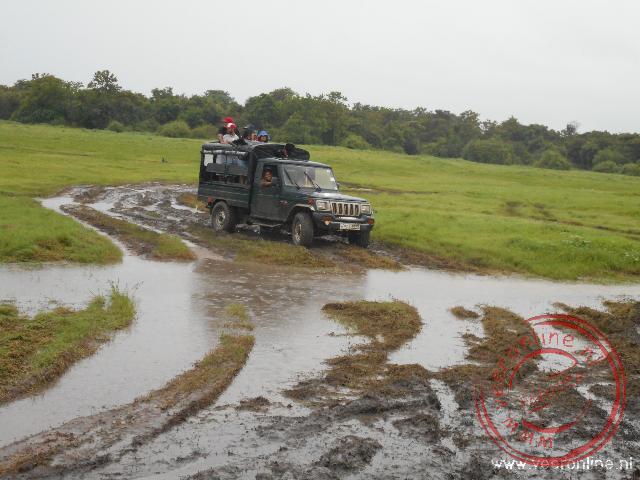 The route is muddy due to rainfall
 Cherry points out the rock paintings in the Maidens Cave
Travelogue Sri Lanka and the Maldives
Dag 2 | Sri Lanka > Buying clothes in Negombo
Dag 3 | Sri Lanka > The Dutch Canal
Dag 4 | Sri Lanka > Elephants in Pinnawela
Dag 5 | Sri Lanka > The Lion Rock of Sigiriya
Dag 6 | Sri Lanka > Rain in Polonnaruwa
Dag 7 | Sri Lanka > From Dambulla to Kandy
Dag 8 | Sri Lanka > The Three Temple Loop near Kandy
Dag 9 | Sri Lanka > By train to Naru Oye
Dag 10 | Sri Lanka > Horton Plains National Park
Dag 11 | Sri Lanka > The temple of Buduruyagala
Dag 12 | Sri Lanka > The temple of Kataragama
Dag 13 | Sri Lanka > Wildlife spotting in Yala N.P.
Dag 14 | Sri Lanka > Sightseeing Colombo
Dag 15 | Sri Lanka > On the way to the Maldives
Dag 16 | Maldives > Enjoying paradise
Dag 17 | Maldives > Rain in the Maldives
Dag 18 | Maldives > Nice relaxing
Dag 19 | Maldives > Farewell to the Maldives
Dag 20 | Maldives > Back home