
154 countries
(and areas)
 - Azerbaijan
- Bahrain
- Barbados
- Belgium
- Belize
- Benin
- Bhutan
- Bolivia
- Bonaire
- Bosnia and Herzegovina
- Botswana
- Brazil
- British Virgin Islands
- Brunei
- Bulgaria
- Cambodia
- Canada
- Cape Verde
- Chile
- China
- Costa Rica
- Croatia
- Cuba
- Curacao
- Cyprus
- Czech Republic
- Denmark
- Dominica
- Dominican Republic
- Egypt
- El Salvador
- England
- Estonia
- Eswatini (Swaziland)
- Ethiopia
- Fiji
- Finland
- France
- French Guiana
- Georgia
- Germany
- Gibraltar
- Greece
- Grenada
- Guadeloupe
- Guatemala
- Honduras
- Hong Kong
- Hungary
- Iceland
- India
- Indonesia
- Iran
- Ireland
- Israel
- Italy
- Jamaica
- Japan
- Jordan
- Kazakhstan
- Kenya
- Kosovo
- Kuwait
- Kyrgyzstan
- Laos
- Latvia
- Lebanon
- Lesotho
- Liechtenstein
- Lithuania
- Luxembourg
- Macau
- Madagascar
- Malawi
- Malaysia
- Maldives
- Malta
- Martinique
- Mexico
- Moldova
- Monaco
- Mongolia
- Montenegro
- Morocco
- Mozambique
- Namibia
- Nepal
- Netherlands
- New Zealand
- Nicaragua
- North Macedonia
- Northern Ireland
- Norway
- Oman
- Pakistan
- Palestine
- Peru
- Philippines
- Poland
- Portugal
- Qatar
- Republic of Korea
- Romania
- Russia
- Saint Kitts and Nevis
- Saint Lucia
- Saint Martin
- Saint Vincent and the Grenadines
- San Marino
- São Tomé and Principe
- Saudi Arabia
- Scotland
- Senegal
- Serbia
- Singapore
- Sint Maarten
- Slovakia
- Slovenia
- South Africa
- Spain
- Sri Lanka
- Suriname
- Sweden
- Switzerland
- Tajikistan
- Tanzania
- Thailand
- The Gambia
- Tibet
- Togo
- Transnistria
- Trinidad and Tobago
- Tunisia
- Turkey
- Turkmenistan
- Uganda
- United Arab Emirates
- United States
- Uruguay
- Uzbekistan
- Vatican City
- Vietnam
- Wales
- Zambia
- Zanzibar
- Azerbaijan
- Bahrain
- Barbados
- Belgium
- Belize
- Benin
- Bhutan
- Bolivia
- Bonaire
- Bosnia and Herzegovina
- Botswana
- Brazil
- British Virgin Islands
- Brunei
- Bulgaria
- Cambodia
- Canada
- Cape Verde
- Chile
- China
- Costa Rica
- Croatia
- Cuba
- Curacao
- Cyprus
- Czech Republic
- Denmark
- Dominica
- Dominican Republic
- Egypt
- El Salvador
- England
- Estonia
- Eswatini (Swaziland)
- Ethiopia
- Fiji
- Finland
- France
- French Guiana
- Georgia
- Germany
- Gibraltar
- Greece
- Grenada
- Guadeloupe
- Guatemala
- Honduras
- Hong Kong
- Hungary
- Iceland
- India
- Indonesia
- Iran
- Ireland
- Israel
- Italy
- Jamaica
- Japan
- Jordan
- Kazakhstan
- Kenya
- Kosovo
- Kuwait
- Kyrgyzstan
- Laos
- Latvia
- Lebanon
- Lesotho
- Liechtenstein
- Lithuania
- Luxembourg
- Macau
- Madagascar
- Malawi
- Malaysia
- Maldives
- Malta
- Martinique
- Mexico
- Moldova
- Monaco
- Mongolia
- Montenegro
- Morocco
- Mozambique
- Namibia
- Nepal
- Netherlands
- New Zealand
- Nicaragua
- North Macedonia
- Northern Ireland
- Norway
- Oman
- Pakistan
- Palestine
- Peru
- Philippines
- Poland
- Portugal
- Qatar
- Republic of Korea
- Romania
- Russia
- Saint Kitts and Nevis
- Saint Lucia
- Saint Martin
- Saint Vincent and the Grenadines
- San Marino
- São Tomé and Principe
- Saudi Arabia
- Scotland
- Senegal
- Serbia
- Singapore
- Sint Maarten
- Slovakia
- Slovenia
- South Africa
- Spain
- Sri Lanka
- Suriname
- Sweden
- Switzerland
- Tajikistan
- Tanzania
- Thailand
- The Gambia
- Tibet
- Togo
- Transnistria
- Trinidad and Tobago
- Tunisia
- Turkey
- Turkmenistan
- Uganda
- United Arab Emirates
- United States
- Uruguay
- Uzbekistan
- Vatican City
- Vietnam
- Wales
- Zambia
- Zanzibar


Copyright 2004 - 2026
Veeronline.nl Travel Adventures
Home > Tibet > Tour of Nepal and Tibet > Travelogue day 17
Travelogue Tour of Nepal and Tibet
15 September 9 October (25 days)
Tibet > Tibetans as slaves in Pana Major
Dag 17 - Monday, October 1, 2007Today is October 1st, a Chinese national holiday. I’m not exactly sure what is being celebrated, but it’s a festive day nonetheless. It’s also a celebration for us, because we don’t leave until 9:30 a.m., which means we can sleep in. We have breakfast across the street at the Yak Restaurant. Except for two people, the whole group is there.

The kitchen can’t manage to serve everyone within an hour, so we end up leaving a bit later than planned. With a fifteen-minute delay, we finally set off. Just as we’re about to leave, there’s commotion about a missing hand towel in one of the rooms. After a thorough check — by us, and with some annoyance — it turns out the towel was in the room all along. Now we can truly depart for Shigatse, a distance of less than a hundred kilometers. Renée has read in her travel guide about the Pana Manor House, just outside Gyantse. The Pana Manor used to belong to a wealthy Tibetan family.

The Chinese have since turned it into a museum to demonstrate how poorly the Tibetans supposedly lived before Chinese rule. The house serves as propaganda to show how beneficial the Chinese “liberation” has been. Our guide Tamdul, as well as the drivers, have never been here before. They follow the guided tour with great interest. It’s almost comical how the Tibetans who once worked for the master of the house are portrayed as tiny figures and labeled as slaves. Further along the road to Shigatse, we visit a small tsampa mill. Water from a nearby stream drives the millstones that grind the grain into fine flour — the main ingredient of tsampa. Inside, everything is covered in a thick layer of flour, even the electrical wires. You have to be careful not to bump into anything or you’ll end up completely white. Around noon, we arrive in Shigatse. The hotel is located in the Tibetan quarter, right across from the “Little Potala” — a smaller version of the palace in Lhasa. The hotel is charmingly decorated, with flower pots along the railings. We stroll into town to find a place for lunch. Guided by the Lonely Planet, we step into a typical Tibetan restaurant where no one speaks English. We point to what we want on the menu and choose our drinks directly from the fridge.

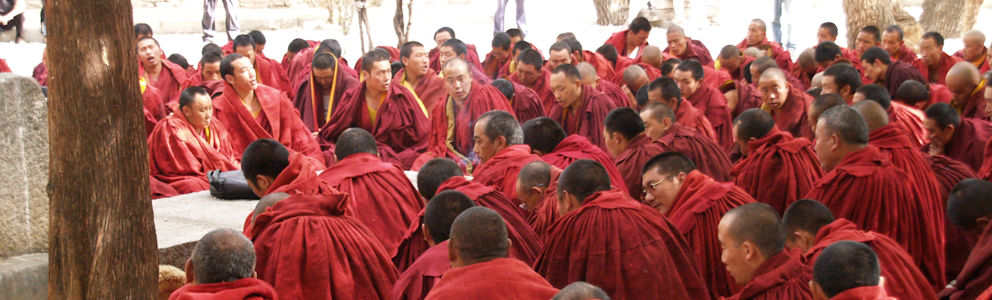
The restaurant looks rather scruffy. The waitress blows bubbles with her chewing gum and takes an interest in our Lonely Planet. Without asking, she grabs the book and starts flipping through it. We half expect one of her gum bubbles to end up between the pages. Just as quietly as she took it, she puts it back — fortunately without gum. Soon after, our food is served, and it turns out to be quite good. In the afternoon, we walk to the Shigatse Monastery, a large complex housing several temples. One of them contains a 26-meter-tall Buddha statue. Tamdul guides us through the monastery and explains the different temples. We visit several Buddha halls — where you can ring a bell beforehand to announce your arrival to the Buddha — as well as the tombs of the Fourth Panchen Lama, the Tenth Panchen Lama, and a shared tomb of the Fifth through Ninth Panchen Lamas. The 26-meter Buddha is impressive. Photography costs €15 per room, and filming €150 — basically meaning, “we’d rather you didn’t take photos,” so we don’t. The Tenth Panchen Lama died under suspicious circumstances, and the new one is believed to have been detained by the Chinese authorities. China has since appointed its own Panchen Lama, a young boy who lives in Beijing. At one of the images of the Panchen Lama, a monk asks Tamdul something in Chinese. Since all the monks here are Tibetan, Tamdul replies in Tibetan that he doesn’t understand. It turns out the man isn’t a real monk but a Chinese one working as a government inspector. Tamdul knew about such “control monks,” but had never encountered one before. The monk lingers near our group for quite a while (most tourist groups, after all, have Chinese guides). We even suspect two other monks of being his assistants — like “007 monks.

” The whole visit suddenly feels rather tense. Tamdul tries to explain what’s going on, but we tell him we’re fully aware and that no further explanation is needed. We also avoid asking him any sensitive questions while inside the monastery. Outside, a few of us decide to walk the kora, the pilgrimage path circling the monastery. The route climbs steeply over the hill, but once outside the gate, the “007 monk” finally leaves us alone. We stop for a drink at a small teahouse before continuing the hike. The kora is indeed quite a climb, but we’re rewarded with magnificent views over the city and the Little Potala. As dusk falls, the scene becomes even more beautiful. We return to the hotel around 7:30 p.m. That evening, we dine at Thasi 2 Restaurant. It’s clearly a Lonely Planet recommendation — the place is filled with tourists of various nationalities. During dinner, we see fireworks through the window; a final reminder of the Chinese holiday. When we walk back to the hotel, the streets are dark and the stalls are already closed. We call it a night and head to bed.
 Tibet
Tibet 

 Nepal
Nepal 

Travelogue Tour of Nepal and Tibet
Dag 2 | Nepal > First impressions of Kathmandu
Dag 3 | Nepal > Durbar Square in the Thamel district
Dag 4 | Tibet > View of the Himalayan giants
Dag 5 | Tibet > May we enter the Potala Palace
Dag 6 | Tibet > Visit to Drepung monastery
Dag 7 | Tibet > Debating monks at Sera monastery
Dag 8 | Tibet > The oldest monastery of Tibet
Dag 9 | Tibet > Climb to the meditation caves
Dag 10 | Tibet > The photogenic Yumbu Lagang palace
Dag 11 | Tibet > Sky burial at the Drigung Til monastery
Dag 12 | Tibet > Having Tibetan butter tea
Dag 13 | Tibet > The heavily destroyed Ganden monastery
Dag 14 | Tibet > The worship of Buddha
Dag 15 | Tibet > The sacred Yamdrok Lake
Dag 16 | Tibet > The stupa of the Kumbum monastery
Dag 17 | Tibet > Tibetans as slaves in Pana Major
Dag 18 | Tibet > Temple fatigue?
Dag 19 | Tibet > Nobody knows our hotel
Dag 20 | Tibet > Tent camp at five kilometers altitude
Dag 21 | Tibet > Basecamp Mount Everest at 5,280 m
Dag 22 | Tibet > Roadwork or not?
Dag 23 | Nepal > Back in Nepal
Dag 24 | Nepal > The royal city Bhaktapur
Dag 25 | Nepal > In the middle of the night in Doha