
154 countries
(and areas)
 - Belize
- Benin
- Bhutan
- Bolivia
- Bonaire
- Bosnia and Herzegovina
- Botswana
- Brazil
- British Virgin Islands
- Brunei
- Bulgaria
- Cambodia
- Canada
- Cape Verde
- Chile
- China
- Costa Rica
- Croatia
- Cuba
- Curacao
- Cyprus
- Czech Republic
- Denmark
- Dominica
- Dominican Republic
- Egypt
- El Salvador
- England
- Estonia
- Eswatini (Swaziland)
- Ethiopia
- Fiji
- Finland
- France
- French Guiana
- Georgia
- Germany
- Gibraltar
- Greece
- Grenada
- Guadeloupe
- Guatemala
- Honduras
- Hong Kong
- Hungary
- Iceland
- India
- Indonesia
- Iran
- Ireland
- Israel
- Italy
- Jamaica
- Japan
- Jordan
- Kazakhstan
- Kenya
- Kosovo
- Kuwait
- Kyrgyzstan
- Laos
- Latvia
- Lebanon
- Lesotho
- Liechtenstein
- Lithuania
- Luxembourg
- Macau
- Madagascar
- Malawi
- Malaysia
- Maldives
- Malta
- Martinique
- Mexico
- Moldova
- Monaco
- Mongolia
- Montenegro
- Morocco
- Mozambique
- Namibia
- Nepal
- Netherlands
- New Zealand
- Nicaragua
- North Macedonia
- Northern Ireland
- Norway
- Oman
- Pakistan
- Palestine
- Peru
- Philippines
- Poland
- Portugal
- Qatar
- Republic of Korea
- Romania
- Russia
- Saint Kitts and Nevis
- Saint Lucia
- Saint Martin
- Saint Vincent and the Grenadines
- San Marino
- São Tomé and Principe
- Saudi Arabia
- Scotland
- Senegal
- Serbia
- Singapore
- Sint Maarten
- Slovakia
- Slovenia
- South Africa
- Spain
- Sri Lanka
- Suriname
- Sweden
- Switzerland
- Tajikistan
- Tanzania
- Thailand
- The Gambia
- Tibet
- Togo
- Transnistria
- Trinidad and Tobago
- Tunisia
- Turkey
- Turkmenistan
- Uganda
- United Arab Emirates
- United States
- Uruguay
- Uzbekistan
- Vatican City
- Vietnam
- Wales
- Zambia
- Zanzibar
- Belize
- Benin
- Bhutan
- Bolivia
- Bonaire
- Bosnia and Herzegovina
- Botswana
- Brazil
- British Virgin Islands
- Brunei
- Bulgaria
- Cambodia
- Canada
- Cape Verde
- Chile
- China
- Costa Rica
- Croatia
- Cuba
- Curacao
- Cyprus
- Czech Republic
- Denmark
- Dominica
- Dominican Republic
- Egypt
- El Salvador
- England
- Estonia
- Eswatini (Swaziland)
- Ethiopia
- Fiji
- Finland
- France
- French Guiana
- Georgia
- Germany
- Gibraltar
- Greece
- Grenada
- Guadeloupe
- Guatemala
- Honduras
- Hong Kong
- Hungary
- Iceland
- India
- Indonesia
- Iran
- Ireland
- Israel
- Italy
- Jamaica
- Japan
- Jordan
- Kazakhstan
- Kenya
- Kosovo
- Kuwait
- Kyrgyzstan
- Laos
- Latvia
- Lebanon
- Lesotho
- Liechtenstein
- Lithuania
- Luxembourg
- Macau
- Madagascar
- Malawi
- Malaysia
- Maldives
- Malta
- Martinique
- Mexico
- Moldova
- Monaco
- Mongolia
- Montenegro
- Morocco
- Mozambique
- Namibia
- Nepal
- Netherlands
- New Zealand
- Nicaragua
- North Macedonia
- Northern Ireland
- Norway
- Oman
- Pakistan
- Palestine
- Peru
- Philippines
- Poland
- Portugal
- Qatar
- Republic of Korea
- Romania
- Russia
- Saint Kitts and Nevis
- Saint Lucia
- Saint Martin
- Saint Vincent and the Grenadines
- San Marino
- São Tomé and Principe
- Saudi Arabia
- Scotland
- Senegal
- Serbia
- Singapore
- Sint Maarten
- Slovakia
- Slovenia
- South Africa
- Spain
- Sri Lanka
- Suriname
- Sweden
- Switzerland
- Tajikistan
- Tanzania
- Thailand
- The Gambia
- Tibet
- Togo
- Transnistria
- Trinidad and Tobago
- Tunisia
- Turkey
- Turkmenistan
- Uganda
- United Arab Emirates
- United States
- Uruguay
- Uzbekistan
- Vatican City
- Vietnam
- Wales
- Zambia
- Zanzibar


Copyright 2004 - 2026
Veeronline.nl Travel Adventures
Home > Nepal > Tour of Nepal and Tibet > Travelogue day 23
Travelogue Tour of Nepal and Tibet
15 September 9 October (25 days)
Nepal > Back in Nepal
Dag 23 - Sunday, October 7, 2007The last day in Tibet has arrived—or rather, the last few hours. Today we leave Tibet, and after breakfast we drive a few bends down to the Chinese border in the village below. We arrive more than an hour and a half early, but it’s better to be at the front of the line. One tour group is already ahead of us, and we quickly join the queue. This means we’ll be served quickly once the border opens. The line behind us grows steadily.

On the other side of the road, Tibetans are waiting to cross the border to work in the Nepalese section (mostly as porters). Occasionally some are allowed through, but if there’s too much pushing, everyone has to wait again. We wait patiently, and by around ten o’clock it’s a complete frenzy behind us. A long line has formed for the border. It’s an advantage to be at the front. Some people, especially the Chinese, try to push ahead, but this isn’t possible at the very front (though they still try). At exactly ten o’clock, the gate opens, and the first tourists proceed to customs. Soon I’m next and officially out of Tibet. A little further on, the luggage is scanned, but the staff at the monitor haven’t started yet.
The process moves along nicely, and within fifteen minutes I’m outside in no-man’s land. The bus has also been checked and has crossed the border. We load the luggage and continue to the Nepalese border. Here, long lines of trucks are waiting as well. Each truck is more elaborately decorated than the last. Although the road is rough, it is dry, and the bus can almost reach the border. The last 500 meters we must walk. We say goodbye to Tamdul and the drivers, who will return to Lhasa tomorrow. Around us, porters push to carry the luggage, but I simply roll my wheeled bag behind me. Exactly in the middle of the bridge is the border between Tibet and Nepal. The line is heavily worn, and only on the railing is the stripe still clearly visible. I am back in Nepal. At the visa office, I fill in a form and am surprisingly quickly served. Once the whole group has received the necessary stamps, we walk about 500 meters to the bus on this side of the border. The bus is also a Tata, which means it’s sturdy! High truck wheels and a low passenger section. The luggage goes on the roof, and we set off. Soon we understand the advantage of the Tata: the road is bumpy with many potholes.

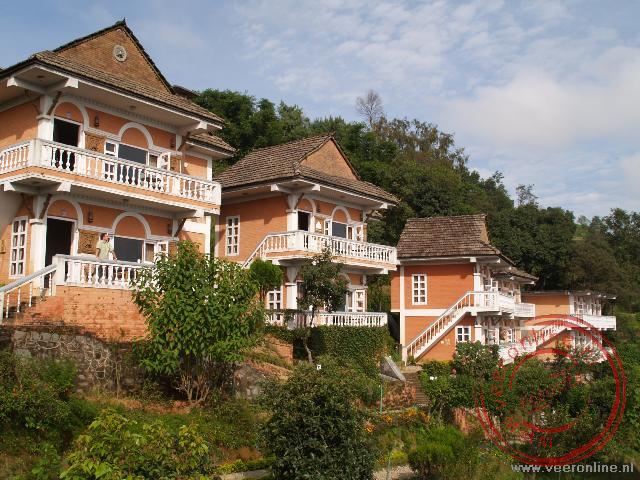
It’s striking how different Nepal feels compared to Tibet. This is partly because Nepal is almost two kilometers lower than the Tibetan Plateau. Nepal is much greener, and many more people live along the rivers. We drive through lively villages, see overcrowded buses with passengers on the roof, and pass rice fields. After a lunch at a restaurant along the way, we continue to Dhulikel. From the border, it’s about a four-hour drive. The resort is just outside Dhulikel. The last stretch of the path to the resort is blocked by a pile of sand, so we walk the final part while porters bring the luggage. At High View Resort, we are welcomed with a glass of cola. From the terrace, we have a view over the valley. If there were no clouds, we would see the Himalayan giants. Unfortunately, it’s cloudy. On the balcony of the apartment, we enjoy a beer and a warm shower, something we’ve missed for over a week and a half. In the evening, we have a group dinner on the terrace with a mix of Nepali and Tibetan dishes. During the meal, we thank Jozalien for her efforts as our tour leader.
 Nepal
Nepal  A raft passes by the restaurant
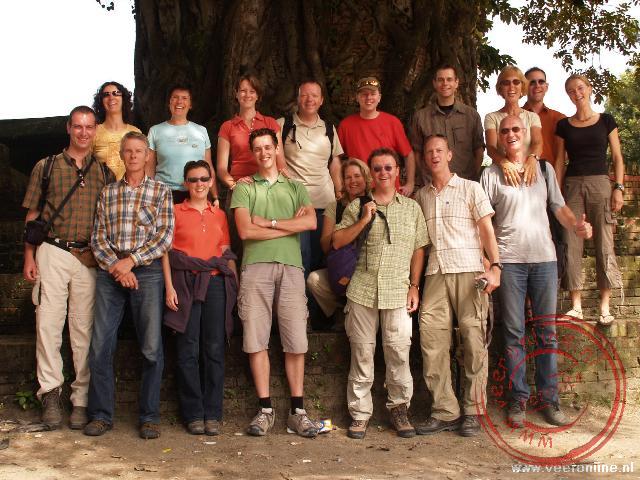 Back Yolande Samantha Marjel Ronald Herman Tim Truus Loek and Jozalien Front Maarten Gerard Monique Willem Renee Rene Barry and Evert
 The communal dinner on the last evening
 Our apartments in Dhulikel
Travelogue Tour of Nepal and Tibet
Dag 2 | Nepal > First impressions of Kathmandu
Dag 3 | Nepal > Durbar Square in the Thamel district
Dag 4 | Tibet > View of the Himalayan giants
Dag 5 | Tibet > May we enter the Potala Palace
Dag 6 | Tibet > Visit to Drepung monastery
Dag 7 | Tibet > Debating monks at Sera monastery
Dag 8 | Tibet > The oldest monastery of Tibet
Dag 9 | Tibet > Climb to the meditation caves
Dag 10 | Tibet > The photogenic Yumbu Lagang palace
Dag 11 | Tibet > Sky burial at the Drigung Til monastery
Dag 12 | Tibet > Having Tibetan butter tea
Dag 13 | Tibet > The heavily destroyed Ganden monastery
Dag 14 | Tibet > The worship of Buddha
Dag 15 | Tibet > The sacred Yamdrok Lake
Dag 16 | Tibet > The stupa of the Kumbum monastery
Dag 17 | Tibet > Tibetans as slaves in Pana Major
Dag 18 | Tibet > Temple fatigue?
Dag 19 | Tibet > Nobody knows our hotel
Dag 20 | Tibet > Tent camp at five kilometers altitude
Dag 21 | Tibet > Basecamp Mount Everest at 5,280 m
Dag 22 | Tibet > Roadwork or not?
Dag 23 | Nepal > Back in Nepal
Dag 24 | Nepal > The royal city Bhaktapur
Dag 25 | Nepal > In the middle of the night in Doha