
154 countries
(and areas)
 - Belize
- Benin
- Bhutan
- Bolivia
- Bonaire
- Bosnia and Herzegovina
- Botswana
- Brazil
- British Virgin Islands
- Brunei
- Bulgaria
- Cambodia
- Canada
- Cape Verde
- Chile
- China
- Costa Rica
- Croatia
- Cuba
- Curacao
- Cyprus
- Czech Republic
- Denmark
- Dominica
- Dominican Republic
- Egypt
- El Salvador
- England
- Estonia
- Eswatini (Swaziland)
- Ethiopia
- Fiji
- Finland
- France
- French Guiana
- Georgia
- Germany
- Gibraltar
- Greece
- Grenada
- Guadeloupe
- Guatemala
- Honduras
- Hong Kong
- Hungary
- Iceland
- India
- Indonesia
- Iran
- Ireland
- Israel
- Italy
- Jamaica
- Japan
- Jordan
- Kazakhstan
- Kenya
- Kosovo
- Kuwait
- Kyrgyzstan
- Laos
- Latvia
- Lebanon
- Lesotho
- Liechtenstein
- Lithuania
- Luxembourg
- Macau
- Madagascar
- Malawi
- Malaysia
- Maldives
- Malta
- Martinique
- Mexico
- Moldova
- Monaco
- Mongolia
- Montenegro
- Morocco
- Mozambique
- Namibia
- Nepal
- Netherlands
- New Zealand
- Nicaragua
- North Macedonia
- Northern Ireland
- Norway
- Oman
- Pakistan
- Palestine
- Peru
- Philippines
- Poland
- Portugal
- Qatar
- Republic of Korea
- Romania
- Russia
- Saint Kitts and Nevis
- Saint Lucia
- Saint Martin
- Saint Vincent and the Grenadines
- San Marino
- São Tomé and Principe
- Saudi Arabia
- Scotland
- Senegal
- Serbia
- Singapore
- Sint Maarten
- Slovakia
- Slovenia
- South Africa
- Spain
- Sri Lanka
- Suriname
- Sweden
- Switzerland
- Tajikistan
- Tanzania
- Thailand
- The Gambia
- Tibet
- Togo
- Transnistria
- Trinidad and Tobago
- Tunisia
- Turkey
- Turkmenistan
- Uganda
- United Arab Emirates
- United States
- Uruguay
- Uzbekistan
- Vatican City
- Vietnam
- Wales
- Zambia
- Zanzibar
- Belize
- Benin
- Bhutan
- Bolivia
- Bonaire
- Bosnia and Herzegovina
- Botswana
- Brazil
- British Virgin Islands
- Brunei
- Bulgaria
- Cambodia
- Canada
- Cape Verde
- Chile
- China
- Costa Rica
- Croatia
- Cuba
- Curacao
- Cyprus
- Czech Republic
- Denmark
- Dominica
- Dominican Republic
- Egypt
- El Salvador
- England
- Estonia
- Eswatini (Swaziland)
- Ethiopia
- Fiji
- Finland
- France
- French Guiana
- Georgia
- Germany
- Gibraltar
- Greece
- Grenada
- Guadeloupe
- Guatemala
- Honduras
- Hong Kong
- Hungary
- Iceland
- India
- Indonesia
- Iran
- Ireland
- Israel
- Italy
- Jamaica
- Japan
- Jordan
- Kazakhstan
- Kenya
- Kosovo
- Kuwait
- Kyrgyzstan
- Laos
- Latvia
- Lebanon
- Lesotho
- Liechtenstein
- Lithuania
- Luxembourg
- Macau
- Madagascar
- Malawi
- Malaysia
- Maldives
- Malta
- Martinique
- Mexico
- Moldova
- Monaco
- Mongolia
- Montenegro
- Morocco
- Mozambique
- Namibia
- Nepal
- Netherlands
- New Zealand
- Nicaragua
- North Macedonia
- Northern Ireland
- Norway
- Oman
- Pakistan
- Palestine
- Peru
- Philippines
- Poland
- Portugal
- Qatar
- Republic of Korea
- Romania
- Russia
- Saint Kitts and Nevis
- Saint Lucia
- Saint Martin
- Saint Vincent and the Grenadines
- San Marino
- São Tomé and Principe
- Saudi Arabia
- Scotland
- Senegal
- Serbia
- Singapore
- Sint Maarten
- Slovakia
- Slovenia
- South Africa
- Spain
- Sri Lanka
- Suriname
- Sweden
- Switzerland
- Tajikistan
- Tanzania
- Thailand
- The Gambia
- Tibet
- Togo
- Transnistria
- Trinidad and Tobago
- Tunisia
- Turkey
- Turkmenistan
- Uganda
- United Arab Emirates
- United States
- Uruguay
- Uzbekistan
- Vatican City
- Vietnam
- Wales
- Zambia
- Zanzibar


Copyright 2004 - 2026
Veeronline.nl Travel Adventures

Home > Suriname > Travel around Suriname > Travelogue day 12
Travelogue Travel around Suriname
20 sept - 12 oct 2006 (23 days)
Suriname > Wild camping in the jungle
Dag 12 - Sunday, October 1, 2006Although it was still warm and humid in the hammock in the evening, the night turned out to be quite cold. The sleeping bag liner was definitely needed, especially to keep the chill from below at bay. Today, we’re not leaving until ten o’clock, so we have plenty of time. We wash ourselves in the river, and after breakfast, we pack up our sleeping gear. John takes us on a short tour of the village of Tutu Kampu. In one of the kitchens, the Indigenous beer is simmering over the fire.
It needs to boil for at least 24 hours to remove all the toxins. The beer is being made for a celebration in three days — a five-year-old’s birthday party. We’ve also been invited to stop by on our return journey. The village isn’t large, and the tour is little more than a walk around the meeting hall and past a few houses. Using a chain of people, we load our luggage onto the boats and say goodbye to the villagers. We continue our journey upstream along the Tapanahony River. Not far ahead, at a large sula (rapid), some hard work awaits us. Normally, all the luggage would be unloaded here, but since we managed to get the boat up quickly yesterday, we decide to try it this time with everything still on board. The two boats are pulled up one at a time. We climb through the rapids and form a human chain, allowing us to pull the rope together and pass it along efficiently. In several stages, we manage to haul the boat up the rapid fairly quickly. Fortunately, we can also steady ourselves by holding onto the rope — the current is quite strong. For the second boat, we have to clamber back down through the rushing water, helping each other to keep balance. Everyone makes it down safely, and soon the second boat is pulled up as well.
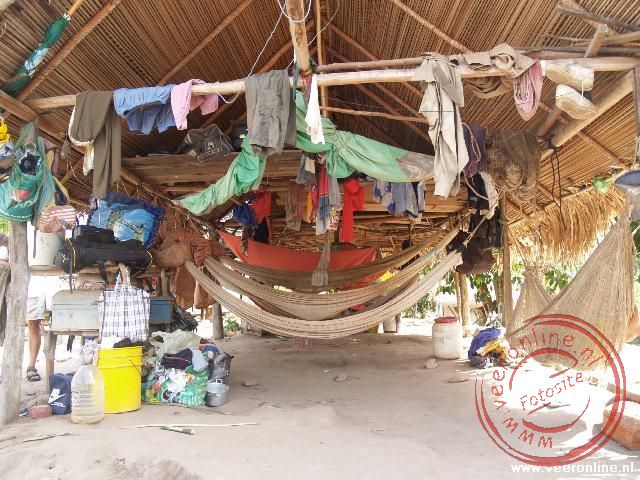
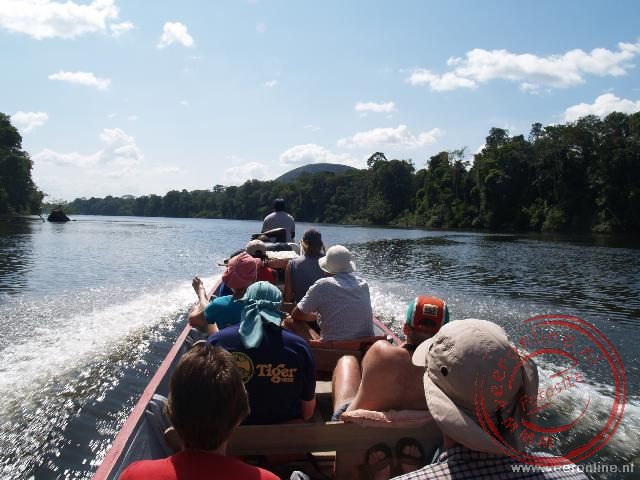
In a calmer stretch of water, we take a refreshing dip and toast our hard work with a bottle of rum. Further up the river, we stop at the largest Indigenous village in the area — Apetina, home to about 250 people. We have lunch here and walk through the village. Photographing the residents is not appreciated. John shows us how wool is spun, how hammocks are woven, and how musical instruments are made from dried nuts. Around half past two, we get back into the korjaals and travel the last stretch to Granda Futu — the furthest upstream point of our journey. There’s no village here, only a primitive campsite built by Indigenous people and earlier Sawadee groups. The previous group repaired the site after last season’s spot had collapsed. We’ll stay here for two nights — a simple but beautiful place. The campsite lies near a rapid, but along the riverbank, the water is calm enough for swimming. We hang our hammocks and spread our wet clothes out on the rocks to dry. The cooking crew builds a fire to prepare dinner. When the sun sets, a bright half-moon takes over, casting a magical light over the surroundings. Dinner is a bit more basic tonight — plenty of rice, but the vegetables and meat are in short supply. Everything is carefully divided so everyone gets their share. Meanwhile, the crew gathers wood and builds a large campfire. We sit around it together, talking and enjoying the peaceful night.
 Suriname
 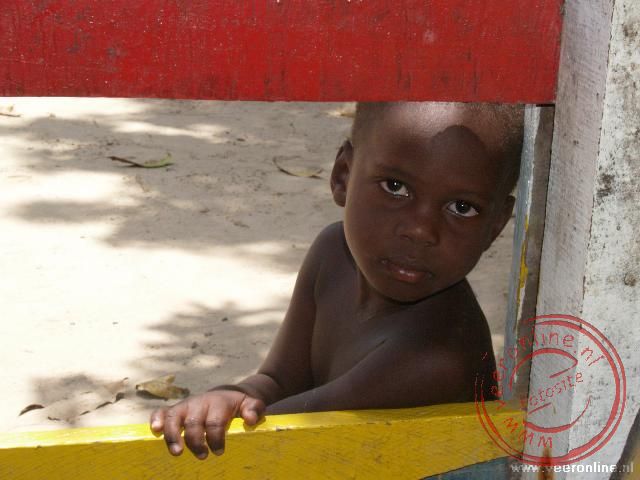 A small boy in one of the jungle villages
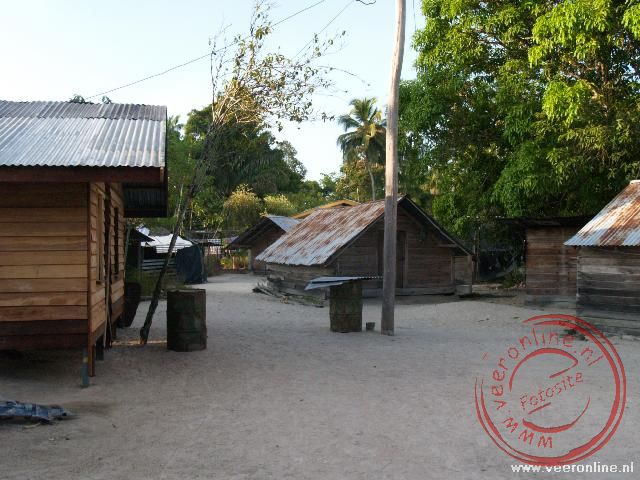 The village Drietabbetje
 An old cannon in Fort Nieuw Amsterdam
 A local kitchen in Tutu Kampu
Travelogue Travel around Suriname
Dag 2 | Suriname > Sailing on the Suriname River
Dag 3 | Suriname > Lightning strike nearby
Dag 4 | Suriname > Morning walk at Overbridge
Dag 5 | Suriname > Taking the birds out on Sunday morning
Dag 6 | Suriname > Cycling to Peperpot
Dag 7 | Suriname > City walk through Paramaribo
Dag 8 | Suriname > A mist of orange dust
Dag 9 | Suriname > Swimming in the Witi Creek
Dag 10 | Suriname > Encounter with the Shaman
Dag 11 | Suriname > Upstream by korjaal
Dag 12 | Suriname > Wild camping in the jungle
Dag 13 | Suriname > Climbing to the Teboe Top
Dag 14 | Suriname > Party in Tutu Kampu
Dag 15 | Suriname > Back again in Drietabbetje
Dag 16 | Suriname > Video camera stolen
Dag 17 | Suriname > Miss Sampson on Stoelmanseiland
Dag 18 | Suriname > Motorcycle breakdown on the way to Albina
Dag 19 | Suriname > On the beach of French Guiana
Dag 20 | Suriname > Papillon prison
Dag 21 | Suriname > Party in the Palmtuin
Dag 22 | Suriname > The large wooden Paulus and Petrus Cathedral
Dag 23 | Suriname > Farewell to Suriname