
154 countries
(and areas)
 - Azerbaijan
- Bahrain
- Barbados
- Belgium
- Belize
- Benin
- Bhutan
- Bolivia
- Bonaire
- Bosnia and Herzegovina
- Botswana
- Brazil
- British Virgin Islands
- Brunei
- Bulgaria
- Cambodia
- Canada
- Cape Verde
- Chile
- China
- Costa Rica
- Croatia
- Cuba
- Curacao
- Cyprus
- Czech Republic
- Denmark
- Dominica
- Dominican Republic
- Egypt
- El Salvador
- England
- Estonia
- Eswatini (Swaziland)
- Ethiopia
- Fiji
- Finland
- France
- French Guiana
- Georgia
- Germany
- Gibraltar
- Greece
- Grenada
- Guadeloupe
- Guatemala
- Honduras
- Hong Kong
- Hungary
- Iceland
- India
- Indonesia
- Iran
- Ireland
- Israel
- Italy
- Jamaica
- Japan
- Jordan
- Kazakhstan
- Kenya
- Kosovo
- Kuwait
- Kyrgyzstan
- Laos
- Latvia
- Lebanon
- Lesotho
- Liechtenstein
- Lithuania
- Luxembourg
- Macau
- Madagascar
- Malawi
- Malaysia
- Maldives
- Malta
- Martinique
- Mexico
- Moldova
- Monaco
- Mongolia
- Montenegro
- Morocco
- Mozambique
- Namibia
- Nepal
- Netherlands
- New Zealand
- Nicaragua
- North Macedonia
- Northern Ireland
- Norway
- Oman
- Pakistan
- Palestine
- Peru
- Philippines
- Poland
- Portugal
- Qatar
- Republic of Korea
- Romania
- Russia
- Saint Kitts and Nevis
- Saint Lucia
- Saint Martin
- Saint Vincent and the Grenadines
- San Marino
- São Tomé and Principe
- Saudi Arabia
- Scotland
- Senegal
- Serbia
- Singapore
- Sint Maarten
- Slovakia
- Slovenia
- South Africa
- Spain
- Sri Lanka
- Suriname
- Sweden
- Switzerland
- Tajikistan
- Tanzania
- Thailand
- The Gambia
- Tibet
- Togo
- Transnistria
- Trinidad and Tobago
- Tunisia
- Turkey
- Turkmenistan
- Uganda
- United Arab Emirates
- United States
- Uruguay
- Uzbekistan
- Vatican City
- Vietnam
- Wales
- Zambia
- Zanzibar
- Azerbaijan
- Bahrain
- Barbados
- Belgium
- Belize
- Benin
- Bhutan
- Bolivia
- Bonaire
- Bosnia and Herzegovina
- Botswana
- Brazil
- British Virgin Islands
- Brunei
- Bulgaria
- Cambodia
- Canada
- Cape Verde
- Chile
- China
- Costa Rica
- Croatia
- Cuba
- Curacao
- Cyprus
- Czech Republic
- Denmark
- Dominica
- Dominican Republic
- Egypt
- El Salvador
- England
- Estonia
- Eswatini (Swaziland)
- Ethiopia
- Fiji
- Finland
- France
- French Guiana
- Georgia
- Germany
- Gibraltar
- Greece
- Grenada
- Guadeloupe
- Guatemala
- Honduras
- Hong Kong
- Hungary
- Iceland
- India
- Indonesia
- Iran
- Ireland
- Israel
- Italy
- Jamaica
- Japan
- Jordan
- Kazakhstan
- Kenya
- Kosovo
- Kuwait
- Kyrgyzstan
- Laos
- Latvia
- Lebanon
- Lesotho
- Liechtenstein
- Lithuania
- Luxembourg
- Macau
- Madagascar
- Malawi
- Malaysia
- Maldives
- Malta
- Martinique
- Mexico
- Moldova
- Monaco
- Mongolia
- Montenegro
- Morocco
- Mozambique
- Namibia
- Nepal
- Netherlands
- New Zealand
- Nicaragua
- North Macedonia
- Northern Ireland
- Norway
- Oman
- Pakistan
- Palestine
- Peru
- Philippines
- Poland
- Portugal
- Qatar
- Republic of Korea
- Romania
- Russia
- Saint Kitts and Nevis
- Saint Lucia
- Saint Martin
- Saint Vincent and the Grenadines
- San Marino
- São Tomé and Principe
- Saudi Arabia
- Scotland
- Senegal
- Serbia
- Singapore
- Sint Maarten
- Slovakia
- Slovenia
- South Africa
- Spain
- Sri Lanka
- Suriname
- Sweden
- Switzerland
- Tajikistan
- Tanzania
- Thailand
- The Gambia
- Tibet
- Togo
- Transnistria
- Trinidad and Tobago
- Tunisia
- Turkey
- Turkmenistan
- Uganda
- United Arab Emirates
- United States
- Uruguay
- Uzbekistan
- Vatican City
- Vietnam
- Wales
- Zambia
- Zanzibar


Copyright 2004 - 2026
Veeronline.nl Travel Adventures
Home > Switzerland > Road Trip Germany and Switzerland > Travelogue day 11
Travelogue Road Trip Germany and Switzerland
August 1530 2020 (16 days)
Switzerland > The Great St. Bernard Pass
Dag 11 - Tuesday 25 August 2020After breakfast, we drive the car out of the parking garage beneath the hotel. A narrow passage leads outside. “You have to steer carefully when going out,” we were advised. This turns out to be good advice. The curved exit ramp uphill is difficult to take. Judging by the marks on the wall, others have struggled here too. Once outside, we load the luggage into the car. Today we’re heading to Montreux by Lake Geneva. Before we get there, we will visit the famous Great St. Bernard Pass. To do so, we drive back out of the Zermatt valley the same way we entered two days ago. At the end of the valley, we turn left toward Lausanne. Via the A9 highway, we drive to Martigny. Here we leave the highway and head toward Italy. On the way there, we choose to take the St. Bernard tunnel, and on the way back, the St. Bernard mountain pass. After two hours’ driving, we arrive at the tunnel. We buy a ticket to pass through. Immediately afterward, we reach the border. The road is marked “stop.” An official gestures from a small office that we can continue driving. The St. Bernard tunnel is over six kilometers long. On the other side lies Italy. Our plan is to stop in the first village over the border to get a drink. This village is Cerisey. Just after the tunnel, the navigation tells us to take a sharp right turn. Indeed, it is a hairpin turn. We descend toward the village. The village consists of just a few houses. The road between the houses is narrow. We can barely get our car through. Unfortunately, there are no cafes or restaurants in the village. We decide not to look further and drive back to Switzerland via the St. Bernard pass. Via hairpin bends, we follow the old connection between Italy and Switzerland. With each bend, we climb higher. The view is magnificent. We pass the St. Bernard tunnel—the one we just drove through. At the top of the St.
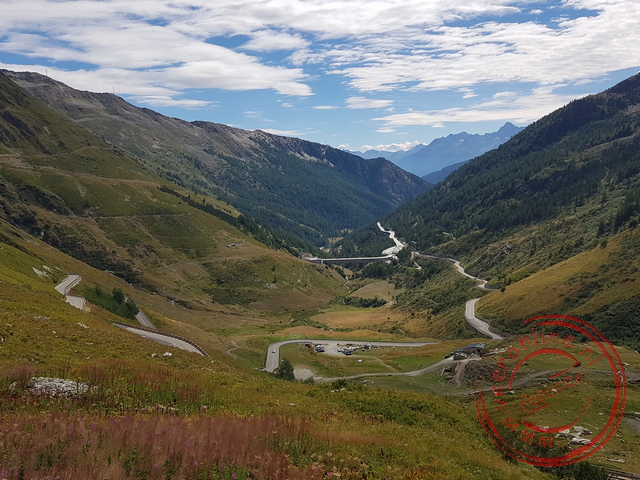
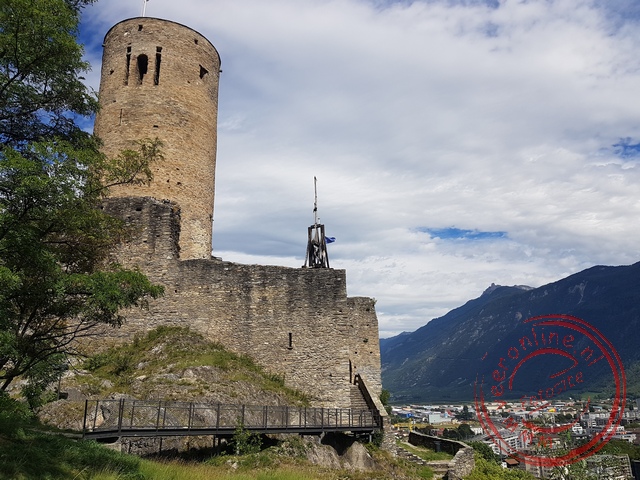
Bernard pass lies the border. There is no customs checkpoint. But there are many tourists taking photos at the mountain lake at the top of the pass. We also park the car and walk to the border. The pass is 2,469 meters high. Just beyond the pass, we park the car on the roadside. We set up the chairs and get out the cooler. A beautiful spot for lunch. We’re getting better at picnicking. Drivers passing by give a thumbs-up to show we’ve chosen a great spot. In the lower part, we see the St. Bernard pass winding downwards. After lunch, we pack up again and follow the mountain pass down. We end up in Martigny. From the market square, we follow the route on foot to the castle. The La Bâtiaz Castle dates from the 13th century and towers over the city. Due to the strategic location of the castle, the trade route over the St. Bernard pass could be controlled in earlier times. The path goes uphill. After several bends, we arrive at the castle. It was not clear in advance whether the castle was open for visitors. It turns out it is, and it’s even free. The tavern operator in the castle enthusiastically tells us that from the tower there is a fantastic view over the city. Via a narrow staircase, we climb to the top of the tower. The view is indeed beautiful. We see the city center and the highway we just drove on. We decide to have a drink at the tavern. After that, we continue to Montreux. Our hotel for tonight is not in the city itself but up in the mountains.
The navigation leads us upwards. With each bend, we climb higher into the mountains. We see Montreux below us. We go much higher than we thought. In other words, the hotel lies much further from the city than we had expected. We pass the Caux Palace, an impressively large building. The former hotel was built in 1900 in the mountains. At that time, the palace was the largest and most luxurious hotel in Switzerland. Nowadays, the Caux Palace hotel is a conference center. Unfortunately, we’re not staying there. Our destination lies even higher on the Caux mountain. Around five o’clock, we arrive at Hotel de Coucou. On the second floor, we have an attic room with shared bathroom facilities. This was the best available and affordable option in the region. From the terrace, we look out over Lake Geneva, Montreux, and Lausanne. It’s a beautiful area. Opposite the hotel is a mountain train station. The hotel stay includes tickets for the train and bus. Normally this is a fifty percent discount, the receptionist explains, but due to the coronavirus, it is currently completely free. That works out well. Tomorrow we can take the train down and walk to Château Chillon. With the train, we can return to Montreux. But that will be tomorrow. On the terrace, we order a beer. On Tuesday, the hotel kitchen turns out to be closed. There is no alternative nearby. We don’t feel like driving down the mountain tonight for a restaurant. The waitress says she can prepare two simple traditional Swiss dishes. That sounds fine to us. While the sun slowly sets behind the mountains of Lake Geneva, we enjoy our meal.

 Switzerland
  The rock formations of the Via Mala Gorge
 The bridge has been repeatedly damaged by fire over the years
 Germany
 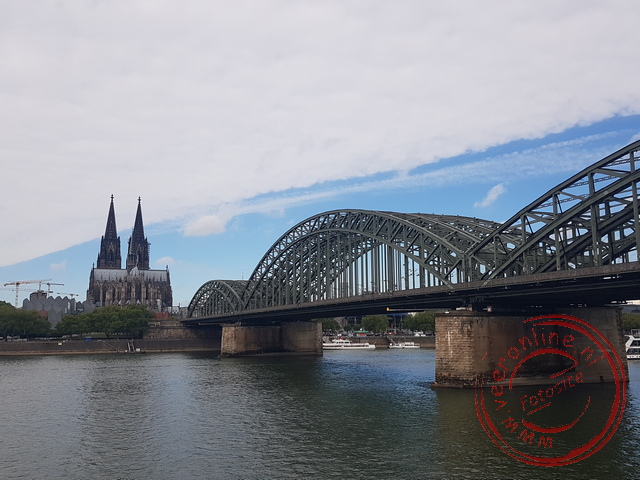 The Hohenzollern Bridge is one of the busiest rail routes in Germany
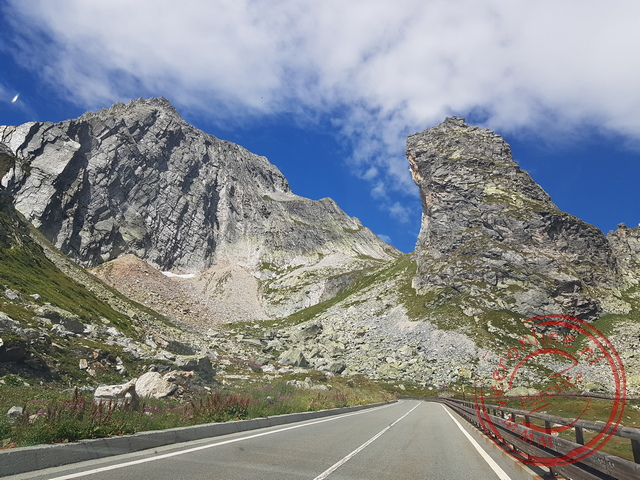 Almost at the top of the St Bernard mountain pass
Travelogue Road Trip Germany and Switzerland
Dag 2 | Germany > Medieval Rothenburg
Dag 3 | Germany > Harburg and Ottobeuren
Dag 4 | Switzerland > The St. Gallen Library
Dag 5 | Liechtenstein > Fürstensteig Mountain Hike
Dag 6 | Switzerland > Around the Davos Lake
Dag 7 | Switzerland > Through the Mountains to Lucerne
Dag 8 | Switzerland > The Dying Lion
Dag 9 | Switzerland > The Oeschinen Mountain Lake
Dag 10 | Switzerland > On Top of the Gornergrat
Dag 11 | Switzerland > The Great St. Bernard Pass
Dag 12 | Switzerland > The Castle of Chillon
Dag 13 | Germany > The Basel Minster
Dag 14 | Germany > The Cologne Cathedral
Dag 15 | Germany > Historic Monschau
Dag 16 | Germany > Farewell Monschau