
154 countries
(and areas)
 - Belize
- Benin
- Bhutan
- Bolivia
- Bonaire
- Bosnia and Herzegovina
- Botswana
- Brazil
- British Virgin Islands
- Brunei
- Bulgaria
- Cambodia
- Canada
- Cape Verde
- Chile
- China
- Costa Rica
- Croatia
- Cuba
- Curacao
- Cyprus
- Czech Republic
- Denmark
- Dominica
- Dominican Republic
- Egypt
- El Salvador
- England
- Estonia
- Eswatini (Swaziland)
- Ethiopia
- Fiji
- Finland
- France
- French Guiana
- Georgia
- Germany
- Gibraltar
- Greece
- Grenada
- Guadeloupe
- Guatemala
- Honduras
- Hong Kong
- Hungary
- Iceland
- India
- Indonesia
- Iran
- Ireland
- Israel
- Italy
- Jamaica
- Japan
- Jordan
- Kazakhstan
- Kenya
- Kosovo
- Kuwait
- Kyrgyzstan
- Laos
- Latvia
- Lebanon
- Lesotho
- Liechtenstein
- Lithuania
- Luxembourg
- Macau
- Madagascar
- Malawi
- Malaysia
- Maldives
- Malta
- Martinique
- Mexico
- Moldova
- Monaco
- Mongolia
- Montenegro
- Morocco
- Mozambique
- Namibia
- Nepal
- Netherlands
- New Zealand
- Nicaragua
- North Macedonia
- Northern Ireland
- Norway
- Oman
- Pakistan
- Palestine
- Peru
- Philippines
- Poland
- Portugal
- Qatar
- Republic of Korea
- Romania
- Russia
- Saint Kitts and Nevis
- Saint Lucia
- Saint Martin
- Saint Vincent and the Grenadines
- San Marino
- São Tomé and Principe
- Saudi Arabia
- Scotland
- Senegal
- Serbia
- Singapore
- Sint Maarten
- Slovakia
- Slovenia
- South Africa
- Spain
- Sri Lanka
- Suriname
- Sweden
- Switzerland
- Tajikistan
- Tanzania
- Thailand
- The Gambia
- Tibet
- Togo
- Transnistria
- Trinidad and Tobago
- Tunisia
- Turkey
- Turkmenistan
- Uganda
- United Arab Emirates
- United States
- Uruguay
- Uzbekistan
- Vatican City
- Vietnam
- Wales
- Zambia
- Zanzibar
- Belize
- Benin
- Bhutan
- Bolivia
- Bonaire
- Bosnia and Herzegovina
- Botswana
- Brazil
- British Virgin Islands
- Brunei
- Bulgaria
- Cambodia
- Canada
- Cape Verde
- Chile
- China
- Costa Rica
- Croatia
- Cuba
- Curacao
- Cyprus
- Czech Republic
- Denmark
- Dominica
- Dominican Republic
- Egypt
- El Salvador
- England
- Estonia
- Eswatini (Swaziland)
- Ethiopia
- Fiji
- Finland
- France
- French Guiana
- Georgia
- Germany
- Gibraltar
- Greece
- Grenada
- Guadeloupe
- Guatemala
- Honduras
- Hong Kong
- Hungary
- Iceland
- India
- Indonesia
- Iran
- Ireland
- Israel
- Italy
- Jamaica
- Japan
- Jordan
- Kazakhstan
- Kenya
- Kosovo
- Kuwait
- Kyrgyzstan
- Laos
- Latvia
- Lebanon
- Lesotho
- Liechtenstein
- Lithuania
- Luxembourg
- Macau
- Madagascar
- Malawi
- Malaysia
- Maldives
- Malta
- Martinique
- Mexico
- Moldova
- Monaco
- Mongolia
- Montenegro
- Morocco
- Mozambique
- Namibia
- Nepal
- Netherlands
- New Zealand
- Nicaragua
- North Macedonia
- Northern Ireland
- Norway
- Oman
- Pakistan
- Palestine
- Peru
- Philippines
- Poland
- Portugal
- Qatar
- Republic of Korea
- Romania
- Russia
- Saint Kitts and Nevis
- Saint Lucia
- Saint Martin
- Saint Vincent and the Grenadines
- San Marino
- São Tomé and Principe
- Saudi Arabia
- Scotland
- Senegal
- Serbia
- Singapore
- Sint Maarten
- Slovakia
- Slovenia
- South Africa
- Spain
- Sri Lanka
- Suriname
- Sweden
- Switzerland
- Tajikistan
- Tanzania
- Thailand
- The Gambia
- Tibet
- Togo
- Transnistria
- Trinidad and Tobago
- Tunisia
- Turkey
- Turkmenistan
- Uganda
- United Arab Emirates
- United States
- Uruguay
- Uzbekistan
- Vatican City
- Vietnam
- Wales
- Zambia
- Zanzibar


Copyright 2004 - 2026
Veeronline.nl Travel Adventures

Home > Bonaire > Cruise 2025 Caribbean > Travelogue day 14
Travelogue Cruise 2025 Caribbean
January 21 February 7 2025 (18 days)
Bonaire > The Lago Lake of Bonaire
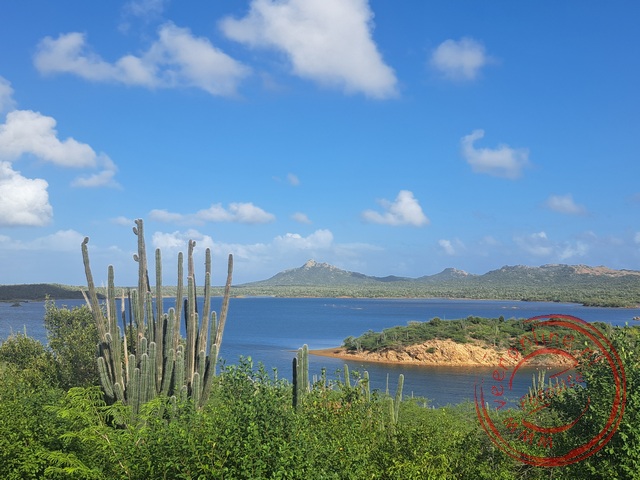
Dag 14 - Monday 3 February 2025At 8:15 a.m., we report for the excursion on the island of Bonaire. We’re a bit early, but the first eighteen participants are counted and we can immediately join the first bus. Funny that the counting is done in Dutch. At the bus, we meet our guide. She appears to be of Dutch origin but makes an effort to give her explanation in German. The other passengers help her when she struggles to find the right words. Compared to the previous two ABC islands, Bonaire has the fewest inhabitants. Only 25,000 people live on the island, sixty percent of whom reside in the capital, Kralendijk. The bus tour first leads through Kaya Granda, the main shopping street of the cozy capital. Just outside the city, it's already clear that Bonaire is primarily a nature island. The bus follows the coast along a narrow asphalt road. The bays we pass have crystal-clear blue water. The vegetation consists of shrubs and cacti. On one of the cacti sits a Yellow-shouldered Amazon parrot. It’s remarkable how these birds aren’t bothered by the cactus spines. We pass “thousand steps,” a descent to the coast where diving is fantastic. The stairs here actually have only 68 steps. A lot of colorful coral surrounds Bonaire, making the island a popular spot for divers and snorkelers. Expensive apartments line the coast. Many foreigners buy homes here as investments and only stay on the island for a few weeks each year. On the northern side of the island lies both a nature park and the oil refinery. Just before the factory, we turn off toward Lago Lake.

In the lake, flamingos forage for food. Some hang completely upside down, with only their bottoms and legs sticking out of the water. We arrive in Rincon, the island's second town. In the past, slaves used to live here. They were forced to work in the salt pans in the south, which meant a six-hour walk to get there, returning home only on weekends. There’s a stop at a small museum with items from the last century. I order a drink, which also supports the museum a bit. We drive back to Kralendijk along the other side of the island. On this side, mainly columnar cacti grow. There's little other vegetation. The cacti thrive in the salty sea spray that blows over the land. As we pass Kralendijk, the cruise ship is clearly visible. No building is taller than four stories. The ship is the tallest “building” on the island. The southern tip of Bonaire has been used for salt production since the seventeenth century.
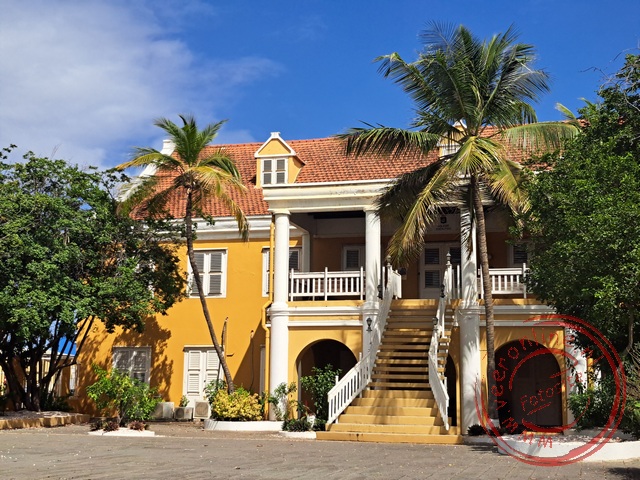
Seawater flows over the salt flats. When the water evaporates, the salt remains. Large piles of salt are waiting for transport. A large ship is currently being loaded. The salt is moved via a conveyor belt into the ship. South of this area are the small slave huts. During the week, the slaves stayed here. The huts are more like large doghouses in size. Five slaves used to sleep in each of them. Around noon, we return to the ship. We decide to go for a swim first. It’s quiet at the pool. We dry off by the side before heading to the restaurant for a meal. In the afternoon, we stroll into Kralendijk. We pass Fort Oranje. The ochre-yellow fort once served to defend the island. Nowadays, the cannons are no longer in use, and the fort functions as a courthouse. In the main street, Kaya Granda, there are mainly shops aimed at tourists. Today, only one ship is docked, but Bonaire has space for three cruise ships. That would make things quite crowded.
There are several restaurants along the coast, including one built on stilts above the sea. A great location. We continue wandering through the town and end up at the Catholic Bernardus Church. We visit the church and the Chapel of the Holy Sacrament. On the way back, we pass a café. We order a beer. It’s not busy, but the people here are all locals. The bars near the cruise ship cater exclusively to cruise passengers. By the end of the afternoon, we return onboard. All passengers must be back by 5:30 p.m. The travelers from cabin 10330 are called—they haven’t returned yet. The captain announces that they’ll wait a little longer and advises everyone to keep their phones on while ashore. They can’t reach the missing guests. Just after 6:00, the captain reports that they still haven’t returned and that their luggage is being offloaded. “Unfortunately,” he adds. Just as the AIDA Perla starts pulling away, the unlucky passengers appear on the pier. The captain decides to stop the ship so the late guests can be brought aboard by a smaller boat. They’re really lucky. For the last time on this trip, we dine at the Casa Nova restaurant. By now, we know the menu by heart. Still, we manage to pick something tasty again. We finish the meal with an Italian coffee with Amaretto. In the theater, we catch the last few songs of the AIDA singers. Tonight, there’s no second show at nine, as usual. Instead, there's a game show: "Weekend Millionaires." After the first contestant, the app stops working, so no more answers can be submitted. Unfortunately, the show must be canceled. At this time of night, there are no other interesting entertainment options. We head back to our own balcony.
 Dominica
 Grenada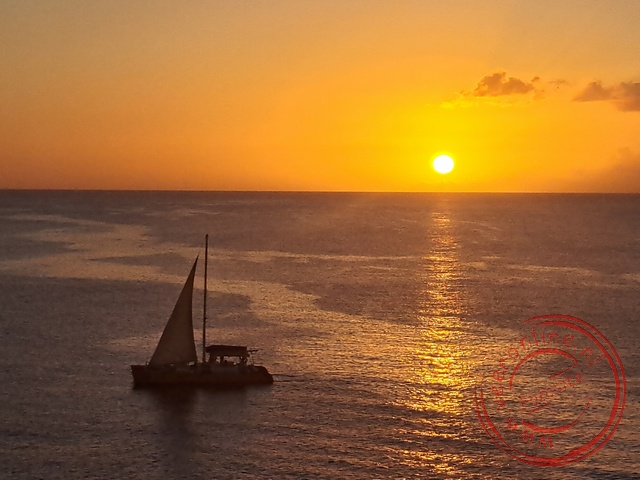
 Barbados

Travelogue Cruise 2025 Caribbean
Dag 2 | Germany > The old town of Düsseldorf
Dag 3 | Barbados > Flight to Barbados
Dag 4 | Saint Vincent and the Grenadines > Black Point Tunnel of Saint Vincent
Dag 5 | Saint Lucia > Sailing Around Saint Lucia
Dag 6 | Dominica > The Emerald Pool on Dominica
Dag 7 | Saint Kitts and Nevis > Touring the Island of Saint Kitts
Dag 8 | Antigua and Barbuda > St. John's Cathedral on Antigua
Dag 9 | Dominican Republic > A Day at Sea
Dag 10 | Dominican Republic > The Cathedral of Santo Domingo
Dag 11 | Aruba > A Bit More Swell at Sea
Dag 12 | Aruba > Aruba, One Happy Island
Dag 13 | Curaçao > The Anna Bay of Curaçao
Dag 14 | Bonaire > The Lago Lake of Bonaire
Dag 15 | Grenada > On the Way to Grenada
Dag 16 | Grenada > Fort Frederick on Grenada
Dag 17 | Barbados > Back on Barbados
Dag 18 | Germany > From Düsseldorf Back Home