
154 countries
(and areas)
 - Azerbaijan
- Bahrain
- Barbados
- Belgium
- Belize
- Benin
- Bhutan
- Bolivia
- Bonaire
- Bosnia and Herzegovina
- Botswana
- Brazil
- British Virgin Islands
- Brunei
- Bulgaria
- Cambodia
- Canada
- Cape Verde
- Chile
- China
- Costa Rica
- Croatia
- Cuba
- Curacao
- Cyprus
- Czech Republic
- Denmark
- Dominica
- Dominican Republic
- Egypt
- El Salvador
- England
- Estonia
- Eswatini (Swaziland)
- Ethiopia
- Fiji
- Finland
- France
- French Guiana
- Georgia
- Germany
- Gibraltar
- Greece
- Grenada
- Guadeloupe
- Guatemala
- Honduras
- Hong Kong
- Hungary
- Iceland
- India
- Indonesia
- Iran
- Ireland
- Israel
- Italy
- Jamaica
- Japan
- Jordan
- Kazakhstan
- Kenya
- Kosovo
- Kuwait
- Kyrgyzstan
- Laos
- Latvia
- Lebanon
- Lesotho
- Liechtenstein
- Lithuania
- Luxembourg
- Macau
- Madagascar
- Malawi
- Malaysia
- Maldives
- Malta
- Martinique
- Mexico
- Moldova
- Monaco
- Mongolia
- Montenegro
- Morocco
- Mozambique
- Namibia
- Nepal
- Netherlands
- New Zealand
- Nicaragua
- North Macedonia
- Northern Ireland
- Norway
- Oman
- Pakistan
- Palestine
- Peru
- Philippines
- Poland
- Portugal
- Qatar
- Republic of Korea
- Romania
- Russia
- Saint Kitts and Nevis
- Saint Lucia
- Saint Martin
- Saint Vincent and the Grenadines
- San Marino
- São Tomé and Principe
- Saudi Arabia
- Scotland
- Senegal
- Serbia
- Singapore
- Sint Maarten
- Slovakia
- Slovenia
- South Africa
- Spain
- Sri Lanka
- Suriname
- Sweden
- Switzerland
- Tajikistan
- Tanzania
- Thailand
- The Gambia
- Tibet
- Togo
- Transnistria
- Trinidad and Tobago
- Tunisia
- Turkey
- Turkmenistan
- Uganda
- United Arab Emirates
- United States
- Uruguay
- Uzbekistan
- Vatican City
- Vietnam
- Wales
- Zambia
- Zanzibar
- Azerbaijan
- Bahrain
- Barbados
- Belgium
- Belize
- Benin
- Bhutan
- Bolivia
- Bonaire
- Bosnia and Herzegovina
- Botswana
- Brazil
- British Virgin Islands
- Brunei
- Bulgaria
- Cambodia
- Canada
- Cape Verde
- Chile
- China
- Costa Rica
- Croatia
- Cuba
- Curacao
- Cyprus
- Czech Republic
- Denmark
- Dominica
- Dominican Republic
- Egypt
- El Salvador
- England
- Estonia
- Eswatini (Swaziland)
- Ethiopia
- Fiji
- Finland
- France
- French Guiana
- Georgia
- Germany
- Gibraltar
- Greece
- Grenada
- Guadeloupe
- Guatemala
- Honduras
- Hong Kong
- Hungary
- Iceland
- India
- Indonesia
- Iran
- Ireland
- Israel
- Italy
- Jamaica
- Japan
- Jordan
- Kazakhstan
- Kenya
- Kosovo
- Kuwait
- Kyrgyzstan
- Laos
- Latvia
- Lebanon
- Lesotho
- Liechtenstein
- Lithuania
- Luxembourg
- Macau
- Madagascar
- Malawi
- Malaysia
- Maldives
- Malta
- Martinique
- Mexico
- Moldova
- Monaco
- Mongolia
- Montenegro
- Morocco
- Mozambique
- Namibia
- Nepal
- Netherlands
- New Zealand
- Nicaragua
- North Macedonia
- Northern Ireland
- Norway
- Oman
- Pakistan
- Palestine
- Peru
- Philippines
- Poland
- Portugal
- Qatar
- Republic of Korea
- Romania
- Russia
- Saint Kitts and Nevis
- Saint Lucia
- Saint Martin
- Saint Vincent and the Grenadines
- San Marino
- São Tomé and Principe
- Saudi Arabia
- Scotland
- Senegal
- Serbia
- Singapore
- Sint Maarten
- Slovakia
- Slovenia
- South Africa
- Spain
- Sri Lanka
- Suriname
- Sweden
- Switzerland
- Tajikistan
- Tanzania
- Thailand
- The Gambia
- Tibet
- Togo
- Transnistria
- Trinidad and Tobago
- Tunisia
- Turkey
- Turkmenistan
- Uganda
- United Arab Emirates
- United States
- Uruguay
- Uzbekistan
- Vatican City
- Vietnam
- Wales
- Zambia
- Zanzibar


Copyright 2004 - 2026
Veeronline.nl Travel Adventures

Home > Ethiopia > Tour through Mythical Ethiopia > Travelogue day 2
Travelogue Tour through Mythical Ethiopia
September 19 October 6 2012 (18 days)
Ethiopia > City tour through Addis Ababa
Dag 2 - Thursday, September 20, 2012When I step into the shower, I’m in for a surprise. The shower itself is fine, but it is located right next to a large window. From the eighth floor, I have a view over Addis Ababa. I wonder how many people on the street can see me standing there. After breakfast, I join the city tour to the center of Addis Ababa. The streets are lively. I see many small shops and street vendors. Addis Ababa has about 3.5 million inhabitants, and the population grows rapidly each year. Construction is everywhere. Scaffolding is built from tree trunks, and concrete is carried in small portable baskets.

At the National Museum, I get out and follow Millian, the guide in Addis Ababa, to the exhibition about the oldest human. Millian explains that in Ethiopia, the skeleton of Lucy was found. The skeleton is 3.5 million years old. This proves that humanity originated in this region and later spread across the globe. After the museum, the bus heads north into the mountains. Addis Ababa itself lies at an altitude of 2,500 meters, making it one of the highest capitals in the world. We drive to the Entoto Mountains, a peak at three thousand meters. The former Emperor Menelik II had his residence here. Later, the capital was moved to the foot of the hill, which became the origin of the city of Addis Ababa.
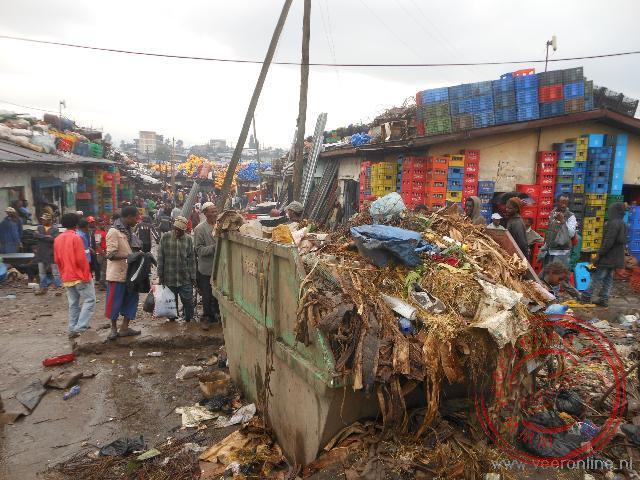
From the Entoto Mountains, I have a beautiful view of the city. Millian takes me to the house of Menelik II. I view the former reception hall and the sleeping quarters. The nearby Entoto Maryam Church, also commissioned by Menelik II, is not accessible. Around the colorful octagonal building, several people pray at the door. In a second small church, there is a small museum about the Menelik period. The local guide leads me around and keeps a close eye to make sure I pay attention. “Next!” he calls out emphatically as he moves to the next display case for his explanation. Many eucalyptus trees grow on Entoto Mountain. These trees grow quickly and provide a lot of wood, which is used for fuel in the city. I see elderly women carrying large bundles of wood down the mountain—a heavy load. Others use donkeys to transport the wood. After lunch in the city center, the tour continues to the Mercato. Around this open market are countless stalls. The streets are crowded. From the bus, I look at the market. I see entire stalls full of jerrycans—an unusual sight. The jerrycans are stacked high on the roofs of the stalls.
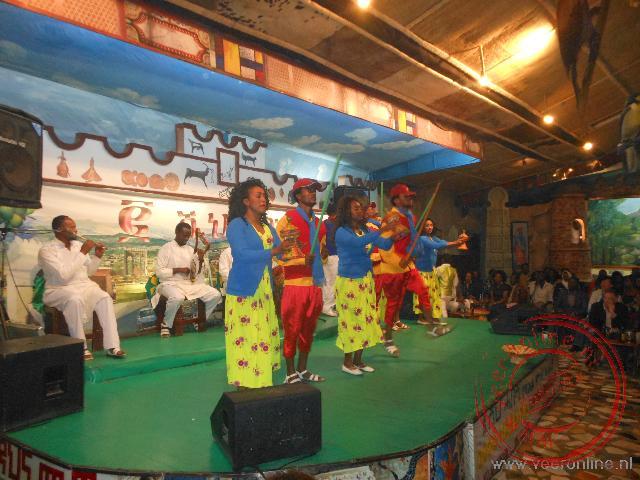
A little further along, I see old barrels. I get the impression that almost anything can be obtained here. Various vendors try to sell their goods to the bus passengers, while others ask more directly for money or pens. In the afternoon, I return to the hotel. I stroll along Africa Avenue, a busy street with larger shops. Because of sewer work, the sidewalk is open. I navigate between stones and water channels and reach a shopping center. I go inside. Passing through luxury shops, a small casino, and a youth arcade, I arrive at a café on the third floor. I order a beer on the outdoor terrace. In the evening, I attend a traditional dance evening with dinner. The restaurant is busy. To my relief, I see mostly Ethiopians and hardly any tourists. I have injera, a type of pancake made from teff grain. On top, I scoop various dishes from the buffet. Following Ethiopian custom, I eat the dishes with a piece of injera each time—of course, using my hands, as Ethiopians do not use cutlery. While drinking the local honey wine, Tej, I enjoy the dance performance.
 Ethiopia
  Bamboo houses of the Dorze tribe
 A collection of Ethiopian food on an injera pancake
 A fish eagle at Arba Minch
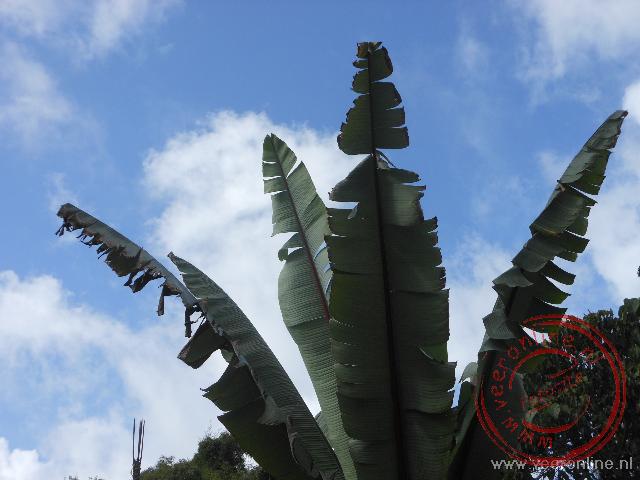 The enset tree also called the false banana
Travelogue Tour through Mythical Ethiopia
Dag 2 | Ethiopia > City tour through Addis Ababa
Dag 3 | Ethiopia > Traveling through green Ethiopia
Dag 4 | Ethiopia > The Nile Falls and Lake Tana
Dag 5 | Ethiopia > The palaces of Gondar
Dag 6 | Ethiopia > Hiking in the Semien Mountains
Dag 7 | Ethiopia > Visit to Grace Village orphanage
Dag 8 | Ethiopia > The stelae of Axum
Dag 9 | Ethiopia > 'Happy Meskel!”
Dag 10 | Ethiopia > The rock churches of Lalibela
Dag 11 | Ethiopia > Flight back to Addis Ababa
Dag 12 | Ethiopia > Heavy rainfall near Aragash
Dag 13 | Ethiopia > Delivering a gift in Arba Minch
Dag 14 | Ethiopia > Visiting the Dorze tribe
Dag 15 | Ethiopia > On the way to Lake Langano
Dag 16 | Ethiopia > Langano Vacation Club Resort
Dag 17 | Ethiopia > Back to Addis, back home
Dag 18 | Ethiopia > Farewell to Ethiopia