
154 countries
(and areas)
 - Azerbaijan
- Bahrain
- Barbados
- Belgium
- Belize
- Benin
- Bhutan
- Bolivia
- Bonaire
- Bosnia and Herzegovina
- Botswana
- Brazil
- British Virgin Islands
- Brunei
- Bulgaria
- Cambodia
- Canada
- Cape Verde
- Chile
- China
- Costa Rica
- Croatia
- Cuba
- Curacao
- Cyprus
- Czech Republic
- Denmark
- Dominica
- Dominican Republic
- Egypt
- El Salvador
- England
- Estonia
- Eswatini (Swaziland)
- Ethiopia
- Fiji
- Finland
- France
- French Guiana
- Georgia
- Germany
- Gibraltar
- Greece
- Grenada
- Guadeloupe
- Guatemala
- Honduras
- Hong Kong
- Hungary
- Iceland
- India
- Indonesia
- Iran
- Ireland
- Israel
- Italy
- Jamaica
- Japan
- Jordan
- Kazakhstan
- Kenya
- Kosovo
- Kuwait
- Kyrgyzstan
- Laos
- Latvia
- Lebanon
- Lesotho
- Liechtenstein
- Lithuania
- Luxembourg
- Macau
- Madagascar
- Malawi
- Malaysia
- Maldives
- Malta
- Martinique
- Mexico
- Moldova
- Monaco
- Mongolia
- Montenegro
- Morocco
- Mozambique
- Namibia
- Nepal
- Netherlands
- New Zealand
- Nicaragua
- North Macedonia
- Northern Ireland
- Norway
- Oman
- Pakistan
- Palestine
- Peru
- Philippines
- Poland
- Portugal
- Qatar
- Republic of Korea
- Romania
- Russia
- Saint Kitts and Nevis
- Saint Lucia
- Saint Martin
- Saint Vincent and the Grenadines
- San Marino
- São Tomé and Principe
- Saudi Arabia
- Scotland
- Senegal
- Serbia
- Singapore
- Sint Maarten
- Slovakia
- Slovenia
- South Africa
- Spain
- Sri Lanka
- Suriname
- Sweden
- Switzerland
- Tajikistan
- Tanzania
- Thailand
- The Gambia
- Tibet
- Togo
- Transnistria
- Trinidad and Tobago
- Tunisia
- Turkey
- Turkmenistan
- Uganda
- United Arab Emirates
- United States
- Uruguay
- Uzbekistan
- Vatican City
- Vietnam
- Wales
- Zambia
- Zanzibar
- Azerbaijan
- Bahrain
- Barbados
- Belgium
- Belize
- Benin
- Bhutan
- Bolivia
- Bonaire
- Bosnia and Herzegovina
- Botswana
- Brazil
- British Virgin Islands
- Brunei
- Bulgaria
- Cambodia
- Canada
- Cape Verde
- Chile
- China
- Costa Rica
- Croatia
- Cuba
- Curacao
- Cyprus
- Czech Republic
- Denmark
- Dominica
- Dominican Republic
- Egypt
- El Salvador
- England
- Estonia
- Eswatini (Swaziland)
- Ethiopia
- Fiji
- Finland
- France
- French Guiana
- Georgia
- Germany
- Gibraltar
- Greece
- Grenada
- Guadeloupe
- Guatemala
- Honduras
- Hong Kong
- Hungary
- Iceland
- India
- Indonesia
- Iran
- Ireland
- Israel
- Italy
- Jamaica
- Japan
- Jordan
- Kazakhstan
- Kenya
- Kosovo
- Kuwait
- Kyrgyzstan
- Laos
- Latvia
- Lebanon
- Lesotho
- Liechtenstein
- Lithuania
- Luxembourg
- Macau
- Madagascar
- Malawi
- Malaysia
- Maldives
- Malta
- Martinique
- Mexico
- Moldova
- Monaco
- Mongolia
- Montenegro
- Morocco
- Mozambique
- Namibia
- Nepal
- Netherlands
- New Zealand
- Nicaragua
- North Macedonia
- Northern Ireland
- Norway
- Oman
- Pakistan
- Palestine
- Peru
- Philippines
- Poland
- Portugal
- Qatar
- Republic of Korea
- Romania
- Russia
- Saint Kitts and Nevis
- Saint Lucia
- Saint Martin
- Saint Vincent and the Grenadines
- San Marino
- São Tomé and Principe
- Saudi Arabia
- Scotland
- Senegal
- Serbia
- Singapore
- Sint Maarten
- Slovakia
- Slovenia
- South Africa
- Spain
- Sri Lanka
- Suriname
- Sweden
- Switzerland
- Tajikistan
- Tanzania
- Thailand
- The Gambia
- Tibet
- Togo
- Transnistria
- Trinidad and Tobago
- Tunisia
- Turkey
- Turkmenistan
- Uganda
- United Arab Emirates
- United States
- Uruguay
- Uzbekistan
- Vatican City
- Vietnam
- Wales
- Zambia
- Zanzibar


Copyright 2004 - 2026
Veeronline.nl Travel Adventures

Home > Ethiopia > Tour through Mythical Ethiopia > Travelogue day 5
Travelogue Tour through Mythical Ethiopia
September 19 October 6 2012 (18 days)
Ethiopia > The palaces of Gondar
Dag 5 - Sunday, September 23, 2012I set the alarm a little earlier to have some time to spot birds in the hotel garden. But I don’t really get going this morning. When I walk outside after breakfast, I see a large hornbill in the trees near the restaurant. The female sits higher up in the same tree. What magnificent birds these are
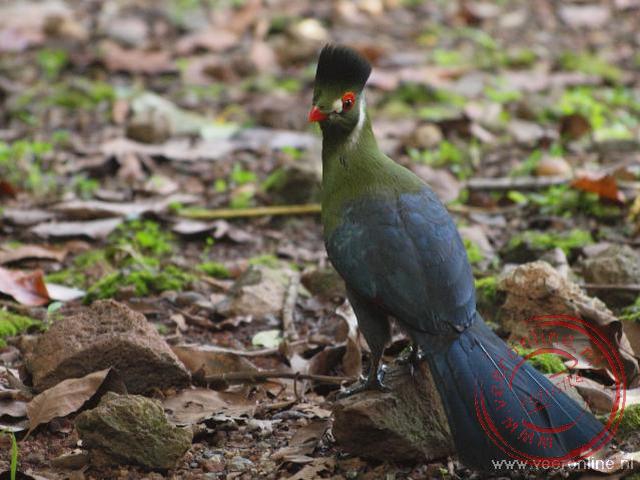
. A White-cheeked Turaco also flies by, and in flight I can see the beautiful colors on its wings. Today I’m heading to Gondar, a city north of Lake Tana, about two hundred kilometers away. Until recently the road was in poor condition, but it has now been improved and asphalted, making the drive only a few hours. The road winds through gently rolling landscapes. Close to Gondar, I see qat fields. These leaves are used as a stimulant, and the qat industry is a huge business—Ethiopia’s number one export. I put a few leaves in my mouth and chew them. The taste is unpleasantly bitter, and I quickly spit them out. Gondar has around 200,000 inhabitants. Until 1855, it was the capital of Ethiopia.

Emperor Fasiladas built his palace inside the walled compound of Fasil Ghebbi, breaking with the tradition of emperors traveling nomadically through the empire. His son, after taking power, built a second palace next to his father’s. Over time, six palaces were constructed within the walls of Fasil Ghebbi. Entering the complex, I immediately see the palace of Fasiladas: a square, three-story castle with a round tower and dome on each corner. This and other palaces were heavily damaged by British bombardments in 1941. Italy had occupied Ethiopia as a colonizer, but with British support, the Ethiopians expelled them. Because the Italians had established their headquarters around Gondar, heavy fighting took place here, leaving parts of the palaces irreparably destroyed. UNESCO restored the main palace to its original condition. I wander among the palaces, climbing old stairways and drifting through ruins. It is a magnificent setting, and I’m impressed.
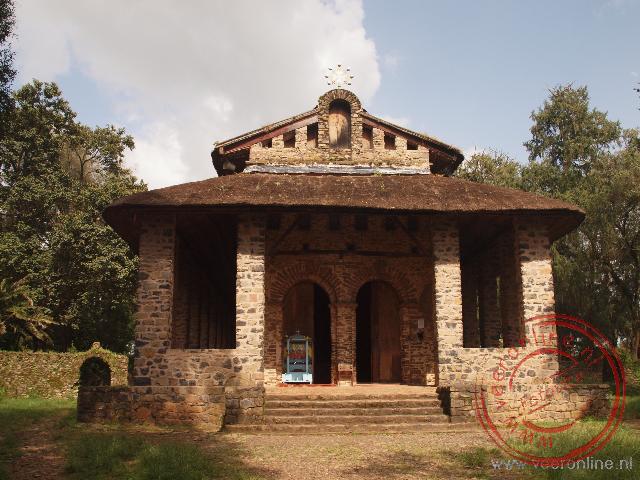
Fortunately, UNESCO protects this site. Outside the walls, I visit the Church of Debra Berhan Selassie, built at the end of the 17th century by Emperor Iyasu the Great, grandson of Fasiladas. The church is famous for its beautiful murals depicting the New Testament. Since many people in the past could not read, the story of Jesus was painted in images. Lastly, I visit Fasiladas’ Bath. Around this old open-air pool, the Timkat Festival is celebrated annually. I see the ancient trees whose roots have become intertwined with the walls. Tribunes surround the bath, and I try to imagine the scene when the stands are filled with people. During the festival, worshippers jump into the holy water. It must be an extraordinary event. By late afternoon, I drive to my hotel. The Goha Hotel sits on a hilltop above the city, offering sweeping views of Gondar.

My room is tastefully decorated but musty from damp walls, and the swollen, creaky doors detract somewhat from the comfort. As I rest on the bed, I hear music and singing. Following the sound, I see a newlywed couple arriving. Hundreds of guests cheer them on as they are welcomed on the terrace, with the city of Gondar as a backdrop. A beautiful scene. I decide not to dine at the hotel. Instead, I take the complimentary shuttle to the city center. Wandering through the streets, I enter a restaurant. The waiter at the door immediately escorts me to a table. Since the music downstairs is quite loud, I head upstairs, but the waiter follows closely behind. Upstairs is more of a bar area, so I return downstairs with him still at my heels. There, I order a fish dish. Just as I finish my meal, a live band begins to play. I enjoy the Ethiopian music as the restaurant gradually fills with enthusiastic guests. Delightful!
 Ethiopia
  Bamboo houses of the Dorze tribe
 A collection of Ethiopian food on an injera pancake
 A fish eagle at Arba Minch
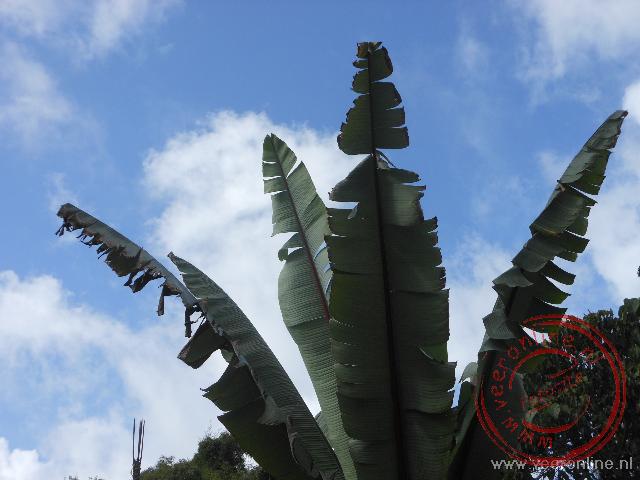 The enset tree also called the false banana
Travelogue Tour through Mythical Ethiopia
Dag 2 | Ethiopia > City tour through Addis Ababa
Dag 3 | Ethiopia > Traveling through green Ethiopia
Dag 4 | Ethiopia > The Nile Falls and Lake Tana
Dag 5 | Ethiopia > The palaces of Gondar
Dag 6 | Ethiopia > Hiking in the Semien Mountains
Dag 7 | Ethiopia > Visit to Grace Village orphanage
Dag 8 | Ethiopia > The stelae of Axum
Dag 9 | Ethiopia > 'Happy Meskel!”
Dag 10 | Ethiopia > The rock churches of Lalibela
Dag 11 | Ethiopia > Flight back to Addis Ababa
Dag 12 | Ethiopia > Heavy rainfall near Aragash
Dag 13 | Ethiopia > Delivering a gift in Arba Minch
Dag 14 | Ethiopia > Visiting the Dorze tribe
Dag 15 | Ethiopia > On the way to Lake Langano
Dag 16 | Ethiopia > Langano Vacation Club Resort
Dag 17 | Ethiopia > Back to Addis, back home
Dag 18 | Ethiopia > Farewell to Ethiopia