
154 countries
(and areas)
 - Belize
- Benin
- Bhutan
- Bolivia
- Bonaire
- Bosnia and Herzegovina
- Botswana
- Brazil
- British Virgin Islands
- Brunei
- Bulgaria
- Cambodia
- Canada
- Cape Verde
- Chile
- China
- Costa Rica
- Croatia
- Cuba
- Curacao
- Cyprus
- Czech Republic
- Denmark
- Dominica
- Dominican Republic
- Egypt
- El Salvador
- England
- Estonia
- Eswatini (Swaziland)
- Ethiopia
- Fiji
- Finland
- France
- French Guiana
- Georgia
- Germany
- Gibraltar
- Greece
- Grenada
- Guadeloupe
- Guatemala
- Honduras
- Hong Kong
- Hungary
- Iceland
- India
- Indonesia
- Iran
- Ireland
- Israel
- Italy
- Jamaica
- Japan
- Jordan
- Kazakhstan
- Kenya
- Kosovo
- Kuwait
- Kyrgyzstan
- Laos
- Latvia
- Lebanon
- Lesotho
- Liechtenstein
- Lithuania
- Luxembourg
- Macau
- Madagascar
- Malawi
- Malaysia
- Maldives
- Malta
- Martinique
- Mexico
- Moldova
- Monaco
- Mongolia
- Montenegro
- Morocco
- Mozambique
- Namibia
- Nepal
- Netherlands
- New Zealand
- Nicaragua
- North Macedonia
- Northern Ireland
- Norway
- Oman
- Pakistan
- Palestine
- Peru
- Philippines
- Poland
- Portugal
- Qatar
- Republic of Korea
- Romania
- Russia
- Saint Kitts and Nevis
- Saint Lucia
- Saint Martin
- Saint Vincent and the Grenadines
- San Marino
- São Tomé and Principe
- Saudi Arabia
- Scotland
- Senegal
- Serbia
- Singapore
- Sint Maarten
- Slovakia
- Slovenia
- South Africa
- Spain
- Sri Lanka
- Suriname
- Sweden
- Switzerland
- Tajikistan
- Tanzania
- Thailand
- The Gambia
- Tibet
- Togo
- Transnistria
- Trinidad and Tobago
- Tunisia
- Turkey
- Turkmenistan
- Uganda
- United Arab Emirates
- United States
- Uruguay
- Uzbekistan
- Vatican City
- Vietnam
- Wales
- Zambia
- Zanzibar
- Belize
- Benin
- Bhutan
- Bolivia
- Bonaire
- Bosnia and Herzegovina
- Botswana
- Brazil
- British Virgin Islands
- Brunei
- Bulgaria
- Cambodia
- Canada
- Cape Verde
- Chile
- China
- Costa Rica
- Croatia
- Cuba
- Curacao
- Cyprus
- Czech Republic
- Denmark
- Dominica
- Dominican Republic
- Egypt
- El Salvador
- England
- Estonia
- Eswatini (Swaziland)
- Ethiopia
- Fiji
- Finland
- France
- French Guiana
- Georgia
- Germany
- Gibraltar
- Greece
- Grenada
- Guadeloupe
- Guatemala
- Honduras
- Hong Kong
- Hungary
- Iceland
- India
- Indonesia
- Iran
- Ireland
- Israel
- Italy
- Jamaica
- Japan
- Jordan
- Kazakhstan
- Kenya
- Kosovo
- Kuwait
- Kyrgyzstan
- Laos
- Latvia
- Lebanon
- Lesotho
- Liechtenstein
- Lithuania
- Luxembourg
- Macau
- Madagascar
- Malawi
- Malaysia
- Maldives
- Malta
- Martinique
- Mexico
- Moldova
- Monaco
- Mongolia
- Montenegro
- Morocco
- Mozambique
- Namibia
- Nepal
- Netherlands
- New Zealand
- Nicaragua
- North Macedonia
- Northern Ireland
- Norway
- Oman
- Pakistan
- Palestine
- Peru
- Philippines
- Poland
- Portugal
- Qatar
- Republic of Korea
- Romania
- Russia
- Saint Kitts and Nevis
- Saint Lucia
- Saint Martin
- Saint Vincent and the Grenadines
- San Marino
- São Tomé and Principe
- Saudi Arabia
- Scotland
- Senegal
- Serbia
- Singapore
- Sint Maarten
- Slovakia
- Slovenia
- South Africa
- Spain
- Sri Lanka
- Suriname
- Sweden
- Switzerland
- Tajikistan
- Tanzania
- Thailand
- The Gambia
- Tibet
- Togo
- Transnistria
- Trinidad and Tobago
- Tunisia
- Turkey
- Turkmenistan
- Uganda
- United Arab Emirates
- United States
- Uruguay
- Uzbekistan
- Vatican City
- Vietnam
- Wales
- Zambia
- Zanzibar


Copyright 2004 - 2026
Veeronline.nl Travel Adventures

Home > Armenia > Caucasus Tour > Travelogue day 14
Travelogue Caucasus Tour
September 13th - October 3th 2025 (21 days)
Armenia > The Spear of the Geghard Monastery
Dag 14 - Friday, September 26, 2025After breakfast in the hotel’s basement, we depart again at nine o’clock for an excursion. Today we are driving east to visit the Garni Temple and the Geghard Monastery. After about an hour through busy traffic, we arrive at the Garni Gorge. The bus cannot descend into the gorge, so we are transported in 4x4 vehicles to the start of the gorge. Just as I prepare for a rough stretch of the route, we are already there—no spectacular descent. The Garni Gorge is flanked on both sides by tall basalt rock formations. The hexagonal basalt is formed when hot lava flows cool rapidly, for example due to water. The stone pillars appear to hang against the cliff face. The term “basalt organ” is fitting. I feel a bit weak today. Could it be last night’s dinner, or am I catching a mild flu? It seems to be going around within the travel group.

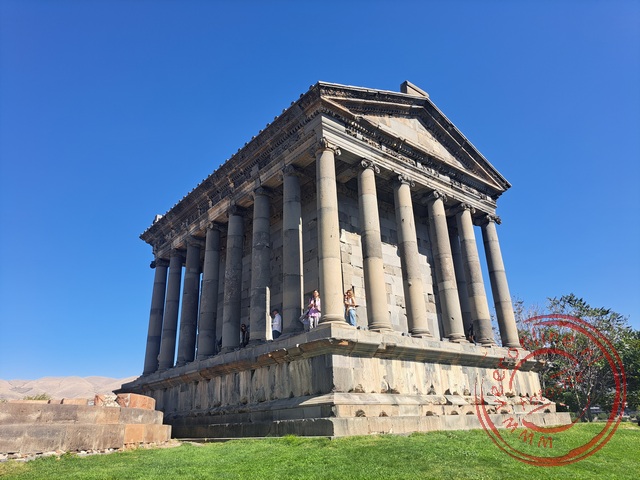
While other travelers walk further into the gorge, I decide to return earlier. In the 4x4 vehicles, we are driven to the Garni Temple. The temple stands atop a cliff. This Roman temple was probably built around 175 AD. It was restored in the 1970s. It is both remarkable and amusing to see such a Roman structure in Armenia. I explore the temple inside and walk a circuit around the columns. I also visit the ancient Roman bathhouse. A video shows how the different rooms were heated in the past. A small portion of the mosaic floor has been preserved. About half an hour further is the Geghard Monastery. My feeling of weakness has turned into nausea. Fortunately, I have a plastic bag just in case.
The Geghard Monastery, located in the narrow Amat Valley, is one of the most impressive religious complexes in the country. It was founded in the 4th century on the site where, according to tradition, the Holy Lance—used to pierce Christ’s side—was kept. The name Geghard means “spear.” The current monastery mostly dates from the 13th century and is famous for its churches and chapels partially carved out of solid rock. Although I feel increasingly unwell, I follow the guide Armine into the church.
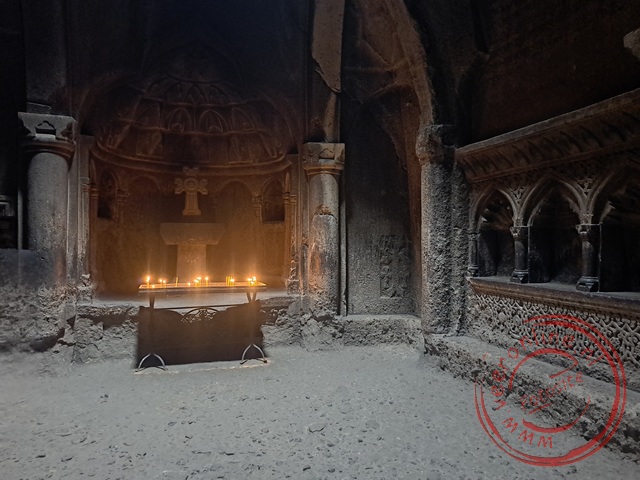
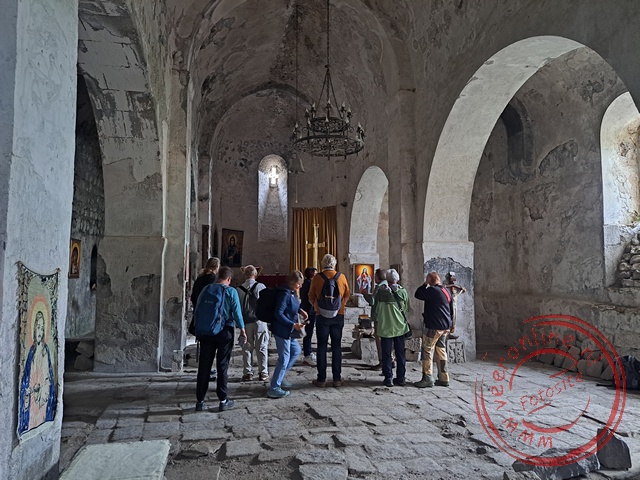
She explains that the monastery is a pilgrimage site for Armenian Christians because of the relics housed there. From the church, I can enter the small rock-carved chapels. There is also a spring here. Overall, it is a remarkable complex and part of the UNESCO World Heritage List. After the visit, we return to Yerevan. Today’s program is not yet over, but I decide to be dropped off at the hotel. I think it’s better to rest in bed so that I can participate in tomorrow’s activities. The rest of the group goes to the genocide memorial and museum just outside the city. I will hear their stories later. After a short nap, I feel much better.
 Armenia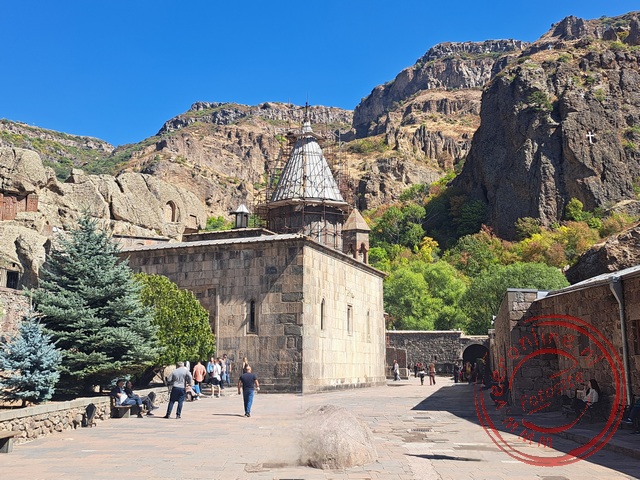
 Georgia

Travelogue Caucasus Tour
Dag 2 | Azerbaijan > The Burning Mountains of Baku
Dag 3 | Azerbaijan > The Rock Engravings of Gobustan
Dag 4 | Azerbaijan > Crossing the Border into Georgia
Dag 5 | Georgia > Saint Nino in Bodbe
Dag 6 | Georgia > A Walking Tour of Tbilisi
Dag 7 | Georgia > The Church of Kazbegi
Dag 8 | Georgia > The Stalin Museum in Gori
Dag 9 | Georgia > The Modern Seaside Resort Batumi
Dag 10 | Georgia > From Batumi to Akhaltsikhe
Dag 11 | Georgia > The Cave City of Vardzia
Dag 12 | Georgia > Via Gyumri to Yerevan
Dag 13 | Armenia > The Cathedral of Etchmiadzin
Dag 14 | Armenia > The Spear of the Geghard Monastery
Dag 15 | Armenia > In Gregory's Cellar
Dag 16 | Armenia > By Cable Car to Tatev
Dag 17 | Armenia > To Lake Sevan
Dag 18 | Armenia > Three Monasteries in One Day
Dag 19 | Armenia > Back to Tbilisi
Dag 20 | Georgia > The Davit Gareja Monastery
Dag 21 | Georgia > Flight to the Netherlands