
153 countries
(and areas)
 - Azerbaijan
- Bahrain
- Barbados
- Belgium
- Belize
- Benin
- Bhutan
- Bolivia
- Bonaire
- Bosnia and Herzegovina
- Botswana
- Brazil
- British Virgin Islands
- Brunei
- Bulgaria
- Cambodia
- Canada
- Cape Verde
- Chile
- China
- Costa Rica
- Croatia
- Cuba
- Curacao
- Cyprus
- Czech Republic
- Denmark
- Dominica
- Dominican Republic
- Egypt
- El Salvador
- England
- Estonia
- Eswatini (Swaziland)
- Ethiopia
- Fiji
- Finland
- France
- French Guiana
- Georgia
- Germany
- Gibraltar
- Greece
- Grenada
- Guadeloupe
- Guatemala
- Honduras
- Hong Kong
- Hungary
- Iceland
- India
- Indonesia
- Iran
- Ireland
- Israel
- Italy
- Jamaica
- Japan
- Jordan
- Kazakhstan
- Kenya
- Kosovo
- Kuwait
- Kyrgyzstan
- Laos
- Latvia
- Lebanon
- Lesotho
- Liechtenstein
- Lithuania
- Luxembourg
- Macau
- Madagascar
- Malawi
- Malaysia
- Maldives
- Malta
- Martinique
- Mexico
- Moldova
- Monaco
- Mongolia
- Montenegro
- Morocco
- Mozambique
- Namibia
- Nepal
- Netherlands
- New Zealand
- Nicaragua
- North Macedonia
- Northern Ireland
- Norway
- Oman
- Pakistan
- Palestine
- Peru
- Philippines
- Poland
- Portugal
- Qatar
- Republic of Korea
- Romania
- Russia
- Saint Kitts and Nevis
- Saint Lucia
- Saint Martin
- Saint Vincent and the Grenadines
- San Marino
- Saudi Arabia
- Scotland
- Senegal
- Serbia
- Singapore
- Sint Maarten
- Slovakia
- Slovenia
- South Africa
- Spain
- Sri Lanka
- Suriname
- Sweden
- Switzerland
- Tajikistan
- Tanzania
- Thailand
- The Gambia
- Tibet
- Togo
- Transnistria
- Trinidad and Tobago
- Tunisia
- Turkey
- Turkmenistan
- Uganda
- United Arab Emirates
- United States
- Uruguay
- Uzbekistan
- Vatican City
- Vietnam
- Wales
- Zambia
- Zanzibar
- Azerbaijan
- Bahrain
- Barbados
- Belgium
- Belize
- Benin
- Bhutan
- Bolivia
- Bonaire
- Bosnia and Herzegovina
- Botswana
- Brazil
- British Virgin Islands
- Brunei
- Bulgaria
- Cambodia
- Canada
- Cape Verde
- Chile
- China
- Costa Rica
- Croatia
- Cuba
- Curacao
- Cyprus
- Czech Republic
- Denmark
- Dominica
- Dominican Republic
- Egypt
- El Salvador
- England
- Estonia
- Eswatini (Swaziland)
- Ethiopia
- Fiji
- Finland
- France
- French Guiana
- Georgia
- Germany
- Gibraltar
- Greece
- Grenada
- Guadeloupe
- Guatemala
- Honduras
- Hong Kong
- Hungary
- Iceland
- India
- Indonesia
- Iran
- Ireland
- Israel
- Italy
- Jamaica
- Japan
- Jordan
- Kazakhstan
- Kenya
- Kosovo
- Kuwait
- Kyrgyzstan
- Laos
- Latvia
- Lebanon
- Lesotho
- Liechtenstein
- Lithuania
- Luxembourg
- Macau
- Madagascar
- Malawi
- Malaysia
- Maldives
- Malta
- Martinique
- Mexico
- Moldova
- Monaco
- Mongolia
- Montenegro
- Morocco
- Mozambique
- Namibia
- Nepal
- Netherlands
- New Zealand
- Nicaragua
- North Macedonia
- Northern Ireland
- Norway
- Oman
- Pakistan
- Palestine
- Peru
- Philippines
- Poland
- Portugal
- Qatar
- Republic of Korea
- Romania
- Russia
- Saint Kitts and Nevis
- Saint Lucia
- Saint Martin
- Saint Vincent and the Grenadines
- San Marino
- Saudi Arabia
- Scotland
- Senegal
- Serbia
- Singapore
- Sint Maarten
- Slovakia
- Slovenia
- South Africa
- Spain
- Sri Lanka
- Suriname
- Sweden
- Switzerland
- Tajikistan
- Tanzania
- Thailand
- The Gambia
- Tibet
- Togo
- Transnistria
- Trinidad and Tobago
- Tunisia
- Turkey
- Turkmenistan
- Uganda
- United Arab Emirates
- United States
- Uruguay
- Uzbekistan
- Vatican City
- Vietnam
- Wales
- Zambia
- Zanzibar


Copyright 2004 - 2026
Veeronline.nl Travel Adventures
Home > Georgia > Caucasus Tour > Travelogue day 20
Travelogue Caucasus Tour
September 13th - October 3th 2025 (21 days)
Georgia > The Davit Gareja Monastery
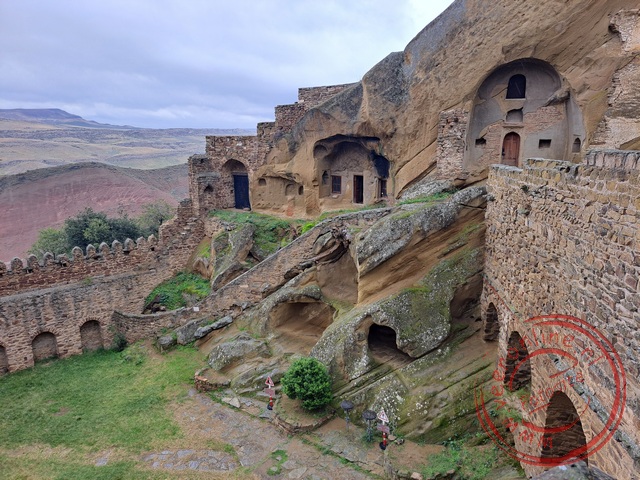
Dag 20 - Thursday, October 2, 2025Today marks the last day of the trip. Tomorrow we will fly home from Tbilisi. Today, we take an excursion from Tbilisi to the Davit Gareja Monastery. This monastery is located about an hour and a half east of the capital, right on the border with Azerbaijan. Traffic in the city is heavy. Nino reminds us that people in Georgia are used to starting work late. Many don’t go to the office until around ten o’clock, which makes the traffic quite congested at this time. It’s a rather gray day, cloudy, with the prospect of rain. This gives the landscape a rather bleak appearance as we drive along the highway. Once we leave the highway, there are still forty kilometers to the Davit Gareja monastery complex. Until a few years ago, the road was too poor to travel by tour bus. Fortunately, Nino tells us, it has now been improved. The narrow road winds through the hills, with barely any vegetation. It’s no wonder this region is called the “desert.” In the only village we pass, Udabno, we stop at a local café. Despite the “open” sign on the door, the building looks closed—but it isn’t. Inside is a simple little bar. I order coffee and also reserve a cup of chicken soup for lunch on the return journey. Just before noon, we arrive at the Davit Gareja Monastery. The complex lies right on the border with Azerbaijan, and there are several Georgian army checkpoints in the area. The complex was founded in the 6th century by Saint David Garejeli, one of thirteen Syrian monks who brought Christianity to this region.

It consists of more than twenty separate monasteries and chapels, cave churches, and cells carved out of the soft rock. We enter the complex through the Main Gate, the upper entrance. From here, the entire monastery is clearly visible. I can see the cave dwellings where the monks lived. Even today, five monks still reside in the complex. I take a staircase down one level, where the monks’ living and communal spaces were located. A stone spiral staircase leads me to the monastery church. The combination of history, location, and unique design makes this monastery a magnificent place to visit.
After the monastery, we return to the small local café. Lunch is already prepared. I order a glass of homemade red wine, though it comes not from this region, but from the area around Telavi. The owner, originally from Poland, tells us that during the Soviet occupation, this town was a model settlement for the Russians, with all facilities provided. After the collapse of the Soviet Union, Udabno quickly fell into decline. The water supply broke, and the village had to go for years without running water. Many people left, and houses fell into disrepair. After lunch, we drive back to Tbilisi. Traffic is heavy as we approach the city center. The police have closed an important main road, forcing all traffic through narrow streets. The driver skillfully navigates the bus through the congestion. Back at the hotel, we have drinks on the rooftop terrace on the sixth floor. Tonight is the last evening with the group. Together, we go to dine at the restaurant Kneina, located on the edge of the old city. I order Chanakhi, a dish with lamb, vegetables, and potatoes, along with a glass of Georgian wine. After dinner, we thank Maaike for guiding the trip. Looking back, it’s only now that we realize how many remarkable places we have visited during this journey.
 Georgia
 Armenia

Travelogue Caucasus Tour
Dag 2 | Azerbaijan > The Burning Mountains of Baku
Dag 3 | Azerbaijan > The Rock Engravings of Gobustan
Dag 4 | Azerbaijan > Crossing the Border into Georgia
Dag 5 | Georgia > Saint Nino in Bodbe
Dag 6 | Georgia > A Walking Tour of Tbilisi
Dag 7 | Georgia > The Church of Kazbegi
Dag 8 | Georgia > The Stalin Museum in Gori
Dag 9 | Georgia > The Modern Seaside Resort Batumi
Dag 10 | Georgia > From Batumi to Akhaltsikhe
Dag 11 | Georgia > The Cave City of Vardzia
Dag 12 | Georgia > Via Gyumri to Yerevan
Dag 13 | Armenia > The Cathedral of Etchmiadzin
Dag 14 | Armenia > The Spear of the Geghard Monastery
Dag 15 | Armenia > In Gregory's Cellar
Dag 16 | Armenia > By Cable Car to Tatev
Dag 17 | Armenia > To Lake Sevan
Dag 18 | Armenia > Three Monasteries in One Day
Dag 19 | Armenia > Back to Tbilisi
Dag 20 | Georgia > The Davit Gareja Monastery
Dag 21 | Georgia > Flight to the Netherlands