
154 countries
(and areas)
 - Belize
- Benin
- Bhutan
- Bolivia
- Bonaire
- Bosnia and Herzegovina
- Botswana
- Brazil
- British Virgin Islands
- Brunei
- Bulgaria
- Cambodia
- Canada
- Cape Verde
- Chile
- China
- Costa Rica
- Croatia
- Cuba
- Curacao
- Cyprus
- Czech Republic
- Denmark
- Dominica
- Dominican Republic
- Egypt
- El Salvador
- England
- Estonia
- Eswatini (Swaziland)
- Ethiopia
- Fiji
- Finland
- France
- French Guiana
- Georgia
- Germany
- Gibraltar
- Greece
- Grenada
- Guadeloupe
- Guatemala
- Honduras
- Hong Kong
- Hungary
- Iceland
- India
- Indonesia
- Iran
- Ireland
- Israel
- Italy
- Jamaica
- Japan
- Jordan
- Kazakhstan
- Kenya
- Kosovo
- Kuwait
- Kyrgyzstan
- Laos
- Latvia
- Lebanon
- Lesotho
- Liechtenstein
- Lithuania
- Luxembourg
- Macau
- Madagascar
- Malawi
- Malaysia
- Maldives
- Malta
- Martinique
- Mexico
- Moldova
- Monaco
- Mongolia
- Montenegro
- Morocco
- Mozambique
- Namibia
- Nepal
- Netherlands
- New Zealand
- Nicaragua
- North Macedonia
- Northern Ireland
- Norway
- Oman
- Pakistan
- Palestine
- Peru
- Philippines
- Poland
- Portugal
- Qatar
- Republic of Korea
- Romania
- Russia
- Saint Kitts and Nevis
- Saint Lucia
- Saint Martin
- Saint Vincent and the Grenadines
- San Marino
- São Tomé and Principe
- Saudi Arabia
- Scotland
- Senegal
- Serbia
- Singapore
- Sint Maarten
- Slovakia
- Slovenia
- South Africa
- Spain
- Sri Lanka
- Suriname
- Sweden
- Switzerland
- Tajikistan
- Tanzania
- Thailand
- The Gambia
- Tibet
- Togo
- Transnistria
- Trinidad and Tobago
- Tunisia
- Turkey
- Turkmenistan
- Uganda
- United Arab Emirates
- United States
- Uruguay
- Uzbekistan
- Vatican City
- Vietnam
- Wales
- Zambia
- Zanzibar
- Belize
- Benin
- Bhutan
- Bolivia
- Bonaire
- Bosnia and Herzegovina
- Botswana
- Brazil
- British Virgin Islands
- Brunei
- Bulgaria
- Cambodia
- Canada
- Cape Verde
- Chile
- China
- Costa Rica
- Croatia
- Cuba
- Curacao
- Cyprus
- Czech Republic
- Denmark
- Dominica
- Dominican Republic
- Egypt
- El Salvador
- England
- Estonia
- Eswatini (Swaziland)
- Ethiopia
- Fiji
- Finland
- France
- French Guiana
- Georgia
- Germany
- Gibraltar
- Greece
- Grenada
- Guadeloupe
- Guatemala
- Honduras
- Hong Kong
- Hungary
- Iceland
- India
- Indonesia
- Iran
- Ireland
- Israel
- Italy
- Jamaica
- Japan
- Jordan
- Kazakhstan
- Kenya
- Kosovo
- Kuwait
- Kyrgyzstan
- Laos
- Latvia
- Lebanon
- Lesotho
- Liechtenstein
- Lithuania
- Luxembourg
- Macau
- Madagascar
- Malawi
- Malaysia
- Maldives
- Malta
- Martinique
- Mexico
- Moldova
- Monaco
- Mongolia
- Montenegro
- Morocco
- Mozambique
- Namibia
- Nepal
- Netherlands
- New Zealand
- Nicaragua
- North Macedonia
- Northern Ireland
- Norway
- Oman
- Pakistan
- Palestine
- Peru
- Philippines
- Poland
- Portugal
- Qatar
- Republic of Korea
- Romania
- Russia
- Saint Kitts and Nevis
- Saint Lucia
- Saint Martin
- Saint Vincent and the Grenadines
- San Marino
- São Tomé and Principe
- Saudi Arabia
- Scotland
- Senegal
- Serbia
- Singapore
- Sint Maarten
- Slovakia
- Slovenia
- South Africa
- Spain
- Sri Lanka
- Suriname
- Sweden
- Switzerland
- Tajikistan
- Tanzania
- Thailand
- The Gambia
- Tibet
- Togo
- Transnistria
- Trinidad and Tobago
- Tunisia
- Turkey
- Turkmenistan
- Uganda
- United Arab Emirates
- United States
- Uruguay
- Uzbekistan
- Vatican City
- Vietnam
- Wales
- Zambia
- Zanzibar


Copyright 2004 - 2026
Veeronline.nl Travel Adventures

Home > Armenia > Caucasus Tour > Travelogue day 13
Travelogue Caucasus Tour
September 13th - October 3th 2025 (21 days)
Armenia > The Cathedral of Etchmiadzin
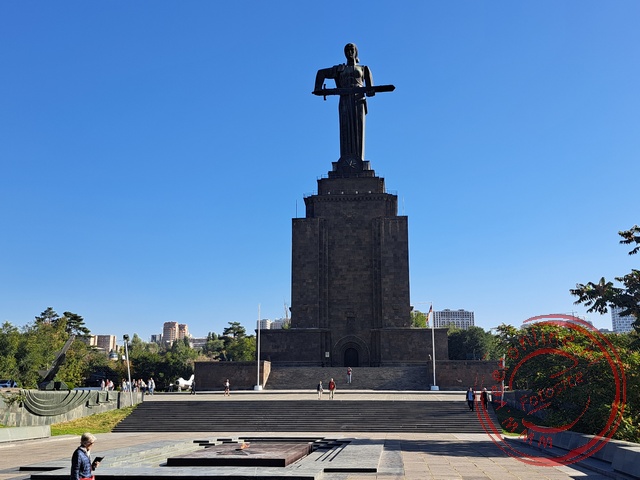
Dag 13 - Thursday, September 25, 2025The hotel room is fine, though not very large. We placed the little table on the cupboard, which makes it easier to store our bags. On the ground floor, the breakfast buffet is ready. We are starting to get into the rhythm: breakfast at eight, departure at nine. Today we are taking an excursion from Yerevan to the Cathedral of Echmiadzin. However, before leaving the city, we first visit the hill with the Mother of Armenia statue. The weather is clear, and from the base of the statue I can see the city of Yerevan with the 5,137-meter-high Mount Ararat behind it. The mountain’s peak is snow-covered—a magnificent sight. The Mother of Armenia statue is an imposing national monument symbolizing strength and courage. It was unveiled in 1967, replacing a statue of Stalin. The statue is over 22 meters tall and stands on a massive 34-meter pedestal, which houses a museum. It is busy during Yerevan’s morning rush. We make our way toward the western side of the capital. Outside the city, traffic flows more smoothly.
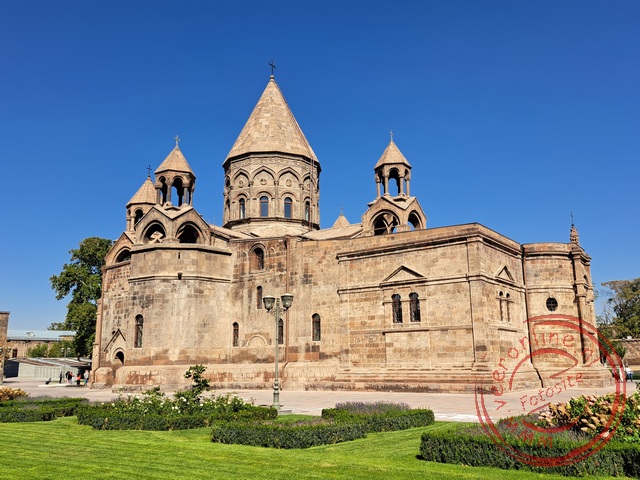
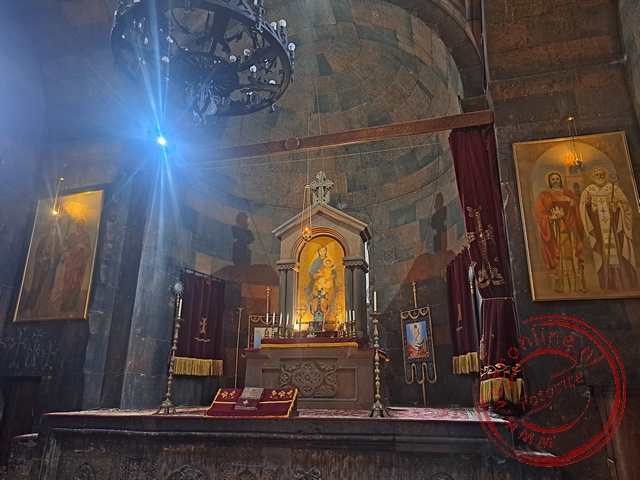
After about an hour, we arrive in Vagharshapat at the Cathedral of Echmiadzin. The cathedral is considered the oldest Christian cathedral in the world. According to tradition, Christ appeared in a vision to Gregory the Illuminator and pointed out the location where the first church should be built, around 303 AD. Since then, the cathedral has been the spiritual and administrative heart of the Armenian Apostolic Church. Its central dome and cross-dome structure are characteristic of Armenian church architecture. Upon entering the cathedral, I am struck by the beautiful wall paintings, icons, and religious relics. Some people try to take photos despite the prohibition, but this is strictly monitored, and they are reprimanded. Although I would love to capture the beauty, I leave my phone in my pocket. Around the cathedral is a monastic complex with seminaries and museums. Several educational institutions for priests are situated around the cathedral. We also have time to visit the old cemetery, where semi-circular tombs of important priests are located. A little further is the Church of Gayane. Gayane was one of thirty nuns who were martyred in the 4th century for refusing to renounce Christianity. One of these nuns was Nino, who later helped bring Christianity to Georgia. Inside the church, a baptism is taking place. A priest addresses three young people in Armenian while the family watches.
A beautiful scene to witness. A few kilometers outside Echmiadzin lie the archaeological ruins of Zvartnots. In addition to a three-story-high church, the palace of King Tiridates once stood here. We view the remains of the unique circular church and the palace. In the museum, there is a model showing how the church once looked: circular from the outside, cross-shaped inside. Around 1:30 PM, we return to Yerevan. We decide not to join the group at the Cascade immediately, but to have lunch first. Afterwards, we visit the Cascade on our own. In daylight, the steps are perhaps even more beautiful. We take the escalator to the top level, transferring several times to the next section. From above, there is a lovely view of the city center and Mount Ararat. I walk back down the stairs. Following a straight path, we arrive at the Opera House, which still hosts daily performances. Behind the theater begins a pedestrian boulevard lined with luxury shops on both sides. The weather is beautiful, and the streets are lively. At the end of the boulevard, we reach Republic Square. The fountain stands prominently on the square.
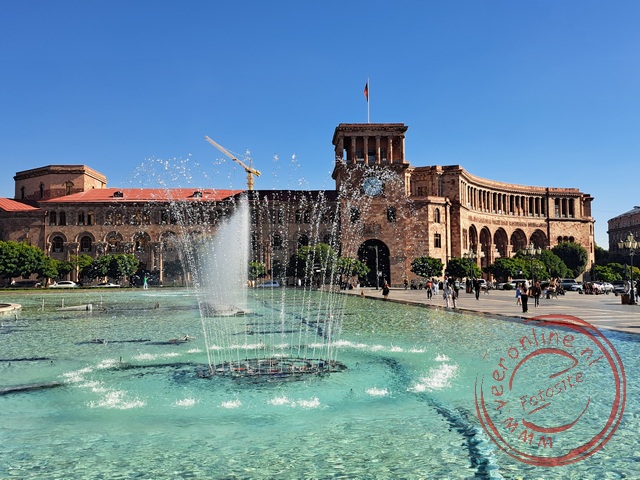
We pass the theater and the parliament building. Tomorrow evening, we plan to watch the light and music show here. Turning off a side street, we arrive at the old mosque and walk around its courtyard. Across from it is a former mosque; the facade is intact, but a supermarket now occupies the interior. In the afternoon, we walk back to our hotel. For dinner, we do not want to go far. The restaurant “Taverne Yerevan” seems nice, but upon arrival, it is more upscale than expected and fully booked. Not wanting to wait an hour, we head to the next corner, where the restaurant “Park” is located. Here, we order the local dish “Veal Tava Khashlama.” Meat, potatoes, and vegetables are covered with dough and baked in the oven. At the table, the dough is flambéed. Once the fire dies down, we cut open the dough layer. I find it tastes very good; Nicolette is less enthusiastic.
 Armenia
  The church of Khor Virap
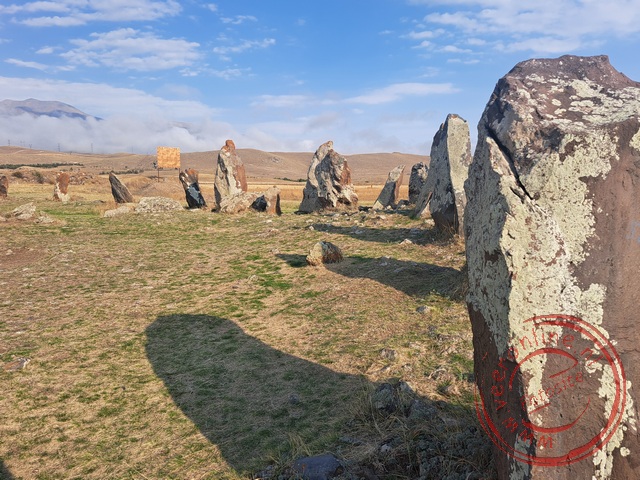 The Stonehenge of Armenia Zorats Karer
 The churches of Noravank
 A tasting of Armenian wines in Areni
Travelogue Caucasus Tour
Dag 2 | Azerbaijan > The Burning Mountains of Baku
Dag 3 | Azerbaijan > The Rock Engravings of Gobustan
Dag 4 | Azerbaijan > Crossing the Border into Georgia
Dag 5 | Georgia > Saint Nino in Bodbe
Dag 6 | Georgia > A Walking Tour of Tbilisi
Dag 7 | Georgia > The Church of Kazbegi
Dag 8 | Georgia > The Stalin Museum in Gori
Dag 9 | Georgia > The Modern Seaside Resort Batumi
Dag 10 | Georgia > From Batumi to Akhaltsikhe
Dag 11 | Georgia > The Cave City of Vardzia
Dag 12 | Georgia > Via Gyumri to Yerevan
Dag 13 | Armenia > The Cathedral of Etchmiadzin
Dag 14 | Armenia > The Spear of the Geghard Monastery
Dag 15 | Armenia > In Gregory's Cellar
Dag 16 | Armenia > By Cable Car to Tatev
Dag 17 | Armenia > To Lake Sevan
Dag 18 | Armenia > Three Monasteries in One Day
Dag 19 | Armenia > Back to Tbilisi
Dag 20 | Georgia > The Davit Gareja Monastery
Dag 21 | Georgia > Flight to the Netherlands