
154 countries
(and areas)
 - Belize
- Benin
- Bhutan
- Bolivia
- Bonaire
- Bosnia and Herzegovina
- Botswana
- Brazil
- British Virgin Islands
- Brunei
- Bulgaria
- Cambodia
- Canada
- Cape Verde
- Chile
- China
- Costa Rica
- Croatia
- Cuba
- Curacao
- Cyprus
- Czech Republic
- Denmark
- Dominica
- Dominican Republic
- Egypt
- El Salvador
- England
- Estonia
- Eswatini (Swaziland)
- Ethiopia
- Fiji
- Finland
- France
- French Guiana
- Georgia
- Germany
- Gibraltar
- Greece
- Grenada
- Guadeloupe
- Guatemala
- Honduras
- Hong Kong
- Hungary
- Iceland
- India
- Indonesia
- Iran
- Ireland
- Israel
- Italy
- Jamaica
- Japan
- Jordan
- Kazakhstan
- Kenya
- Kosovo
- Kuwait
- Kyrgyzstan
- Laos
- Latvia
- Lebanon
- Lesotho
- Liechtenstein
- Lithuania
- Luxembourg
- Macau
- Madagascar
- Malawi
- Malaysia
- Maldives
- Malta
- Martinique
- Mexico
- Moldova
- Monaco
- Mongolia
- Montenegro
- Morocco
- Mozambique
- Namibia
- Nepal
- Netherlands
- New Zealand
- Nicaragua
- North Macedonia
- Northern Ireland
- Norway
- Oman
- Pakistan
- Palestine
- Peru
- Philippines
- Poland
- Portugal
- Qatar
- Republic of Korea
- Romania
- Russia
- Saint Kitts and Nevis
- Saint Lucia
- Saint Martin
- Saint Vincent and the Grenadines
- San Marino
- São Tomé and Principe
- Saudi Arabia
- Scotland
- Senegal
- Serbia
- Singapore
- Sint Maarten
- Slovakia
- Slovenia
- South Africa
- Spain
- Sri Lanka
- Suriname
- Sweden
- Switzerland
- Tajikistan
- Tanzania
- Thailand
- The Gambia
- Tibet
- Togo
- Transnistria
- Trinidad and Tobago
- Tunisia
- Turkey
- Turkmenistan
- Uganda
- United Arab Emirates
- United States
- Uruguay
- Uzbekistan
- Vatican City
- Vietnam
- Wales
- Zambia
- Zanzibar
- Belize
- Benin
- Bhutan
- Bolivia
- Bonaire
- Bosnia and Herzegovina
- Botswana
- Brazil
- British Virgin Islands
- Brunei
- Bulgaria
- Cambodia
- Canada
- Cape Verde
- Chile
- China
- Costa Rica
- Croatia
- Cuba
- Curacao
- Cyprus
- Czech Republic
- Denmark
- Dominica
- Dominican Republic
- Egypt
- El Salvador
- England
- Estonia
- Eswatini (Swaziland)
- Ethiopia
- Fiji
- Finland
- France
- French Guiana
- Georgia
- Germany
- Gibraltar
- Greece
- Grenada
- Guadeloupe
- Guatemala
- Honduras
- Hong Kong
- Hungary
- Iceland
- India
- Indonesia
- Iran
- Ireland
- Israel
- Italy
- Jamaica
- Japan
- Jordan
- Kazakhstan
- Kenya
- Kosovo
- Kuwait
- Kyrgyzstan
- Laos
- Latvia
- Lebanon
- Lesotho
- Liechtenstein
- Lithuania
- Luxembourg
- Macau
- Madagascar
- Malawi
- Malaysia
- Maldives
- Malta
- Martinique
- Mexico
- Moldova
- Monaco
- Mongolia
- Montenegro
- Morocco
- Mozambique
- Namibia
- Nepal
- Netherlands
- New Zealand
- Nicaragua
- North Macedonia
- Northern Ireland
- Norway
- Oman
- Pakistan
- Palestine
- Peru
- Philippines
- Poland
- Portugal
- Qatar
- Republic of Korea
- Romania
- Russia
- Saint Kitts and Nevis
- Saint Lucia
- Saint Martin
- Saint Vincent and the Grenadines
- San Marino
- São Tomé and Principe
- Saudi Arabia
- Scotland
- Senegal
- Serbia
- Singapore
- Sint Maarten
- Slovakia
- Slovenia
- South Africa
- Spain
- Sri Lanka
- Suriname
- Sweden
- Switzerland
- Tajikistan
- Tanzania
- Thailand
- The Gambia
- Tibet
- Togo
- Transnistria
- Trinidad and Tobago
- Tunisia
- Turkey
- Turkmenistan
- Uganda
- United Arab Emirates
- United States
- Uruguay
- Uzbekistan
- Vatican City
- Vietnam
- Wales
- Zambia
- Zanzibar


Copyright 2004 - 2026
Veeronline.nl Travel Adventures

Home > Iran > In the Footsteps of Marco Polo > Travelogue day 15
Travelogue In the Footsteps of Marco Polo
April 28 July 1 2012 (65 days)
Iran > Kurdish food in the park
Dag 15 - Saturday, May 12, 2012
In the center of Sanandaj I walk into the courtyard of the old Jamai Mosque. I am immediately noticed by a group of students. They are drawing the mosque. “Where are you from?” A question I will have to answer many more times in the coming weeks. “Holland,” I call back enthusiastically. The story goes that the architect of the mosque was blinded after completion, to prevent him from ever creating such a design again. Ironically, right next to the mosque, in the same courtyard, now stands a modern Quran school. I agree with the sketching students that this building is hideous. The mosque’s caretaker happens to arrive just then. He is willing to open the door of the mosque for me. I take off my shoes and step inside the structure from 1227. The mosque floor is covered with a layer of sturdy carpets. Despite its simplicity, the mosque is beautiful. I continue on to the Sanandaj Museum. The museum is housed in an old merchant’s house. I find myself paying more attention to the beautiful old stained-glass windows than to the collection itself. It is special that the cellar is open, with its old fountain.
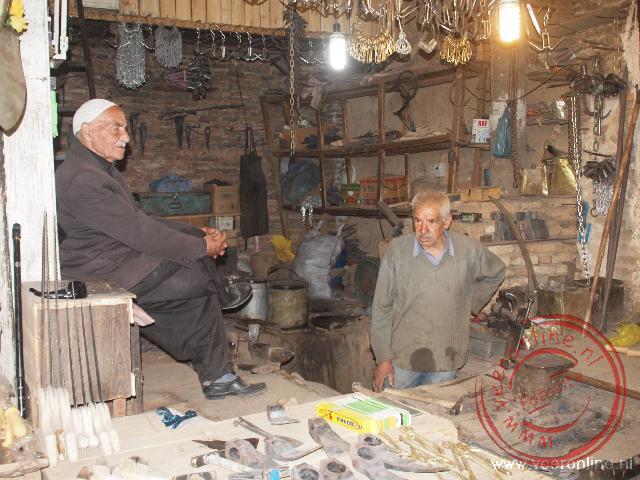
Across the street, I enter the Asef Vaziri House. This is also an old merchant’s house. As I step into the courtyard, I see that this house is far more extensive and beautiful than the museum. Through the narrow streets I gradually enter the bazaar of Sanandaj. A maze of alleys. I had seen in a brochure that there is an old hammam. This ancient bathhouse is said to be beautiful. I ask several times for directions to this hammam. I am referred to a door. Unfortunately, the door is closed, and garbage is piled up against it. Fortunately, the bazaar has plenty to offer: colorful stalls and many people in Kurdish dress. The men wear wide trousers with a low-hanging crotch. The women wear colorful robes. I go in search of the Mishir Divan traditional house. The Lonely Planet says you can knock on the door and maybe be let in (“use the speakerphone and hope”). But the door is already open. Construction workers are busy with restoration. They gesture for me to come in. This old merchant’s house is in poor condition. Restoration is urgently needed. The wooden frames hang crooked, and several windows are broken. The caretaker proudly shows me around the complex.

With gestures, he points out the old hammam. A beautiful bathhouse in the corner of the courtyard. A pity it hasn’t been maintained earlier. There is still a lot of work to be done to fully restore this house. I wander further through the city to another hammam on the map. Unfortunately, this one is closed as well. The shopkeeper next door tells me it shut down because there was too little interest. Not surprising in a city where hardly any tourists come. With probably the oldest taxi in town, I let myself be driven back to the hotel. In the late afternoon, I walk from the hotel to a nearby park. When I ask two boys for directions, I strike up a conversation with them. Siamak and Keivan are two Kurdish boys. Siamak speaks a little English. He is a lawyer, but starting tomorrow he must serve ten months in the army. He dreads it. Keivan is a filmmaker. They want to know everything about me and everything about the Netherlands. They ask if I have already eaten. They invite me to eat in a small nearby park. Keivan orders food from a stall. They insist I don’t pay anything. I feel a little uncomfortable about it, but I let the Iranian hospitality wash over me. A little later, I am sitting down to a Kurdish meal of warm yogurt and a kind of folded flatbread pancake with vegetables. As I eat, I draw quite some attention in the park. Several boys want to take a photo with me.

Although these boys speak much better English, I keep the interaction short. After all, I was invited by Siamak and Keivan, and they seem to appreciate that. After tea in a nearby teahouse, I say goodbye to the boys. I wish Siamak strength for his military service. I walk back to the hotel. At the reception a surprise awaits me. I have to pay 320,000 rials for the laundry. That is over 16 euros. I suspect there has been a misunderstanding between toman and rial. Many prices in Iran are quoted in toman but paid in rials. One toman equals ten rials. No matter how much I try to explain that this is extremely expensive, the receptionist keeps writing down the amount. When I complain to the hotel manager, he tells me the price is correct. What a lousy hotel. With a strong feeling of being cheated, I go to sleep.
 Kyrgyzstan
 Iran
Iran 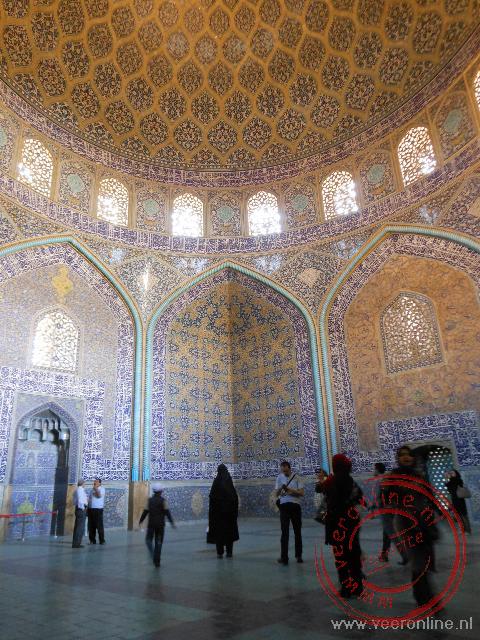 The small Sheikh Lotfollah Mosque
 Uzbekistan
  The Uzbekistan vs Iran football match in Tashkent
 Edelweiss grows abundantly in the mountains of Kyrgyzstan
Travelogue In the Footsteps of Marco Polo
Dag 2 | Turkey > The mausoleum of Atatürk
Dag 3 | Turkey > On the way to Cappadocia
Dag 4 | Turkey > Balloon flight over the rock formations
Dag 5 | Turkey > Rain in Kahta
Dag 6 | Turkey > In dense fog on Nemrut Dagi mountain
Dag 7 | Turkey > Friday prayers in Sanliurfa
Dag 8 | Turkey > The Kurdish capital Diyarbakir
Dag 9 | Turkey > The consequences of the earthquake in Van
Dag 10 | Turkey > The island Akdamar in Lake Van
Dag 11 | Turkey > The Ishak Pasha Palace in Dogubayazit
Dag 12 | Iran > Crossing the border to Iran
Dag 13 | Iran > Visiting a cave dwelling
Dag 14 | Iran > The Throne of Solomon
Dag 15 | Iran > Kurdish food in the park
Dag 16 | Iran > An afternoon tour through Hamadan
Dag 17 | Iran > The mausoleum of Fatima in Qom
Dag 18 | Iran > On the roof of the bazaar of Kashan
Dag 19 | Iran > The red mountain village Abyaneh
Dag 20 | Iran > Wandering through Esfahan
Dag 21 | Iran > A whirlwind on the square
Dag 22 | Iran > The shrine of Sayyed Ahmad
Dag 23 | Iran > Local encounters in Shiraz
Dag 24 | Iran > The tomb of Cyrus in Pasargadae
Dag 25 | Iran > The desert city Yazd
Dag 26 | Iran > Helicopters in the desert
Dag 27 | Iran > The golden tomb of Imam Reza
Dag 28 | Iran > Back to the Holy Shrine
Dag 29 | Turkmenistan > Across the border to Turkmenistan
Dag 30 | Turkmenistan > Ashgabat: Unique and bizarre
Dag 31 | Turkmenistan > Long bus ride to Mary
Dag 32 | Turkmenistan > The UNESCO city of Merv
Dag 33 | Uzbekistan > Mosques and madrasas in Bukhara
Dag 34 | Uzbekistan > On the roof of the madrasa
Dag 35 | Uzbekistan > The old palace of Timur Lenk
Dag 36 | Uzbekistan > Registan Square in Samarkand
Dag 37 | Uzbekistan > Football match Uzbekistan - Iran
Dag 38 | Kazakhstan > Computer malfunction at the border
Dag 39 | Kazakhstan > Hiking in Aksu Djabagly Nature Park
Dag 40 | Kyrgyzstan > Ala-Too Square in Bishkek
Dag 41 | Kyrgyzstan > The waterfall in Ala Archa Nature Park
Dag 42 | Kyrgyzstan > Tamchi on Lake Issyk Kul
Dag 43 | Kyrgyzstan > The old wooden cathedral of Karakol
Dag 44 | Kyrgyzstan > Overnight in a yurt
Dag 45 | Kyrgyzstan > On horseback through the valley
Dag 46 | Kyrgyzstan > Through the mountains to Lake Sol Kul
Dag 47 | Kyrgyzstan > Rain and snow around Sol Kul
Dag 48 | Kyrgyzstan > Caravanserai of Tash Rabat
Dag 49 | China > The Torugart Pass into China
Dag 50 | China > Kashgar, the city of the Uyghurs
Dag 51 | China > Cows and goats for sale
Dag 52 | China > By train through the Taklamakan desert
Dag 53 | China > Death Valley of China
Dag 54 | China > Ruins of Jiaohe and Gaochang
Dag 55 | China > The sand dunes of Dunhuang
Dag 56 | China > The Buddhist Mogao Caves
Dag 57 | China > The fort of Jiayuguan
Dag 58 | China > Temple of the Eight Immortals
Dag 59 | China > The Terracotta Army of Xian
Dag 60 | China > Cycling on the Xian city wall
Dag 61 | China > The Forbidden City
Dag 62 | China > Rainy Temple of Heaven
Dag 63 | China > On the Great Wall of China
Dag 64 | China > Meeting the giant panda
Dag 65 | China > There is no bus