
154 countries
(and areas)
 - Belize
- Benin
- Bhutan
- Bolivia
- Bonaire
- Bosnia and Herzegovina
- Botswana
- Brazil
- British Virgin Islands
- Brunei
- Bulgaria
- Cambodia
- Canada
- Cape Verde
- Chile
- China
- Costa Rica
- Croatia
- Cuba
- Curacao
- Cyprus
- Czech Republic
- Denmark
- Dominica
- Dominican Republic
- Egypt
- El Salvador
- England
- Estonia
- Eswatini (Swaziland)
- Ethiopia
- Fiji
- Finland
- France
- French Guiana
- Georgia
- Germany
- Gibraltar
- Greece
- Grenada
- Guadeloupe
- Guatemala
- Honduras
- Hong Kong
- Hungary
- Iceland
- India
- Indonesia
- Iran
- Ireland
- Israel
- Italy
- Jamaica
- Japan
- Jordan
- Kazakhstan
- Kenya
- Kosovo
- Kuwait
- Kyrgyzstan
- Laos
- Latvia
- Lebanon
- Lesotho
- Liechtenstein
- Lithuania
- Luxembourg
- Macau
- Madagascar
- Malawi
- Malaysia
- Maldives
- Malta
- Martinique
- Mexico
- Moldova
- Monaco
- Mongolia
- Montenegro
- Morocco
- Mozambique
- Namibia
- Nepal
- Netherlands
- New Zealand
- Nicaragua
- North Macedonia
- Northern Ireland
- Norway
- Oman
- Pakistan
- Palestine
- Peru
- Philippines
- Poland
- Portugal
- Qatar
- Republic of Korea
- Romania
- Russia
- Saint Kitts and Nevis
- Saint Lucia
- Saint Martin
- Saint Vincent and the Grenadines
- San Marino
- São Tomé and Principe
- Saudi Arabia
- Scotland
- Senegal
- Serbia
- Singapore
- Sint Maarten
- Slovakia
- Slovenia
- South Africa
- Spain
- Sri Lanka
- Suriname
- Sweden
- Switzerland
- Tajikistan
- Tanzania
- Thailand
- The Gambia
- Tibet
- Togo
- Transnistria
- Trinidad and Tobago
- Tunisia
- Turkey
- Turkmenistan
- Uganda
- United Arab Emirates
- United States
- Uruguay
- Uzbekistan
- Vatican City
- Vietnam
- Wales
- Zambia
- Zanzibar
- Belize
- Benin
- Bhutan
- Bolivia
- Bonaire
- Bosnia and Herzegovina
- Botswana
- Brazil
- British Virgin Islands
- Brunei
- Bulgaria
- Cambodia
- Canada
- Cape Verde
- Chile
- China
- Costa Rica
- Croatia
- Cuba
- Curacao
- Cyprus
- Czech Republic
- Denmark
- Dominica
- Dominican Republic
- Egypt
- El Salvador
- England
- Estonia
- Eswatini (Swaziland)
- Ethiopia
- Fiji
- Finland
- France
- French Guiana
- Georgia
- Germany
- Gibraltar
- Greece
- Grenada
- Guadeloupe
- Guatemala
- Honduras
- Hong Kong
- Hungary
- Iceland
- India
- Indonesia
- Iran
- Ireland
- Israel
- Italy
- Jamaica
- Japan
- Jordan
- Kazakhstan
- Kenya
- Kosovo
- Kuwait
- Kyrgyzstan
- Laos
- Latvia
- Lebanon
- Lesotho
- Liechtenstein
- Lithuania
- Luxembourg
- Macau
- Madagascar
- Malawi
- Malaysia
- Maldives
- Malta
- Martinique
- Mexico
- Moldova
- Monaco
- Mongolia
- Montenegro
- Morocco
- Mozambique
- Namibia
- Nepal
- Netherlands
- New Zealand
- Nicaragua
- North Macedonia
- Northern Ireland
- Norway
- Oman
- Pakistan
- Palestine
- Peru
- Philippines
- Poland
- Portugal
- Qatar
- Republic of Korea
- Romania
- Russia
- Saint Kitts and Nevis
- Saint Lucia
- Saint Martin
- Saint Vincent and the Grenadines
- San Marino
- São Tomé and Principe
- Saudi Arabia
- Scotland
- Senegal
- Serbia
- Singapore
- Sint Maarten
- Slovakia
- Slovenia
- South Africa
- Spain
- Sri Lanka
- Suriname
- Sweden
- Switzerland
- Tajikistan
- Tanzania
- Thailand
- The Gambia
- Tibet
- Togo
- Transnistria
- Trinidad and Tobago
- Tunisia
- Turkey
- Turkmenistan
- Uganda
- United Arab Emirates
- United States
- Uruguay
- Uzbekistan
- Vatican City
- Vietnam
- Wales
- Zambia
- Zanzibar


Copyright 2004 - 2026
Veeronline.nl Travel Adventures
Home > Netherlands > Discovering Northern Netherlands > Travelogue day 12
Travelogue Discovering Northern Netherlands
June 20 July 4 2021 (15 days)
Netherlands > Climbing the Martini Tower
Dag 12 - Thursday 1 July 2021Groningen is the most important city in the north of the country. The city is also popular with students, something clearly visible in the city center by the enormous number of bicycles in the streetscape. We follow an ANWB city walking route through the center. On the Rademarkt, we pass through a small gate into the courtyard of the St. Anthony Guesthouse. The small houses here date from the 18th and 19th centuries. The monumental station dates from 1896. At that time, the city wall was demolished to allow for expansion. Opposite the station stands the modern Groninger Museum. Whether you find this modern block-like structure beautiful or ugly, it is certainly an eye-catcher for the city. The center features more striking, mainly historical, buildings. The university’s main headquarters is housed in the Academy Building, which had been a monastery since 1614.

Since 1907, the building has been used by the university. The provincial government building was designed by the same architect. Its oldest part dates from the 16th century, with an extension added in the early 20th century. Through a gate on the Turfsingel, we enter the Prinsentuin, a beautiful rose garden behind the Prinsenhof, the former residence of the stadtholders. At a small terrace in the Prinsentuin, we order coffee. At one o’clock, we check in at the Martinitoren. Climbing the 97-meter-high tower is one of the highlights of the city. In stages, we make our way up to the viewing platform at 58 meters, standing directly behind the clock faces. Below us, we see Groningen in miniature and can trace the route we walked earlier today. The tower’s bells are still original, striking every half hour. With a loud boom, the tower strikes half past one right above our heads. The descent on the narrow stone spiral staircase seems easier, but still requires caution. People used to be shorter, and the staircase wasn’t built for tall people—frequent ducking is necessary.

In the final part of the descent, the steps are higher, a former defensive measure: the higher the step, the harder it was to conquer. The Grote Markt, next to the Martinitoren, was heavily damaged at the end of World War II. Reconstruction took place in a modernist style. One example of this “Nieuwe Zakelijkheid” is the building of the Vindicat student association—not exactly beautiful. Behind these buildings stands the relatively new, multifunctional Forum, where escalators crisscross the interior. We move from floor to floor until we reach the tenth floor, where we again enjoy a view over the city. In the late afternoon, we dine at the Goudkantoor. This former tax and assay office from 1635 is now a cozy restaurant. We order food on the terrace. At seven o’clock, we return to the Forum. On the fifth floor, there is a cinema where we watch the film Nomadland.
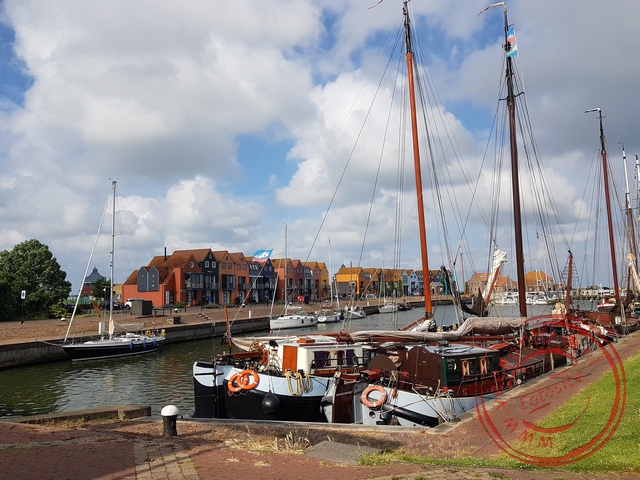 Boats in the harbor of Stavoren
 An old boat in the Sneek Maritime Museum
 A huge fish stands as a monument in the harbor of Stavoren
 St Michaels Church in Woudsend
Travelogue Discovering Northern Netherlands
Dag 2 | Netherlands > The Eleven Alley Tour
Dag 3 | Netherlands > From Stavoren to Workum
Dag 4 | Netherlands > The Brekken Path
Dag 5 | Netherlands > Harlingen and Terschelling
Dag 6 | Netherlands > Touring Terschelling
Dag 7 | Netherlands > The Oldest Planetarium
Dag 8 | Netherlands > Boating through Alde Feanen
Dag 9 | Netherlands > View over the Lauwersmeer
Dag 10 | Netherlands > Cycling on Schiermonnikoog
Dag 11 | Netherlands > The Groninger 'Wierde” Villages
Dag 12 | Netherlands > Climbing the Martini Tower
Dag 13 | Netherlands > The Hanging Kitchens
Dag 14 | Netherlands > Dutch History
Dag 15 | Netherlands > House in Wedde