
154 countries
(and areas)
 - Belize
- Benin
- Bhutan
- Bolivia
- Bonaire
- Bosnia and Herzegovina
- Botswana
- Brazil
- British Virgin Islands
- Brunei
- Bulgaria
- Cambodia
- Canada
- Cape Verde
- Chile
- China
- Costa Rica
- Croatia
- Cuba
- Curacao
- Cyprus
- Czech Republic
- Denmark
- Dominica
- Dominican Republic
- Egypt
- El Salvador
- England
- Estonia
- Eswatini (Swaziland)
- Ethiopia
- Fiji
- Finland
- France
- French Guiana
- Georgia
- Germany
- Gibraltar
- Greece
- Grenada
- Guadeloupe
- Guatemala
- Honduras
- Hong Kong
- Hungary
- Iceland
- India
- Indonesia
- Iran
- Ireland
- Israel
- Italy
- Jamaica
- Japan
- Jordan
- Kazakhstan
- Kenya
- Kosovo
- Kuwait
- Kyrgyzstan
- Laos
- Latvia
- Lebanon
- Lesotho
- Liechtenstein
- Lithuania
- Luxembourg
- Macau
- Madagascar
- Malawi
- Malaysia
- Maldives
- Malta
- Martinique
- Mexico
- Moldova
- Monaco
- Mongolia
- Montenegro
- Morocco
- Mozambique
- Namibia
- Nepal
- Netherlands
- New Zealand
- Nicaragua
- North Macedonia
- Northern Ireland
- Norway
- Oman
- Pakistan
- Palestine
- Peru
- Philippines
- Poland
- Portugal
- Qatar
- Republic of Korea
- Romania
- Russia
- Saint Kitts and Nevis
- Saint Lucia
- Saint Martin
- Saint Vincent and the Grenadines
- San Marino
- São Tomé and Principe
- Saudi Arabia
- Scotland
- Senegal
- Serbia
- Singapore
- Sint Maarten
- Slovakia
- Slovenia
- South Africa
- Spain
- Sri Lanka
- Suriname
- Sweden
- Switzerland
- Tajikistan
- Tanzania
- Thailand
- The Gambia
- Tibet
- Togo
- Transnistria
- Trinidad and Tobago
- Tunisia
- Turkey
- Turkmenistan
- Uganda
- United Arab Emirates
- United States
- Uruguay
- Uzbekistan
- Vatican City
- Vietnam
- Wales
- Zambia
- Zanzibar
- Belize
- Benin
- Bhutan
- Bolivia
- Bonaire
- Bosnia and Herzegovina
- Botswana
- Brazil
- British Virgin Islands
- Brunei
- Bulgaria
- Cambodia
- Canada
- Cape Verde
- Chile
- China
- Costa Rica
- Croatia
- Cuba
- Curacao
- Cyprus
- Czech Republic
- Denmark
- Dominica
- Dominican Republic
- Egypt
- El Salvador
- England
- Estonia
- Eswatini (Swaziland)
- Ethiopia
- Fiji
- Finland
- France
- French Guiana
- Georgia
- Germany
- Gibraltar
- Greece
- Grenada
- Guadeloupe
- Guatemala
- Honduras
- Hong Kong
- Hungary
- Iceland
- India
- Indonesia
- Iran
- Ireland
- Israel
- Italy
- Jamaica
- Japan
- Jordan
- Kazakhstan
- Kenya
- Kosovo
- Kuwait
- Kyrgyzstan
- Laos
- Latvia
- Lebanon
- Lesotho
- Liechtenstein
- Lithuania
- Luxembourg
- Macau
- Madagascar
- Malawi
- Malaysia
- Maldives
- Malta
- Martinique
- Mexico
- Moldova
- Monaco
- Mongolia
- Montenegro
- Morocco
- Mozambique
- Namibia
- Nepal
- Netherlands
- New Zealand
- Nicaragua
- North Macedonia
- Northern Ireland
- Norway
- Oman
- Pakistan
- Palestine
- Peru
- Philippines
- Poland
- Portugal
- Qatar
- Republic of Korea
- Romania
- Russia
- Saint Kitts and Nevis
- Saint Lucia
- Saint Martin
- Saint Vincent and the Grenadines
- San Marino
- São Tomé and Principe
- Saudi Arabia
- Scotland
- Senegal
- Serbia
- Singapore
- Sint Maarten
- Slovakia
- Slovenia
- South Africa
- Spain
- Sri Lanka
- Suriname
- Sweden
- Switzerland
- Tajikistan
- Tanzania
- Thailand
- The Gambia
- Tibet
- Togo
- Transnistria
- Trinidad and Tobago
- Tunisia
- Turkey
- Turkmenistan
- Uganda
- United Arab Emirates
- United States
- Uruguay
- Uzbekistan
- Vatican City
- Vietnam
- Wales
- Zambia
- Zanzibar


Copyright 2004 - 2026
Veeronline.nl Travel Adventures
Home > Netherlands > Discovering Northern Netherlands > Travelogue day 14
Travelogue Discovering Northern Netherlands
June 20 July 4 2021 (15 days)
Netherlands > Dutch History
Dag 14 - Saturday 3 July 2021Appingedam is located in the northeast of the Netherlands. From here, it’s not far to the northeasternmost point of our country, on the border with Germany and the Dollard. Right at this spot stands the Kiekkaaste, a birdwatching hut with a view over the Wadden area. I drive there via Bad Nieuweschans. In the past, the fortress of Oudeschans provided protection against attacks. When the marshy area around the Dollard dried up, a more northerly fortress was needed. This became Nieuweschans. Today, nothing remains of the Nieuweschans fortress, except for a small section of quay in the park. Bad Nieuweschans is now better known for its thermal baths, located at the site of a centuries-old spring. A little further north lies Nieuwe Statenzijl, a hamlet of barely six houses by the lock that connects the Dollard and the Westerwolde Aa. This is also where the border with Germany lies. Cyclists and walkers can easily pass through a gate in the fence. On the Dutch side, a narrow wooden path begins through the marshy reeds, leading to the Kiekkaaste birdwatching hut. The path is a few hundred meters long. The hut stands on the shore of the Dollard. From inside, I see birds in flight. On the exposed mudflats, birds search for food. Lapwings fly back and forth to the hut. In the upper part of the lookout, there are numerous nests.

Young lapwings cry out for their parents’ attention. They want to be fed. It’s a funny sight, their heads poking out of the nest openings. Back at the car, I enter “Heiligerlee” into the navigation system. The battle of 1568 is regarded as the start of the Eighty Years’ War. On the way, I pass Blauwestad and the Pieter Smit Bridge in Winschoten. At 800 meters in length, this is the longest cycling bridge in Europe. The bridge connects Winschoten to Blauwestad and was opened earlier this year. Just past Winschoten lies Heiligerlee. On the site of the battle stands a statue of the dying Count Adolf of Nassau. I enter the museum. A volunteer asks if I’m familiar with the history. I thought I had a decent grasp of Dutch history, but it quickly becomes clear my knowledge is incomplete. I am given an explanation about the brothers Lodewijk and Adolf of Nassau. “Forget about the third brother, William of Orange,” the man continues. “He was a coward.” I watch the film about the Battle of Heiligerlee. It was not the first battle against the Spanish, but it was the first victory.

That’s why this battle is seen as the beginning of the war. Count Adolf of Nassau died during the fighting. The victory, however, did not lead to the fall of Groningen. The rebels had to retreat, later landing again at Brielle. After the film, the volunteer continues with an extensive and fascinating explanation. When he hears I’m from Teijlingen, he goes on to recount the entire history from Jacoba of Bavaria to Emperor Charles V. It’s a captivating and detailed account of Dutch history. After more than an hour, I enter the museum proper. I realize that most of the information on the panels I’ve already heard. During my visit, the volunteer comes back one more time in response to my question about the stadtholders of Hoorn and Van Egmond. He probably looked it up in the meantime. According to him, they were beheaded in Brussels as revenge for the Battle of Heiligerlee. I had thought it was more because of their support for the revolt against the Spanish. The museum is a fine prelude to my visit to the fortress of Bourtange. Bourtange was built after the Eighty Years’ War as a defense for the eastern side of the Dutch Republic.

The fortress fell into decline but has been restored since the 1960s to its original state of 1742. At the visitor center, I check in for the night in one of the soldiers’ lodgings. We sleep in the middle of the stronghold. Via several drawbridges, I reach the main gate. On the small square are some cozy terraces. The room is just behind them. Marco also arrives in Bourtange. He had trouble with his bike—about eight kilometers before the fortress, his battery died, and an error message appeared on the display. Without assistance, he cycled the last stretch. We take a walk over the second and outer defensive wall. To the left, we see fields stretching toward the German border; to the right, the inner moat and inner wall. From here, Bourtange looks impregnable—perhaps that’s why it was never attacked. From the inner wall, we have a view of the houses inside the fortress. It’s not large. All the streets lead to the square. We pass the mill, the church, and various houses. We end up at the square for a beer. In front of the church is a stage—there’s a performance in the fortress tonight. During dinner, we enjoy the sounds of local musicians. The temperature is perfect.
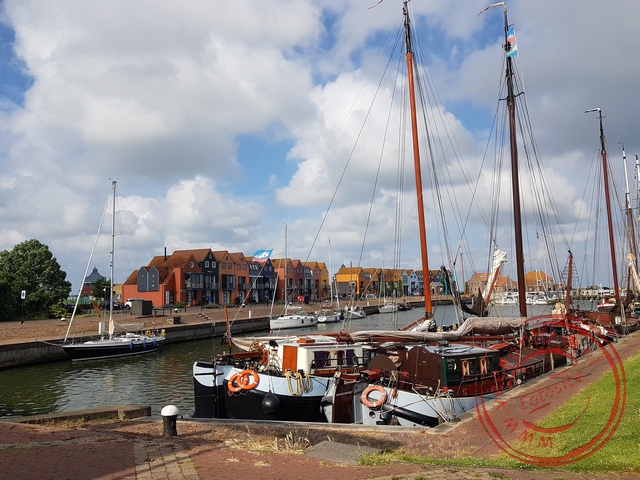 Boats in the harbor of Stavoren
 An old boat in the Sneek Maritime Museum
 A huge fish stands as a monument in the harbor of Stavoren
 St Michaels Church in Woudsend
Travelogue Discovering Northern Netherlands
Dag 2 | Netherlands > The Eleven Alley Tour
Dag 3 | Netherlands > From Stavoren to Workum
Dag 4 | Netherlands > The Brekken Path
Dag 5 | Netherlands > Harlingen and Terschelling
Dag 6 | Netherlands > Touring Terschelling
Dag 7 | Netherlands > The Oldest Planetarium
Dag 8 | Netherlands > Boating through Alde Feanen
Dag 9 | Netherlands > View over the Lauwersmeer
Dag 10 | Netherlands > Cycling on Schiermonnikoog
Dag 11 | Netherlands > The Groninger 'Wierde” Villages
Dag 12 | Netherlands > Climbing the Martini Tower
Dag 13 | Netherlands > The Hanging Kitchens
Dag 14 | Netherlands > Dutch History
Dag 15 | Netherlands > House in Wedde