
154 countries
(and areas)
 - Belize
- Benin
- Bhutan
- Bolivia
- Bonaire
- Bosnia and Herzegovina
- Botswana
- Brazil
- British Virgin Islands
- Brunei
- Bulgaria
- Cambodia
- Canada
- Cape Verde
- Chile
- China
- Costa Rica
- Croatia
- Cuba
- Curacao
- Cyprus
- Czech Republic
- Denmark
- Dominica
- Dominican Republic
- Egypt
- El Salvador
- England
- Estonia
- Eswatini (Swaziland)
- Ethiopia
- Fiji
- Finland
- France
- French Guiana
- Georgia
- Germany
- Gibraltar
- Greece
- Grenada
- Guadeloupe
- Guatemala
- Honduras
- Hong Kong
- Hungary
- Iceland
- India
- Indonesia
- Iran
- Ireland
- Israel
- Italy
- Jamaica
- Japan
- Jordan
- Kazakhstan
- Kenya
- Kosovo
- Kuwait
- Kyrgyzstan
- Laos
- Latvia
- Lebanon
- Lesotho
- Liechtenstein
- Lithuania
- Luxembourg
- Macau
- Madagascar
- Malawi
- Malaysia
- Maldives
- Malta
- Martinique
- Mexico
- Moldova
- Monaco
- Mongolia
- Montenegro
- Morocco
- Mozambique
- Namibia
- Nepal
- Netherlands
- New Zealand
- Nicaragua
- North Macedonia
- Northern Ireland
- Norway
- Oman
- Pakistan
- Palestine
- Peru
- Philippines
- Poland
- Portugal
- Qatar
- Republic of Korea
- Romania
- Russia
- Saint Kitts and Nevis
- Saint Lucia
- Saint Martin
- Saint Vincent and the Grenadines
- San Marino
- São Tomé and Principe
- Saudi Arabia
- Scotland
- Senegal
- Serbia
- Singapore
- Sint Maarten
- Slovakia
- Slovenia
- South Africa
- Spain
- Sri Lanka
- Suriname
- Sweden
- Switzerland
- Tajikistan
- Tanzania
- Thailand
- The Gambia
- Tibet
- Togo
- Transnistria
- Trinidad and Tobago
- Tunisia
- Turkey
- Turkmenistan
- Uganda
- United Arab Emirates
- United States
- Uruguay
- Uzbekistan
- Vatican City
- Vietnam
- Wales
- Zambia
- Zanzibar
- Belize
- Benin
- Bhutan
- Bolivia
- Bonaire
- Bosnia and Herzegovina
- Botswana
- Brazil
- British Virgin Islands
- Brunei
- Bulgaria
- Cambodia
- Canada
- Cape Verde
- Chile
- China
- Costa Rica
- Croatia
- Cuba
- Curacao
- Cyprus
- Czech Republic
- Denmark
- Dominica
- Dominican Republic
- Egypt
- El Salvador
- England
- Estonia
- Eswatini (Swaziland)
- Ethiopia
- Fiji
- Finland
- France
- French Guiana
- Georgia
- Germany
- Gibraltar
- Greece
- Grenada
- Guadeloupe
- Guatemala
- Honduras
- Hong Kong
- Hungary
- Iceland
- India
- Indonesia
- Iran
- Ireland
- Israel
- Italy
- Jamaica
- Japan
- Jordan
- Kazakhstan
- Kenya
- Kosovo
- Kuwait
- Kyrgyzstan
- Laos
- Latvia
- Lebanon
- Lesotho
- Liechtenstein
- Lithuania
- Luxembourg
- Macau
- Madagascar
- Malawi
- Malaysia
- Maldives
- Malta
- Martinique
- Mexico
- Moldova
- Monaco
- Mongolia
- Montenegro
- Morocco
- Mozambique
- Namibia
- Nepal
- Netherlands
- New Zealand
- Nicaragua
- North Macedonia
- Northern Ireland
- Norway
- Oman
- Pakistan
- Palestine
- Peru
- Philippines
- Poland
- Portugal
- Qatar
- Republic of Korea
- Romania
- Russia
- Saint Kitts and Nevis
- Saint Lucia
- Saint Martin
- Saint Vincent and the Grenadines
- San Marino
- São Tomé and Principe
- Saudi Arabia
- Scotland
- Senegal
- Serbia
- Singapore
- Sint Maarten
- Slovakia
- Slovenia
- South Africa
- Spain
- Sri Lanka
- Suriname
- Sweden
- Switzerland
- Tajikistan
- Tanzania
- Thailand
- The Gambia
- Tibet
- Togo
- Transnistria
- Trinidad and Tobago
- Tunisia
- Turkey
- Turkmenistan
- Uganda
- United Arab Emirates
- United States
- Uruguay
- Uzbekistan
- Vatican City
- Vietnam
- Wales
- Zambia
- Zanzibar


Copyright 2004 - 2026
Veeronline.nl Travel Adventures
Home > Romania > A Road Trip Through Europe > Travelogue day 23
Travelogue A Road Trip Through Europe
June 8 July 7 2018 (30 days)
Romania > The beautiful monasteries of Bukovina
Dag 23 - Saturday, June 30, 2018At the reception, we meet the young man from the hotel who speaks English. He apologizes for not being present yesterday and asks if our check-in went smoothly. He shows us the breakfast room. The buffet is much better than what we had become accustomed to in Moldova. Not so much in terms of presentation, but especially the cold cuts, cheeses, and various breads are far more generous.In the Bukovina region, where we are staying, there was a monastic outpost in the sixteenth century. Due to frequent Ottoman attacks, the monks built fortified monasteries in the mountains. These monasteries also provided protection for the villagers during attacks. The monasteries are characterized by the beautiful frescoes on the exterior walls of the churches. To protect the frescoes from the elements, the monastery roofs were built with a significant overhang.Near our hotel is the Moldovita Monastery. Walking under the gateway of the fortified wall, we already see the decorated church.

The nine-meter-high church is covered from top to bottom with magnificent paintings. On the side wall, the siege of Constantinople—modern-day Istanbul—is depicted. The frescoes are still in good condition (or have been well restored).Inside, the monastery church may be even more beautiful. The small, somewhat dark space is completely covered with frescoes. In the high dome, Christ looks down. A Romanian woman venerates the icons in the church. One by one, she touches and kisses them. We have already visited many monasteries and small churches, but this one ranks among the most impressive.A little further along the route is a second monastery, Humor. We drove past it yesterday afternoon.

This monastery also has beautiful frescoes, although the exterior paintings have not been as well preserved. The most famous monastery is Voronet. The paintings on the exterior walls feature strikingly beautiful blue tones. The church is even called the "Sistine Chapel of the East." We admire the Tree of Life on the outer wall. Although this church is also stunning inside, the first church remains our favorite.It is half past eleven when we are back at the car. We still have a long drive ahead. Today we want to continue to the border with Hungary, which is another stretch in the direction of the Netherlands. The road passes through villages that merge effortlessly into one another. In short: progress is slow. We drive between fifty and sixty kilometers per hour, even though we plan to cover over three hundred kilometers today.Along the way, we see many stork nests. In the enormous nests on top of power poles, the young storks are being fed. For lunch, we stop at a small guesthouse. Just to be sure, we ask if we can pay by card, because we only have slightly more than three euros in cash. This is possible. When the omelets are served, the girl explains that the card machine is not working today, but we can also pay in euros.Around half past six, we enter Satu Mare. The city center mainly has one-way streets. Probably the street plan was recently changed, as the navigation repeatedly sends us down streets we are not allowed to enter.

Eventually, we reach the Cardinal Hotel. We drive the car under the archway and park in the courtyard. Around the square, we have a beer and later in the evening order something to eat—a beautiful farewell to Romania.
 Transnistria
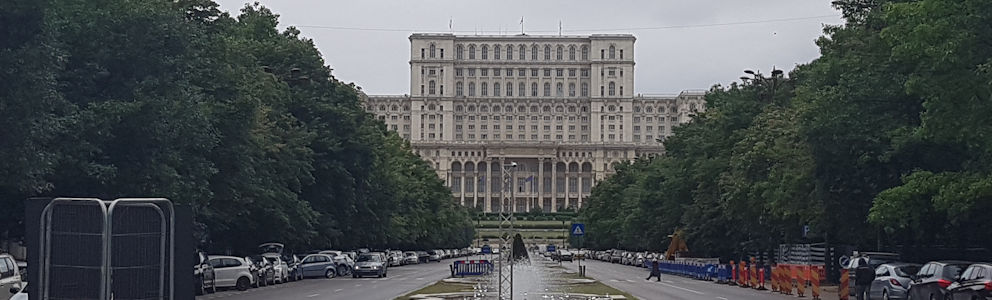
  The parliament building in Transnistria
 Moldova
  The limestone caves house the largest wine collection in the world
 A selfdrive tour through the Milestii Mici wine cellars
 The entrance to the wine cellars
Travelogue A Road Trip Through Europe
Dag 2 | Austria > The Neuschwanstein castle
Dag 3 | Slovenia > The lake of Bled
Dag 4 | Croatia > The Plitvice lakes and Una N.P.
Dag 5 | Bosnia and Herzegovina > The old town of Sarajevo
Dag 6 | Montenegro > The Montenegrin mountains
Dag 7 | Kosovo > Monasteries of Kosovo
Dag 8 | Albania > The ferry to Koman
Dag 9 | Albania > Tirana and Berat
Dag 10 | Albania > The old town Butrint
Dag 11 | North Macedonia > Through the mountains to Ohrid
Dag 12 | North Macedonia > The church of Ohrid
Dag 13 | North Macedonia > The capital Skopje
Dag 14 | Bulgaria > Smoke in the car
Dag 15 | Romania > The old town Veliko Tarnovo
Dag 16 | Romania > The huge parliament building
Dag 17 | Romania > The Dracula castle
Dag 18 | Romania > Climbing Mt Tâmpa
Dag 19 | Moldova > Gagauzia
Dag 20 | Moldova > Driving in the wine cellar
Dag 21 | Moldova > Transnistria
Dag 22 | Romania > The castle of Soroca
Dag 23 | Romania > The beautiful monasteries of Bukovina
Dag 24 | Hungary > Swimming in a cave
Dag 25 | Slovakia > The Tatra mountains
Dag 26 | Slovakia > The wooden houses of Vlkolínec
Dag 27 | Slovakia > The castle of Bratislava
Dag 28 | Czech Republic > Valtice and Lednice
Dag 29 | Germany > The old center of Dresden
Dag 30 | Netherlands > On the way home