
154 countries
(and areas)
 - Belize
- Benin
- Bhutan
- Bolivia
- Bonaire
- Bosnia and Herzegovina
- Botswana
- Brazil
- British Virgin Islands
- Brunei
- Bulgaria
- Cambodia
- Canada
- Cape Verde
- Chile
- China
- Costa Rica
- Croatia
- Cuba
- Curacao
- Cyprus
- Czech Republic
- Denmark
- Dominica
- Dominican Republic
- Egypt
- El Salvador
- England
- Estonia
- Eswatini (Swaziland)
- Ethiopia
- Fiji
- Finland
- France
- French Guiana
- Georgia
- Germany
- Gibraltar
- Greece
- Grenada
- Guadeloupe
- Guatemala
- Honduras
- Hong Kong
- Hungary
- Iceland
- India
- Indonesia
- Iran
- Ireland
- Israel
- Italy
- Jamaica
- Japan
- Jordan
- Kazakhstan
- Kenya
- Kosovo
- Kuwait
- Kyrgyzstan
- Laos
- Latvia
- Lebanon
- Lesotho
- Liechtenstein
- Lithuania
- Luxembourg
- Macau
- Madagascar
- Malawi
- Malaysia
- Maldives
- Malta
- Martinique
- Mexico
- Moldova
- Monaco
- Mongolia
- Montenegro
- Morocco
- Mozambique
- Namibia
- Nepal
- Netherlands
- New Zealand
- Nicaragua
- North Macedonia
- Northern Ireland
- Norway
- Oman
- Pakistan
- Palestine
- Peru
- Philippines
- Poland
- Portugal
- Qatar
- Republic of Korea
- Romania
- Russia
- Saint Kitts and Nevis
- Saint Lucia
- Saint Martin
- Saint Vincent and the Grenadines
- San Marino
- São Tomé and Principe
- Saudi Arabia
- Scotland
- Senegal
- Serbia
- Singapore
- Sint Maarten
- Slovakia
- Slovenia
- South Africa
- Spain
- Sri Lanka
- Suriname
- Sweden
- Switzerland
- Tajikistan
- Tanzania
- Thailand
- The Gambia
- Tibet
- Togo
- Transnistria
- Trinidad and Tobago
- Tunisia
- Turkey
- Turkmenistan
- Uganda
- United Arab Emirates
- United States
- Uruguay
- Uzbekistan
- Vatican City
- Vietnam
- Wales
- Zambia
- Zanzibar
- Belize
- Benin
- Bhutan
- Bolivia
- Bonaire
- Bosnia and Herzegovina
- Botswana
- Brazil
- British Virgin Islands
- Brunei
- Bulgaria
- Cambodia
- Canada
- Cape Verde
- Chile
- China
- Costa Rica
- Croatia
- Cuba
- Curacao
- Cyprus
- Czech Republic
- Denmark
- Dominica
- Dominican Republic
- Egypt
- El Salvador
- England
- Estonia
- Eswatini (Swaziland)
- Ethiopia
- Fiji
- Finland
- France
- French Guiana
- Georgia
- Germany
- Gibraltar
- Greece
- Grenada
- Guadeloupe
- Guatemala
- Honduras
- Hong Kong
- Hungary
- Iceland
- India
- Indonesia
- Iran
- Ireland
- Israel
- Italy
- Jamaica
- Japan
- Jordan
- Kazakhstan
- Kenya
- Kosovo
- Kuwait
- Kyrgyzstan
- Laos
- Latvia
- Lebanon
- Lesotho
- Liechtenstein
- Lithuania
- Luxembourg
- Macau
- Madagascar
- Malawi
- Malaysia
- Maldives
- Malta
- Martinique
- Mexico
- Moldova
- Monaco
- Mongolia
- Montenegro
- Morocco
- Mozambique
- Namibia
- Nepal
- Netherlands
- New Zealand
- Nicaragua
- North Macedonia
- Northern Ireland
- Norway
- Oman
- Pakistan
- Palestine
- Peru
- Philippines
- Poland
- Portugal
- Qatar
- Republic of Korea
- Romania
- Russia
- Saint Kitts and Nevis
- Saint Lucia
- Saint Martin
- Saint Vincent and the Grenadines
- San Marino
- São Tomé and Principe
- Saudi Arabia
- Scotland
- Senegal
- Serbia
- Singapore
- Sint Maarten
- Slovakia
- Slovenia
- South Africa
- Spain
- Sri Lanka
- Suriname
- Sweden
- Switzerland
- Tajikistan
- Tanzania
- Thailand
- The Gambia
- Tibet
- Togo
- Transnistria
- Trinidad and Tobago
- Tunisia
- Turkey
- Turkmenistan
- Uganda
- United Arab Emirates
- United States
- Uruguay
- Uzbekistan
- Vatican City
- Vietnam
- Wales
- Zambia
- Zanzibar


Copyright 2004 - 2026
Veeronline.nl Travel Adventures
Home > Austria > A Road Trip Through Europe > Travelogue day 2
Travelogue A Road Trip Through Europe
June 8 July 7 2018 (30 days)
Austria > The Neuschwanstein castle
Dag 2 - Saturday, June 9, 2018Just before half past seven, we enter the breakfast room. The buffet is already set up. On weekends, breakfast starts at 7:30; on other days, earlier. After breakfast, we load the luggage back into the car and are ready to depart. Following the same route as yesterday, we drive back to the A7. From there, we continue along the A7 for about one hundred kilometers until just before the Austrian border. We turn off toward the town of Hohenschwangau. In this town lies Neuschwanstein Castle. The castle was built in 1869 by order of King Ludwig II of Bavaria. Perched on a rocky outcrop, it is an impressive sight. Six weeks before the castle’s completion in 1886, Ludwig died. Since then, the castle has served solely as a museum. Over sixty million people have visited it. We park in the village. As we step out of the car, we can already see the castle nestled in the mountains. From the ticket office, there is still quite a climb ahead. We decide not to go directly to the castle; our tour does not start until twelve, and we are more than early. We follow the signs to the Marienbrücke. The steeply climbing path takes us higher and higher. After about thirty minutes, we reach the bridge. From here, there is a stunning view of Neuschwanstein Castle and the surrounding landscape. We are not alone—there are probably at least a hundred people simultaneously taking photos and selfies.

Through the forest, we walk to the castle entrance. The sky is partly cloudy, but the sun dominates. At a souvenir stall, we order two Cokes. The tours are well-organized: a new tour starts every five minutes. Our tour begins precisely at 11:55, allowing us to enter through the ticket gates. About fifty people are in our group. Catherina is our guide for today and welcomes us. Everyone in the group receives an earpiece, so she does not have to speak loudly and her explanations are easy to follow. Catherina shows us the various rooms of Ludwig II’s castle, emphasizing that it was built solely for him. Every room is adorned with exquisite paintings, chandeliers, and mosaic floors. The music room is particularly spectacular. The tour is efficiently managed, with time in each room carefully measured so the next group does not have to wait. After forty minutes, we are back outside. What a magnificent castle, both inside and out. With this experience behind us, we walk back to the car. It works out well that we return to the parking lot a little earlier than anticipated, as we have a busy afternoon planned.

We want to continue to the Grossglockner mountain pass, the oldest pass accessible over the Alps. On the other side, in Heiligenblut, lies our next hotel. To get there, we still have about five hours of driving ahead. We quickly cross the Austrian border and head toward Innsbruck, passing the Fernpass. On the ascent, the navigation alerts us to an accident—a fifteen-minute delay. A few bends later, we encounter a traffic jam. The traffic is at a complete standstill. The GPS advises turning around, but we are on a mountain road with no opportunity to do so. Other cars ahead and behind us wait patiently. Predictions for the delay range from thirty to over eighty minutes, changing every few minutes. It seems the mountain pass is temporarily closed. Strangely, oncoming traffic continues to flow. After more than two hours of waiting, during which we have advanced only about five hundred meters, traffic begins moving again. This time, it is not just a few hundred meters—we can continue over the Fernpass without further interruption. Upon reaching the Austrian A12, we follow the route toward Innsbruck. After the delay, it feels good to finally drive at a steady 100 km/h. Just before Sankt Johann in Tirol, we leave the highway. Through familiar ski resorts such as Brixen, Kirchberg, and Kitzbühel, we head toward the famous Grossglockner Hochalpenstrasse.

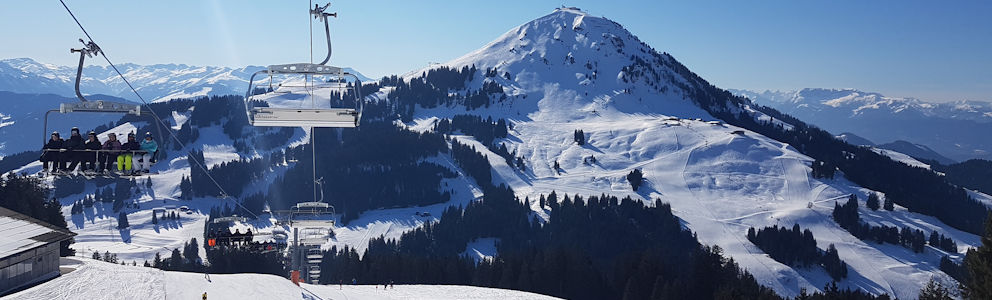
By the time we reach Zell am See, it is already past seven. From here, the mountain pass begins. Will it remain open in the evening? After all, it is a toll road. Fortunately, one toll booth is still open. Although all the signs indicate €36, we only pay €26—no idea why. Perhaps because it is evening? We drive on quickly. We start at 845 meters above sea level; the highest point of the pass reaches 2,505 meters. Via hairpin bends, we gain altitude rapidly. In second gear, we climb the 12% gradient steadily. Traffic is minimal, only occasional groups of motorcyclists pass by. The higher we climb, the more spectacular the views become. Dark clouds hang over the pass. Patches of snow from the previous winter remain, and snow still caps the surrounding peaks. One of these giants must be the Grossglockner itself at 3,750 meters. We do not take the time to identify the exact summit. We also skip the visitor center and the side road to the glacier. It is nearly eight o’clock when we descend the pass toward Heiligenblut. At the guesthouse, we are warmly welcomed. We had indicated in advance that we would arrive around seven; we are about an hour late. The accommodation is slightly outside the village. Nearby, there is a place to eat. The hostess is unsure if it is still open, apologizing that the high season has not yet begun. We walk quickly over, and fortunately, they can still prepare two pizzas. With a beer, this proves to be a perfect solution.
 Czech Republic
  The 17thcentury castle of Valtice
 Moldova
  The colorful Curchi Monastery just outside Chisinau
 The parliament building of Moldova
 Romania
  The interior of the Humor Monastery
Travelogue A Road Trip Through Europe
Dag 2 | Austria > The Neuschwanstein castle
Dag 3 | Slovenia > The lake of Bled
Dag 4 | Croatia > The Plitvice lakes and Una N.P.
Dag 5 | Bosnia and Herzegovina > The old town of Sarajevo
Dag 6 | Montenegro > The Montenegrin mountains
Dag 7 | Kosovo > Monasteries of Kosovo
Dag 8 | Albania > The ferry to Koman
Dag 9 | Albania > Tirana and Berat
Dag 10 | Albania > The old town Butrint
Dag 11 | North Macedonia > Through the mountains to Ohrid
Dag 12 | North Macedonia > The church of Ohrid
Dag 13 | North Macedonia > The capital Skopje
Dag 14 | Bulgaria > Smoke in the car
Dag 15 | Romania > The old town Veliko Tarnovo
Dag 16 | Romania > The huge parliament building
Dag 17 | Romania > The Dracula castle
Dag 18 | Romania > Climbing Mt Tâmpa
Dag 19 | Moldova > Gagauzia
Dag 20 | Moldova > Driving in the wine cellar
Dag 21 | Moldova > Transnistria
Dag 22 | Romania > The castle of Soroca
Dag 23 | Romania > The beautiful monasteries of Bukovina
Dag 24 | Hungary > Swimming in a cave
Dag 25 | Slovakia > The Tatra mountains
Dag 26 | Slovakia > The wooden houses of Vlkolínec
Dag 27 | Slovakia > The castle of Bratislava
Dag 28 | Czech Republic > Valtice and Lednice
Dag 29 | Germany > The old center of Dresden
Dag 30 | Netherlands > On the way home